Alabama Cat Ladies Raise $85k For Legal Appeal, Plan To File Civil Suit

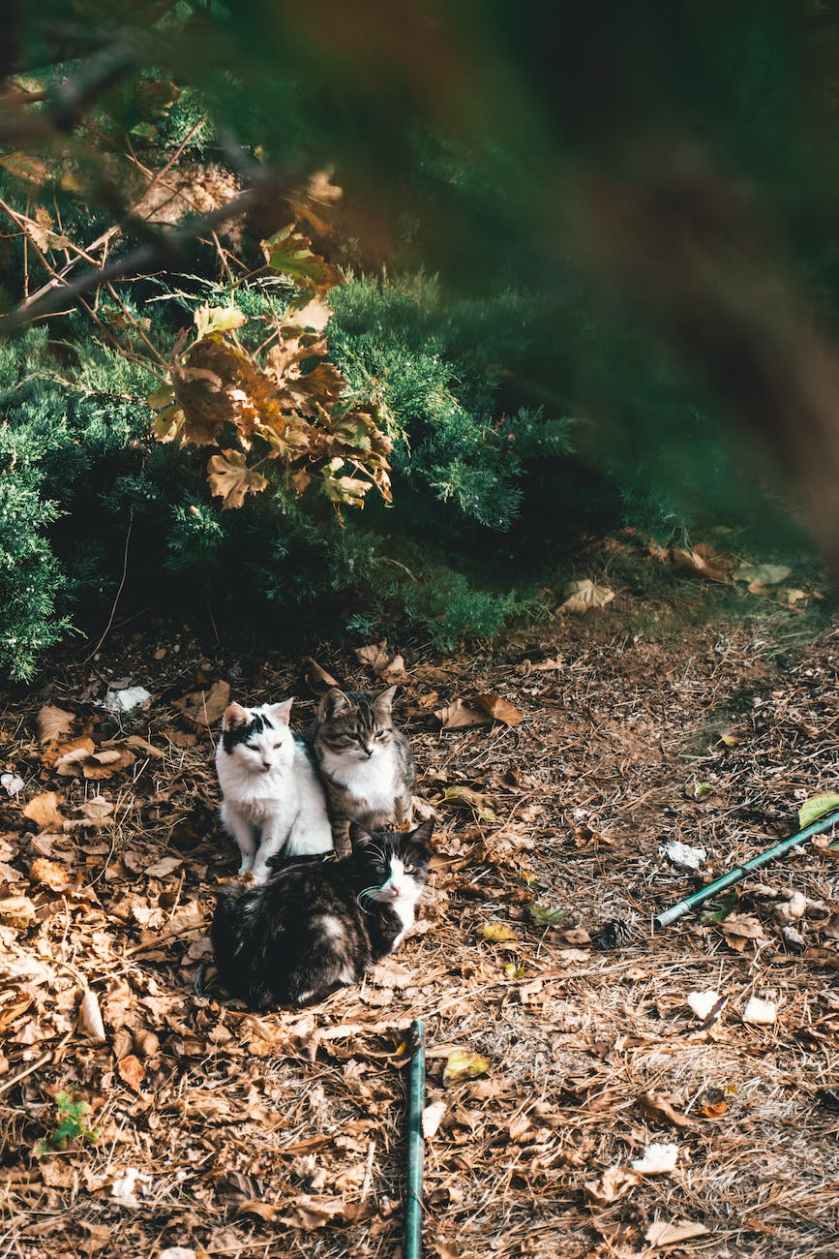
Mary Alston and Beverly Roberts will return to court for an appeal on February 23 after they were convicted in December of charges associated with managing a cat colony.

Two women who managed a cat colony in their Alabama hometown — and were rewarded with an infamously tone-deaf arrest and criminal conviction for their efforts — have raised $85,000 for their appeal.

This time, their fate won’t be decided by a small-time judge appointed by the same mayor who ordered police to arrest the women in the first place.

Mary Alston and Beverly Roberts of Wetumpka, Ala., were arrested on June 25 after three police cars pulled up and four officers surrounded them on public land, demanding they stop their efforts to trap feral cats and leave the area immediately.

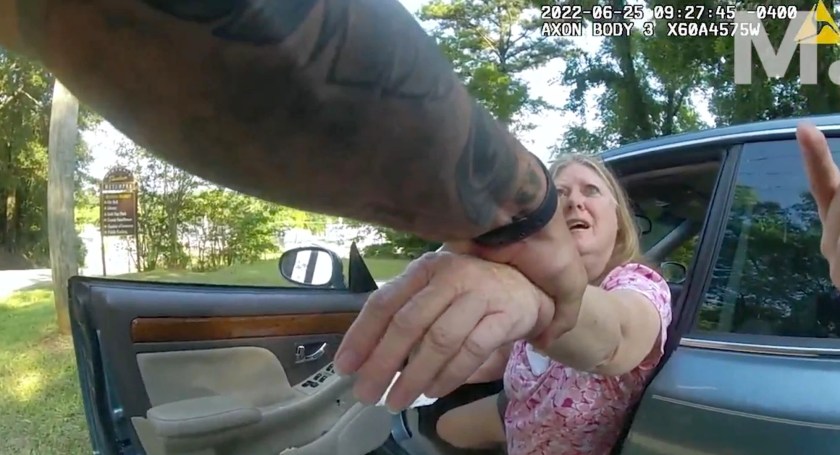
Alston and Roberts, who were in disbelief that four officers had been dispatched and were treating them like hardened criminals, didn’t move fast enough for the cops, who berated them and placed them both in handcuffs before charging them with a pair of misdemeanors each.

Their attorneys fought for months to obtain a copy of the police body camera videos of the arrest, and when they finally obtained that copy, it became apparent why the Wetumpka Police Department fought to keep it out of their hands.

The footage shows officers warning the women the confrontation was “going to get ugly,” insulting them and joking that they were “a bunch of cops beatin’ up on some old ladies.” It showed the police escalated the situation and had little regard for two women who were doing their hometown a service by managing a stray cat colony and conducting TNR — trap, neuter, return — to prevent the cats from breeding and multiplying.

They were convicted in a December trial that was followed by local and national media.

Now Roberts, 85, and Alston, 61, have raised $85,195 for their appeal via GoFundMe, with more than 3,000 donors across the US contributing to the fund.

After filing an appeal on Dec. 19, the women have been notified that their first hearing is set for Feb. 23 in front of 19th Judicial Circuit Court Judge Amanda Baxley, said Mary King, Roberts’ daughter. Baxley was sworn in earlier this month and begins her tenure on Jan. 17 after she was elected to the post in November.

bravecop
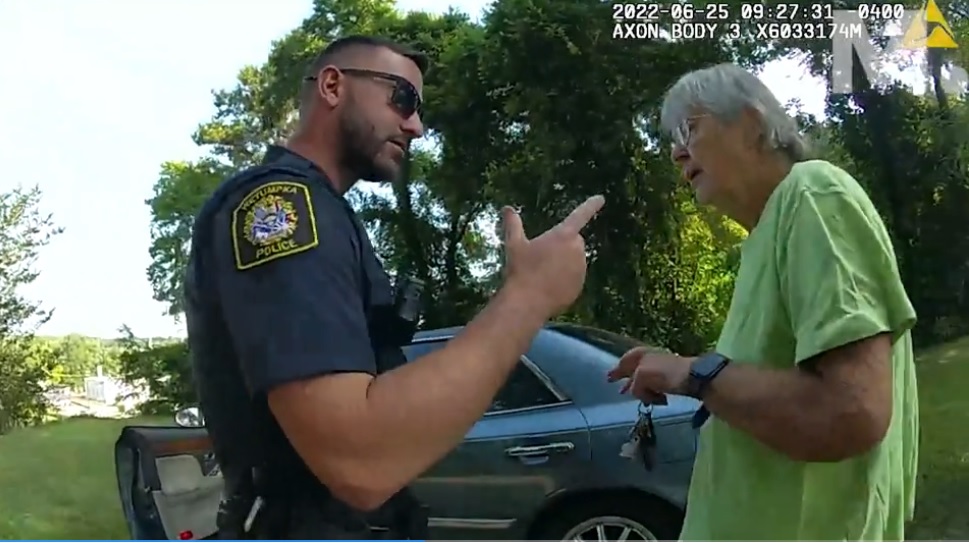
A Wetumpka police officer wags a finger at Roberts, who was 84 years old at the time, before handcuffing her hands behind her back and rifling through her personal possessions.

In a December trial, attorneys for Alston and Roberts revealed it was Wetumpka Mayor Jerry Willis who personally dispatched the officers by calling the assistant chief after spotting Alston’s car parked near a wooded area owned by the county. The lawyers also questioned Willis on his history of feuding with the pair on animal-related issues.

Although Willis testified that he did not tell police to arrest the women, Officer Jason Crumpton testified that he was indeed instructed to make the arrests before he arrived and determined what the women were doing.

Despite the fact that Wetumpka does not have laws against feeding or trapping cats, municipal Judge Jeff Courtney, who is directly employed by the town instead of being answerable to voters, found Alston and Roberts guilty of two misdemeanors each, sparking an outcry in local and national media. Courtney found Roberts guilty of trespassing and disorderly conduct, while he found Alston guilty of trespassing and interfering with governmental operations, an analogue for resisting arrest.

“I thought that they surely had more pressing issues to attend to,” Roberts told PITB in December. “I really thought the judge would dismiss it and tell the city to work it out.”

The arrest and conviction were widely panned by observers, including Alabama Political Reporter’s Josh Moon, who called the drama an “utterly absurd” spectacle that “reeks of small town politics.”

Roberts and Alston hope Baxley will give them a fair trial, which they believe they did not receive under Courtney in Wetumpka.

In the meantime, the colony cats in Wetumpka remain on their own. Willis, who has not responded to requests for comment by PITB, allegedly rejected offers by animal welfare groups in neighboring towns to care for the cats.

“We are very worried about them,” Roberts told PITB last month. “A few animal lovers have said they would help, but we are not sure this will happen. I’m not sure there is enough food available to hunt. The weather is getting colder, and they need protein.”

SUNDAY CATS: Mountain Lion Scared Off By Buddy Look-Alike, Bodega Cat ‘Bridget Moynahan’ Goes Missing

PLUS: Get the Army Corps of Engineers’ whimsical 2023 Cat Calendar!

A mountain lion got more than it bargained for when it found itself face to face with a ferocious furball last week.

The puma was taking a breather near a home on Jan. 5 when it turned, realizing there was a pair of eyes watching it. Those eyes belonged to the resident cat, a 13-year-old moggie who was not pleased to see a wild intruder in its territory.

The puma initially squared off on the other side of a sliding glass door as if saying “You want some of this?” but seemed shocked when the domestic cat, rather than backing down, launched into a series of feints and yowls.

The puma flinched a few times, then decided to vacate the premises.

Clearly, the wild cat found itself wondering about the identity of the tabby.

“Is that Buddy the Cat? Oh crap! If it’s him, I’m in trouble! They say he has huge meowscles and is a master of 36 styles of Kung Fu!”

Bridget Moynahan joins the search for Bridget Moynahan

Blue Bloods actress Bridget Moynahan gave a boost to the search for a missing cat bearing her name.

The 51-year-old actress lent her star power to the search by posting about it on Instagram, where she has 345,000 followers.

The missing kitty belongs to the owner of a Manhattan bodega, and spends her days napping on the shelves and being admired by customers.

There are an estimated 10,000 bodegas in New York City, where traditional grocery stores don’t really fit into an urban lifestyle where most people don’t own cars and can’t load up two weeks’ worth of groceries in a minivan.

To keep mice and rats at bay, most of New York’s bodegas have cats. They’re technically illegal, but because having a cat in the store carries the same $300 penalty as having rodents, bodega owners opt for the former. The cats are beloved by New Yorkers, and the city is mostly content to overlook their presence unless there are major health violations.

Bridget-Moynahan-Cat-20191125_38-79f2e6948165428bae9b486654bd3feb

Get the Army Corps of Engineers 2023 Cat Calendar for free

If you still haven’t picked up a calendar for the New Year, the Army Corps of Engineers has got you covered.

Their 2023 Cat Calendar features magnificent moggies in giant form, scratching, lounging and napping on ships, jetties, dams and dredges.

Click here to download the printable PDF of the calendar.

Who Freed Dallas Zoo’s Clouded Leopard? Cops Say Cat’s Enclosure Was Intentionally Breached

The 25-pound wildcat was found late on Friday afternoon. Now investigators are trying to determine who freed her and why.

A clouded leopard who went missing from her enclosure was intentionally let loose according to police, who have opened a criminal investigation.

The medium-size wildcat, whose species is native to the foothills of the Himalayas, escaped from her enclosure some time between late Thursday night and Friday morning, prompting a zoo-wide shutdown and a massive coordinated search. During that time, zoo staff emphasized to local press — and in social media posts — that clouded leopards are not aggressive toward people and the escaped cat wasn’t a threat.

She was eventually found safe and unharmed on zoo grounds, hiding in a tree not far from her enclosure, at about 4:40 p.m. on Friday. She was secured within 35 minutes, zoo officials told the Fort Worth Star-Telegram.

But that’s not the end of the saga. Zoo staff say the leopard, a three-year-old named Nova, didn’t escape on her own — a person or persons breached the two-story exhibit by cutting through the mesh fence. Nova’s sister, Luna, lives in the same enclosure and did not leave the area.

Clouded_leopard_(14134537190)
A clouded leopard. Credit: Wikimedia Commons

Now investigators are trying to determine if the people responsible for breaching the enclosure were committing an act of vandalism or intended to take the 25-pound wildcat.

“We found a suspicious opening in the habitat wall in front of the exhibit,” a Dallas Zoo official told reporters on Friday afternoon. “It was clear that this opening was not exhibit failure and it wasn’t keeper error.”

Police are reviewing surveillance footage and looking for clues in the 106-acre zoological park, which is located about three miles south of downtown Dallas and is home to more than 2,000 animals.

“It is their (Dallas Zoo officials’) belief and it is our belief that this was an intentional act, so we have started a criminal investigation,” Sgt. Warren Mitchell of the Dallas Police Department said.

Harrison Edell, vice president of animal care and conservation at the Dallas Zoo, warned against anyone attempting to steal zoo animals.

“This is a cat of conservation concern,” Edell said. “This is not a pet — she’s a critically important member of our family at Dallas Zoo.”

Clouded_Leopard_b_d
Clouded leopards diverged from a common ancestor shared with big cats, but typically don’t grow to more than 30 or 40 pounds. Credit: Wikimedia Commons
Clouded_Leopard_(36997885773)
There are fewer than 10,000 clouded leopards left in the wild. In captivity, the wildcats live for 11 years on average. Credit: Wikimedia Commons

A Tabby Cat Tours Pompeii’s Newly Restored Roman Mansion

Cats were treasured pets in ancient Rome, and strays can be found living in the ruins of the empire today.

This is only tangentially related to cats, but 1) It’s awesome, 2) It represents one of the best surviving examples of Roman home life, and 3) Cats invited themselves to the party.

The AP has a story and an extensive photo gallery of what it calls “newly restored remains of an opulent house in Pompeii that likely belonged to two former slaves who became rich through the wine trade offer visitors an exceptional peek at details of domestic life in the doomed Roman city.”

The House of Vettii was known as Domus Vettiorum in Latin and its owners, Aulus Vettius Conviva and Aulus Vettius Restitutus, were freed slaves who used their knowledge of wine — probably gleaned from their former dominus — to launch a successful business which propelled them to the economic heights of Roman society.

And who do we have there in slide number 16 of the photo gallery? A tabby cat, checking out the restored lararium, a nook where Romans would venerate their “household gods.”

tabbypompeii
A tabby cat prowls the House of the Vettii in Pompei. Credit: AP

The Vettii spared no expense when it came to hiring the best craftsmen and artists to lavishly decorate their home, covering the walls with scenes from Greek and Roman mythology. It took 20 years to restore the domus to much of its former glory

“They evidently tried to show their new status also through culture and through Greek mythological paintings, and it’s all about saying, ‘We’ve made it and so we are part of this elite’” of the Roman world, said Gabriel Zuchtriegel, a German archeologist who is now the director of the Pompeii archaeological park.

Looking at the restored home, it’s clear shows like HBO’s Rome and Starz’ Spartacus did a good job of portraying what Roman houses looked like on the inside, and how individual rooms were used by the people who lived in the homes as well as their servants:

pompeiidomus
Well-preserved walls show meticulously rendered scenes in the House of the Vettii. Credit: AP

We tend to think of ancient Greek and Roman buildings as monochrome since the paint has long worn off most structures, but the unique circumstances of Pompeii allowed some homes and other structures to remain largely preserved under volcanic debris since 79 AD.

Here’s a scene from Rome showing the interior of Servilia’s home, giving us an idea of how a wealthy Roman’s house would have looked in contemporary times:

Rome
Servilia and Octavia from HBO’s Rome. Credit: HBO

Can Cats Solve New York’s Rat Problem?

When even the mayor can’t keep rats from overwhelming his property, it’s clear New York is losing its battle against rodents.

For the second time in seven months, one of New York Mayor Eric Adams’ own health inspectors has ticketed him for rat infestations at the Brooklyn brownstone he calls home.

Because it wouldn’t be New York without things turning into a circus, the man who unsuccessfully ran against Adams for the mayorship, Guardian Angels founder Curtis Sliwa, took advantage of the mayor’s embarrassment by bringing two of his 16 18 cats to Adams’ block and holding a press conference on the sidewalk where he touted felines as the solution. (Adams, who is well known for his hatred of the rodents, famously held a “rat summit” at Brooklyn Borough Hall in 2019, “gleefully” showing off a new rat-killing contraption to reporters.)

Introducing reporters to his tuxedo, Tiny, and tabby cat, Thor, Sliwa said Adams was missing the most obvious solution to the rat problem — cats — and offered to become the city’s “rat czar” free of charge.

“Like most New Yorkers, [Adams] is frightened of rats,” Sliwa told reporters outside the mayor’s brownstone. “He’s tried everything but it’s time that we revert back to the best measure that has ever worked — and that’s cats.”

As we’ve noted before on PITB, Sliwa and his wife are dedicated cat servants, perhaps overly so. They currently house 18 cats in their Manhattan studio apartment, Sliwa said on his radio show this Sunday. Some of them are the couple’s pets and some are fosters for their rescue.

sliwacats
Nancy and Curtis Sliwa with one of their cats. Credit: Matthew McDermott

The rat problem in New York is real and, sadly, as bad as people make it out to be. You can hear them at night in many neighborhoods, and it’s not unusual to see them briefly caught in the glow of streetlights before scurrying into the shadows again.

I’ll never forget watching an entire conga line of them at the 125th St. subway platform. They just marched out of a hole in the twilight, each one bigger than the last, going about their business without any concern for what people might do to them.

And the answer, they know, is nothing. Because New York’s rats aren’t regular rats. They’re well-fed freaks, ballooning to enormous sizes thanks to the abundance of garbage cans to eat out of and the way garbage is collected in the city. Back in 2015, video of a rat dragging an entire slice of pizza down the steps to a Manhattan subway platform went viral, racking up more than 12 million views and earning the rodent the title Pizza Rat:

People who aren’t from New York and have never visited are probably shocked to see garbage piled high on the sidewalks of every street. New Yorkers are supposed to put the garbage out the night before pickup, but no one really observes that rule, and the mounds of trash grow for days before sanitation removes them. It’s a feast for the rats, and any solution has to start with cleaning  up the garbage situation.

In the winter the cold weather prevents the contents of the trash from rotting, so the stink isn’t as bad, and sometimes the trash mountains are covered by snow.

But in the summer, when the tree-lined avenues get their green canopies and flowers bloom in window boxes, the city reeks. On hot days, the perfume of New York is rotting trash and the overwhelming smell of urine wafting up from the subways. Sometimes I think of what the Japanese, with their spotless streets and shiny subways, must think when they come to New York for the first time.

In October, after the city fielded a 71 percent increase in rat complaints over the previous year, the city introduced a new law making it illegal to put trash on the sidewalk before 8 pm ahead of pickup the following morning. The change hasn’t made a dent in the rodent problem.

ratssize
A 2015 study by Matt Combs of Fordham University documented the enormous size of New York City’s rats. Credit: Matt Combs

In any case, New York is not a good place for cats. Thankfully we have a huge and generally well-funded network of rescues that get kitties off the street and pulls cats and dogs from the city’s animal control system before they’re due to be euthanized, but strays who fall through the cracks don’t last long.

Indeed, when the New York Post talked to one of Mayor Adams’ neighbors shortly after Sliwa’s latest press event on Sunday afternoon, the woman said she’d like another cat to patrol the area around her building. The last one, she explained, had been run over by a car.

I don’t really expect anything to come of Sliwa’s plan to use cats in rat-infested locales. The red-bereted radio host is hawking the scheme because he likes to be a thorn in the mayor’s side, and because it generates free publicity, especially from the city’s tabloids and local news channels.

But if it ever comes to fruition, and people really expect strays to handle their rat problems, Sliwa and company better have a plan to keep the cats safe from traffic.