Pa. Politician Resigns After Running Over Stray Cats With His Truck

“We don’t need his idea of animal control,” says one neighbor, who has been caring for the local cat colony for years.

Neighbors who live on a quiet street in rural Pennsylvania were horrified when a man in a white pickup truck intentionally tried to run over stray cats last week, hitting at least one.

Now, thanks to one neighbor who captured part of the attack on video, they’ve identified the man at the wheel, and he’s a local politician.

Frank Pagani Jr. resigned from his seat on the municipal council of Galilee, a rural Pennsylvania town with a population of 379. Video shows Pagani Jr. speeding up and swerving to hit one of two cats who were in the road at the time. He was going so fast he blew through the stop sign at the end of the street.

The brazen politician then made a left turn and casually pulled into his own driveway on a side street.

William Bittner, who captured part of the Dec. 1 hit-and-run on video, said Pagani called him afterward, admitted what he’d done, and said he would resign his council seat.

“He thinks that’s the end of it,” said Bittner, who takes care of the cats along with other neighbors on the street. “You just can’t let an act like that go on without someone being charged.”

The Beaver County Humane Society said its humane officers were investigating the incident, but Pagani Jr. hadn’t been charged as of Dec. 6. Neighbors told the Beaver County Times that police officers were going door to door on Dec. 3 to speak to witnesses. Pagani has not returned calls from at least two local media outlets.

Pagani works with his father in their family business, Pagani and Son Trucking LLC, which contracts with the United States Postal Service to shuttle mail in bulk to and from a processing facility to individual post offices in the area. The company has had three USDOT violations in 2020 and 2021, records show.

As for the cats, their fate remains unknown. The video appears to show Pagani’s truck hitting or running over the tail of one cat, who immediately bolted along with the other cat who was in the street at the time. Those two cats took off with a larger group that was on the nearby sidewalk. The injured cat hasn’t been seen since.

“He could have hit the undercarriage of the front, he could have had his tail run over, he could have been bruised,” Bittner told KDKA, the local CBS affiliate. “We’ve been searching and searching and we can’t find him.”

”And when I feed him in the morning and night, he’s not showing up. So we don’t know whether [he] ran off to die or…” Bittner said, trailing off.

In a follow-up post on Facebook, Bittner explained that the strays are part of a managed TNR colony, with neighbors pitching in to help feed the cats and adopt out kittens. So far, 28 cats have been trapped and fixed.

People in the neighborhood believe Pagani was taking matters into his own hands, which follows a disturbing trend of vigilantism toward cats by people who either hate them or think they’re protecting local wildlife by killing cats.

“We don’t need his idea of animal control,” Bittner wrote.
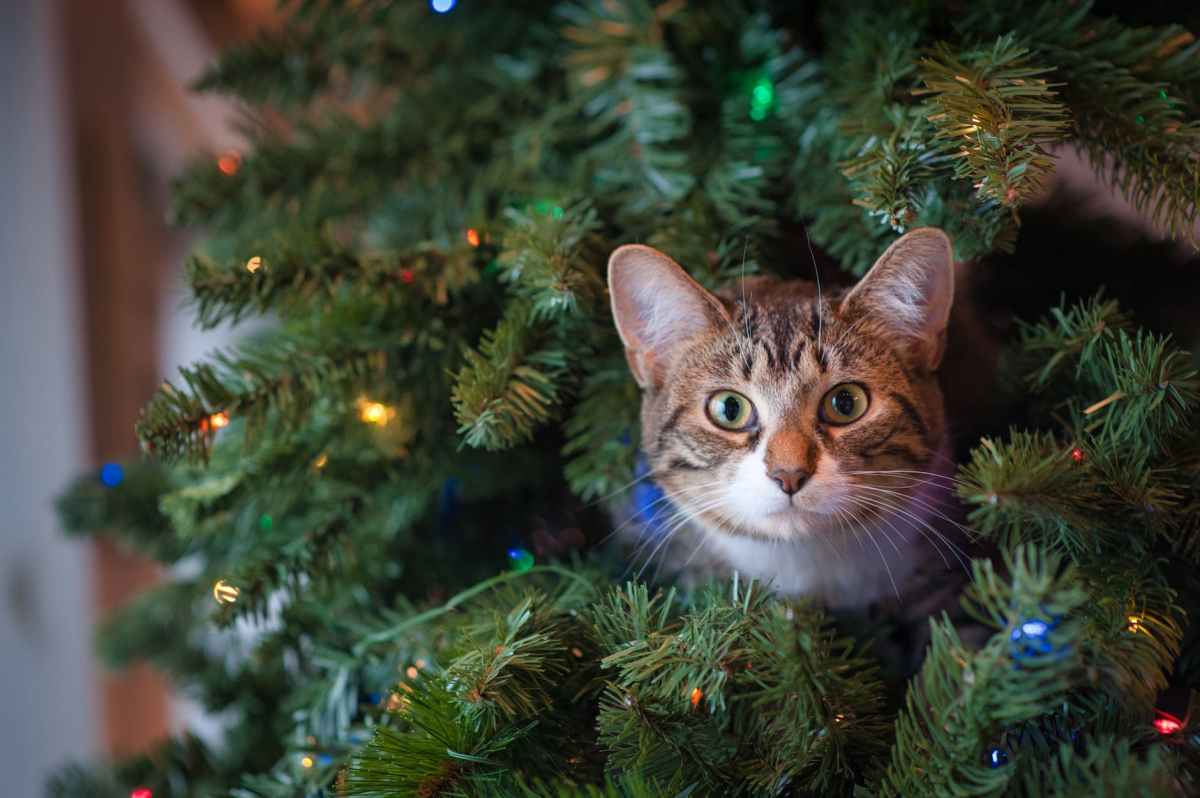
TikTokers Are Intentionally Traumatizing Their Cats With Christmas Trees

The newest trend on TikTok is terrorizing cats with Christmas trees so they’ll leave the trees alone during the holidays. Not cool.

Proving once again that social media has little or no redeeming value, TikTokers have latched onto a trend that has them using Christmas trees to terrify their cats.

The trend was started by a user who shared a “hack” she’d invented: Chase your chat around your home while wielding your new Christmas tree like a weapon, she said, and the cat won’t mess with the tree or its ornaments the rest of the holiday season.

“If you chase your cat around with the Christmas tree, it’ll be too scared to f**k with it,” said the “hack” originator, @alexisjj_.

User “@becs.richards” racked up more than 25 million views with a video that shows her holding her Christmas tree and thrusting it like a lance toward her confused and scared cat. She wore a big smile as she did so, and set the video to upbeat Christmas music.

Terrorizing your cat is a bad idea, author Anita Kelsey told Newsweek.

“A cat will not have any idea why you are causing them stress or fear and, more than likely, frightening a cat with a Christmas tree can lead to the cat being fearful of the room the tree is in, fearful of the tree, urinating around the home or on the tree and urinating on anything around the tree—like presents,” said Kelsey, author of Let’s Talk About Cats. “It also can cause a breakdown of trust between the cat and the person trying to frighten them.”

Daniel Cummings of the UK’s Cat Protection nonprofit said the method may seem successful, but it “doesn’t take into account how cats learn” and could cause long term problems.

“No cat owner would want to intentionally stress out their cat,” he said, “and part of cat ownership is accepting their natural behaviors.”

Unfortunately this newest trend isn’t surprising, especially coming from a user base of people who happily hand over their user data to the Chinese government, which controls TikTok and makes use of its data just as it does with any other ostensibly “private” company operating in China. There have been more than enough investigative stories illustrating how the Chinese government weaponizes data for any reasonable person to avoid platforms like TikTok.

I’m fortunate that Buddy is a good boy and mostly doesn’t mess with Christmas trees. He’s swiped a handful of ornaments off branches in the past, but so what? He’s a living being with feelings, and ornaments are just things.

Besides, as Cummings notes, curiosity and playfulness are part of the deal when we adopt cats. If people aren’t up for that, they shouldn’t adopt.

Top photo credit Jessica Lynn Lewis/Pexels.

This Is Why We Can’t Have Nice Things: Woman Breastfeeds Cat On Flight

“Emotional support snakes,” passengers breastfeeding cats, people being violent jerks to flight attendants: This is why airlines take away privileges.

As more airlines scoff at the idea of emotional support animals and banish pets to cargo compartments, selfish air travelers remind us why.

Like a woman on a Delta flight en route to Atlanta last week, who grossed out fellow passengers by breastfeeding her cat. Flight attendants asked the woman to stop and place her cat back inside its carrier, as per FAA rules, but she refused.

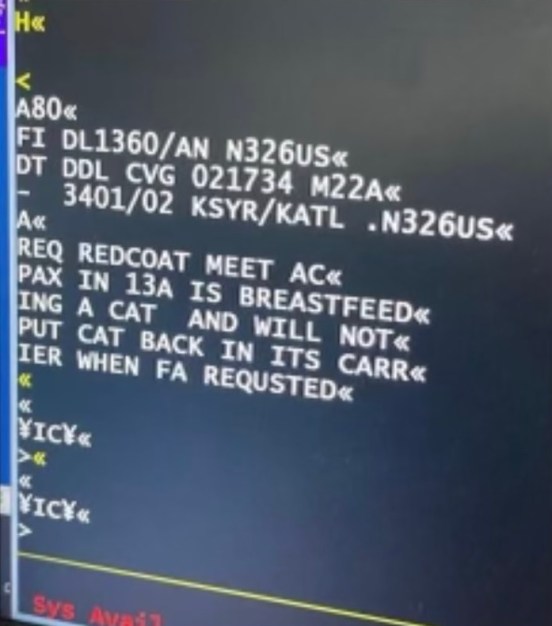
That prompted the pilot to send a message ahead to the destination airport via ACARS, short for Aircraft Communications Addressing and Reporting System:

acarscat
An ACARS message sent from Delta Air flight DL1360 to ATL, Hartsfield-Jackson Atlanta International Airport.

The pilot asked for a ground team to meet the passenger aircraft upon landing. It’s not clear if the woman was prohibited from traveling on the airline in the future.

Regardless, as press reports note, Delta has been dealing with an 84 percent uptick in emotional support animal-related incidents, which comes amid a dramatic spike in general incidents aboard passenger jets. As of September, there were already three times as many incidents compared to the whole of 2019, and the FAA had handed out more than $1 million in fines, a CNN report noted. (Data for 2020 isn’t particularly useful as a point of comparison because air travel remained restricted for months due to the pandemic.)

It’s gotten so bad that flight attendants are quitting and airlines are worried about being unable to staff flights, as most don’t have enough attendants to provide a full crew complement as it is. And who can blame these flight attendants, who are already overworked and perform an often thankless job that should not include acting as law enforcement at 40,000 feet?

One flight attendant told the New York Times she feels like her and her colleagues are “like punching bags for the public,” while others say the job has become dehumanizing.

“What really hurts are the people who won’t even look at you in the eye,” she said. “I don’t even feel like a human anymore.”

Emotional support animals are supposed to be fairly rare and reserved for people with extreme anxiety. Instead, we’ve had a parade of assholes in the past few years demanding they be allowed to travel with “emotional support snakes” among other ridiculous companion animals. A Delta spokesperson said the airline had fielded demands from people with “comfort turkeys, gliding possums known as sugar gliders, snakes, spiders, and more.”

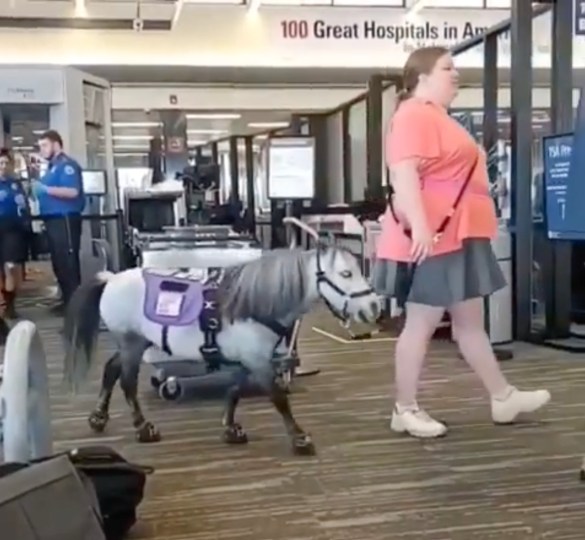
Then there’s “Flirty the Emotional Service Horse,” whose owner also maintains an Instagram page for the animal which informs visitors that Flirty prefers the gendered pronouns “she/her.”

What. An. Asshole.

An "emotional service horse"
Above: A selfish person.

Speaking not only as a cat caretaker, but one who is very attached to my little dude, did I like the idea of leaving him back in New York for almost a month when I went to Japan before the pandemic? No. Of course not. I missed him terribly.

Did I enjoy the 14-plus hours it took to fly to Haneda Airport? Of course not. On top of existing anxiety issues I can’t vape on a plane and I don’t like confined spaces.

But boo fucking hoo.

The rest of us just get on with it. We’re already pampered and accommodated beyond what we deserve in most circumstances. We should all have empathy, and we should all have respect for people who suffer from anxiety, but your right to comfort yourself ends at the point where I have to smell a horse’s ass for the six hours it takes to cross from New York to LA. Are passengers just supposed to endure it when the horse defecates? Is a single person’s comfort more important than the discomfort of entire rows of passengers surrounding her?

There are animal welfare issues here as well. No one should be allowed to take a wild animal on a passenger flight, and there’s a strong argument to be made that bringing a damn horse — or even a duck, for that matter — onto a flight is tantamount to animal abuse. Given the choice, those animals would not be there.

We live in an era of living indictments of the American education system who think the Constitution grants them the right to shit all over everyone else as long as it makes them feel good. There is no such right.

And the more that people abuse the privilege of taking an emotional support animal on a flight, the greater the chance that the people who genuinely need them will no longer be allowed the option.

Why Do Americans Love Shooting Cats?

Americans are exceptionally cruel to cats, especially strays and outdoor kitties. Why?

Seriously, what the hell is wrong with people in this country?

American cruelty to cats is even more upsetting within the context of human behavior elsewhere. In Turkey, where it’s practically a national pastime to care for felines, people build shelters for strays, welcome them into their shops with food and affection, and kitties are so trusting of humans that mother cats have on several instances brought their kittens into human hospitals and clinics for help.

Then we have ‘Merica, where apparently it’s a sport for people to sit on their front porches drinking beer and shooting stray cats with pellet guns.

Like, for instance, in Long Island this past weekend, where some stain on the human race shot a ginger tabby named Abraham and left him with a pellet lodged in his spine. Or in northern California, where a couple brought their cat to the vet because they thought he’d been attacked by a coyote, only for x-rays to show the little one had been shot several times by someone with a pellet gun. Or Augusta, South Carolina, where a cat was shot with what appears to be a bullet from a 9mm handgun. Or tiny Brookville, Pa., where a man shot his neighbor’s cat for the unthinkable crime of exploring his porch.

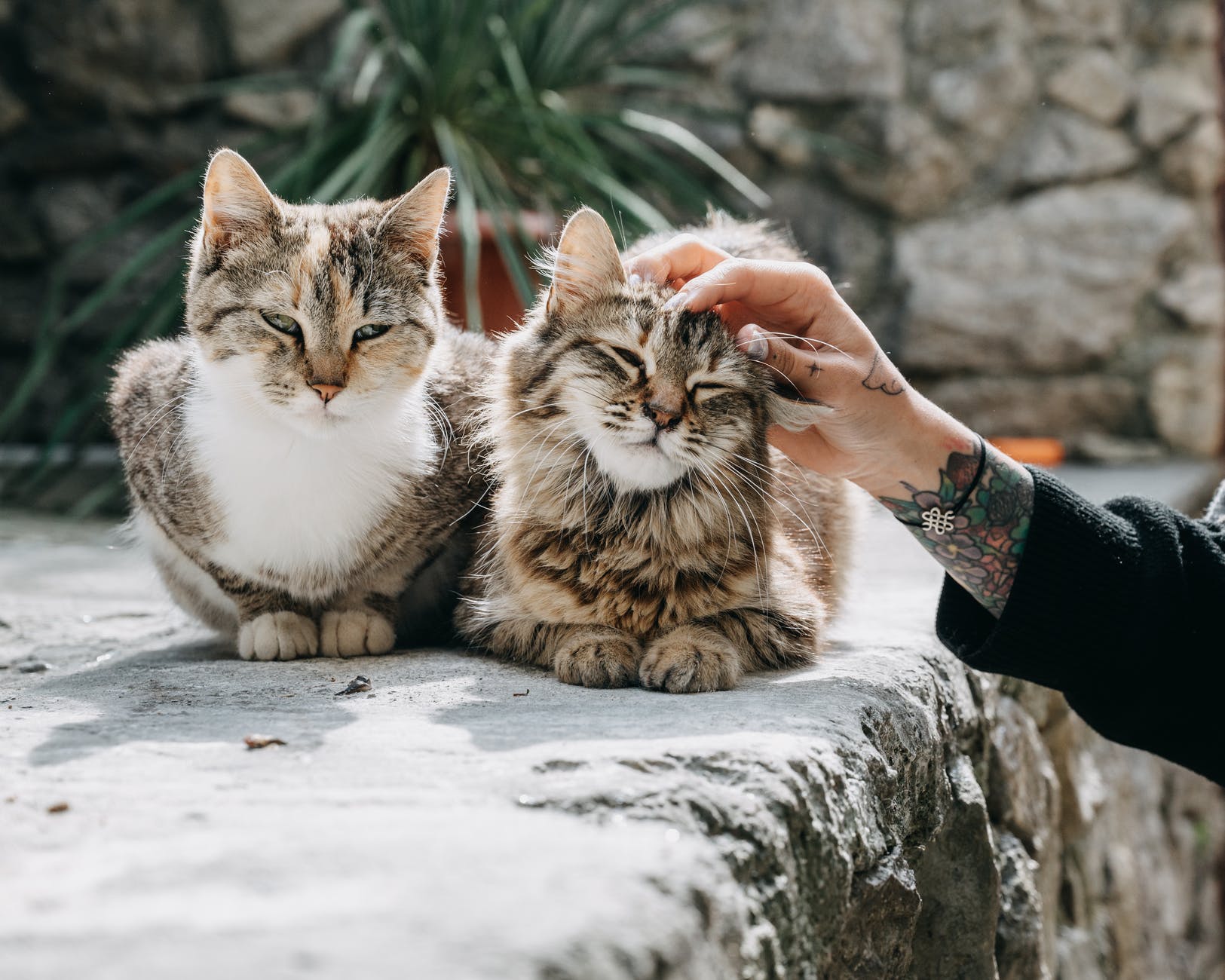
hipster with tattoos stroking cute cats on stony fence
Credit: Dmitriy Ganin/Pexels

I have Google News alerts set up for cat-related stuff to mention here on PITB, and a lot of it is great: Compassionate rescues, feline hi-jinx, heroic cats saving kids.

But those stories are always sandwiched in between articles about people shooting cats. Constantly, incessantly, apparently without a thought about the suffering they’re causing sentient animals who have feelings just like we do and experience pain, anxiety and fear the same as us. That’s not conjecture, contrary to what some people might believe, but objective scientific fact as proven experimentally many times over in recent years.

When Americans aren’t shooting cats they’re stealing them, mutilating them and killing them, like the recent nightmare case out of Tennessee: A woman left her cat in the care of a friend while she was traveling, and the friend allowed the cat to roam outside. Another woman saw the cat wandering, didn’t like what she saw and stole the kitty, eventually giving it away to 19-year-old Deamion Robert Davis via Craigslist. Davis now faces charges of animal cruelty for allegedly binding the cat’s paws and stabbing it to death with a screw driver, according to police. Detectives said they traced the killing to Davis by lifting fingerprints from the tape Davis allegedly used to bind the cat.

So because some busybody saw a pet cat on the street and decided a random, sketchy 19-year-old who responded to a Craigslist ad would provide a better home, a woman’s cat was brutally killed.

Meanwhile hatred for cats continues to be driven by bad science, like this meta-analysis of 202 toxoplasma gondii studies by researchers who need to be reminded that correlation does not imply causation. The research team looked at data on toxoplasma infections recorded in wild animals, then with no evidence whatsoever framed their study around the suggestion that cats “may” be and “probably” are transmitting the parasite to wild animals because the rates of infection are higher in urban areas.

Never mind that humans are much more likely to be infected by eating under-cooked food, certain meats, touching contaminated soil, or using utensils that were used to cut contaminated meat and shellfish. The study ignored that fact and posited — again without evidence — that cats are the primary vector for other animals and humans.

It would be nice if people in the scientific community took responsibility for the fact that their research influences the behavior of others, and blaming cats for everything from bird extinctions to parasite infections drives people to do cruel things like cull cats or poison their food. If they’re going to publish studies drawing a link between cats and extinctions or diseases, scientists have a responsibility to make sure there’s a connection more substantial than “we think, therefore we publish.”

That will conclude this rant on human cruelty to animals.

Why We Need Stronger Animal Protection Laws: Example #233

A Pennsylvania man faces a minor misdemeanor charge for disemboweling a kitten.

Take a good look at the mugshot.

That winner-at-life is 21-year-old Mylo Latour, who used a sword to attack a kitten and said the experience was “magic,” according to Pennsylvania State Police.

Latour, who lives in York, Pa — a city of 44,000 in southern Pennsylvania, about 50 miles north of Baltimore — is accused of slashing his sister’s kitten, Mittens.

Latour told the cops he killed the baby cat because “it came into his room and it had power over him,” adding “my eyes dilated and I chopped it with my sword. It was magic.”

Mittens “had injuries consistent with disembowelment,” according to WHTM, a local ABC affiliate. Paperwork from an arrest report reviewed by the TV news station noted “there appeared to be a clean cut to the rear of the cat’s body.”

Latour was charged with cruelty to animals, a second-degree misdemeanor in the Pennsylvania penal code. That’s a charge on par with shoplifting, bigamy or stealing property worth less than $200. If he’s convicted, he faces a maximum penalty of $5,000 and up to a year in jail.

A more severe charge, aggravated cruelty to animals, does exist in the state. It’s defined as torturing an animal or “causing serious bodily injury to the animal or the death of the animal.” It’s not clear why Latour was hit with the lesser charge, and only one of more than a half dozen media reports specifies the charge against him.

We’ll keep an eye on this case and update accordingly.