Sunday Cats: Larry Welcomes A New Servant To No. 10 Downing, More Cats Rescued From Ukraine

Happy National Cat Day! PLUS: Some changes to PITB.

Larry the Cat, official mouser in chief at 10 Downing Street, is now on his fifth prime minister.

After the disastrous and short-lived tenure of his predecessor, Lizz Truss, new PM Rishi Sunak officially moved into the UK prime minister’s residence earlier this week — and walked right past Larry without acknowledging him:

Note the reporter doing a live broadcast, which you can hear in the background.

“He is arriving now…the new prime minister of the United Kingdom!” the reporter said as Larry padded his way down the sidewalk and stopped.

Failing to acknowledge the true power at No. 10 is an ill portend for Sunak and the UK. What kind of person doesn’t greet his boss on his first official day of work? Larry will get him sorted in short time, undoubtedly.

Big and small cats from Ukraine find homes in Poland and the US

During the opening phase of the Ukraine war, there was an Indian national webcasting from Donbas, constantly asking for money to keep his “pet jaguars” — actually leopards — safe from the advancing Russians.

idiotandhisjaguar

It was one of the most infuriating aspects of the young war. The guy was keeping the big cats in an apartment, referred to them as his “children” despite not even knowing their species or how to care for them, and he lied to his audience, claiming he’d purchased them from the Kyiv Zoo. He didn’t. Zoos don’t sell big cats to people. He got them on the illegal wildlife market.

I don’t know if those particular leopards are among the big cats rescued from Kyiv in recent weeks, but a new report says illegally kept pets are among the felids who were rescued from Kyiv and Odessa — two of the hardest-hit cities — and brought to sanctuaries in Poland.

That’s good news. Hopefully any remaining wild animals are taken out of the hands of private owners and put in sanctuaries where they belong. Big cats don’t belong in a war zone, and they don’t belong in private hands.

Meanwhile, Homeward Trails Animal Rescue in Washington, D.C., has house cats from Ukraine up for adoption.

Most of the little ones were rescued from warn-torn areas in the eastern part of the country, and the rest were moved from a Ukrainian shelter just in time, as the building was hit by Russian missiles shortly after the animals were cleared out. Some of the cats were found wandering amid the ruins and destruction in towns and villages that had been hit hard by the invading Russians, Homeward Trails’ Sue Bell told WTOP.

The US non-profit will continue to work with a shelter in Ukraine, which rescues cats from heavily impacted areas.

“Right now, Homeward Trails is the only organization taking cats from this new Ukraine shelter,” Bell said. “And so, for every cat that we took from the shelter, that not only gave that cat an opportunity for a home, but it created a space in that shelter for the team to go out there and bring more cats in.”

budandwhitetiger2

A belated happy National Cat Day!

There are so many cat days, I lose track, so apologies for missing this one.

Happy National Cat Day to all PITB readers and your beautiful kitties! It’s a good excuse to spoil our little buddies and remind them how much we appreciate them.

Changes to PITB

You may have noticed, if you don’t have ad blockers installed on your browser, that I enabled ads in mid-September. I strongly dislike ads and I don’t like clutter on the site, but after three years of operating and publishing PITB, I decided to enable a limited number of ads in an effort to get PITB to pay for itself and hopefully a few upgrades that would be helpful in making the site more accessible, while also providing the tools to expand PITB’s content offerings.

Please send us your feedback. If you see an ad that covers the content, let me know. If you see an inappropriate ad, let me know. You should see ads for cat-related products and/or ads for things you may have expressed interest in before — due to the way ad networks use cookies and data from services you use, which is perfectly normal — but I want to make sure no one’s having a bad experience here.
The Most Important Cat Study Ever Has Been Completed, And The Results Are In

For the first time ever, a US city has conducted a true cat census using scientifically proven methods, including doing it the hard way — by counting. The project’s authors hope other cities follow their lead.

The last decade has seen something of a renaissance in cat-related research, with insightful studies about feline behavior coming from researchers in the US and Japan.

On the other hand there’s been a glut of research into feline predatory impact and public policy, and the majority of those studies have been deeply flawed. They’re based on suspect data and tainted by the interests of people who are more interested in blaming cats for killing birds than they are in learning about the real impact of domestic felines on local wildlife.

Those studies have all taken extreme shortcuts — using data that was collected for entirely different studies, for example, or handing out questionnaires that at best lead to highly subjective and speculative “data” on how cats affect the environment.

Several widely-cited studies that put the blame on cats for the extirpation of bird species have relied on wild guesses about the cat population in the US, estimating there are between 20 million and 120 million free-roaming domestic cats in the country. If you’re wondering how scientists can offer meaningful conclusions about the impact of cats when even they admit they could be off by 100 million, you’re not alone.

No one had ever actually counted the number of cats in a location, much less come close to a real figure — until now.

When leaders in Washington, D.C., set out to tackle the feral cat problem in their city, they knew they couldn’t effectively deal with the problem unless they knew its scope. They turned to the University of Maryland for help, which led to the D.C. Cat Count, a three-year undertaking to get an accurate census with the help of interested groups like the Humane Society and the Smithsonian.

DC Cat Count
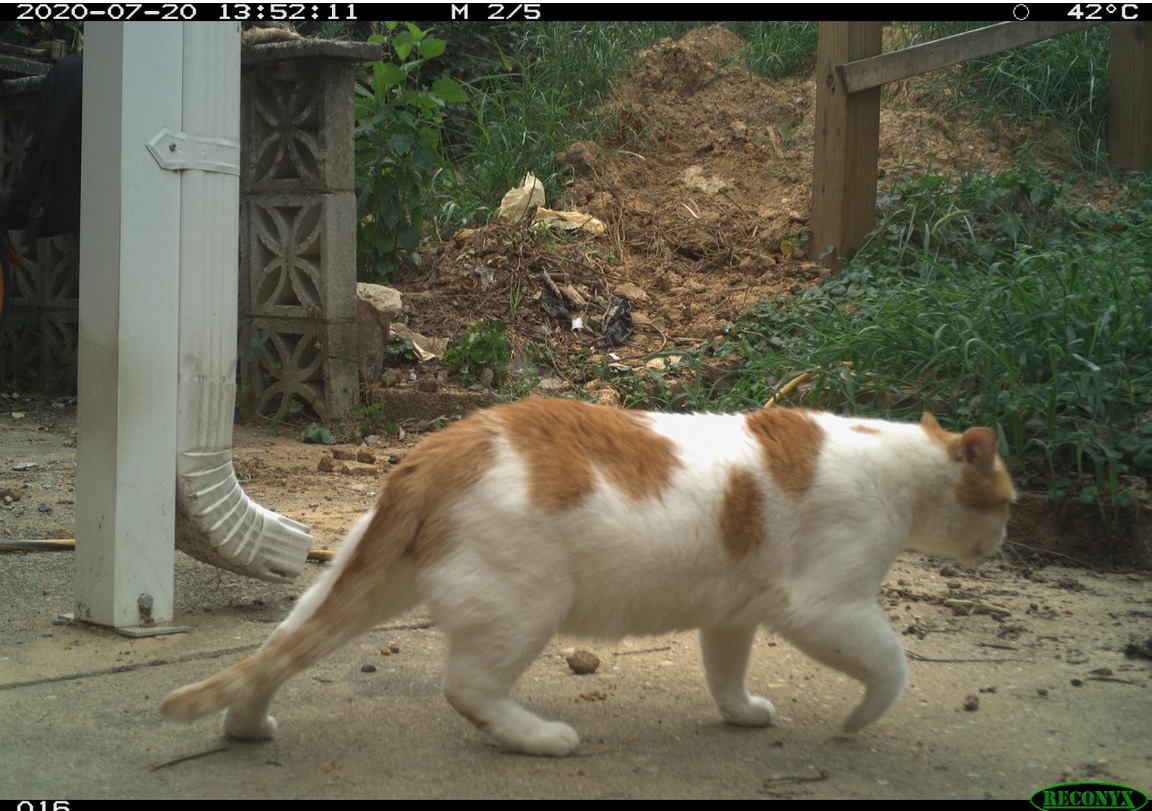
An image from one of 1,530 motion-activated cameras deployed for the D.C. Cat Count. Credit: D.C. Cat Count

The researchers approached each of their local shelters and rescues for data, then assembled a meticulous household survey to get a handle on how many pet cats live in the city, and how many have access to the outdoors.

Finally — and most critically — they used 1,530 motion-activated cameras, which took a combined 6 million photos in parks, alleys, public spaces, streets and outdoor areas of private residences. They also developed methods for filtering out multiple images of individual cats, as well as other wildlife. And to supplement the data, team members patrolled 337 miles of paths and roads in a “transect count” to verify camera-derived data and collect additional information, like changes in the way local cats move through neighborhoods.

DC Cat Count
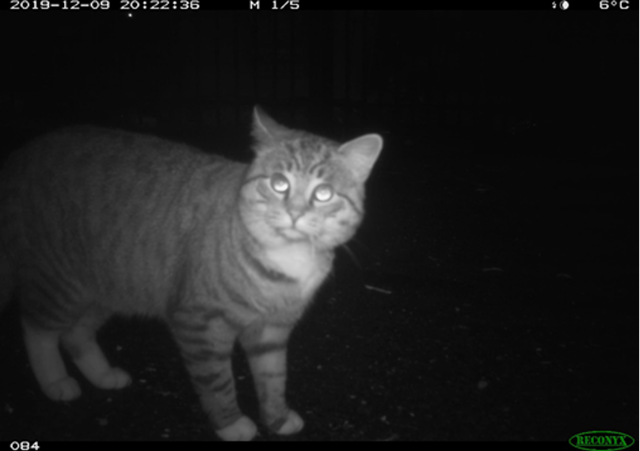
A cat who looks a lot like the Budster was captured in this 2019 photo from a motion-activated camera with night vision. Credit: DC Cat Count

Now that all the data’s been collected and analyzed, the D.C. Cat Count finally has a figure: There are about 200,000 cats in the city, according to the study.

Of those, 98.5 percent — or some 197,000 kitties — are either pets or are under some form of human care and protection, whether they’re just fed by people or they’re given food, outdoor shelter and TNR.

“Some people may look at our estimate and say, oh, well, you know, you’re not 100% certain that it’s exactly 200,000 cats,” Tyler Flockhart, a population ecologist who worked on the count, told DCist. “But what we can say is that we are very confident that the number of cats is about 200,000 in Washington, D.C.”

The study represents the most complete and accurate census of the local cat population in any US city to date, and the team behind it is sharing its methods so other cities can conduct their own accurate counts. (They’ll also need money: While the D.C. Cat Count relied on help from volunteers and local non-profits it was still a huge project involving a large team of pros, and it cost the city $1.5 million.)

By doing things the hard way — and the right way — D.C. is also the first American city to make truly informed choices on how to manage its feline population. No matter what happens from here, one thing’s certain — the city’s leaders will be guided by accurate data and not creating policy based on ignorance and hysteria painting cats as furry little boogeymen.

DC Cat Count
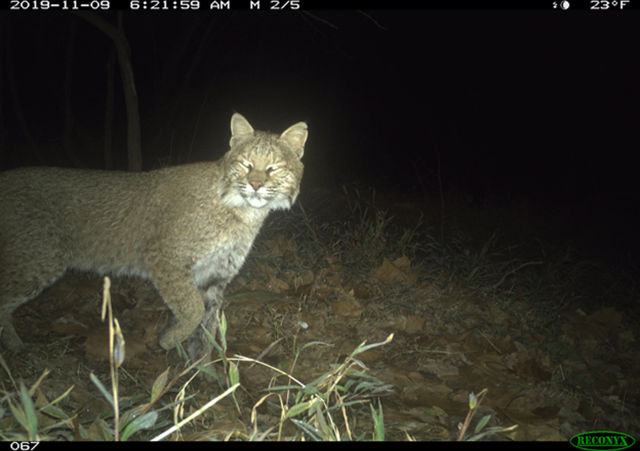
Not all the photos captured images of cats, and not all the felines were little: In this 2019 night image, a bobcat wanders in front of a trail camera. Credit: DC Cat Count