For The First Time, American Vets Can Prescribe FIP Meds For Cats

People whose cats are infected with FIP can now get a legal prescription and buy it from a US pharmacy. A full course of treatment will cost a few hundred dollars instead of the thousands charged on the illegal market.

Starting on June 1, people whose cats are infected with deadly Feline Infectious Peritonitis won’t have to shell out thousands of dollars to shady middlemen importing the cure from China.

FIP is a virtual death sentence for cats, but there’s a drug — GS-441524 — that has a cure rate somewhere around 90 percent, a Godsend for people whose beloved felines are afflicted with the virus.

Previously the only way to get it was through predatory online middlemen who charged exorbitant sums, but thanks to a partnership between UK pharmaceutical company Bova Group and New Jersey-based compounding pharmacy Stokes, the FIP cure will be available legally in the US.

The legal version of the drug will come in a tuna-flavored tablet format and customers can expect to pay a few hundred dollars for a full treatment instead of between $5,000 and $15,000 some paid for the FIP treatment from importers.

A US company invented the drug and held the rights, so it seemed like bringing it to market for cat caretakers would be a no-brainer. Unfortunately, GS-441524 is similar to COVID drug Remdesivir so the company was worried if they submitted the FIP cure to the FDA for approval and the FDA did not grant it, the denial could lead the agency to revoke its approval of Remdesivir due to its molecular similarity.

As a result, innumerable people whose cats were suffering with FIP turned to groups like Facebook’s FIP Warriors to help them obtain GS-441524 illegally. The drug was manufactured by facilities in China, sold to middlemen in the US and Europe, then marked up by eye-watering amounts for sale to people with sick cats.

jupiterpitbtopimg
Jupiter, a British shorthair, was diagnosed with FIP. His human, a young professional from London, paid almost $10,000 for FIP treatment obtained through middlemen.

Last year the feds announced they’d exposed a GS-441524 smuggling ring, alleging a woman from Texas and another from Oregon had made almost $10 million from selling the FIP treatment to panicked cat lovers.

GS-441524 importers knew their customers were desperate to save their beloved feline friends so they’d be willing to pay the extraordinary mark-up — and pay they did.

Here at PITB we’ve interviewed and written about several people whose cats were diagnosed with FIP. One of them, a student, spent her entire savings on GS-441524 obtained through the Facebook group and relied on help from generous donors to raise the rest. Another, a young professional in London, paid even more, spending £7,500 (about $9,400 at the time) on the medication alone, not including vet visits.

A Texas woman whose cat, Seth, was diagnosed with FIP said the middlemen — and women — said the sellers “saw our desperate situation and took advantage of us.”

“It was a very stressful time for us, and every time we needed to refill, they charged us more,” she told PITB. “They knew we couldn’t say no.”

For readers interested in more details about GS-441524, Stokes pharmacy has a resource page that breaks down pricing, shipment times, availability and more.

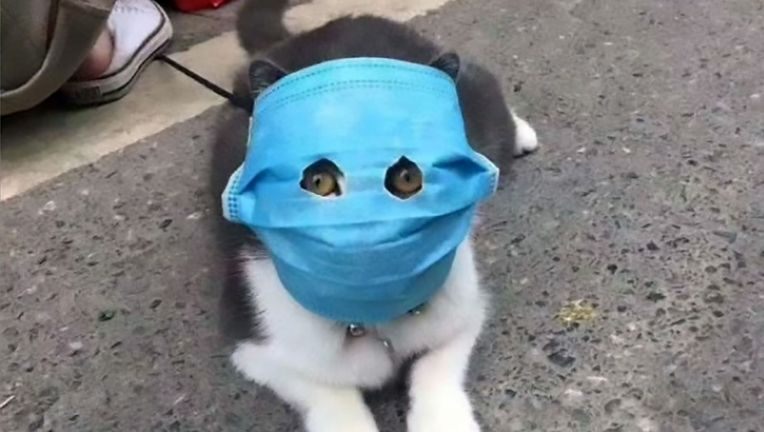
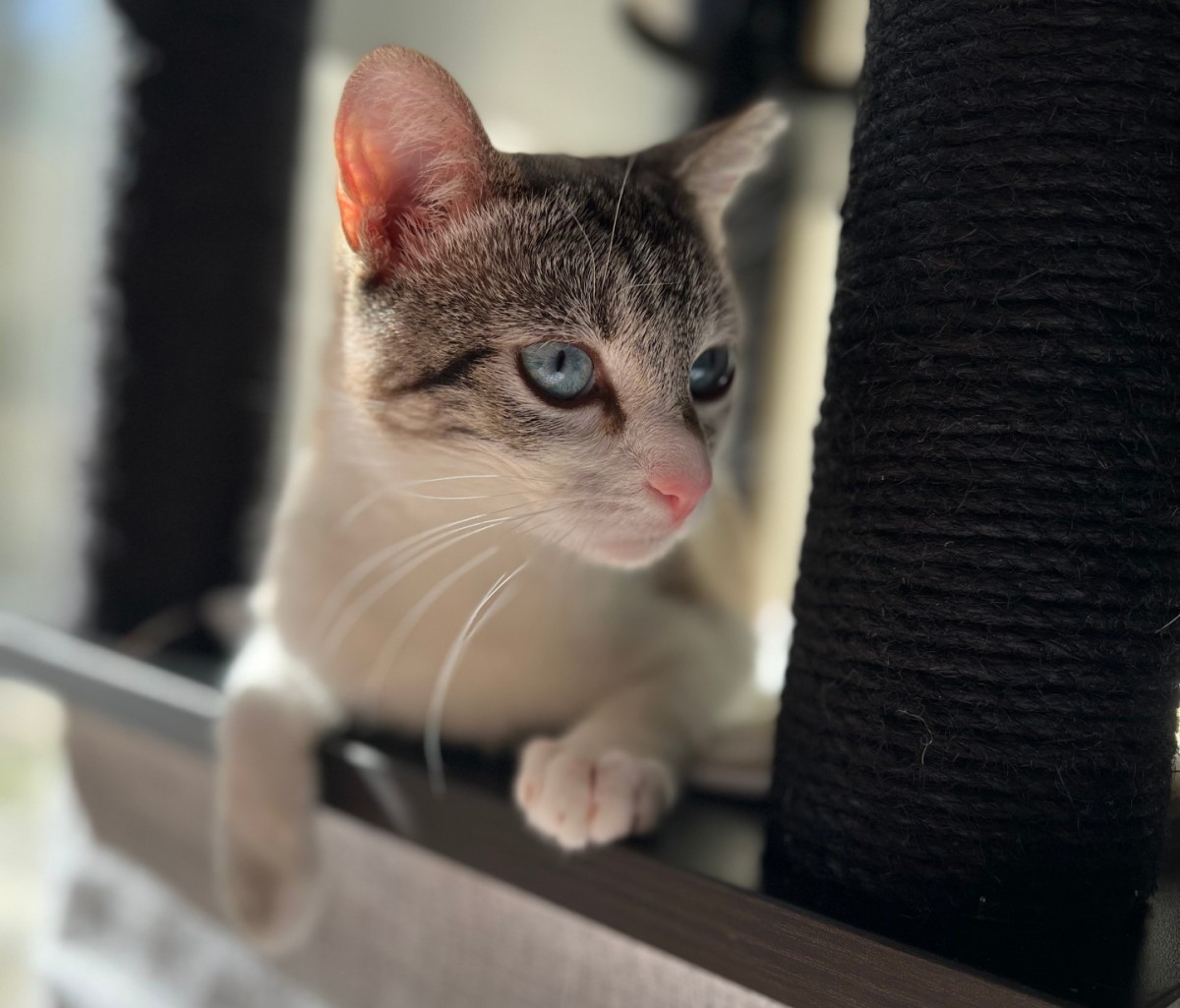
Parsnip, the cat pictured at the top, and Jupiter, the British shorthair pictured within the story, were both cured after taking full courses of GS-441524.
Hug Your Cats Tight, Don’t Let Them Out Of Sight

With news of the first infected cat comes panic and misinformation that could prove deadly to our loyal little friends.

Cats have been a Godsend in this era of social distancing.

People are looking for something — anything — to get their minds off grim reality and the repetitive, depressing 24/7 virus coverage that dominates television.

Cats have delivered. Our furry friends have been covering themselves in glory, providing an endless supply of viral videos and making people smile just by being their endearing, quirky selves.

Most of all they’ve been there for us at home, soothing anxieties and lowering blood pressure with each lap they claim and each affectionate nuzzle. We may be isolated from other people, but when there’s a cat in the house you never feel truly alone. (If for nothing else, their meows at meal time will make sure of that.)

For me it’s not even a question: Without my Buddy, I’d be slipping into depression of a kind that can’t be cured with Netflix bingeing, books or games.

buddy_march2020_funny
Little Buddy the Cat on March 27, 2020.

Now we’ve got to return the favor and protect our cats.

The first “confirmed” case of a cat contracting COVID-19 has come from Belgium, where a veterinary lab ran tests on a sick cat with respiratory problems and concluded the cat picked up the virus from her human.

“The cat lived with her owner, who started showing symptoms of the virus a week before the cat did,” said Steven Van Gucht, a public health official in Belgium, according to the Brussels Times. “The cat had diarrhea, kept vomiting and had breathing difficulties. The researchers found the virus in the cat’s feces.”

This is not good news.

Medical diagnostic labs in the US have tested thousands of pets for COVID-19 and haven’t found a single infected animal.

The World Health Organization has repeatedly said there is no evidence of dogs or cats serving as hosts for the virus or infecting humans, although that organization has killed its own credibility with its effusive praise for the Chinese government, and by parroting Chinese insistence that the virus couldn’t be transmitted from human to human. (WHO continued telling the world there was no evidence of contagion through late January, some six weeks after it was clear the virus was multiplying.)

The deadly consequences of misinformation

Unfortunately that didn’t stop innumerable people from abandoning their cats and dogs in China, leaving them in apartments and houses to starve. One Chinese animal welfare group, which is partnered with Humane Society International, says “tens of thousands” of pets were abandoned.

Some Chinese territories instructed people to kill their pets, and there are sickening reports of people clubbing defenseless animals to death in the streets.

That may not be surprising in China, which has an abominable record on human and animal rights, but now there are disturbing reports from all over the world. Shelter operators in the UK, for instance, say they’re fielding calls from people who want to abandon their pets because of the Coronavirus.

“Mostly, it’s people who haven’t got access to the right information online,” Claire Jones, who works at a shelter in Stoke-on-Trent, told the BBC. “It’s a nightmare.”

Misinformation and confusion are compounding the problem, the result of a new media ecosystem in which news is whatever a person’s social circle posts on their feeds and news consumers don’t distinguish between reliable press outlets (Wall Street Journal, Associated Press, Reuters, etc) and the thousands of less scrupulous sites masquerading as legitimate sources of news.

Thus, when a dog in China tested positive for trace elements of Coronavirus — but blood tests were negative — sites like Quartz wasted no time pumping out headlines declaring that dogs and cats can be infected.

Exercising caution with information

It looks like the Belgium case is another in which fact and nuance are sacrificed for clicks. Belgian virologist Hans Nauwynck is among the skeptics who believe veterinary authorities in his country acted too rashly.

“Before sending this news out into the world, I would have had some other tests carried out,” Nauwynck told the Brussels Times.

To confirm the positive test, the lab used a polymerase chain reaction, or PCR. A PCR test “allows scientists to multiply a very small sample of genetic material to produce a quantity large enough to study,” the Times noted. But the test only confirmed that the cat suffered from a flu-like virus. It did not specifically match the viral infection with COVID-19.

“A clear link between virus excretion and clinical signs cannot be established, in part because other possible causes for the cat’s illness were not excluded,” wrote Ginger Macaulay, a veterinarian in Lexington, South Carolina.

In addition, authorities didn’t rule out the possibility that the sample was contaminated or maintain a forensic chain of possession that would ensure it was properly handled.

“I would advise people to slow down,” Nauwynck said. “There may somehow have been genetic material from the owner in the sample, and so the sample is contaminated.”

To be absolutely certain, he said, more tests should have been done to confirm the initial result, and certainly before making an announcement to the world. Veterinary authorities should have tested for the presence of antibodies in the cat’s system as well, he said, which is a sign that an immune system is fighting off an infection.

“I’m worried that people will be scared by this news and animals will be the ones to suffer, and that’s not right. As scientists we ought to put out clear and full information, and I don’t think that has happened.”

With reports about the infected cat spreading across the globe — and adding to existing fears — the Belgian virologist said panic could override reason, with catastrophic consequences for our little feline friends.

“I wouldn’t wish to be a cat tomorrow.”

Animals-Face-Mask-ASIAWIRE-4
A cat on a lead in China is protected with a face mask. Credit: AsiaWire