TikTok’s Latest Viral Trend Is Popping Cat Pimples: Can We Ban This App Already?

Each viral trend on the app is more grotesque than the last.

I’m all out of withering sarcasm, so I’ll just say it: The newest trend on TikTok involves close-up videos showing people popping their Sphynx cats’ pimples.

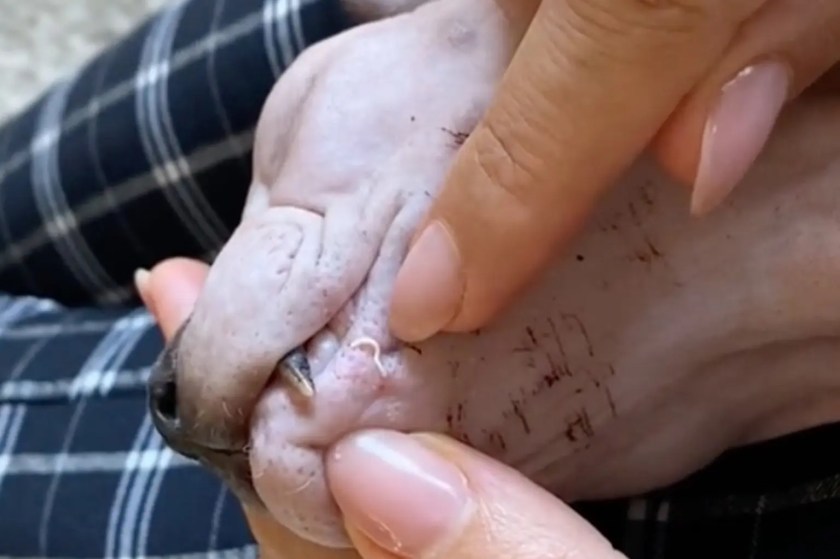
The PewDiePie of the craze, if you will, is one @Sphynx.cleaner, whose videos show a woman’s carefully manicured hands holding a defeated-looking Sphynx cat and popping its pimples between her formidable fingernails.

Tens of millions of people have watched her videos of puss pimple-popping, not including the millions of other views accumulated by lesser practitioners of the grotesque genre.

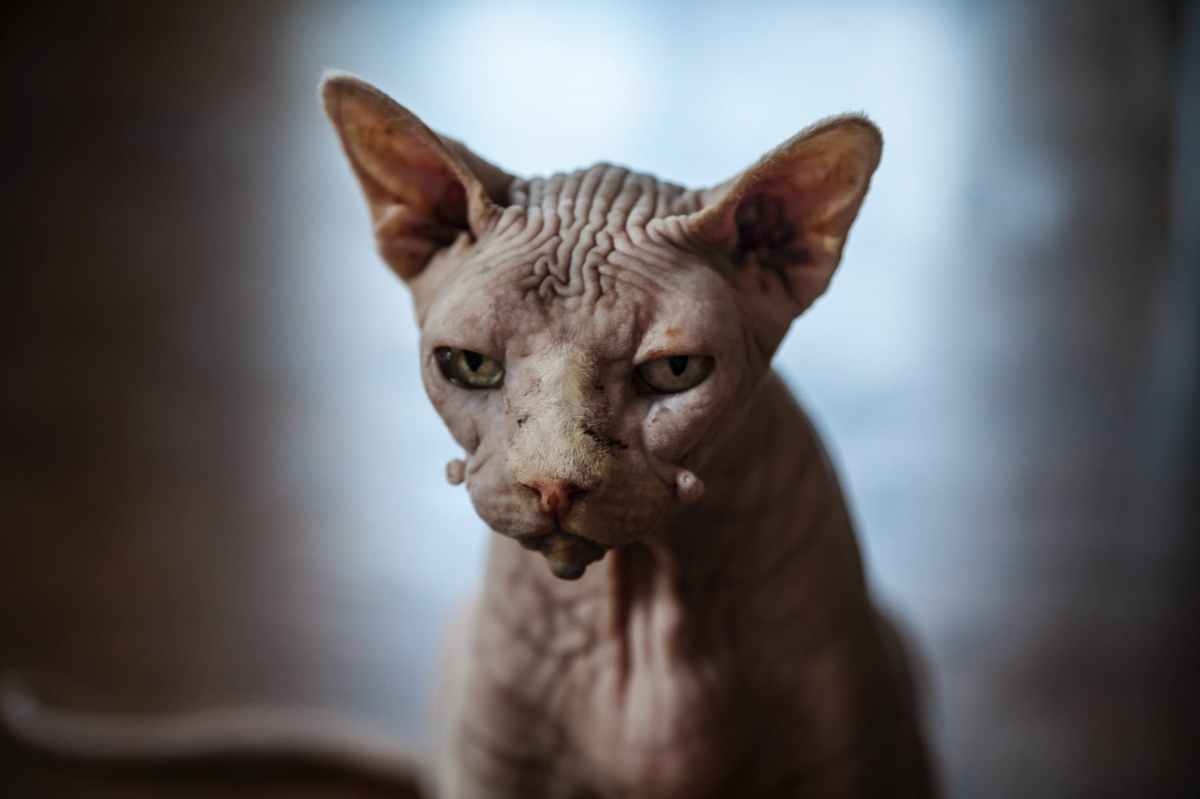
Sphynx cats lack fur and have skin often compared to chamois leather. Fur helps cats absorb and redistribute naturally-occurring oils secreted by the skin, so felines of the Sphynx breed are much more susceptible to acne problems than typical short- and long-haired cats. Without fur to help redistribute them, the skin oils can create a “film” that clogs pores, according to Jessica Taylor, a veterinarian in North Carolina.

Sphynx pimples
Uh, no. Credit: Sphynx.cleaner/TikTok

Not surprisingly, popping a cat’s pimples makes things worse and is not pleasant for the kitty.

“These lesions indicate a disruption in the skin and skin barrier, and squeezing or poking them can introduce bacteria, potentially worsening the lesion, causing pain and infection,” Taylor told Newsweek. “If the lesion is already infected, handling it could spread bacteria to the pet parent.”

As for TikTok, this is not the first time one of the app’s trends has been detrimental to the health and safety of felines, although most of its inanity is focused on humans. I suppose you can view it as some sort of advanced Darwinian engine, accelerating the self-removal of human beings from the gene pool. Among the trends that have gone viral on the app:

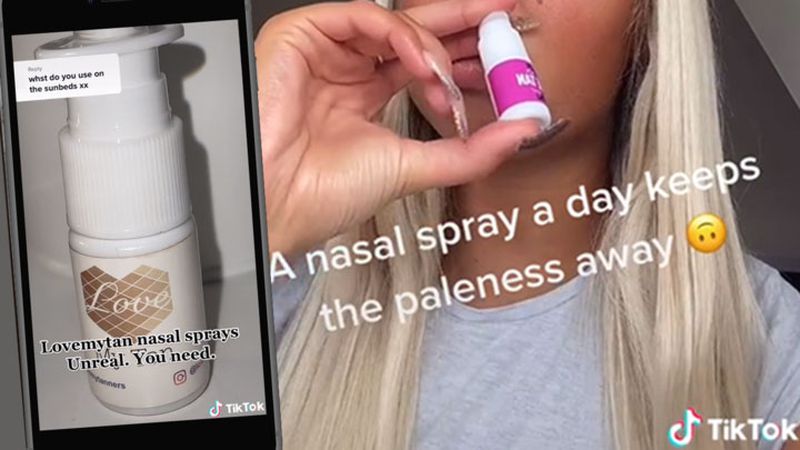
  • People who use self-tanning bottles as nasal spray out of some misguided belief that ingesting the stuff will not only achieve the desired effect, but somehow lead to a more even, natural-looking distribution of tanner. It reminds me of former President Donald Trump’s impromptu suggestion, during a national press conference, that ingesting hand sanitizer could be a “tremendous” way to stop COVID.
  • Videos instructing women to eat the tablets inside Clearblue pregnancy tests as a “contraceptive hack,” claiming the tablets — which are designed to absorb urine during the chemical test — are actually morning after pills.
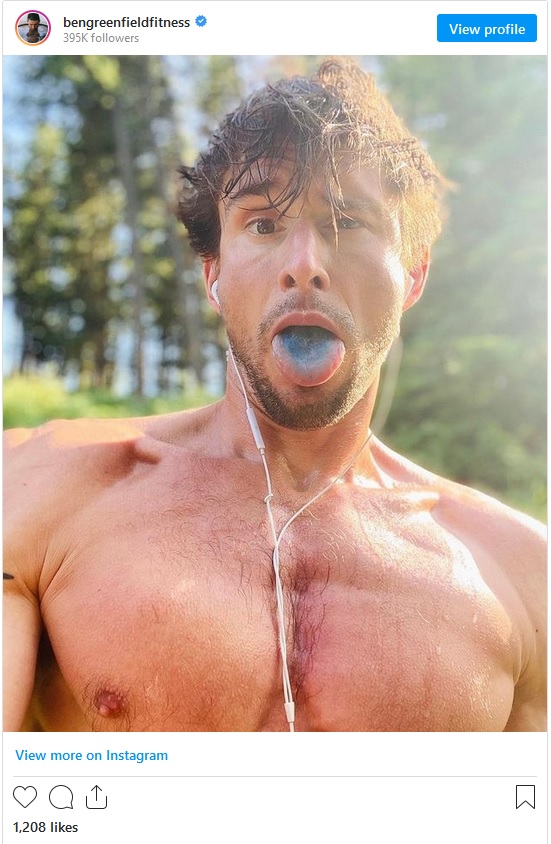
  • People ingesting methylene blue — an anti-fungal fish tank cleaner — because “fitness influencers” say it can “cure” COVID-19, boost metabolism and slow the aging process. Think of the triumph of critical thinking here: These are people who won’t get a vaccine that’s been through three-stages of trials before getting FDA approval, and whose efficacy and safety have been the subjects of rigorous peer review, but they’re willing to drink a chemical manufactured and sold as a cleaning solution for fish tanks.
  • The so-called Nyquil Challenge, in which people use Nyquil instead of cooking oil to cook chicken in a frying pan.
  • Period blood face masks, which are self-explanatory. Another grotesque and potentially dangerous trend started by “influencers” who claim some sort of nebulous expertise and know that “hacks” will net them attention and clicks. The more outrageous, the better.
https __prod.static9.net
“Did you know that urinal cakes are made by Carvel? It’s true! They’re deliciously chocolatey, with just a hint of vanilla, cinnamon and industrial strength anti-bacterial. Mmmmmm!”

Of course, we’ve known for years that Chinese companies are beholden to the Chinese government according to Chinese law, which means the government — and the communist party — can help itself to TikTok user data whenever it wants.

After TikTok’s US-based executives insisted to congress that American users’ data is firewalled and cannot be accessed by the company’s employees in China — and, by extension, the Chinese government — a series of leaks confirmed that China’s government was in fact regularly accessing that data. Absolutely no one, except maybe the politicians who think the internet is a “series of tubes,” were surprised by this revelation.

China’s government can use the data to track journalists, exploit American and European users, program its algorithm to shuffle them toward harmful content, censor content the Chinese government doesn’t like, and even coerce individuals by threatening to release information on their viewing habits.

So can we evacuate TikTok’s US headquarters already, raze it to the ground, and ban the app from every mobile store?

methblue2
“Mr. Darwin! Mr. Darwin let him go! Magnifico!”

RIP Elliot, The Stray Cat Found Frozen To The Ground

Little Elliot was recovering from his ordeal, but developed a deadly blood clot.

This feels like a real gut punch, especially after a South Carolina veterinarian’s heroic efforts to save Juliet, the cat who had 38 hair ties removed from her stomach and died after her health seemed to improve.

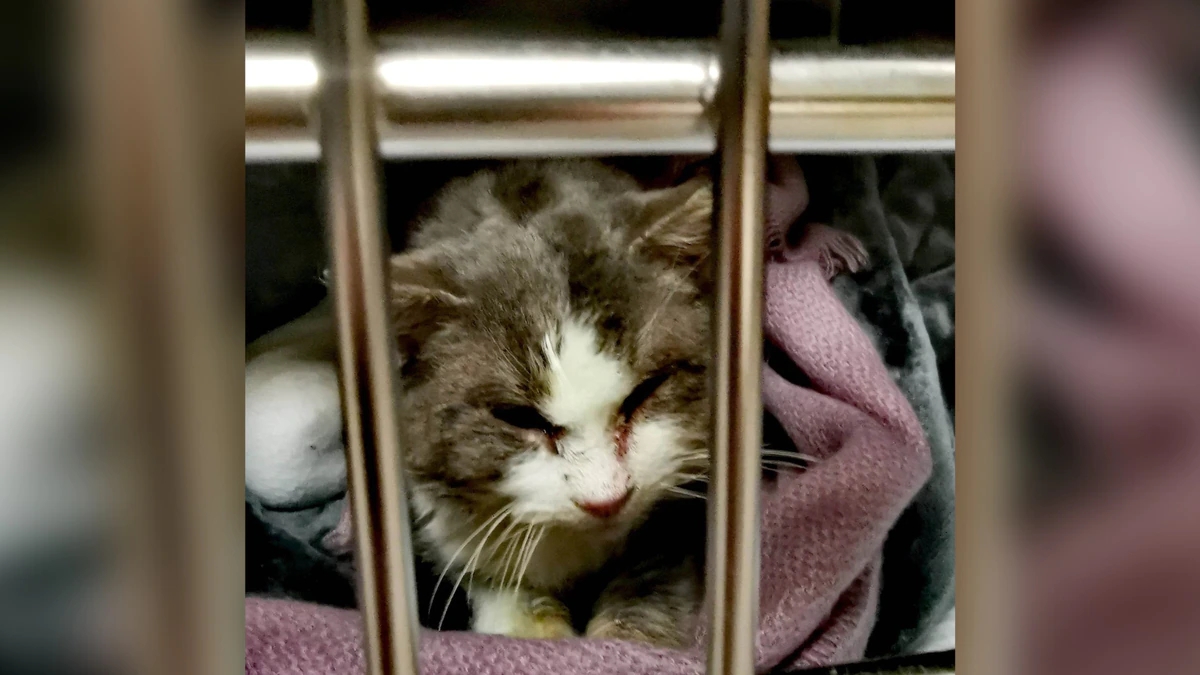
Elliot, you’ll recall, was the poor, sweet stray who was found literally frozen to the concrete on the day after Christmas, when the country was in a deep chill the likes of which we haven’t seen in decades, with temperatures plunging well into the negative. A Good Samaritan found the little guy in a bad way, with his eyes frozen shut and his organs shutting down, but she turned up her truck’s heat and rushed him to Big Lake Community Animal Clinic in Muskegon, Michigan, where the staff took good care of him and named him after the storm he was found in.

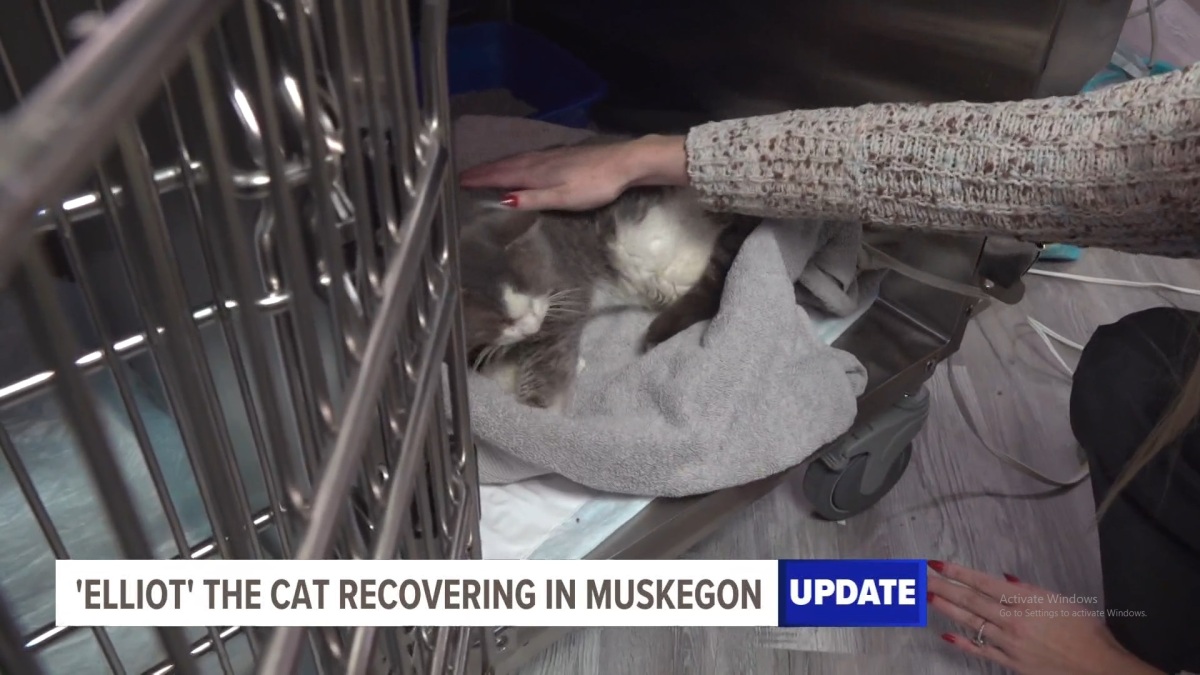
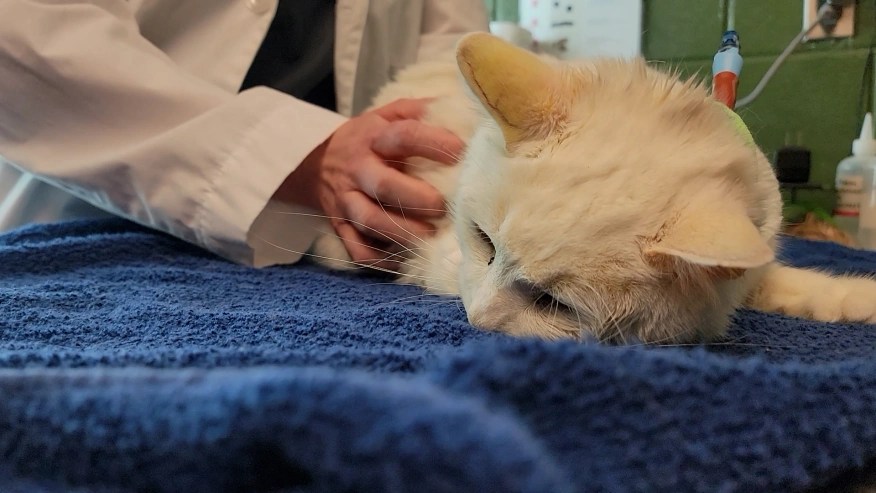
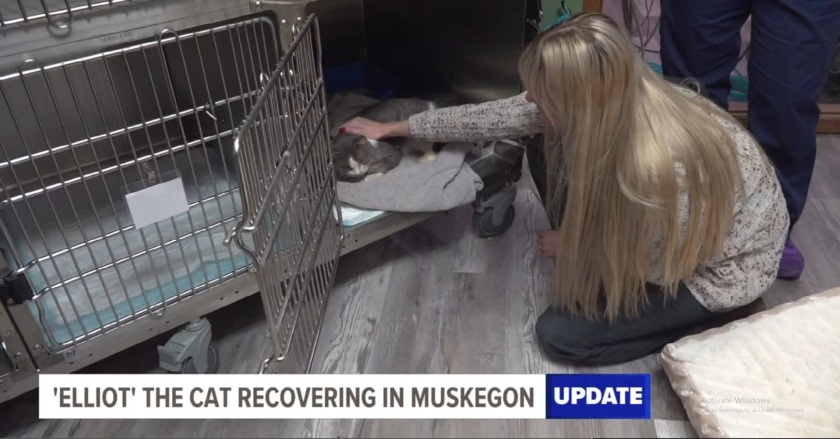
They wrapped little Elliot up in warm blankets, gave him fluids and began to slowly raise his body temperature, which was a dangerous 94 degrees. Things started to look up, too: Elliot had a habit of reaching his paw out to the vet techs who were monitoring him, began to regain his appetite, and eventually was able to stand and eat on his own.

elliotcat_follow2

But Elliot’s health took a turn for the worse again, and veterinarians determined he developed a saddle thrombosis, which is described asa blood clot (called a “thrombus”) that lodges at the base of the aorta just as it branches into two distinct arteries, thereby obstructing blood flow to the hind limbs. It is so named because of the saddle-like shape it roughly resembles once it takes up residence in this location.

For cats who develop a saddle thrombosis, the outlook is not good, and drugs designed to dissolve blood clots are often ineffective.

“Sadly, there was nothing we could have done to prepare for that but we knew it was time to let him be free from the pain and struggle he’s known most of his life,” Big Lake’s staff wrote to supporters.

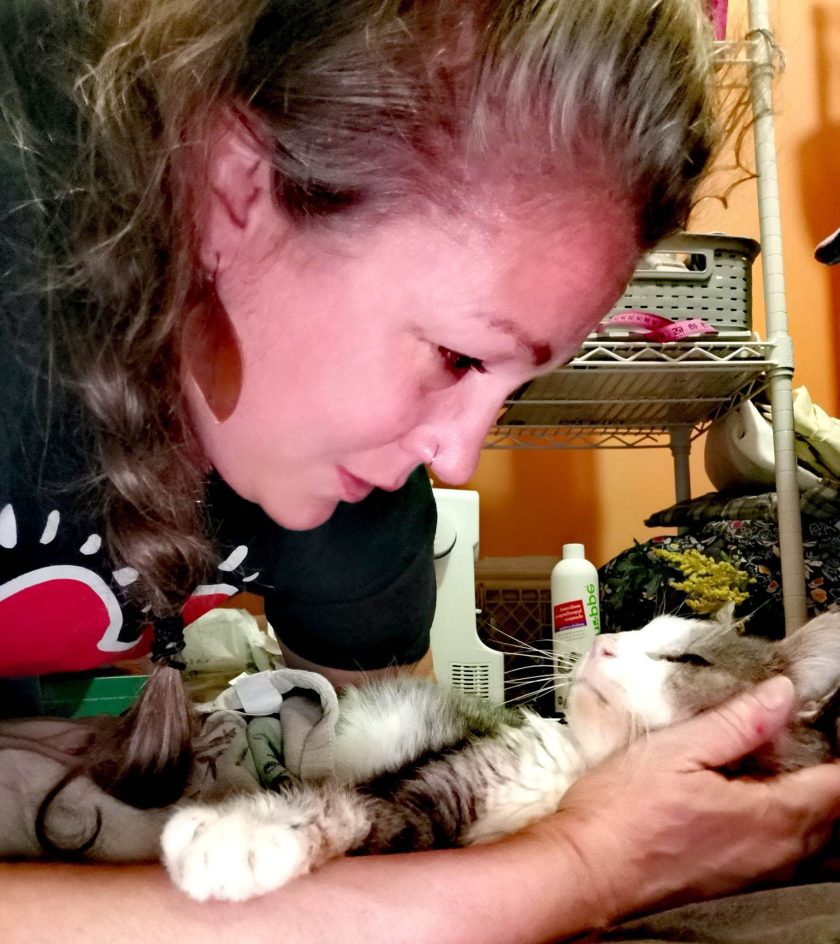
A staffer named Diane Neas, who took Elliot into her home after a few days when he’d stabilized, was particularly hard hit by the loss, and understandably so. Well-wishes and applications to adopt Elliot had come pouring in, and it seemed like the former stray’s suffering would lead to the best reward — a warm home of his own and people to love and care for him.

“We find peace in knowing the last two weeks of his life were spent with people who showed him kindness, care and love,” shelter staff wrote. “We can’t believe the following and support he has gained on this journey to healing; from the bottom of our hearts, thank you all for caring so deeply for him and sending such love and support his way.”

Images courtesy of Big Lake Community Animal Clinic

elliotcat_follow

South Carolina Cat Dies After Surgery To Remove 38 Hair Ties From Her Stomach

Veterinarians tried their best to save Juliet, but noted “even with the best care, not every animal makes it.”

Juliet the cat and her two feline siblings were unceremoniously dumped outside their former home when their humans moved out of state a few weeks ago.

A Good Samaritan realized the trio had no one taking care of them and nowhere to go, and brought the cats to the Charleston Animal Society in South Carolina. After some time, Juliet stopped eating. A scan revealed why: The cream-and-white cat had an amorphous mass inside her stomach, a “seemingly endless bundle of strings” in the words of one veterinarian, which blocked Juliet’s stomach and prevented her from being able to eat or process food.

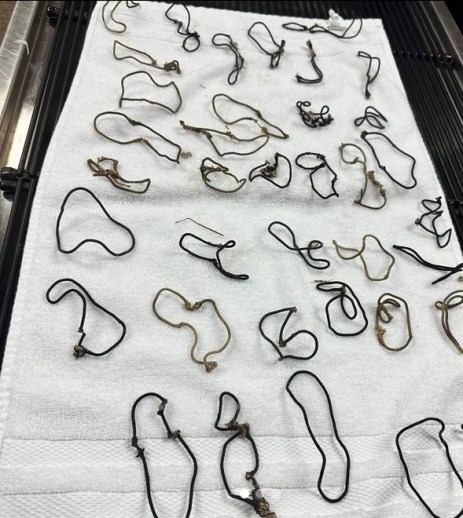
A vet performed emergency surgery on Juliet earlier this week and removed 38 hair ties.

“I’ve never seen anything like it,” said Leigh Jamison, the shelter’s associate director of veterinary care.

julietcathairties
Hair ties removed from the stomach of Juliet the cat.

Vet techs monitored Juliet closely and fed her carefully, making sure she got the nutrients she desperately needed without overwhelming her shocked system, which had suffered a buildup of fat in her liver.

They thought Juliet would pull through, but the ailing kitty took a turn for the worse on Friday and died a few hours later, the shelter announced.

“Our expert veterinarians and lifesaving team perform what we think are miracles every single day. Unfortunately, even with the best care, not every animal makes it,” staff wrote in an Instagram post. “Even though Juliet was loved and was not suffering during her last days, she did succumb to this tragic accident. We are all heartbroken.”

Pica, an eating disorder that affects humans, also occurs with cats. Defined as the consumption of items which are not food, pica can manifest in cats as a predilection for things like paper, plastic bags, rubber bands, small pieces of plastic and, as was the case with Juliette, items like hair ties that are made of fabric, wool or synthetic materials.

While there are medical reasons pica can present in felines, it’s also sometimes brought on by environmental stress, and it wouldn’t be a stretch to imagine the kind of people who would abandon their pet cats may not have been good caretakers. No one except her former caretakers know what Juliet’s been through, and they’re unlikely to come forward.

Likewise, adoption isn’t a part time, halfway or temporary thing. Adopting a cat means committing to taking care of the animal for his or her entire life. Despite the stubbornly persistent idea that cats are aloof, solitary animals who are indifferent to companionship, research studies show felines are just as sociable as dogs and form strong emotional attachments with their humans. They care deeply, but they express affection in different and less overt ways. That doesn’t mean they suffer less when they lose their homes and the people they’ve grown to love.

cute black kitten
Credit: beytlik/Pexels


Found Frozen To The Ground In Record Storm, Michigan Cat Is Recovering At Clinic

After a close brush with death during the severe winter storm over the holidays, a former stray cat is recovering and will get a forever home.

Elliot the cat was near death when Kelli Vanderlaan found him literally frozen to the concrete in the early morning hours of Dec. 26, during one of the coldest, most severe storms to sweep the US in decades.

Initially unsure whether the white and gray stray was still alive, as his eyes were frozen shut, Vanderlaan wriggled him free and took him to the Big Lake Community Animal Clinic in Muskegon, Michigan. Although barely able to move and unable to vocalize, Elliot seemed to be grateful for the car’s heat.

“You could tell that he was obviously frozen, so he needed warmth and touch and everything, I think he was pretty happy when I got him into the truck,” Vanderlaan told the local ABC affiliate, WZZM.

Elliot the Cat
Staff at Big Lake Community Animal Clinic have been nursing Elliot the Cat back to health. Credit: WZZM

Once Vanderlaan and the stray arrived at Big Lake, staff there immediately began gently raising the little guy’s temperature, wrapping him in warm blankets and giving him fluids.

“We weren’t sure what he’s been through,” said Alexis Robertson, executive director of the local Humane Society. “He’s definitely been out there for a while trying to take care of himself, just trying to survive, but it was at a critical point where he was ready to pass.”

After giving Elliot a veterinary exam, cleaning his eyes and making sure he was snug, the staff at Big Lake Community Animal Clinic monitored him closely overnight. His organs had been dangerously close to shutting down when he was brought in, and he still wasn’t out of the woods yet.

Elliot, who was named after the storm that swept the region over the holidays, has continued to improve in the days since. He’s since been able to stand on his own and has regained his appetite, the clinic’s staff wrote on Facebook.

“We are so happy to say he is doing much better and was monitored during the night,” staffers wrote. “He reaches out his paw to the vet tech that has been caring for him overnight, showing her just how happy he is that he is being helped. He still has a long way to go, but we won’t give up.”

Elliot, who was described as an “older” cat who’s been fending for himself, will come out of the ordeal with his life much improved. After surviving the storm — which plunged temperatures well into the single digits, set record lows across much of the midwest and claimed the lives of at least 56 people across the country — Elliot will be put up for adoption, and the clinic has already received inquiries from people who want to open their home to the little survivor. If his will to live and his gratitude toward his rescuers are any indication, the little guy has a lot of love to give.

“It’s the most heartfelt feeling in the world to see this cat come from basically nothing and being vocal and happy to be touched and fed, it’s just an amazing thing to watch,” Leah Wetmore, the clinic’s manager, told WZZM.

elliotcat_save
Kelli Vanderlaan was the Good Samaritan who saved Elliot’s live. Credit: WZZM

How Cats See The World

Cats see the world differently, in objective physical terms as well as psychologically.

Have you ever wondered what the world looks like to your cat?

Veterinarians, animal ophthalmologists and researchers from the University of Pennsylvania’s ophthalmology group provided insight for this article and the accompanying images, which show how scenes look to us humans and to our feline friends.

The images are striking and show the relative strengths and weaknesses of feline vision. While cats see the world in muted colors and in less acuity than typical humans, they make up for it with their astounding night vision and their ability to instantly detect motion within their visual fields.

This image shows feline night vision at work thanks to the tapetum lucidum, a layer of tissue that acts as a retroreflector, increasing the amount of light that makes it to the photoreceptors in cats’ eyes. The tapetum lucidum is best known as the reflective “lens” that makes cat eyes appear to glow in the dark:

catsview2

This image shows the trade-off compared to human vision. Cat eyes have a wider field of view, seen below, but they don’t pick up reds or greens, and their overall vision is blurry compared to average human eyesight, represented in the top image:

catsview

Night vision and extreme visual sensitivity to movement are important to cats as crepuscular hunters, allowing them to spot prey in low light conditions and to negate advantages from natural camouflage, as motion gives away the presence of prey animals.

Cats have a slightly wider visual field than people do, at approximately 200 degrees compared to the human 180 degrees, while most cats have between 20/100 and 20/200 vision. (That’s much better than Big Buddy sans glasses, whose 20/600 vision enables him to see blurry, colorful shapes and not much else. No wonder Little Buddy likes to torture his human by swiping his glasses.)

Of course, these images do not entirely account for how cats see the world, which is why I’ve created my own image. Behold a Buddy’s Eye View, showing how the world — and humans — look to him:

Downton Buddy
From Buddy the Cat’s perspective, humans are all servants, constantly standing by to attend to him.