Playland: Riding A 100-Year-Old Roller Coaster At New York’s Historic Amusement Park

New to kids and nostalgic to adults, Playland means summer for New Yorkers. PITB visits the National Historic Landmark.

“You know,” I said to my niece, rapping my knuckles against a wooden support beam of Playland’s Dragon Coaster, “they built this thing 100 years ago.”

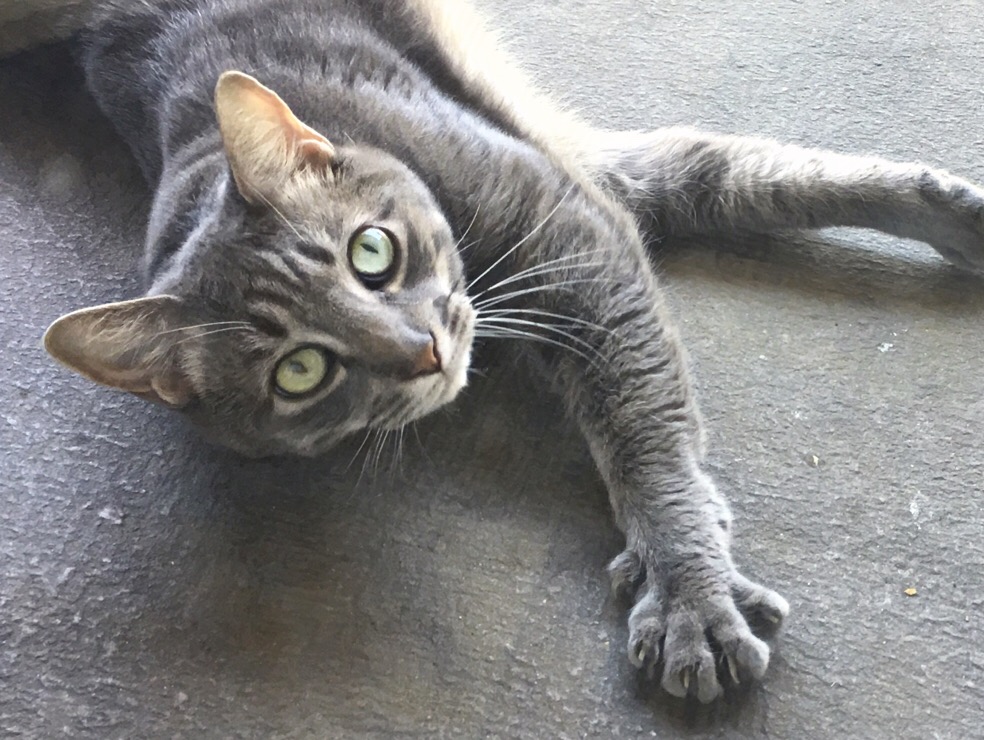
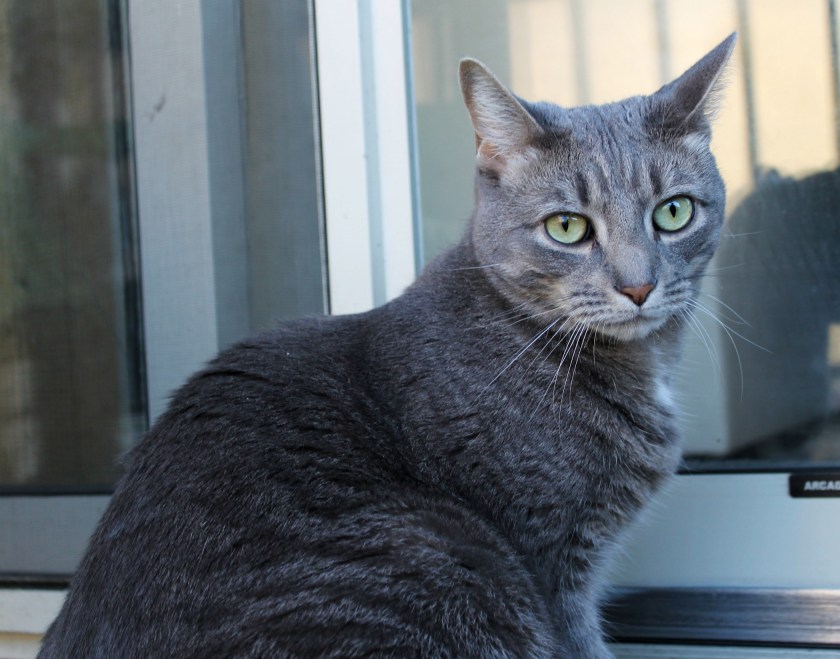
Her eyes widened. At 10 years old and already wise beyond her years, she smelled a joke at her expense by her constantly wise-cracking uncle. (I once told her and her sister that my cat had a vast collection of Pokémon cards, and that he almost certainly had the ultra-rare cards they coveted. At the time, their young minds didn’t question it and wanted to propose trades with Buddy, but now it comes up every time I tell them something absurd.)

“No it wasn’t!” my niece said as we stood in line to ride the venerable and historic wooden coaster.

My brother chimed in.

“It says it right there,” he said, pointing to a sign above the queue. “This roller coaster was built in 1929, the year the park opened.”

Playland
Playland’s ferris wheel and the manicured midway that runs the length of the park, with a giant fountain on one end and a stage for outdoor performances on the other. Credit: PITB

The Dragon Coaster is indeed almost a 100 years old, and to a 10-year-old a century is an incomprehensible amount of time. Mentioning the ride’s age almost backfired on us and we had to assure the kids the ride was safe.

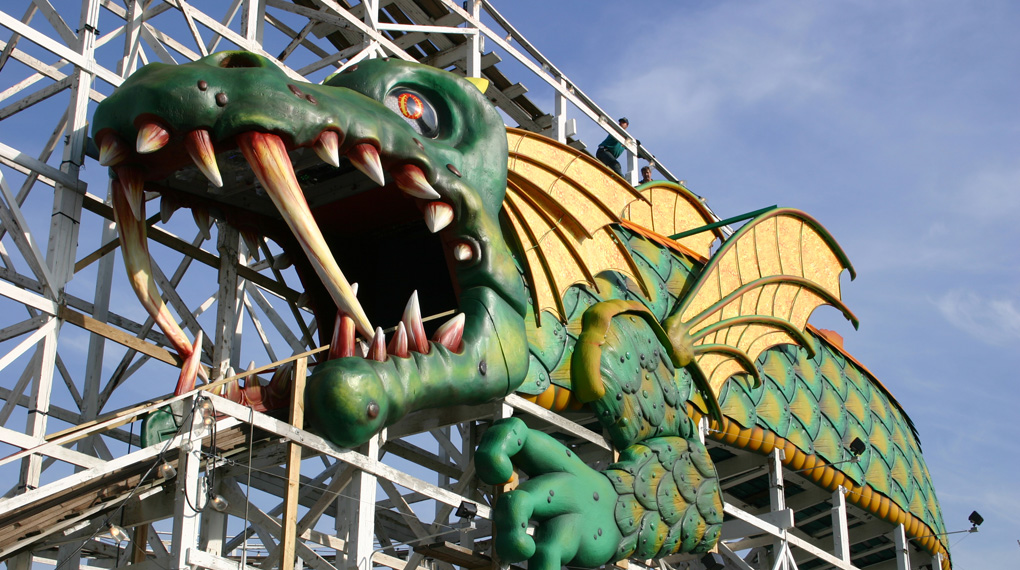
Truth be told, the Dragon Coaster doesn’t look safe. It’s all aging wooden beams, rusting rivets and peeling paint, and the coaster rattles as it allows gravity to do the bulk of the work, with an initial 80-foot drop propelling the cars over 3,400 feet of shuddering track. But it passes inspection every year and it’s a relic of a time when things were built to different standards.

The iconic coaster’s history also extends to pop culture: Tom Hanks rode the Dragon Coaster in the 1988 film, Big, as did Mariah Carey in the video for her 1995 hit Fantasy. In 1987, it was featured prominently in the psychological thriller Fatal Attraction with Glenn Close and Michael Douglas.

Tom Hanks at Rye Playland
A young Tom Hanks on Playland’s boardwalk in Big (1988). The “Zoltar” machine that grants Hanks’ wish in the movie is still in the park and has been moved to the midway.
mariahcarey
Mariah Carey riding the Dragon Coaster in the 1995 video for her hit, Fantasy. Carey returned to Playland last summer with her family over the July 4 weekend.
Dragon Coaster at Rye Playland
The Dragon Coaster’s front entrance in September of 2024. Credit: PITB

My brother and I rode the Dragon Coaster when we were kids, as did my mom and her friends in their youth. If you grew up in Westchester County, the Bronx or Manhattan, chances are that Playland was a big part of your summers.

I have vague memories of the park from early childhood, fond memories of screaming on rides like the Mind Scrambler in my teenage years, fresher memories of taking my little charges there when I was a summer camp counselor, and new memories formed annually as I bring my brother’s kids.

Taking the kids to the amusement park was one of the things I most looked forward to when I became an uncle, and they’re at the age now where they really love it. Visiting the park brought on waves of nostalgia (“Good Vibrations” by Marky Marky and the Funky Bunch blasted from the PA when we first arrived), the happiness of seeing the kids’ eyes light up with joy, and the realization that even though I get dizzy and my stomach doesn’t appreciate rapid changes in gravity and direction anymore, some rides are still a hell of a lot of fun as an adult.

The Carousel at Playland
The medium-size version of three carousels at Playland in Rye, NY, September 2024. Credit: PITB.

We returned this year to find new rides, refurbished shops and lots of construction. Playland is in the middle of yet another refresh, this time to the tune of $150 million, leaving some rides and areas of the park dark to visitors.

Playland was built on 280 acres of prime waterfront real estate on the Long Island Sound and it’s very much a product of its time. Although it has seen its share of retrofits and refurbishment over almost century of existence, there’s no hiding the fact that it was constructed in the 1920s.

The structures — which include an entrance plaza, an ice casino and arcade, a pool, a beachfront boardwalk and a central tower — were built in an Art Deco style, with a consistent limestone, orange and emerald green color scheme.

As a kid my favorite ride was the Mind Scrambler, a blackout ride variation on the classic Scrambler housed within a dome. I remember waiting on line with my friends, hoping we’d get a good song for the ride, which was adorned with lots of neon and blacklights for maximum funkiness and disorientation.

Alas, messing around on a ride like that doesn’t bring good results. In a sequence of events that’s still difficult to believe, a seven-year-old girl was killed when she was thrown from the Mind Scrambler in 2004.

Playland's Mind Scrambler
The exterior Mind Scrambler shortly before the darkride was dismantled following a series of deaths.

Three summers later, park management promoted a 21-year-old Playland employee who was working the night the girl was killed, making her the ride’s manager. She died that summer on the same ride. An investigation found she was kneeling backwards in her seat when she was thrown from the Scrambler just 20 seconds in.

The woman’s death prompted the park’s management to shut the ride down, a decision that was later made permanent despite the fact that “user error” was to blame.

Playland during the Depression
Riders on the Dragon Coaster during the Great Depression. Credit: Rye Historical Society
Playland poster
A poster from the 1930s showing a bird’s eye view of Playland in Rye, NY. Note the beaches and the boardwalk below the park and the adjacent suburban neighborhood. Very little about the park’s layout or the neighborhood has changed over the years. Credit: Rye Historical Society

A close second favorite was the Music Express, a straightforward moderate speed ride that was also known for pumping out loud pop hits. I have fond memories of riding the Music Express to everything from the Spin Doctors’ Two Princes and Technotronics’ Move This, to Blues Traveler’s Run Around and Snow’s ludicrous summer hit, Informer.

The Music Express was out of commission last summer, but this time it was back in action.

“We’ve gotta ride this!” I told my nieces. Just when I was thinking it was getting a little intense, it slowed down. That wasn’t so bad, I thought. Then it spun up again, faster than before, this time spinning backwards. I felt like I’d downed a six pack of beer in a half hour when I stumbled off the damn thing.

musicexpress
The Music Express at Rye Playland.

I wisely limited myself to less strenuous rides for the rest of the night, including the bumper cars, Ferris wheel and the Zombie Castle. At seven years old, my younger niece isn’t big enough yet to ride some of the attractions by herself, and that’s when the Funcle steps in. Thankfully she’d had her fill of stomach-churners too.

Above: A classic swing ride at rest, left, and mid-sequence as it twirls riders through the air. Credit: PITB

Playland became a National Historic Landmark in 1987, and is unique among amusement parks in the US — and possibly the world — in that it’s government-owned. That’s because the people who live in the area, a wealthy waterfront enclave, were worried about growing crowds, traffic and “unsavory” people. In the 1920s at the urging of the community, Westchester County purchased the land, folded several smaller waterfront operations into a single park, and began drafting plans for a larger destination in the Art Deco style popular at the time.

While Art Deco is typically associated with structures like the Empire State Building and the Chrysler Building in Manhattan, as well as the Chicago Board of Trade skyscraper, the jazz-age aesthetic is another feature that makes Playland  so unique.

Zombie Castle at Playland
The Zombie Castle was built in the 1930s with a different theme, then was refurbished in the late 1960s, perhaps in response to the success of George Romero’s Night of the Living Dead, which was released in 1968. This image shows the Zombie Castle on September 22, 2024. Credit: PITB

Remarkably, many of the attractions are as old as the park itself, including the aforementioned Dragon Coaster, The Whip, and the original carousel. Several of the older rides were designed and manufactured by engineer W.F. Mengels, the “Wizard of Coney Island” who was famous for designing many of that iconic park’s rides.

Taking the kids to Legoland in New York earlier this summer felt like a soulless experience, like paying to sit through a four-hour commercial for eponymous toys. Every ride was tied to a Lego intellectual property, every note of the piped-in music a corporate composition, every ride forcing you to exit via attached gift shops where $300 play sets beckoned to the children.

Even the “waterpark” had a corporate regimen to it: you’re required to book “appointments” ahead of time and get precisely 20 minutes to cool off under sprinklers on a Lego pirate-themed water playground, complete with Lego palm trees and Lego ships while the next group queues in the afternoon sun and watches, willing time to go faster.

Playland may not be as polished, but the experience feels more honest, and there’s no doubt the kids had more fun here. If I were a betting man, I’d wager Playland will still be there when they have kids of their own, while Legoland will be consigned to the dustbin of themed parks that don’t give you a reason to come back.

The Whip at Coney Island
Coney Island’s version of The Whip designed by W.F. Mengels. Undated but likely in the 1910s.

Day One: Leaping Away From Love

Buddy inadvertently leaves the comforts and love of his home and quickly finds himself in deep trouble.

Buddy licked his lips, belched and rolled over, sighing as he felt the afternoon sun’s warmth on his belly.

It was his favorite time of day and he was enjoying fresh air on the balcony, sitting in his favorite chair and surveying the world below like a little king. If he’d had a belt, he’d loosen it after scarfing down every last morsel of turkey and licking his bowl clean.

He waved his tail, thinking of how he’d pass the time later. Perhaps he would have a nap, then demand that Big Buddy take out the laser pointer. With a little luck, he might be given catnip as well, otherwise he’d have to meow relentlessly for it. Failing that, there was a new plastic bottle ring he’d stashed away for later play, and if Big Buddy were to fall asleep while watching baseball, Buddy could entertain himself by repeatedly waking his human via ambush. That was always delightful.

A squeak interrupted his thoughts, too high for humans to pick up but still well within his own hearing range. He sat up and cocked his head forward as his ears swiveled, trying to pinpoint where the noise had come from.

Sudden movement on his peripheral vision snapped his eyes to the target: Down below, among the cars and trees, a tiny animal scurried from beneath the cover of one car to another.

Buddy wasn’t sure what it was, exactly, but he knew he wanted to catch it.

He hopped off his throne and crouched low, poking his head through the balcony railing as he tracked the rodent.

The light box inside pumped out its usual weekday sounds: The crack of a ball against wood, the cheers of tens of thousands of humans, and Big Buddy alternately celebrating or sighing in frustration.

For all their supposed seriousness, humans were strangely invested in watching other humans play with toys.

Buddy caught movement beneath the rear bumper of a squat SUV. Two rodential faces peaked out from cover, chittering in human-inaudible frequencies.

His tail thrashed against the floor as he watched the diminutive trespassers brazenly moving about on the edge of his territory. They were mocking him, he was sure of it! He would have his revenge by ruthlessly hunting each of them down and jumping around joyfully on his hind legs, which he always did after he won at hunting games with Buddy the Larger.

The rodential duo took off, abandoning the cover of the SUV for the lower-hanging body and bumper of an old Nissan Skyline.

Bud’s tail thumped furiously. The twitchy little interlopers were getting ready to run again.

Buddy leapt from the balcony before he was consciously aware of what he was doing, meowing an “Oh poop!” as he dropped the 14 feet to the ground. He hit the ground hard but shared the impact on all four limbs. He’d be sore later, but the thought was gone as fast as it came, replaced by the primal instinct that had caused him to jump in the first place: The hunt.

His targets were now well aware of his presence, chittering furiously at each other between cars. Bud stalked the more plump of the two, crouching low so he could track its movement.

A distant subwoofer thumped the air, sending vibrations through the ground to his paw pads. The pudgy rodent took off, gunning for the fence at the far end of the lot and the safety of the trees beyond.

Driven entirely by instinct, Bud gave chase without realizing a car had turned the corner and was pulling into the lot, fast.

“Mrrrrrrooowww!” Buddy exclaimed, dashing away from the vehicle.

It was still moving, still coming toward him with that awful, furious thump from its speakers. Buddy ran and ran until he could run no more: out of the lot, away from his building, up the street, past strange houses emanating strange smells and into a park, where he hoped the car couldn’t chase him.

He collapsed on the grass and sprawled out, chest heaving. That was too close, he thought.

Now he had another problem, one he’d failed to consider when he jumped from the balcony: How would he get back inside? He couldn’t just walk into the apartment building. You needed a human to open the front door, then get past a second door that only opened via some sort of human sorcery that involved waving a little piece of plastic in front of the handle. He knew that much from his night walks with Big Buddy, when the stimulation was almost too much to bear — the smell-taste of flowers at nose level, the spiral cascade of water from the sprinklers, the far-off hum of the deathway, where thousands of cars rumbled down endless lanes of hard human-made ground.

If by luck he was able to slip inside as a human was entering his building, he’d have to cross the lobby, walk down the hallway and finally reach the door to his realm and domicile. Could he reach the door bell? If he meowed loud enough, would Big Bud hear him?

Buddy the Cat

“What do we have here?” Buddy had been so lost in his thoughts and worries that he hadn’t noticed the human walk right up to him. He suddenly felt very vulnerable and rolled onto his stomach.

It was a human boy. He wore a dark baseball cap and a wide grin that didn’t reach his eyes.

“Easy,” he said, reaching out.

Buddy hissed, arching his back. The boy took another step forward, hand still extended. Buddy retreated a few steps, cautiously keeping his eyes on the boy as the fur on his tail spiked outward.

“Here, kitty kitty,” the boy said mockingly.

Buddy took another step away, then felt a pair of human hands clamp around his belly.

“Gotcha!” said another human boy, who had approached from behind as his friend served as a distraction.

Buddy squirmed, lashing out with his claws.

“Hey!” the second boy said. “The little fucker scratched me!”

“Bad kitty!” the first boy said, slapping Buddy on the top of his head. “Ohohoho! He’s pissed!”

The boys laughed as Buddy struggled.

“Come on,” the first boy said. “There’s a pair of gloves and some beach towels in my mom’s car. We can wrap the little shit up in the towel.”

“Where we going, Spencer?” the second boy said, holding the still-struggling Buddy tight as they walked toward the car.

“We could take him beneath the railroad bridge,” Spencer said as he opened the trunk. “I’ve got half a bottle of lighter fluid. We could have ourselves a little barbecue.”

The boys wrapped Buddy in a towel, muffling their laughter. He heard car doors closing and a crystalline human voice singing through speakers. Vibrations felt through his captor’s hands told him they were moving.

“Careful,” Spencer said after they had parked. “Just hold him, don’t be such a little bitch, dude. He’s not gonna hurt you.”

Buddy didn’t understand what they were planning to do with him, but he instinctively knew his life was in danger. He went slack.

“S’okay,” Spencer’s friend said. “He’s not struggling anymore. I don’t think he has any fight left.”

“Oh, he will,” Spencer said. He pushed back the towel, uncovering Buddy’s face.

“We’re gonna have some fun with you, you little shit,” Spencer said, leaning in close. “We’re gonna…”

Spencer howled as Buddy chomped on his lip with all his might.

Spencer’s shocked friend loosened his grip, and for a second or two Buddy swung from the shrieking teenager’s face, the latter’s panicked breath radiating in hyperventilating blasts. His smirk had evaporated, replaced by flush cheeks and a mask of pain.

Buddy released Spencer’s lip, tasting blood, and ran for his life. As he disappeared into the trees he could hear Spencer sobbing hysterically.

When he was sure the boys weren’t following him, he crossed a human yard in a blur and scurried beneath a short wooden staircase leading to a porch. A lawnmower droned in a yard nearby. In a neighboring basement, someone pounded out the opening kicks and snares of a song about a prince buying flowers.

“And if you want to call me baby…” a male human crooned over the drums and guitar, “just go ahead now!”

As Bud’s breathing slowed and the fear chemicals subsided, a new kind of dread filled the vacuum. Neither his eyes nor his ears nor his nose could tell him where he was.