Tokyo’s ‘Waving Cat’ Temple, Gōtoku-ji, Has Run Out Of Cats

The world-famous cat shrine has experienced a surge in tourism, leaving it bereft of the familiar statues that are inspired by the legend of a friendly cat.

Gōtoku-ji temple has a unique problem.

The complex, where legend says a friendly waving cat led a Japanese feudal lord and his men to warmth and safety ahead of a brutal storm, has seen an influx of travelers since Japan relaxed its COVID-era restrictions and tourists have returned.

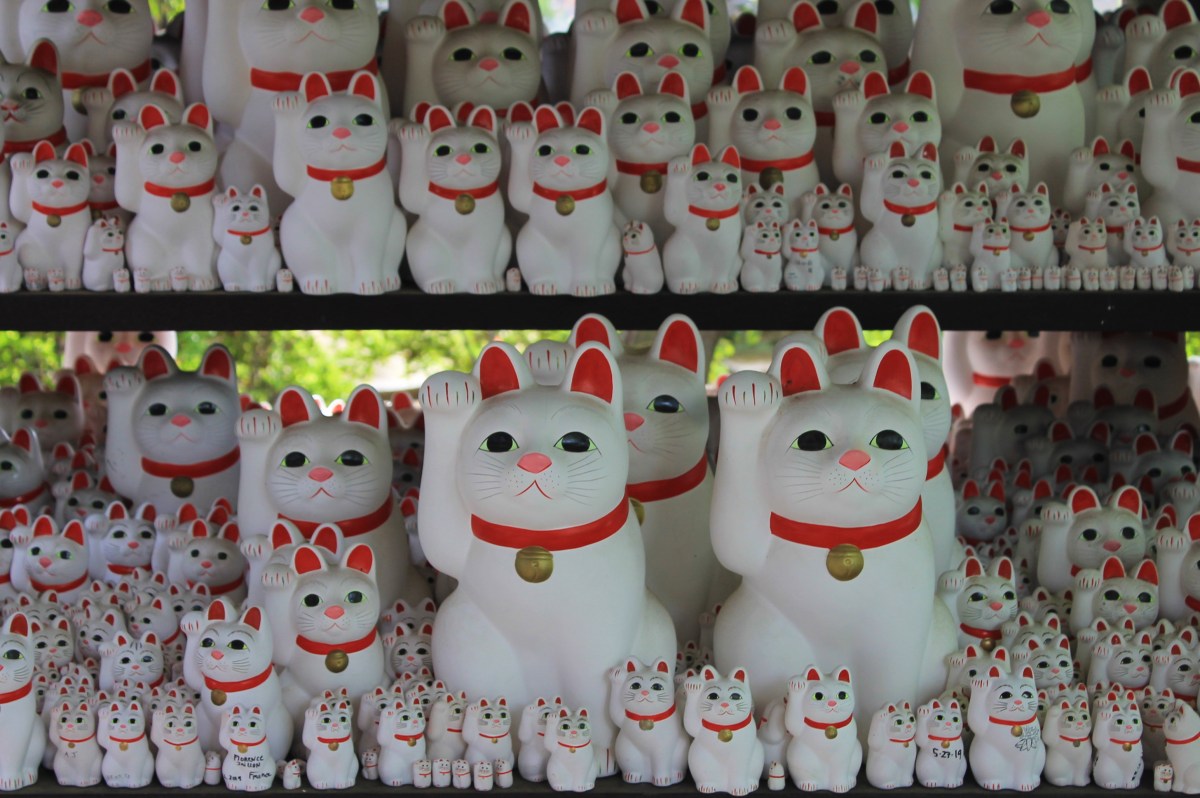
Now Gōtoku-ji can’t keep up with the demand for maneki neko, the ubiquitous “beckoning cat” statues that visitors purchase at the shrine’s tiny gift shop, the Washington Post says in a new report. People who come to the temple write prayers on the statues and place them in a perpetually-expanding section of the shrine grounds.

The cats are said to bring good luck, with variations in their designs and colors: red for health, pink for love, gold for success and so on. White maneki neko, which are sold at the shrine, are the original and “all purpose” prayer cats. The shrine is Buddhist, but practitioners of Shinto, Jainism, Christianity and other religions write prayers on the little cats, hoping they’ll be heard by whichever version of God they believe in.

The manufacturer, which also makes statues for the Lunar New Year and other festivities, can’t keep up with the demand. Now staff at Gōtoku-ji have put up signs apologizing to visitors. They say they don’t know when they’ll get more maneki neko.

When I visited in 2019 there were many thousands of the iconic statues, but the photos from Monday’s WaPo story show thousands more placed on recently-built shelves. Temple staff have begun asking visitors to take their maneki neko home with them instead of leaving them at Gōtoku-ji. They clean, shelve and organize the thousands of statues currently there and won’t dispose of them because they represent the prayers of visitors, but the volume has become unmanageable.
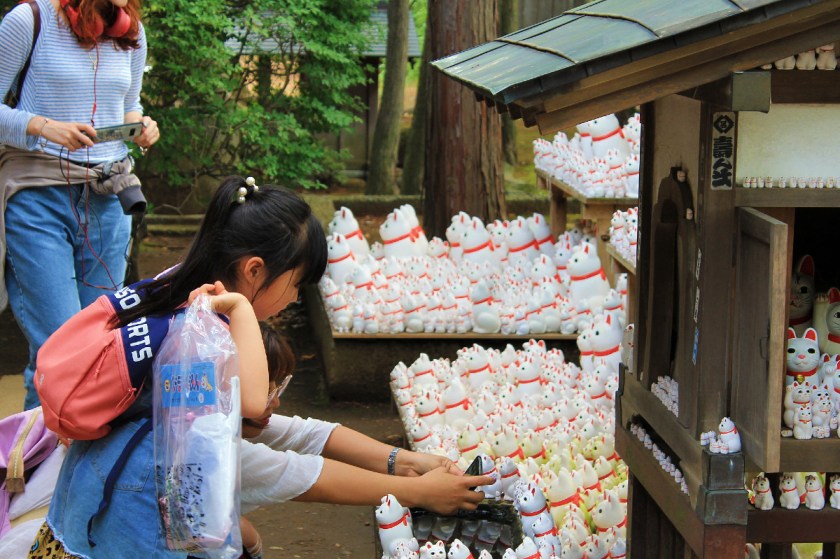
Maneki Neko at Setagaya Tokyo
Visitors leave their own maneki neko statues at the shrine, often with personal messages asking for different blessings and written in black marker on the back of the statues. Credit: Pain In The Bud

Despite Gōtoku-ji’s rise in popularity, I still recommend checking it out, especially for cat lovers who are headed to Japan. While most of Tokyo’s most famous shrines are located in the city proper, with modern skyscrapers looming above temples that date to pre-modern Japan — never letting you forget you’re in a bustling metropolis — Gōtoku-ji is in Setagaya, a mostly-residential ward.

The temple grounds are surrounded by homes and they’re quiet in a way that others aren’t. The shrine is well-manicured and beautiful, dotted with statuary as well as centuries-old wooden temple structures.

When I was there a smiling elderly docent walked the grounds carrying a photo album that showed the temple and its structures over the years. With my sister-in-law’s rudimentary Japanese we were able to get a bit around the language barrier, and he told me one of the most striking buildings, a three-story tiered wooden tower, was home to one of the resident cats who liked to sleep on its second floor.

I wasn’t able to catch a glimpse of the little one but I imagine Gōtoku-ji is one of the best places on the planet a stray cat could call home. Like the people of Turkey, respect for cats is ingrained in Japanese culture and temple cats in particular are treated extremely well. Some even have their own Instagram pages and fan clubs, becoming tourist draws in their own right.

Maneki Neko Setagaya Tokyo
Maneki Neko statues at Setagaya shrine. Credit: PITB

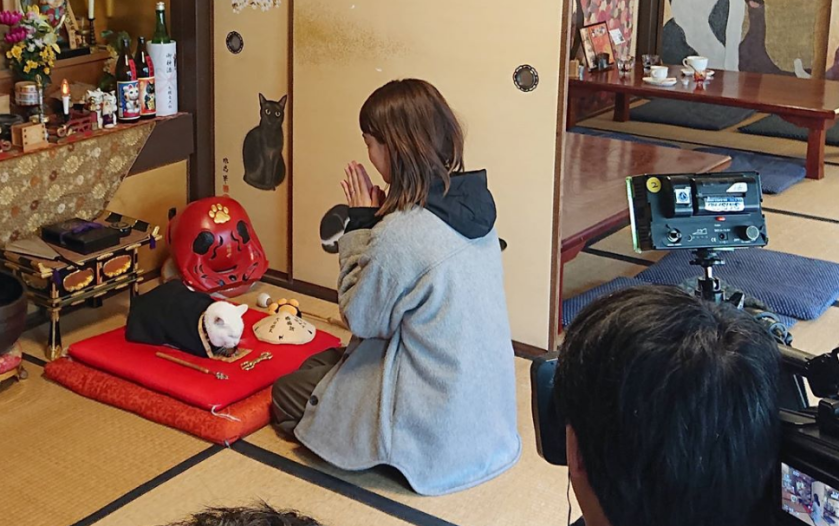
Cats Are The Monks At This Japanese Temple

Nyan Nyan Ji translates to “meow meow shrine.”

One of the highlights of my trip to Japan last summer was Gotokuji Temple, the famous “cat shrine” in Tokyo’s Setagaya suburb.

Gotokuji is home to thousands of statues of maneki-neko, or “beckoning cat,” an important and ubiquitous image in Japan: Statues of maneki-neko adorn shops and virtually every public place in Tokyo, but Gotokuji is where the legend of the beckoning cat was born. Visitors write prayers on the statues and ask for good luck for a variety of venture, from opening new businesses to getting married.

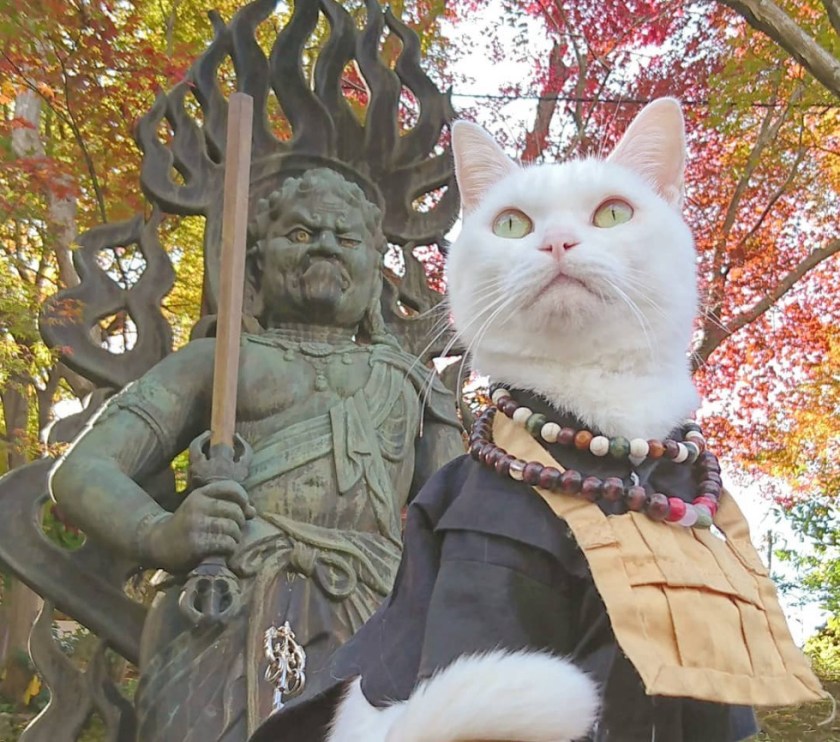
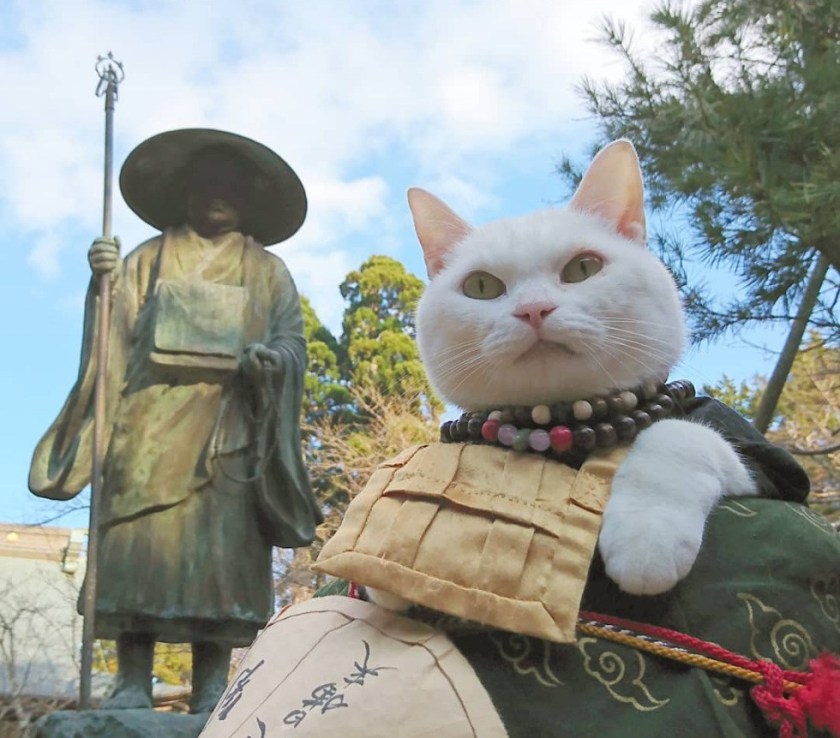
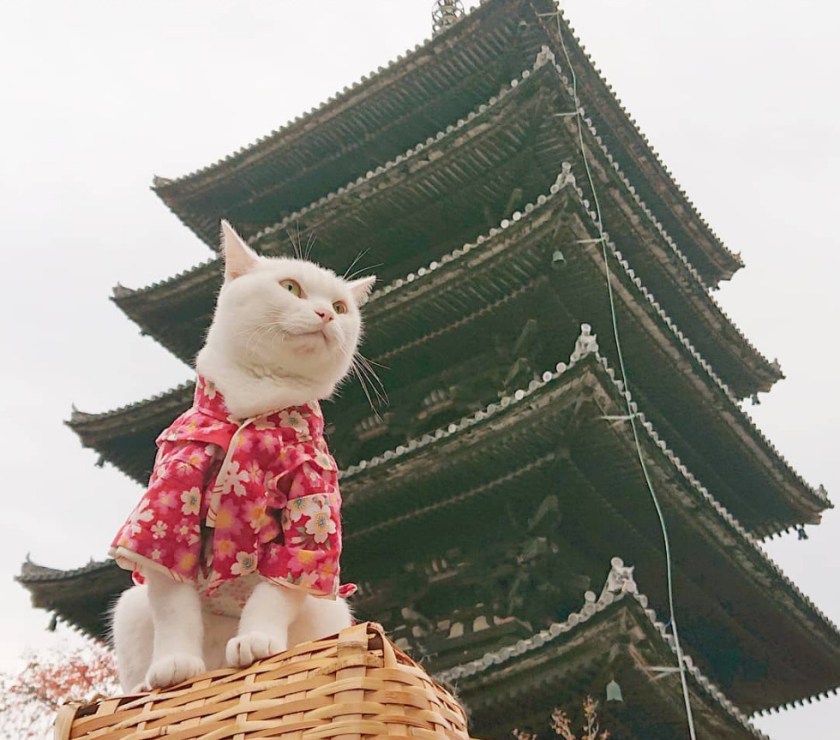
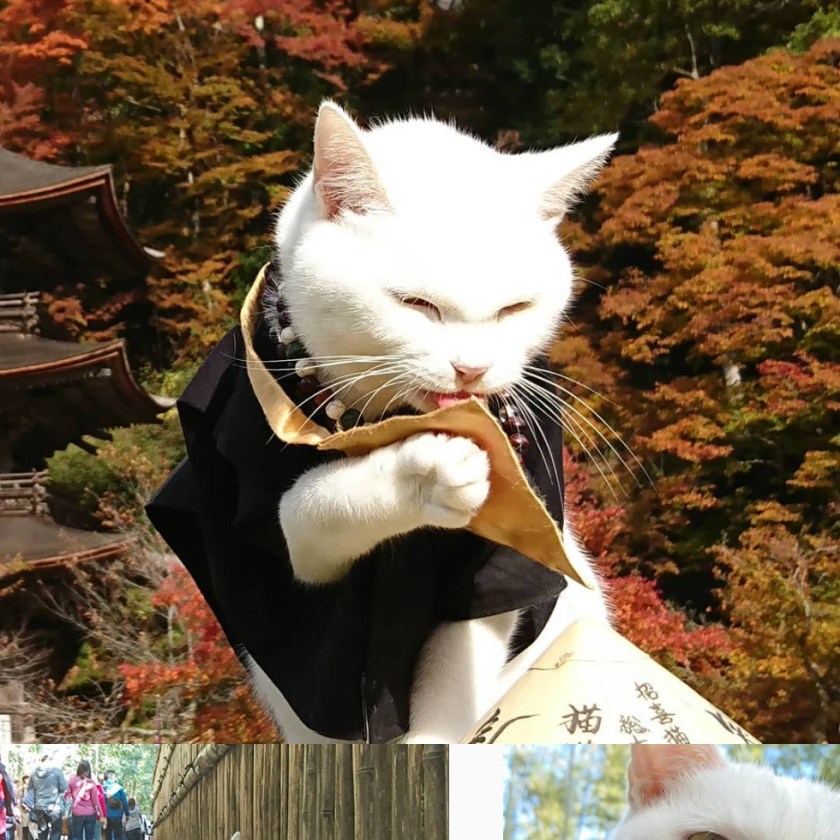
There is, however, only one current feline resident at Gotokuji, while Kyoto’s Nyan Nyan Ji — literally “meow meow shrine” — is populated exclusively by feline “monks,” who wear monkly garb and take their duties — especially napping, er, meditating — very seriously.

The most recognizable of them is Koyuki, the chief cat priestess at Nyan Nyan Ji.

Here are some photos, all courtesy of the temple’s Instagram, showing what life is like for Koyuki and her fellow priests:

Screenshot_2020-08-12 ねこ地蔵とおる ( nekojizo) is on Instagram(11)

Screenshot_2020-08-12 ねこ地蔵とおる ( nekojizo) is on Instagram(2)
“This is how it’s supposed to be, humans: You kneeling before us. Those ancient Egyptians had it right.”
Screenshot_2020-08-12 ねこ地蔵とおる ( nekojizo) is on Instagram(5)
“I can call upon powerful minions to smite you whenever I please.”

Screenshot_2020-08-12 ねこ地蔵とおる ( nekojizo) is on Instagram(10)

Screenshot_2020-08-12 ねこ地蔵とおる ( nekojizo) is on Instagram(9)
“Tiny humans are permitted to touch my holy personage.”
Screenshot_2020-08-12 ねこ地蔵とおる ( nekojizo) is on Instagram(4)
“And here is the nursery, where it’s currently reading time for our kittens…”
Screenshot_2020-08-12 ねこ地蔵とおる ( nekojizo) is on Instagram(3)
“Walk with me on the path to deliciousness…”
Screenshot_2020-08-12 ねこ地蔵とおる ( nekojizo) is on Instagram(8)
“Read the sign! We’re not open until I says so. Now if you please, I have napping to do.”

Screenshot_2020-08-12 ねこ地蔵とおる ( nekojizo) is on Instagram(7)
Screenshot_2020-08-12 ねこ地蔵とおる ( nekojizo) is on Instagram(13)
Screenshot_2020-08-12 ねこ地蔵とおる ( nekojizo) is on Instagram(12)
Screenshot_2020-08-12 ねこ地蔵とおる ( nekojizo) is on Instagram(4)


Mt. Takao: Snow Monkeys and Shrines

About an hour from the heart of Tokyo, Mt. Takao offers shrines, snow monkeys and hiking paths.

I arrived at Mt. Takao’s monkey park just in time to watch an exciting part of the day for the troop: lunch.

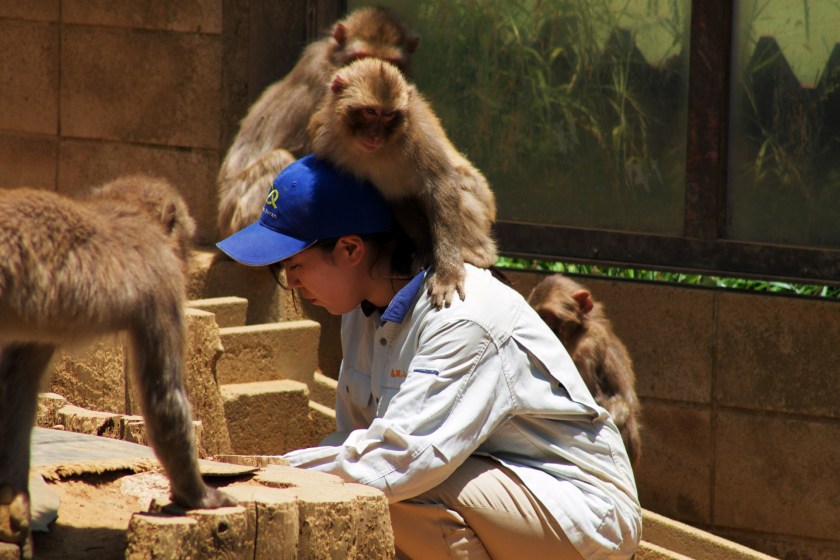
One of the keepers entered the exhibit with a bucket of seeds, and this little guy decided he wanted a ride:

Mt. Takao snow monkey rides a keeper
A juvenile snow monkey at Japan’s Mt. Takao hops on a keeper’s shoulder.

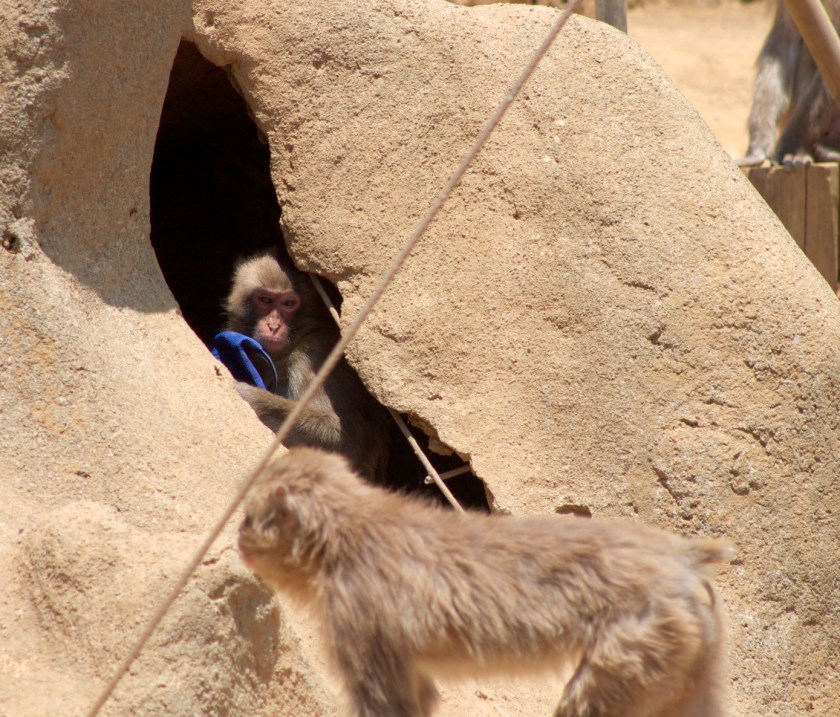
After a few minutes of snatching up seeds, the little monkey decided he liked the keeper’s hat, so he helped himself to it:

My. Takao snow monkey steals hat
A young snow monkey hides from one of his keepers after running off with her hat.

The keeper couldn’t get the monkey to give up the hat, so she called in reinforcements. For the next few minutes, two keepers tried to grab a hat from one monkey hiding in a den with five exits.

It was like wack-a-mole as his little face kept popping out of the various holes only to beat a hasty retreat and try for another when one of the keepers spotted him.

Eventually they did get the hat back after the prankster grew bored.

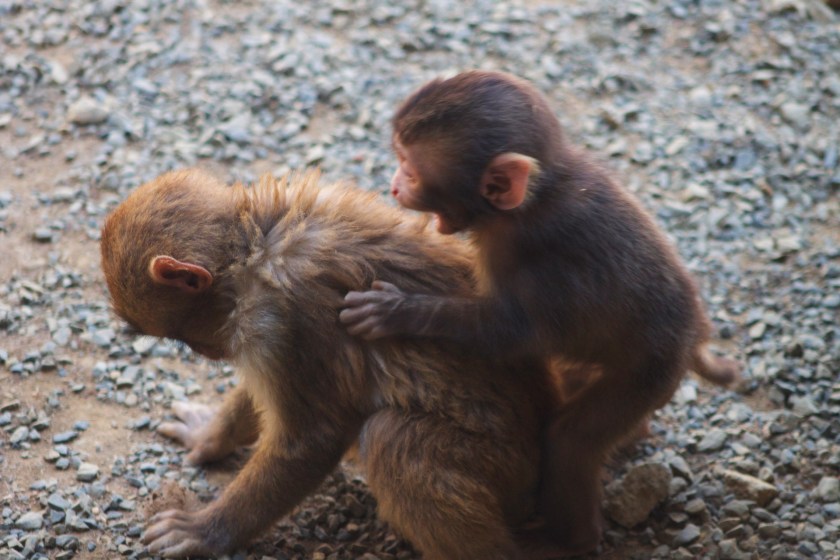
Snow monkey baby and older sibling
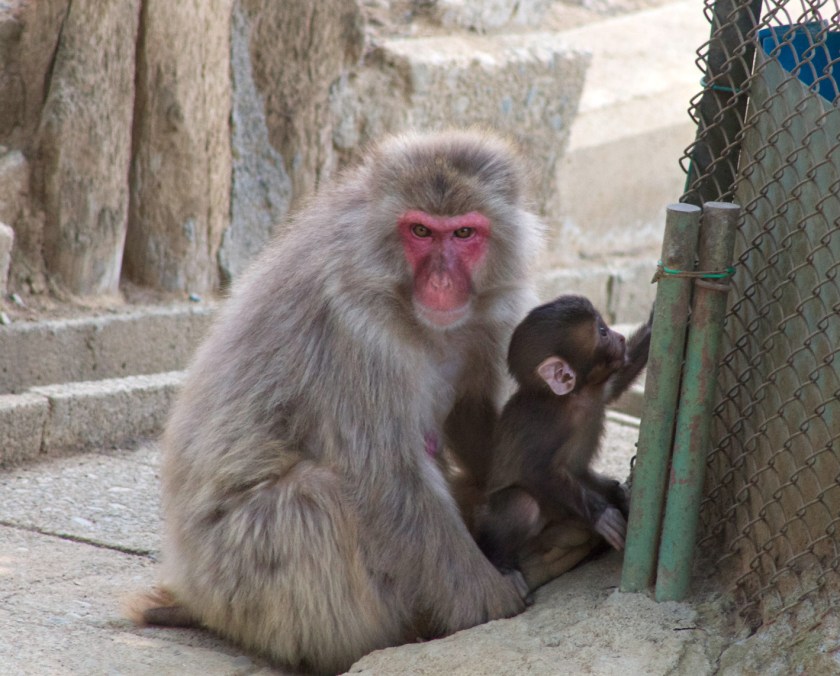
A weeks-old snow monkey baby wants to play with her older sibling, who’s picking seeds off the ground.

Snow monkeys are macaques, just like rhesus monkeys, bonnets and long-tails. What makes them unique is the fact that they are the northern-most, coldest-dwelling non-human primates on the planet.

No other monkey or ape can tolerate the extreme cold like Japanese macaques. Most people have seen images of them in snowy Nagano, where they bathe in hot springs during the deep chill and sleep in tightly-packed “group hugs” to share body heat.

Japanese macaques live in matriarchal societies. Each troop is headed by an alpha and a matriarch. Troops have strict hierarchies, and rank is matrilineal — a monkey’s standing in the troop depends on who his or her mother is.

Females stay in their maternal troops for life, while males are driven out by the alpha and his lieutenants on the cusp of adulthood, usually around six or seven years old.

This has the benefit of removing potential challengers to the throne as well as preventing inbreeding. The ousted males will spend their next few years trying to prove themselves to new troops, or decide to start their own.

I spotted the group’s alpha in the most well-shaded corner of the enclosure, attended to by three lesser-ranked monkeys who were grooming his fur. Grooming is a big deal in macaque society — it’s one of their primary social activities, where relationships are forged and problems smoothed out.

It pays to be king: The alpha always eats first, has first claim to choice spots and first crack at propagating his DNA.

Also present were two nursing moms with infants. Macaques, especially Japanese and rhesus monkeys, are extraordinarily dedicated mothers.

Japanese macaques mom and her baby
A snow monkey mom encourages her baby to take a few steps.

Babies spend almost the entirety of their first six to eight months of life clinging to their mothers by clutching their fur. As the babies become more ambulatory, their mothers gently nudge them to crawl, to take their first steps or climb their first obstacle.

Upon success, the babies will hop back into their mothers’ arms. Life continues that way for several more months until the babies are about a year old and start to venture further from their moms. They continue to nurse for up to two years.

Japanese macaque and baby
A patient mother encourages her weeks-old baby to climb.

After the impromptu monkey show, I met up with my brother and we made our way up mountain toward several shrine complexes and temples.

Mt. Takao, Tokyo, Japan
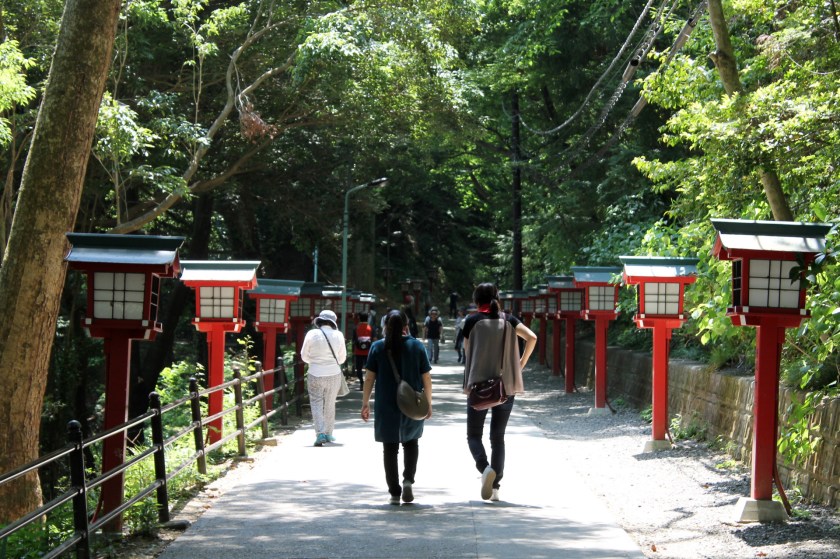
Visitors make their way toward a shrine on Mt. Takao.

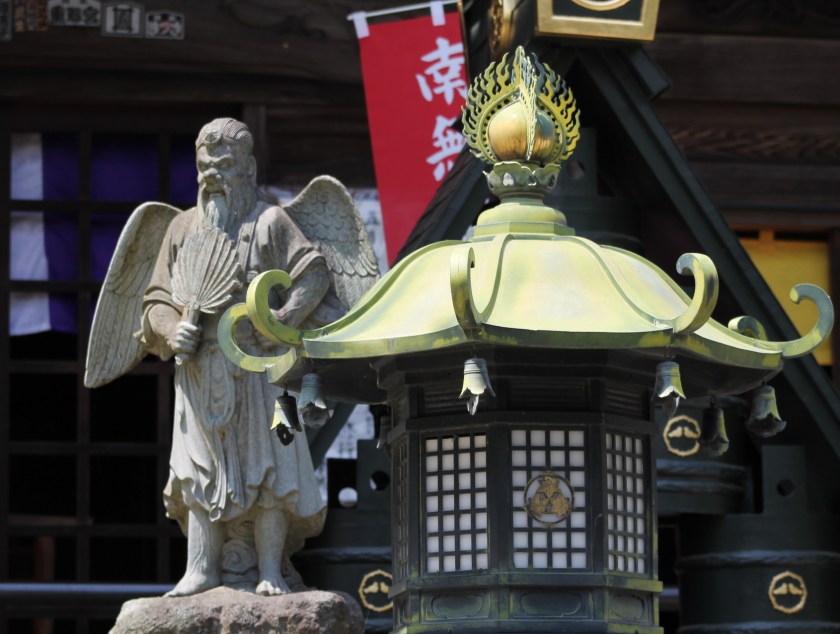
Mt. Takao tops out at 1,965-ft, and the ascent to its peak is peppered with mixed Buddhist-Shinto shrines. They’re the real deal, with centuries-old woodwork and artifacts that date back even further.

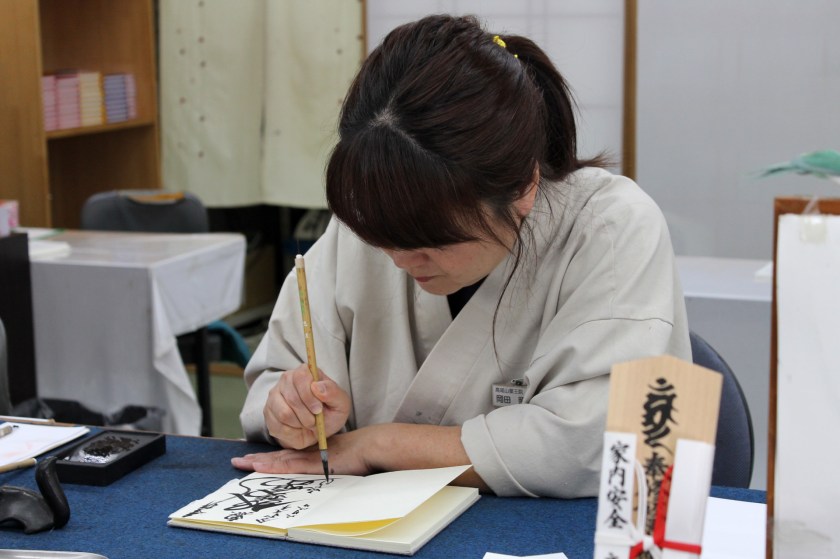
Each shrine in the country has its own unique stamps and calligraphic symbols. Visitors can buy blank books and collect stamps and calligraphy from each shrine they visit.

In this photo, a woman paints calligraphy onto a blank page with precise brush strokes:

26939D8B-0061-4AD5-8F5E-A799F74E7531

Further uphill are the temples:

Woman in prayer
The shrines and temples aren’t just part of history, they’re sites of religious importance.
Buddha statues
Statues of Buddha on tall plinths line a path adjacent to a medium-size temple

3985F1B9-1B80-44AB-9867-016B825F5AC5

646B2D88-6C6E-4C15-BF2D-06F12ADC4534

00CCC686-B77D-4185-809B-48330BC1CD0E