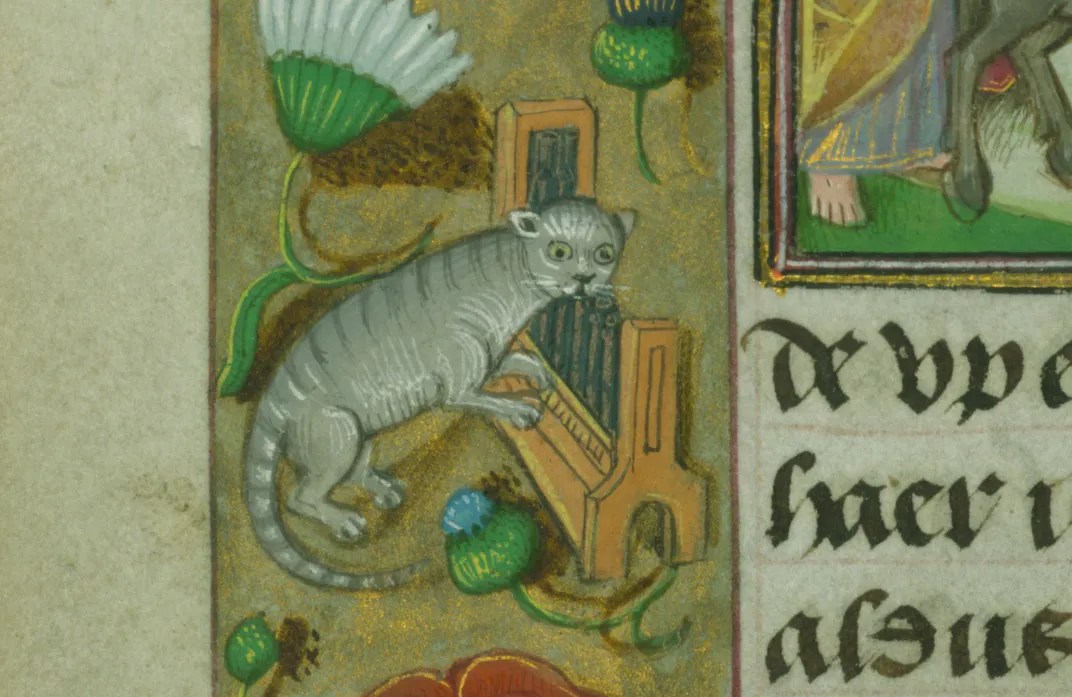
It turns out cats have been adding their special sauce to our communications for as long as written language has been a thing.
Illuminated manuscripts date back long before the printing press, and their manufacture was arduous.
Literacy itself was rare in the Dark Ages and usually only the province of educated nobility and the professionally religious. Most people had no hope of learning to read, so the monks charged with copying religious texts were already practitioners of a rare skill for their time.
They weren’t just writing either. They carefully illustrated each page with drawings, cartouches and other decorative touches, and the text itself was a form of art in its calligraphic symmetry, designed to be beautiful as well as legible.
It took thousands of hours to complete a manuscript. There was no whiteout and no do-overs: a mistake meant the page had to be scrapped even if it represented a week’s worth of work.
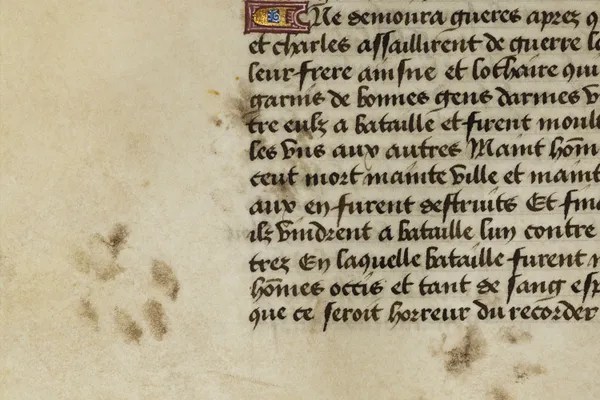
So when a Flemish scribe finished a page of his manuscript and set it aside, he thought he was in the clear — until a cat came along and left its own signature in the form of paw prints.
Three of them, in fact, representing one and a half kitty strides. Two of the feline’s little feet found white space, but another landed right on top of the meticulously rendered text.
The feline-marked parchment in all its glory.
It kind of puts keyboard cats in context, doesn’t it? Our four legged friends may occasionally ruin our drafts or emails — or in my case wreck a music recording session with a discordant keyboard solo by walking across a synthesizer at an inopportune time — but at least they don’t cost us dozens of hours of work.
The 500-year-old, kitty-marked manuscript is now the centerpiece of “Paws On Parchment,” a new exhibit at Baltimore’s Walters Art Museum.
Click here for more details from the museum, which is open Tuesday through Saturday, with late hours on Thursday evenings. Admission is free.
And if you ever take up calligraphy as a hobby, keep your work hidden from your feline overlords!
In the era of Amazon, America’s independent bookstores survive by offering things the online giant can’t.
Like everything else in the realm of print media, bookstores have been having a rough go of it the last decade or two.
Waldenbooks, Crown Books and Borders no longer exist, with the latter chain shuttering its last 400 stores in 2011. Barnes and Noble is the last surviving book chain thanks to an aggressive strategy of expanding their cafe and lounge space, encouraging shoppers to hang out while they sample books and drink coffee.
There are still some 14,000 bookstores in the US, depending on how some hybrid businesses are categorized, and independent booksellers now make up the majority of real-world retail while the giant that is Amazon looms.
The key to survival is offering things Amazon can’t. Some distinguish themselves by catering to specific customers, like fans of mystery or science fiction, offering rare and signed volumes alongside their regular stock. Some pursue a Barnes and Noble-like strategy, leaning heavily into the hybrid coffee shop model. And some become community spaces for book signings and poetry nights.
Others lure customers inside — and back after they’ve already visited — with pets.
In a new story, the New York Times highlights independent book shops around the country that have dogs, lizards, turtles, rabbits, and of course, cats.
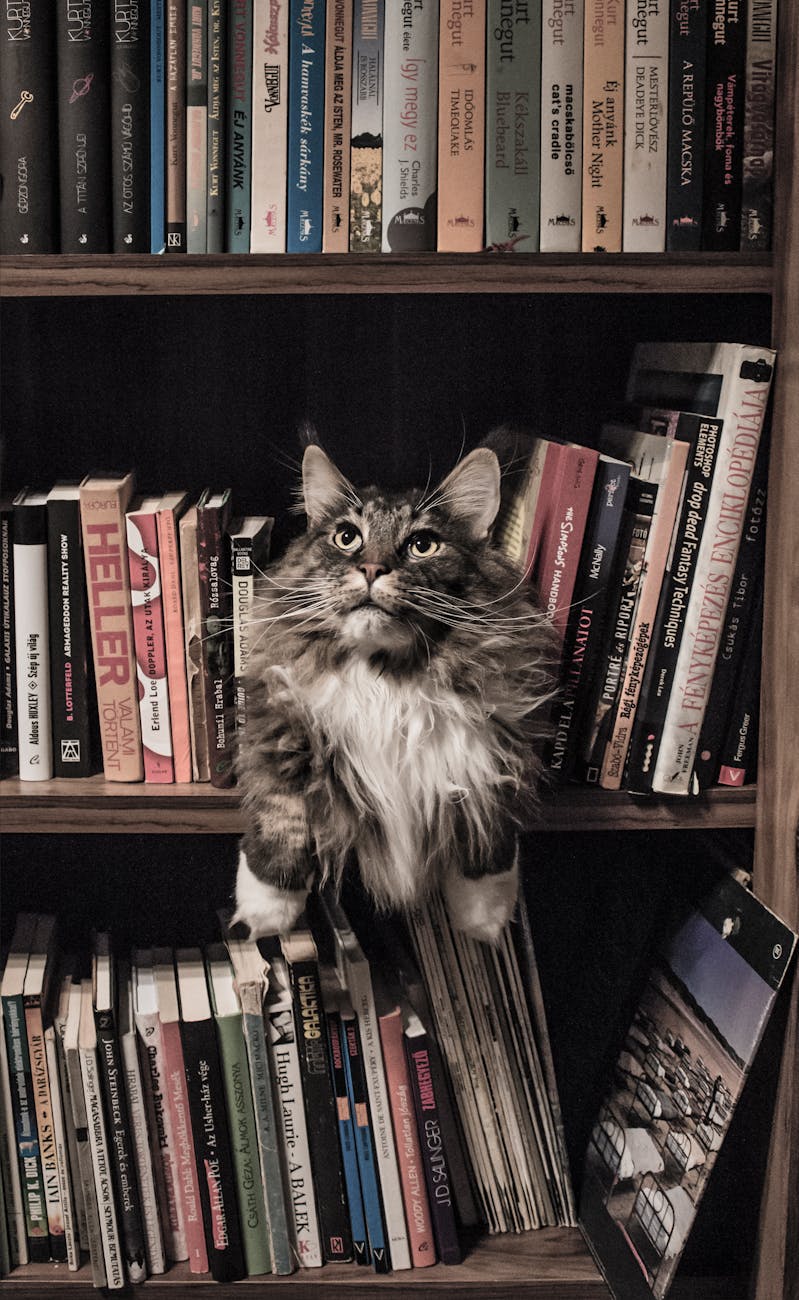
When it comes to our furry and clawed friends, some shops are populated with adoptable felines:
At the Literary Cat Co. in Pittsburg, Kansas, readers have the opportunity to adopt a pet while they shop. The store partners with a local rescue organization, hosting about seven cats at a time, along with three permanent feline “employees”: Hank, the regional manager; Scarlett Toe’Hara, the assistant regional manager (she’s polydactyl); and Mike Meowski, the assistant to the assistant regional manager.
Jennifer Mowdy, the store’s owner, described each cat’s role, personality and origin story with the air of a matriarch ticking off successful grandchildren. Speaking of the upper respiratory illness that cost Mike Meowski an eye, she sounded stoic. He was a kitten; she was there for him. They soldiered through.
Mowdy created a glass alcove for allergic customers – and to deter escapees – and a “kitty conference room” (accessible by cat door) for litter boxes. With regular scooping, four air purifiers and daily mists of Mrs. Meyers Room Spray, she said the scent of the store is neutral to positive.
In the past year and a half, the Literary Cat Co. has facilitated 50 adoptions. “We’ve only had one cat that didn’t work out,” Mowdy said. “Too much fight in her.”
Kittens tend to wreak havoc; Mowdy prefers a mature animal of the “Don’t call me, I’ll call you” variety. Felines are welcome to scale shelves and interact with readers as they please, which is their way.
“They get to practice being a good house cat,” Mowdy said. “They get socialized.” Occasionally, the right cat finds the right reader’s lap. The rest is destiny (with the rescue organization handling logistics; the Literary Cat Co. simply makes the introduction).
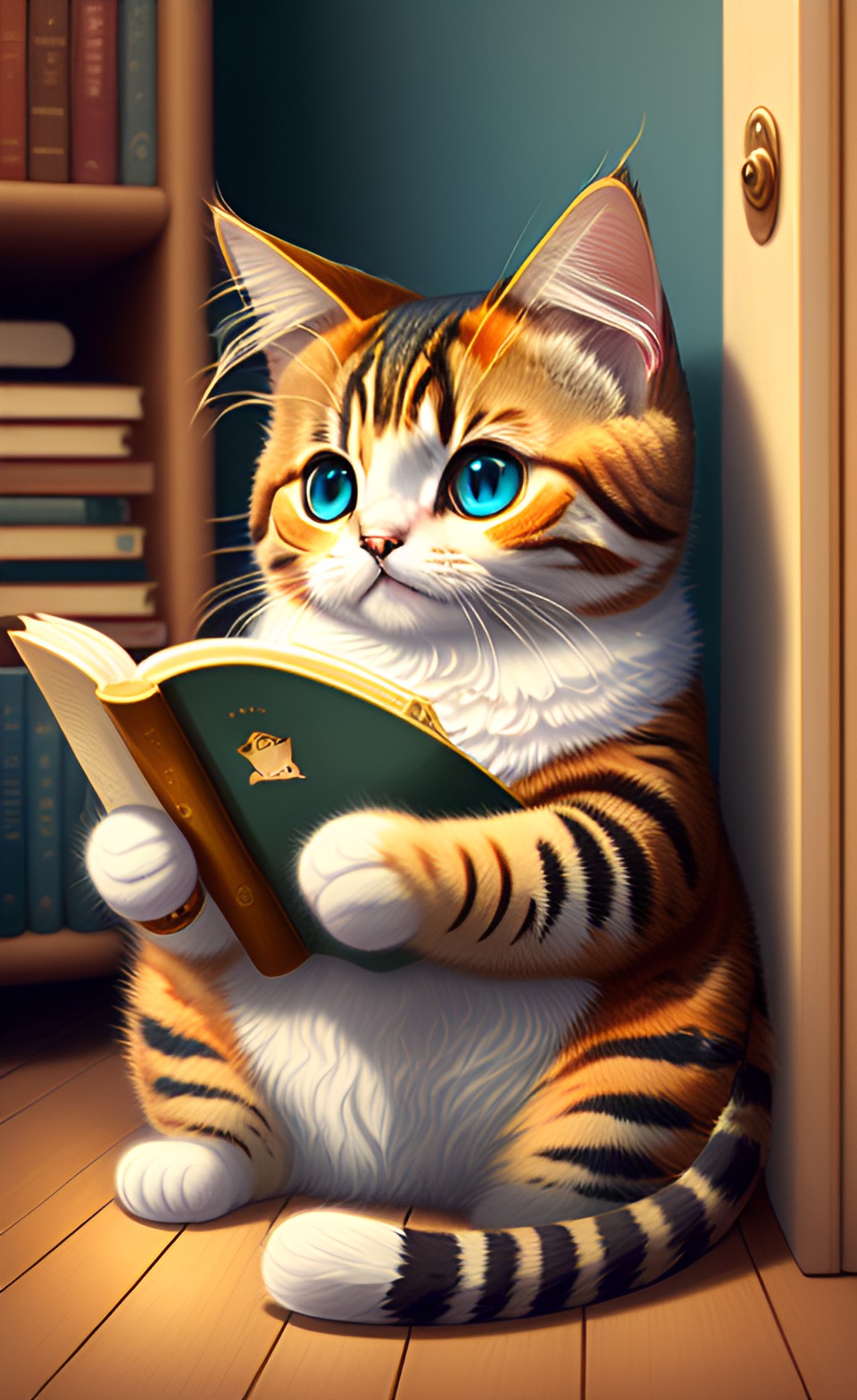
Did you now? Little Buddy the Cat read an astounding 713 books last year and authored 43 of his own, including the bestseller “How To Handle Your Human Like A Pro: 10 Steps To Better Performance By Your Servant”
You read that right. According to a survey of more than 2,000 people from an independent industry research firm, 51.7 percent of American adults did not read a book in 2021.
More than one fifth (22.01 percent) haven’t read a book in three years, and more than 10 percent haven’t read a book in 10 years.
There are obvious reasons for that, including the choice of many other mediums for entertainment, plus an unprecedented volume of content offerings from streaming networks and traditional TV, meaning most of us have tens of thousands of movies at our fingertips through paid subscriptions like Netflix, Amazon and Hulu, as well as free ad-supported streamers like Tubi and the Roku channel.
Then there’s internet doomscrolling, the endless consumption of news (of which I am guilty), social media platforms designed to keep people engaged, fan fiction sites and a million other leisure activities competing for our attention.
Yet none of those things have a quality that books do. When you read a book, you are entering a theater of the mind created by one mind. Not a movie that has 500 crew members in addition to its cast, focus groups, script writers, script doctors and script polishers. Not a TV show written by committee in a writers room to the specifications of network honchos. With a fiction book, you’re allowing one person’s imagination to usher you into a story, trusting in their storytelling skill to make the experience worthwhile. With a well-researched non-fiction book, you can travel back in time, reliving wars, coups and personal stories, events that shaped the world and events that meant the world to a few people.
Not surprisingly, the survey shows, the percentage of people who read books regularly is lower for younger age cohorts. Credit YA fiction, like Harry Potter, The Hunger Games and similar series for turning at least some of them into readers.
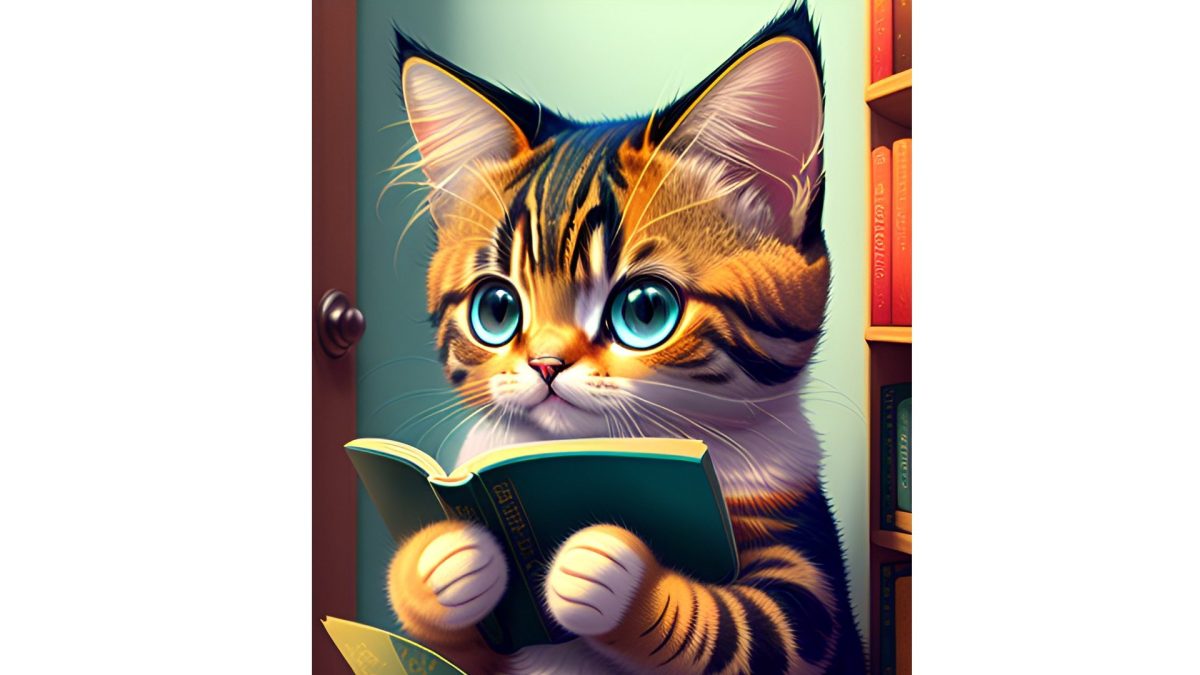
A curious kitty reading “The Art of Meowing for Treats” by Buddy the Cat. Credit: PITB
The publishing industry is in a sorry state. In lean times publishers and their imprints have become as risk-averse as major movie studios, so they’re far less likely to take chances on new authors with new perspectives than they are to fall back on the same handful of big-name novelists or surefire memoirs like Prince Harry’s Spare.
Because of that, publishing houses don’t invest in developing younger up-and-coming writers the way they once did, and there are fewer literary journals and genre magazines for new authors to use as stepping stones.
Compounding the problem is the echo chamber in publishing: Because many publishing jobs offer low salaries, most of the people who can afford to take those jobs are independently wealthy, increasingly concentrated in places like Brooklyn, and share similar perspectives. That has a pronounced effect on the kind of books they’re publishing.
Still, I think we all share in the blame. I read only 12 or 13 books in the past year. That seemed low but not so bad until I though about it. That’s a measly 120 books in 10 years. It doesn’t add up to much over a lifetime.
When you put it like that, you either want to make sure every book you read is a gem, or you get your ass in gear, put down the junk news articles and smartphone, and dive into more books.
I am a science fiction junkie and wanted to read more female authors since my favorites happen to be a bunch of British guys — Iain M. Banks, Alastair Reynolds, Peter F. Hamilton — and managed a measly one fiction book by a female author in the past year, although it was pretty awesome. (Dead Silence by S.A. Barnes, also known as Stacey Kincade. I think she’s Barnes for science fiction and Kincade for other stuff.) I’ll definitely be down for the planned sequel, and I have Ursula LeGuin in the queue.
What are your reading habits? How many books do you read per year, and are you happy with your pace?

 Pain In The Bud