Wordy Wednesday: Visiting Japan’s Snow Monkeys

Meet the Japanese macaques, also known as snow monkeys, living in an enclosure on the side of Mt. Takao, about an hour from Tokyo.

A note on this series: Although I published some of these photos earlier, the majority have been recovered from an old drive that took a circuitous route of more than five years, three continents and four countries to get back to me. I plan to run them in themed segments on Wednesdays this summer, including Tokyo nightlife, shrines, cityscapes and more. This week’s photos are from the snow monkey exhibit at Mt. Takao.

Japanese macaques are the northernmost-dwelling of any non-human primate species.

They’re built for the cold, with heavier coats than their cousins, the rhesus, long-tailed and bonnet macaques. They also sleep in well-organized groups, rotating so each monkey gets time in the center to soak up body heat, and they’re famous for keeping warm in northern Japan’s hot springs.

But as these photos show, snow monkeys are also adaptable, and they make the best of things during the hot, humid summers at Mt. Takao, about 51 km (30 miles) from Tokyo.

These photos were taken on a hot day in June when I was one of only a handful of visitors.

Welcome to Mount Takao! So you want to see snow monkeys?
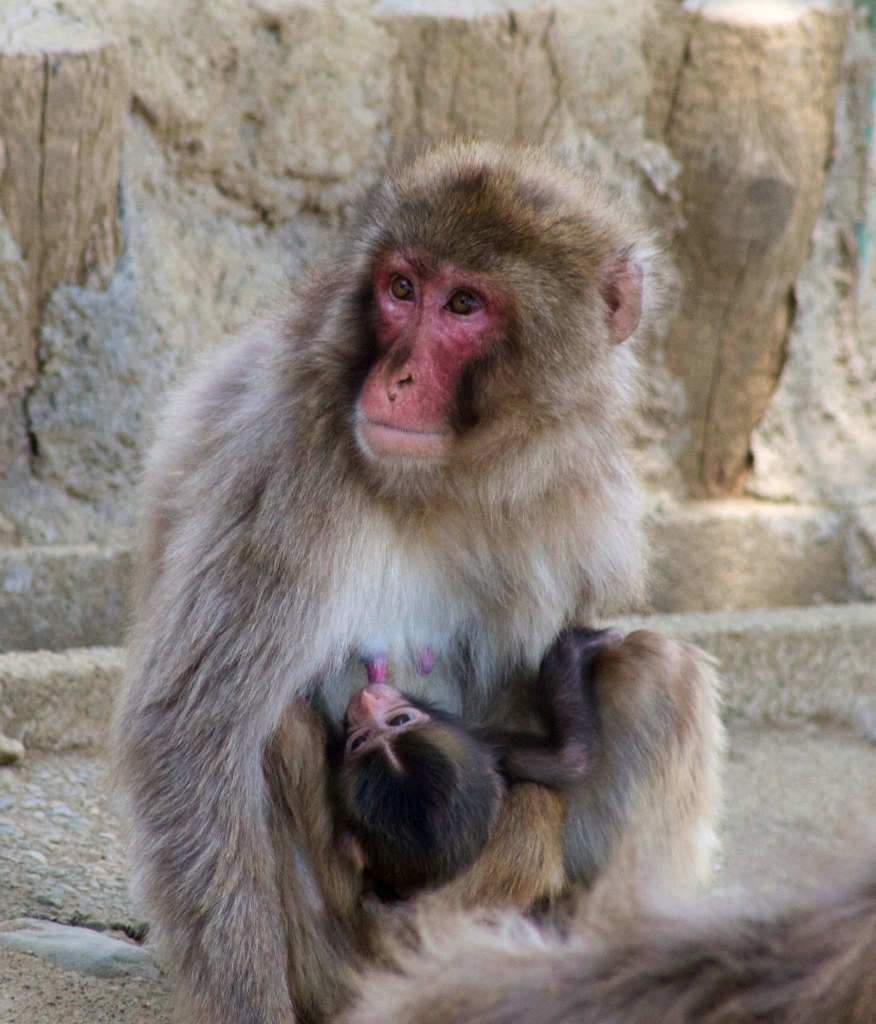
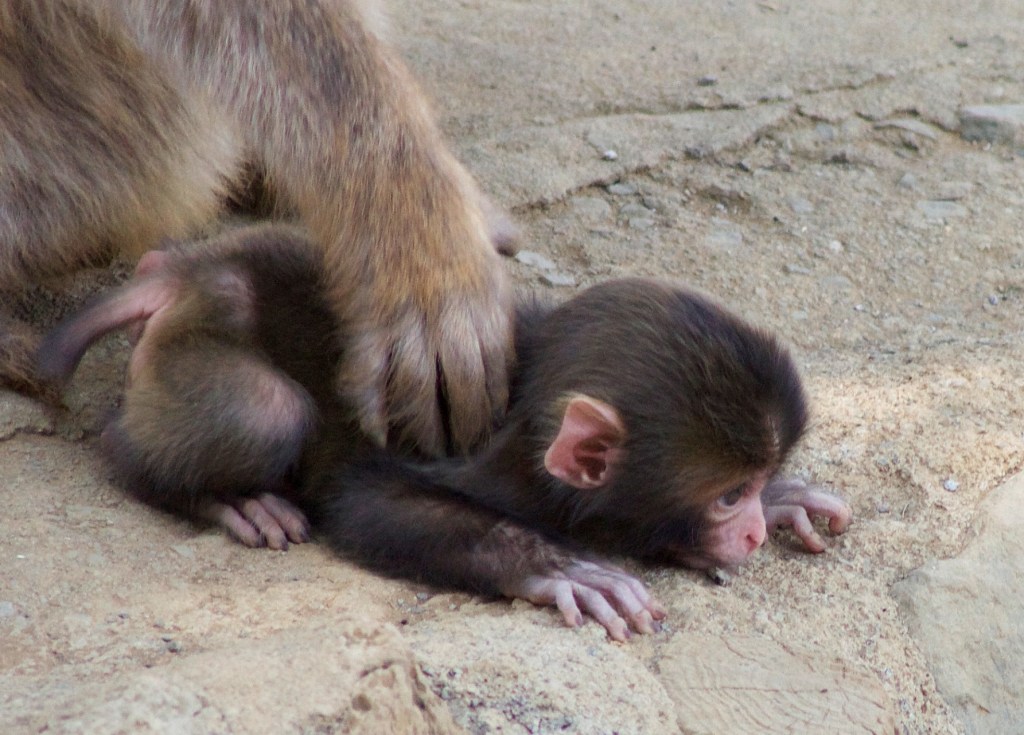
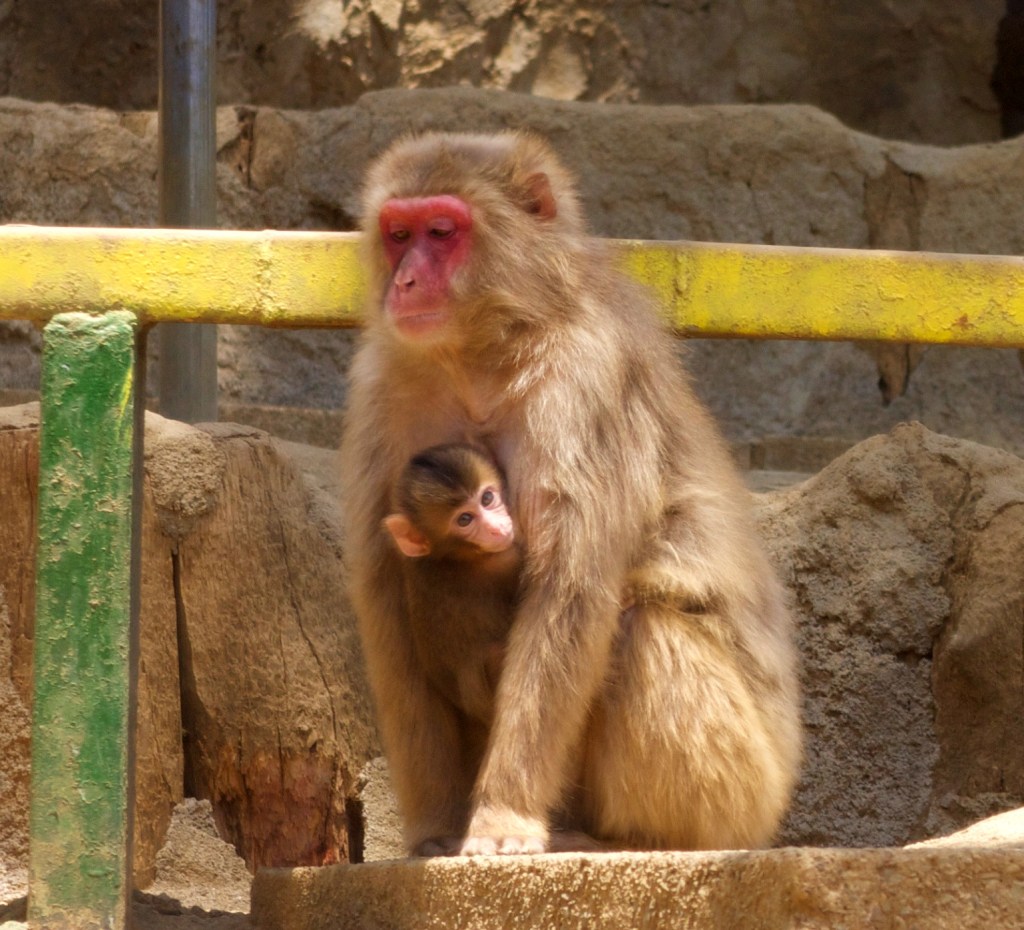
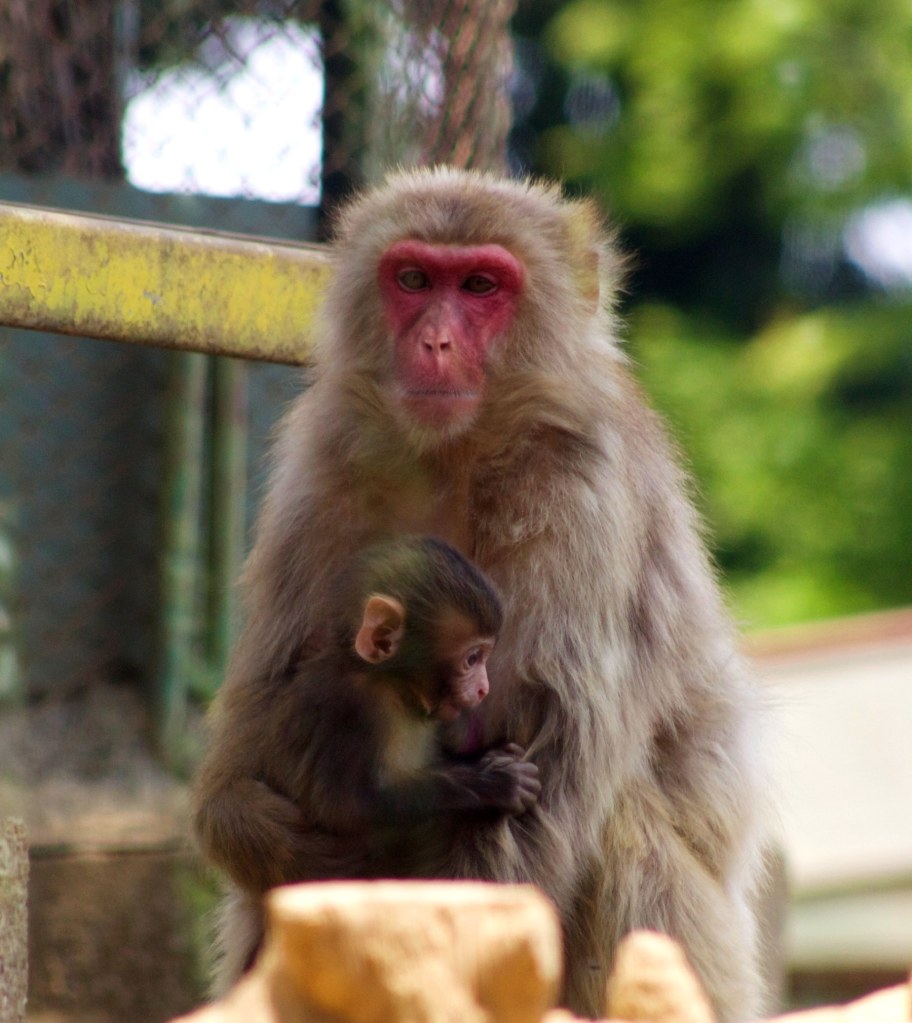
“The milk bar’s open!” Snow monkeys, aka Japanese macaques, are extremely attentive mothers. This baby is is about 8 to 10 weeks old and completely dependent on mom.
“I’ve had my fill of milk, now it’s time to explore!”
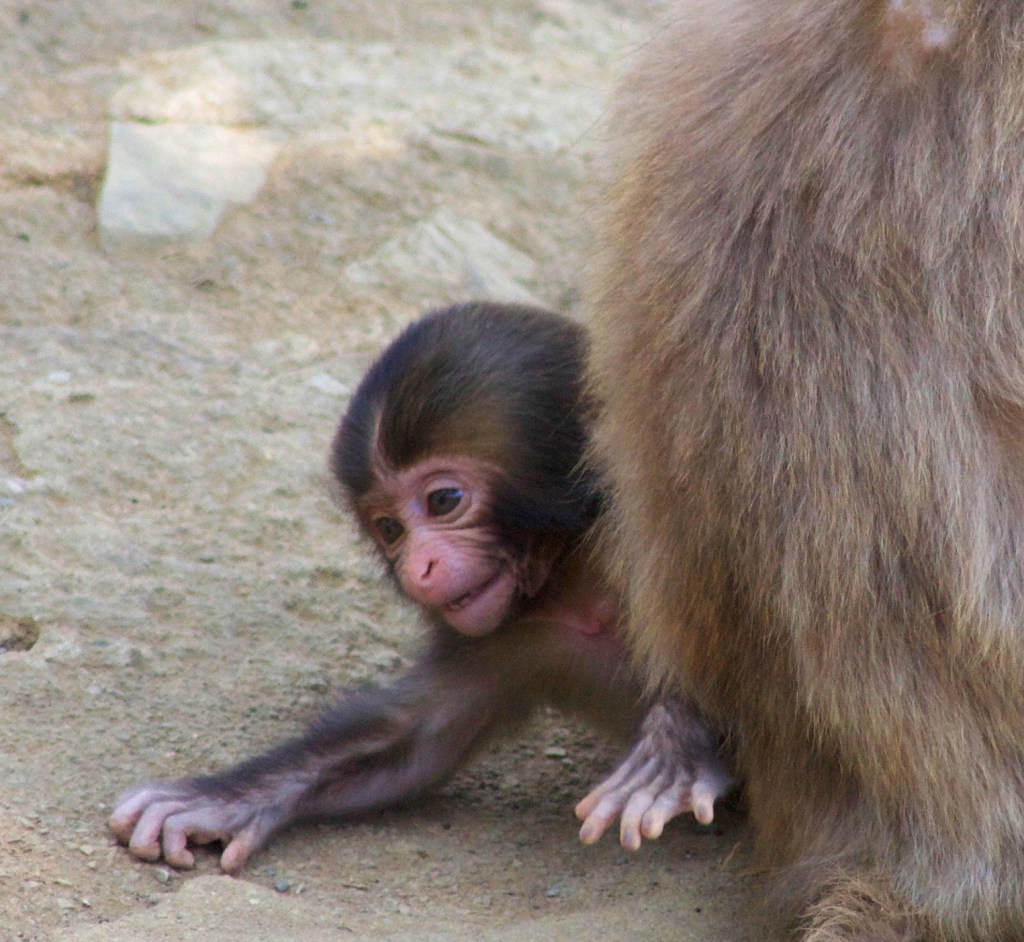
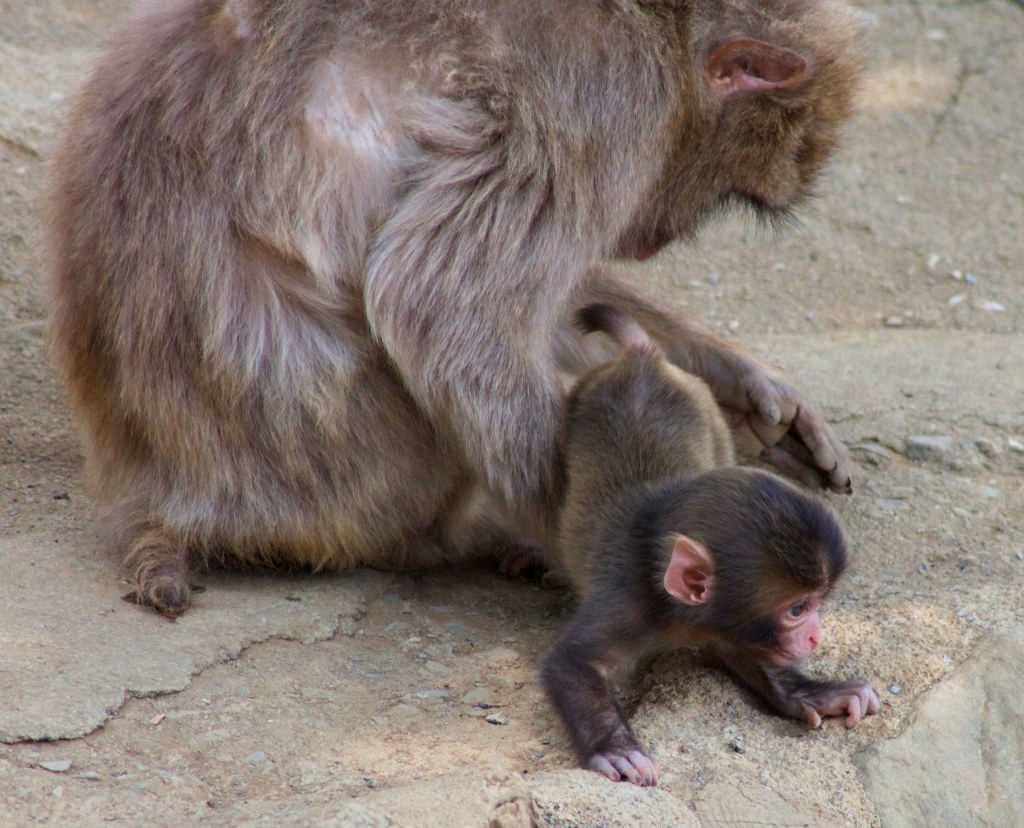
“But mom won’t let me go far! I’m too young to go off on my own, and mom is really protective of me.”
“If I could…just…get away…for a sec!”
“Come on, mom! Let me play!”
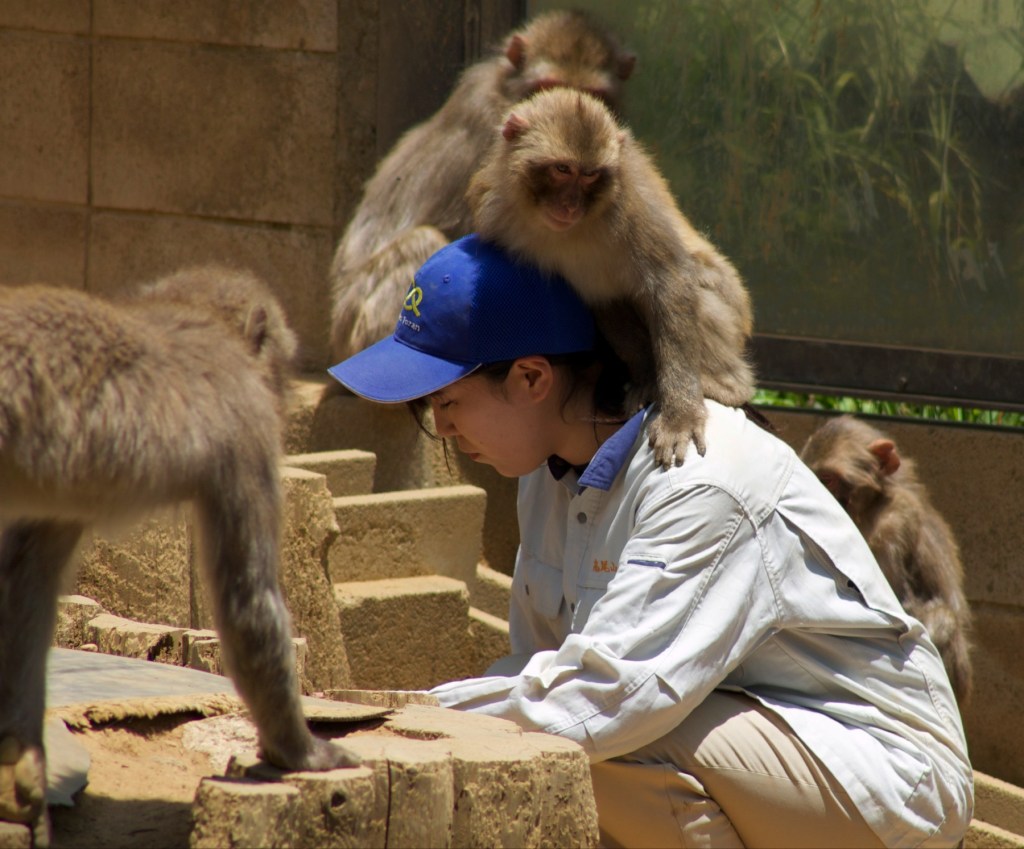
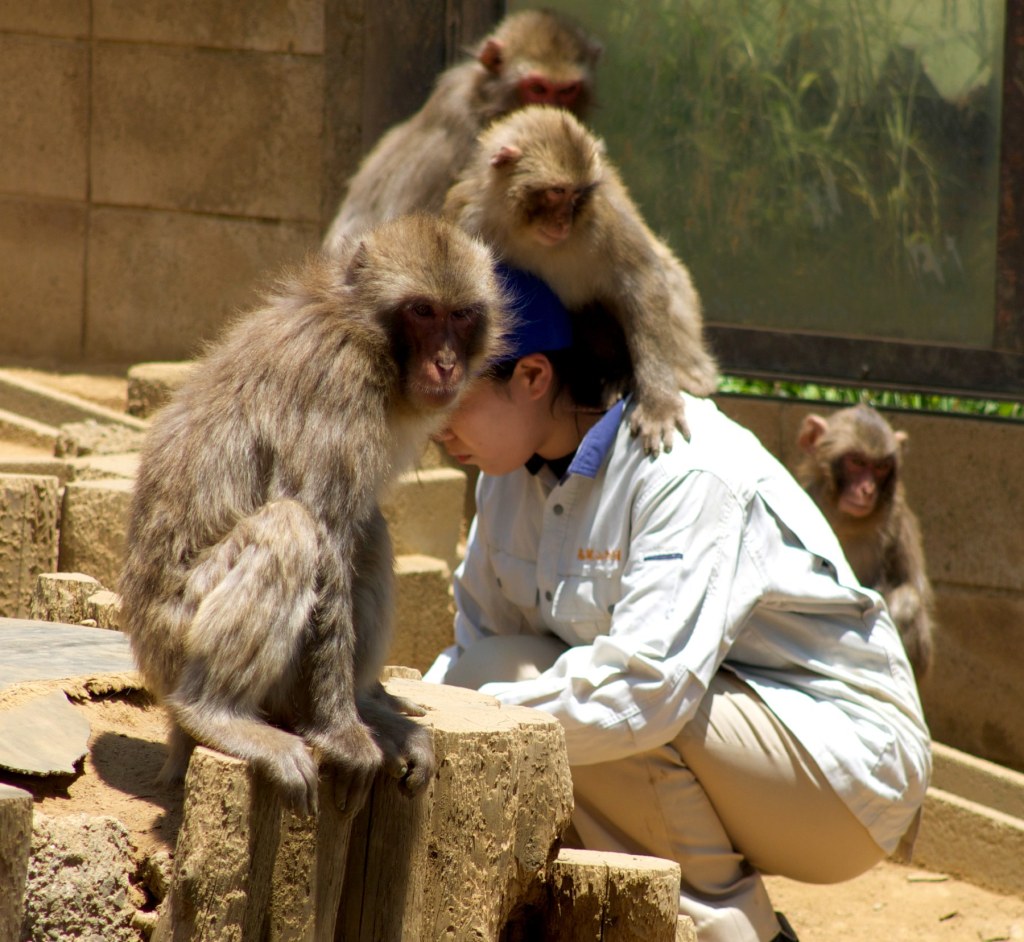
A keeper at the Mt. Takao monkey enclosure. She has a hat…but not for long. Note the mischievous monkey on her shoulders, who’s waiting for just the right moment to grab her hat and run.
The monkey on the left is like: “Oh crap, here it comes!”
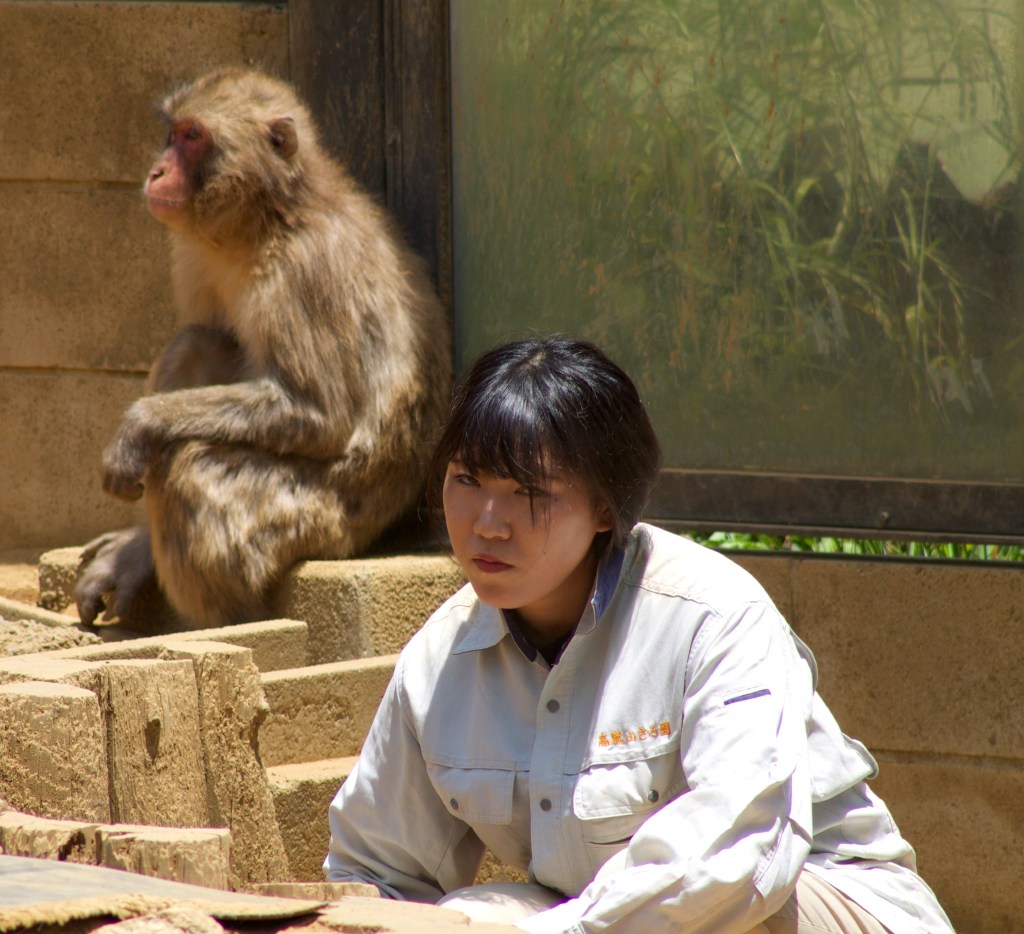
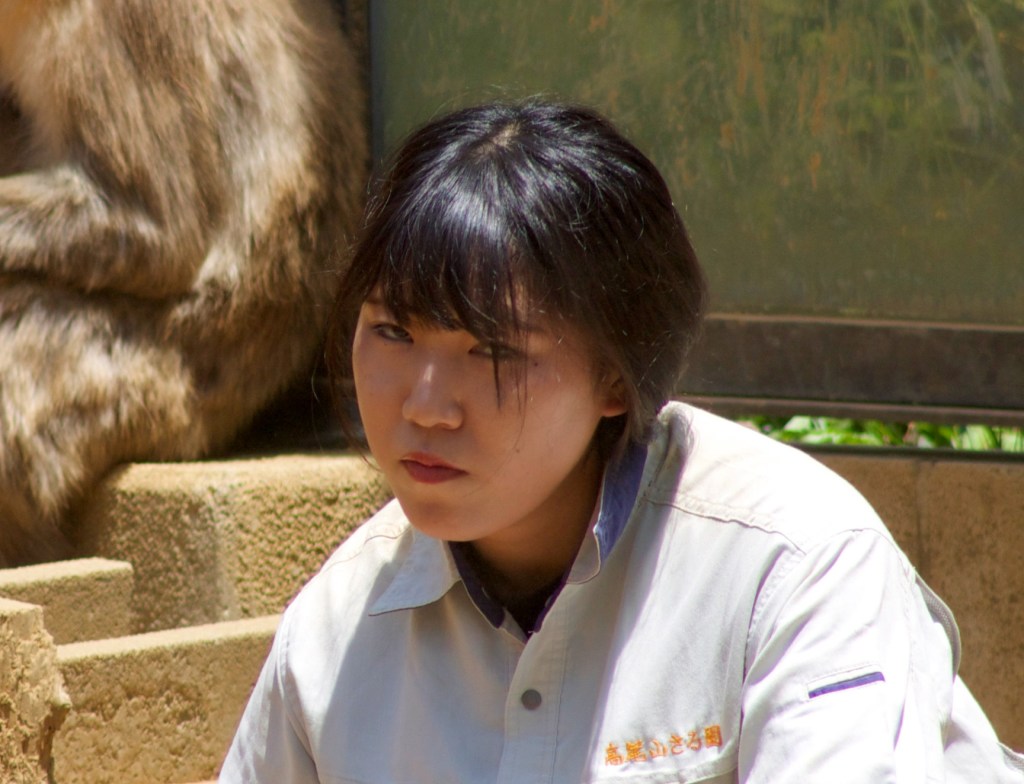
The keeper is staring daggers directly at me. There was a small crowd at the Mt. Takao snow monkey exhibit that day, and while the Hat Incident delighted the onlookers, the keeper was not amused when she saw me snapping away. I’m pretty sure she wanted to throttle me. Sorry!
Yeah, she definitely hates me.
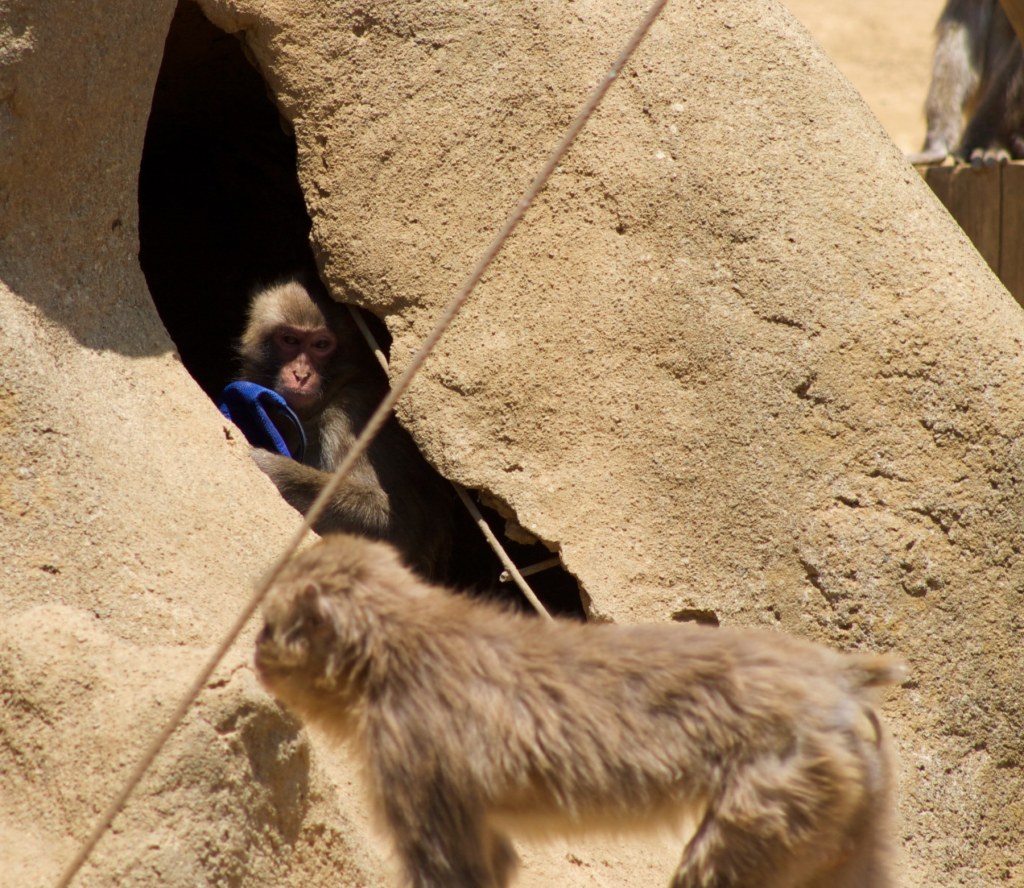
Getting her hat back was not an easy task. The devious little monkey who made off with it immediately retreated into a small cave/shelter system big enough for the macaques, but too small for humans to enter. Making matters worse, there were at least four or five entrances and exits. Every time the keeper approached, the little monkey darted inside and popped up through a different hole, like a game of wack a mole. Eventually it took both keepers to retrieve the hat.
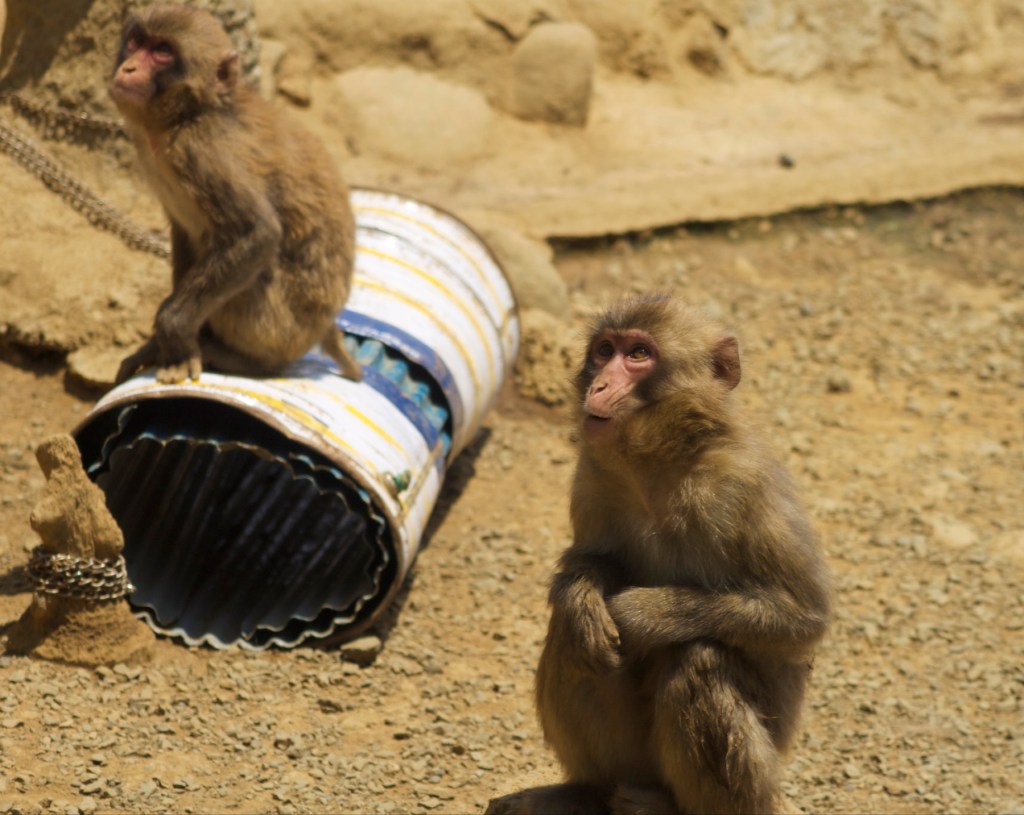
“Oh, you know, just chillin’.”
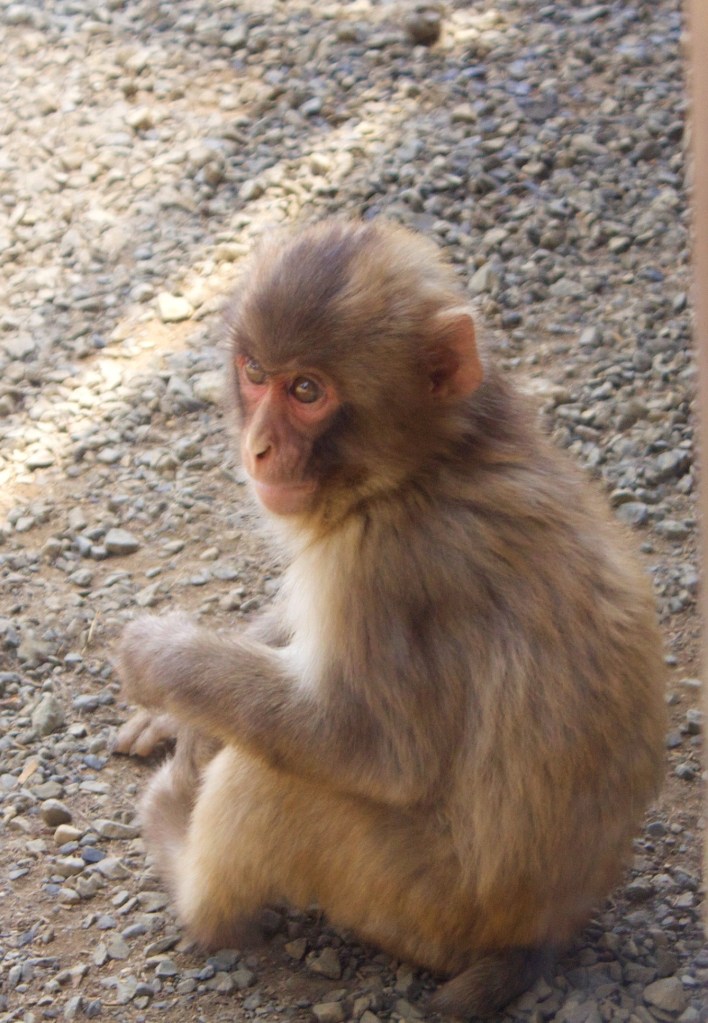
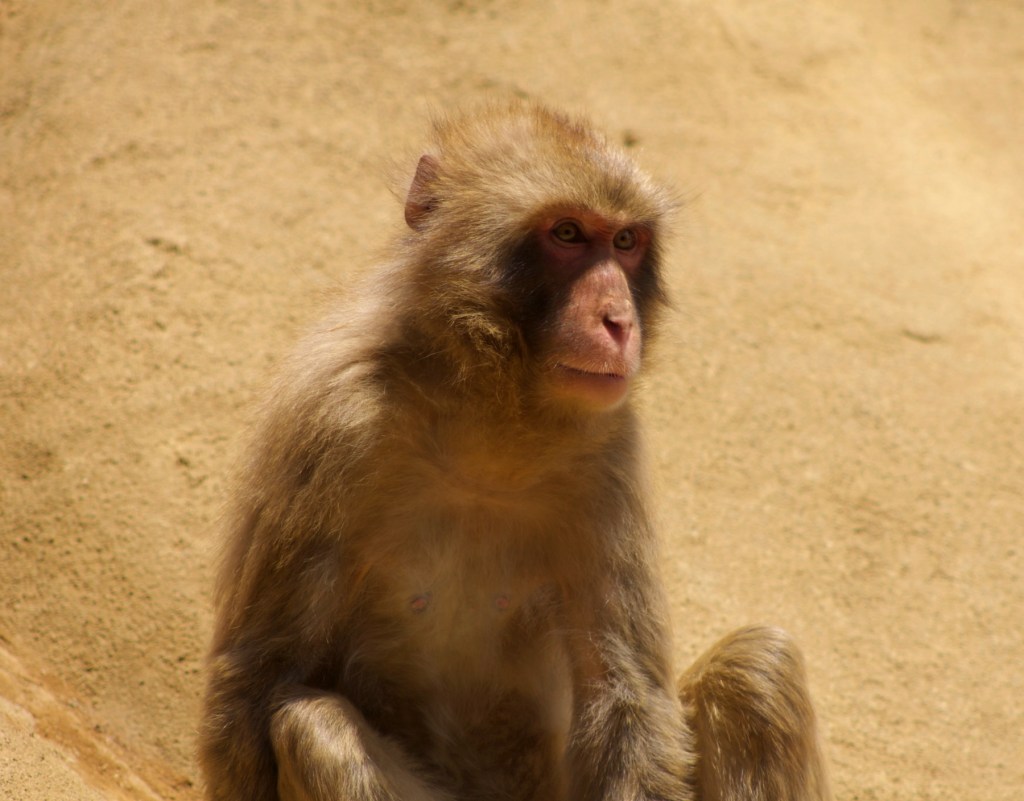
I was super close to this little lady. She was probably about two or three years old.
Macaques live in troops of up to 300 members, and their societies are matrilinear, meaning an individual monkey’s “rank” in the troop’s social hierarchy is determined by who their mother is.

Macaque troops are headed by alphas who are the strongest males and deal directly with protecting troop members, but the matriarch runs most aspects of troop life.

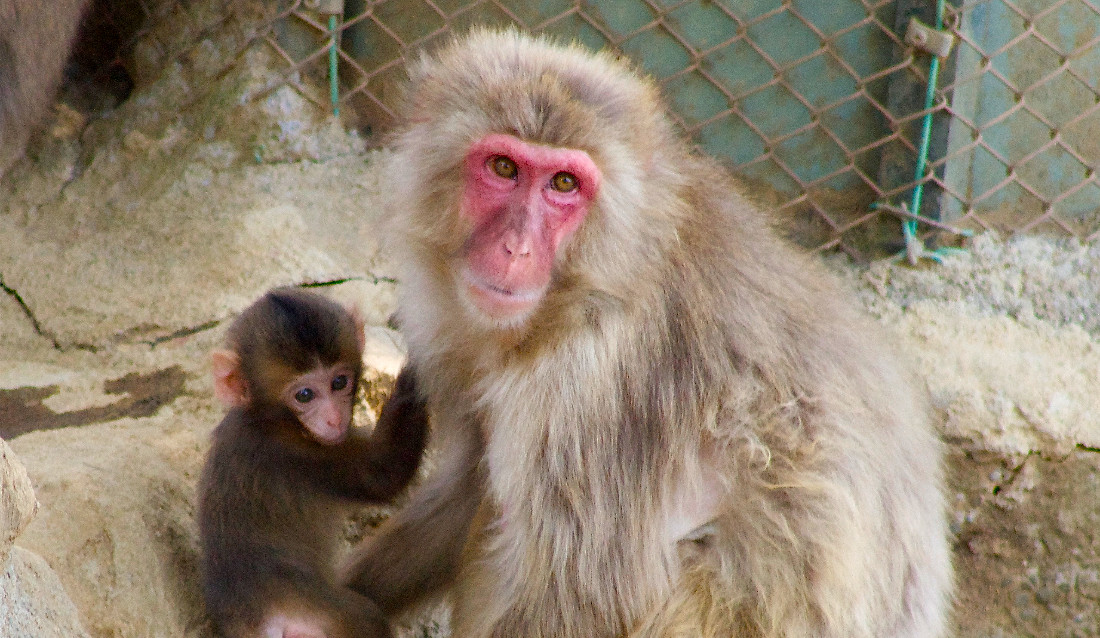
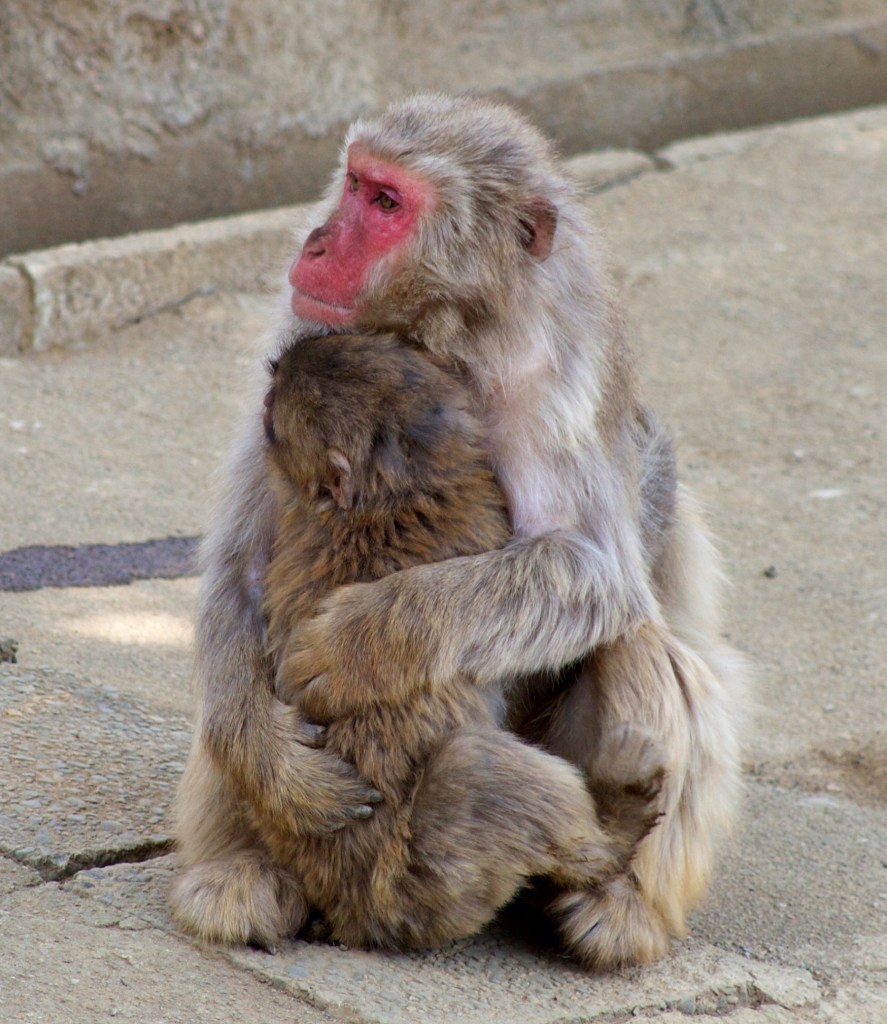
Here, a snow monkey mom hugs her child. The bond between moms and their kids is strong. Daughters stay with their mothers and their troops for life, while sons remain in the troop until they’re about five years old, at which time they depart to avoid inbreeding. They often go on to live as bachelors in small groups before joining or starting their own troops.
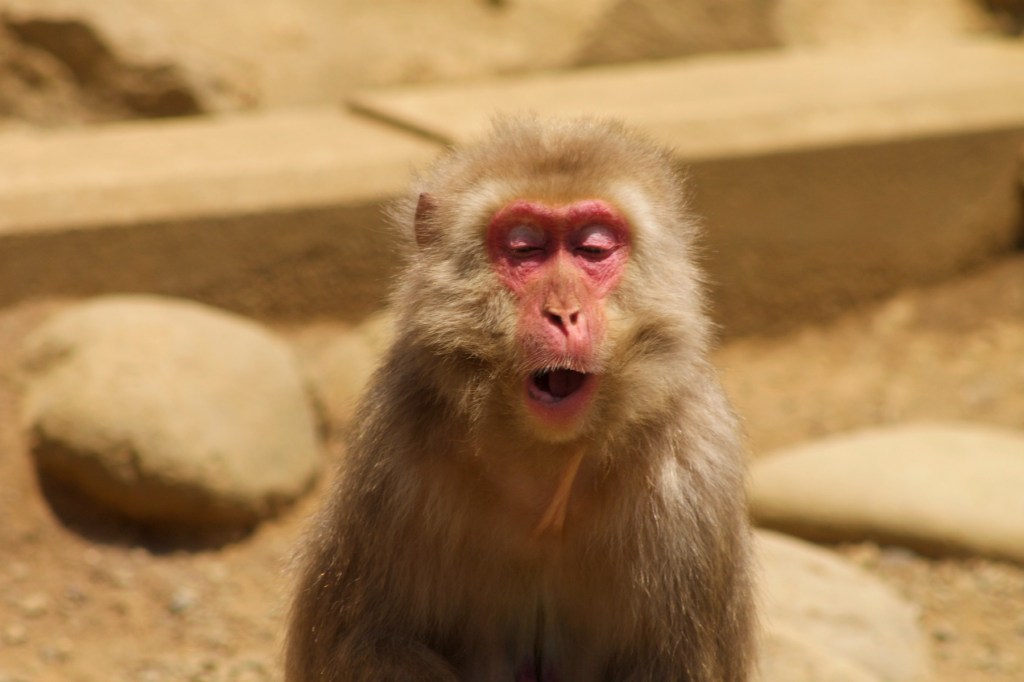
This baby is geckering. A gecker is a “loud, pulsed vocalization” usually described as a “broken, staccato noise.” People often think of it as a baby macaque throwing a temper tantrum, but it’s more than that, and it’s involuntary, meaning the babies can’t control it. In plain English, it’s a noise, accompanied by spasms and made by babies and young macaques when they’re particularly upset. Babies usually gecker when they’re separated from their mothers, being bullied by older monkeys, or in situations when they want to nurse but their moms won’t let them.
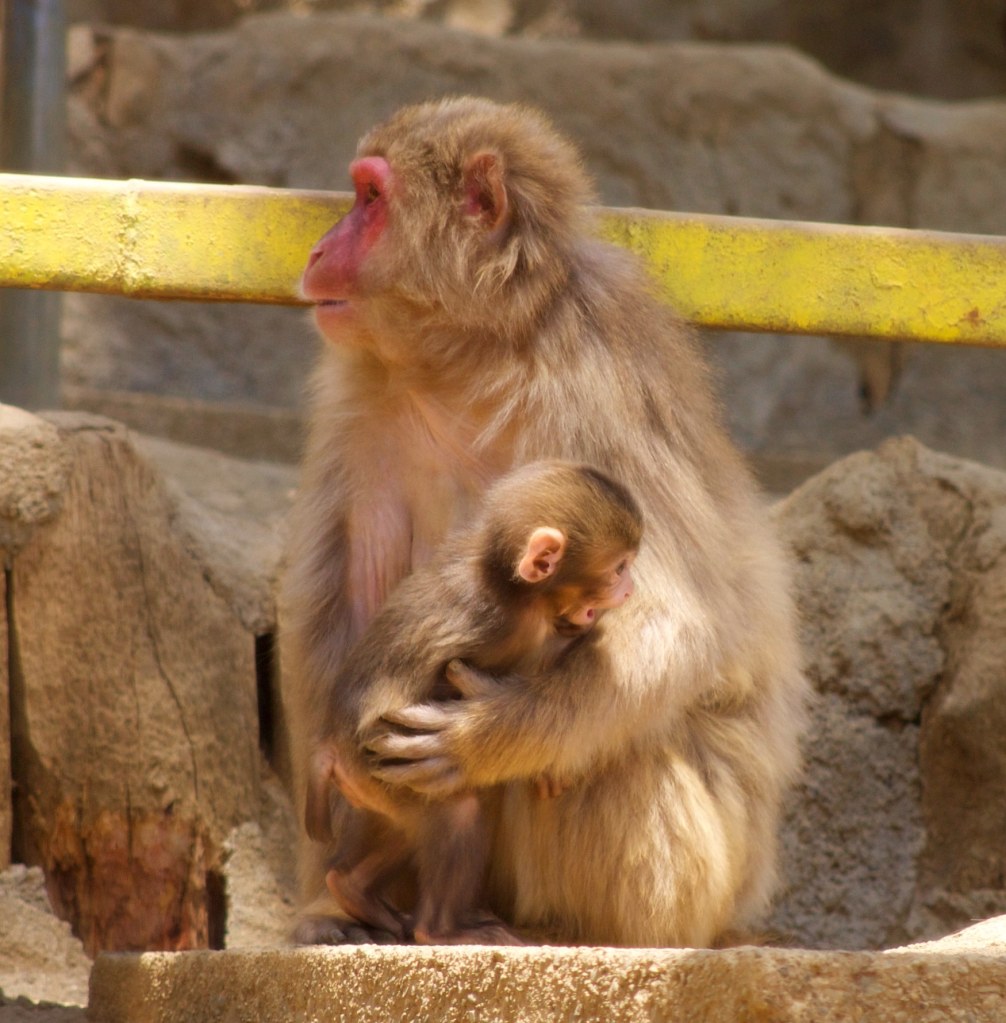
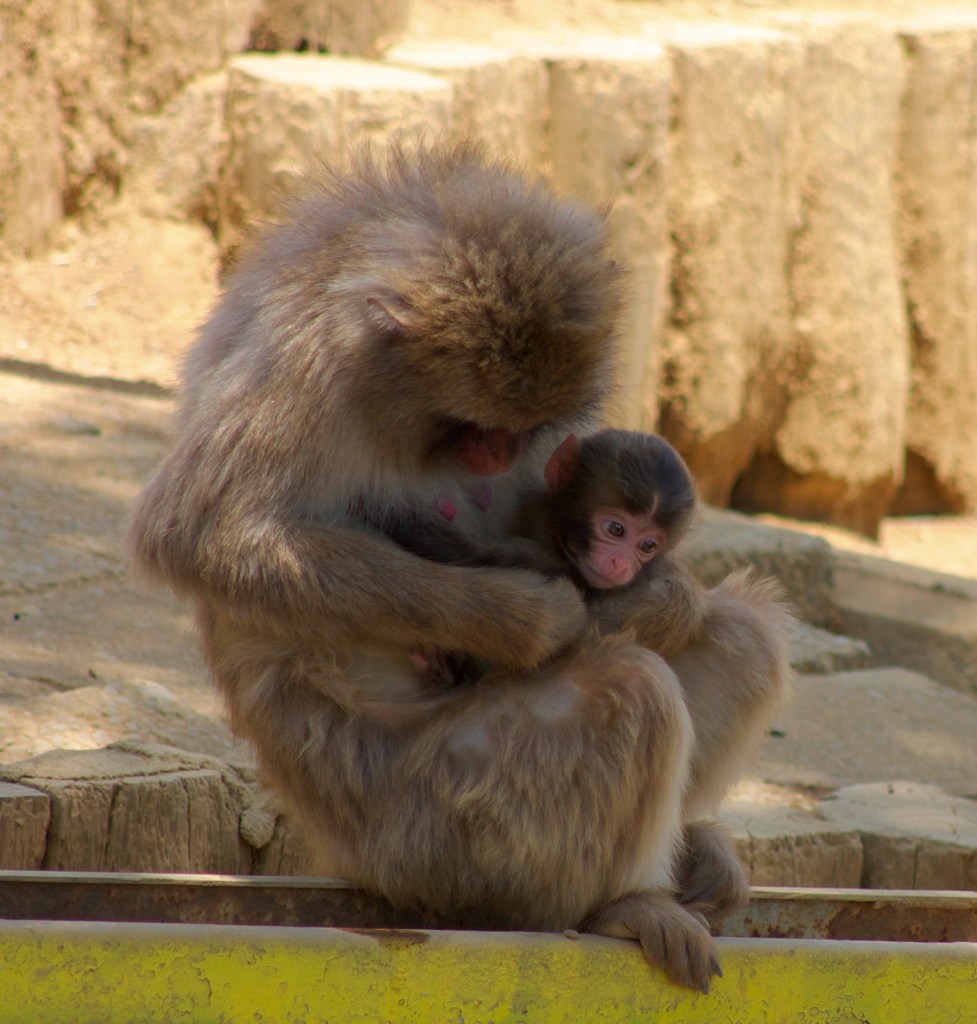
Another mom with a young nursing baby. This baby is a bit older than the one above, probably about three months old.
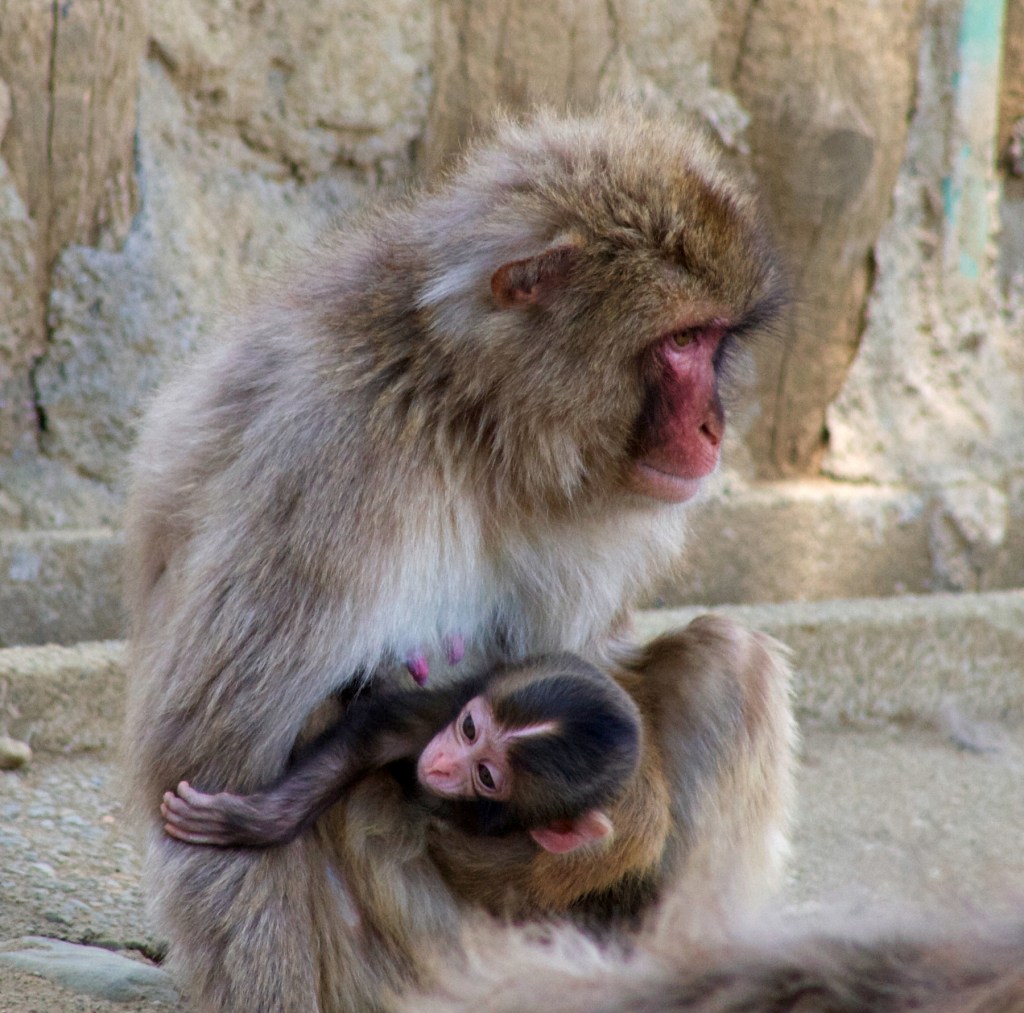
The first baby again. Notice how mom is grooming the baby. Grooming is an important aspect of macaque social relations, in addition to serving the practical function of clearing insects and other debris from fur.
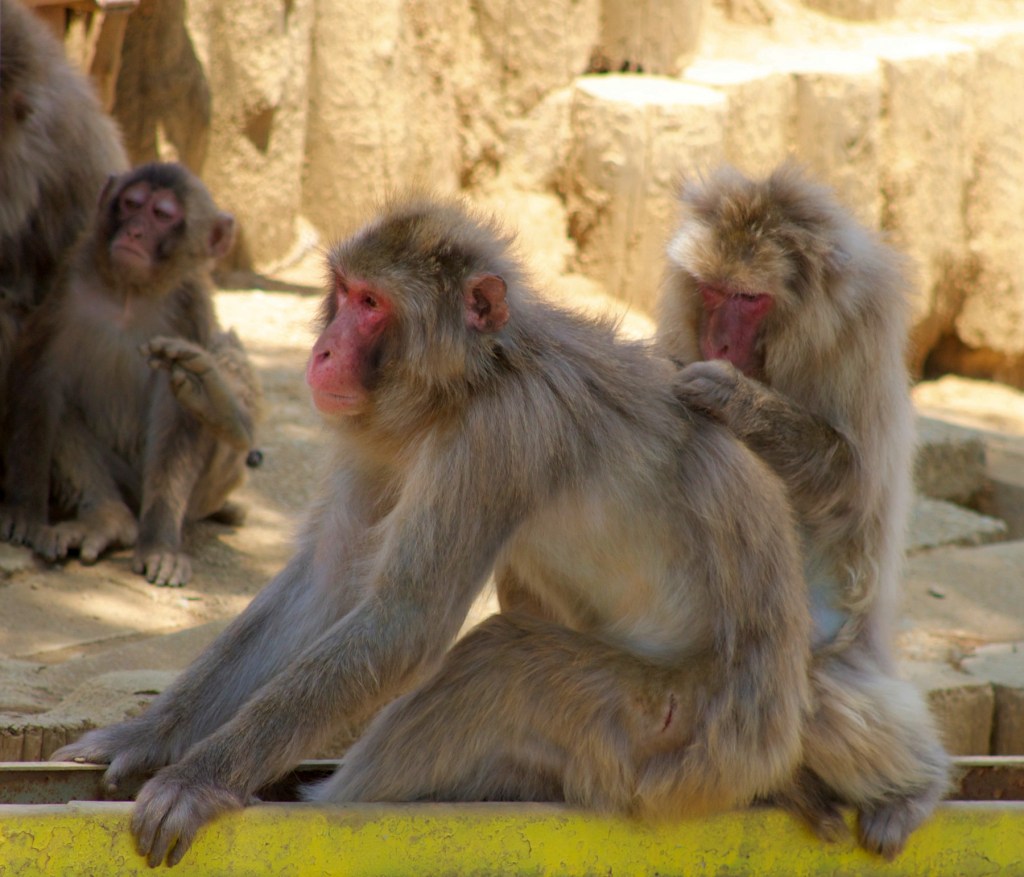
More social grooming. The monkey on the right is attentively picking insects from the fur of the monkey on the left.
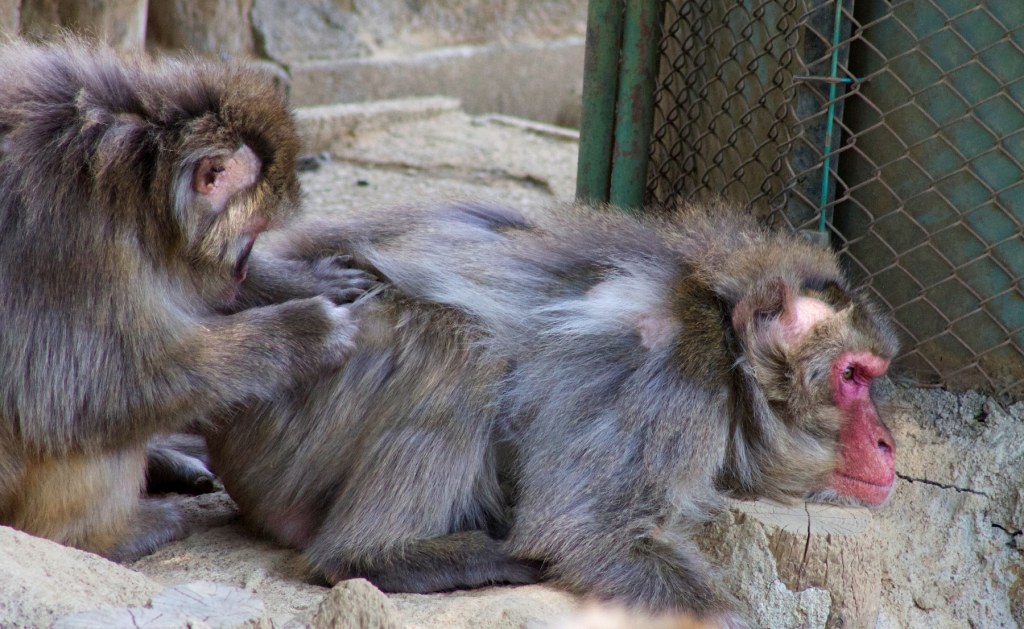
He’s big, he’s old, he’s battle-scarred. He’s the alpha, and he always gets groomed first, whenever he wants. He also eats first, enjoys the best lounging spots, and gets to mate with his choice of females. In the wild, alphas don’t retain their thrones long, often being deposed within a year or two. Extraordinary alphas who keep their troops in good stead and enjoy an aura of invincibility can last a decade or longer.
Babies nurse for as many as two years and spend almost the entire first year of their lives holding onto their moms. That’s one reason why the practice of buying baby monkeys — or any monkeys — as pets is incredibly cruel, and it’s why pet monkeys are always seen clinging to stuffed animals. They’re taken from their mothers within hours or days, and they need the tactile comfort of holding onto — and being held by — their mothers.

Harry Harlowe’s infamous experiments in the 1960s proved that the physical comfort of being held is crucial to the psychological development of all primates, humans included. If a baby is denied that, the consequences manifest as severe psychological issues later in life.
A male member of the troop. It’s not clear if this guy was brought in from another captive troop elsewhere in the country, or if he’s native to the Mt. Takao troop. If it’s the latter, at his age — about four or five years old, give or take — he’ll be expected to soon depart. Young males leave their troops to avoid inbreeding and potential violence as they become stronger and are viewed as potential rivals to the alpha and/or his lieutenants.

Adios, humans!

Sunday Cats: Woman Dumps Boyfriend After He Loses Senior Cat, Kitten Abuse Leads To Felony Charge

Prosecutors are taking an animal abuse case in Maine seriously and have charged the suspect with a felony under a federal animal welfare law passed in 2019.

Although the story is more about her gradual acceptance that her boyfriend was inconsiderate — and didn’t put as much effort as she did into their relationship — Business Insider’s Anne Jarret writes about how his carelessness with her cat led her to end a two-year relationship.

Jarret describes how her boyfriend would do things like leave wet towels on her side of the bed, leave dishes around their home and show disregard for her sleep schedule when he knew she had to rise at 6 a.m. every morning as a teacher, but the final straw was his cavalier attitude toward losing her 15-year-old cat, who was on her last legs and needed meds to survive:

“Where’s the cat?” I asked my boyfriend as I walked into the kitchen. The sun had set, and it was time for us to give her a steroid to ease her pain.

“I don’t know,” he said with a shrug. We searched, but we couldn’t find her anywhere. Then I saw the patio door was wide open.

Guerrilla, the dying 15-year-old cat, loved spending time outside on a leash and would beg us to take her exploring.

“I guess when I took the dogs out earlier I forgot to close the door,” he said. “I’m sorry.” My heart broke.

Unfortunately, Jarret never found her cat and didn’t get closure on her fate, which is a horrible thing for anyone who loves their feline, especially after spending 15 years together.

Prosecutors use 2019 federal statute to charge teen with cat abuse

A 17-year-old from Maine has been charged with a felony under 2019’s Preventing Animal Cruelty and Torture (PACT) Act after a video surfaced on Facebook showing him brutalizing a kitten.

The teenager is accused of picking up a stray cat by his tail and repeatedly slamming him into the ground on Nov. 4. The kitten, named Harlow by the local Humane Society staff, will “likely” lose an eye as a result of the head trauma the teenager inflicted, Humane Society shelter director Katie Lisnik told the Sun-Journal.

Despite that, Harlow doesn’t hate people and seems to crave affection.

“He just loves to cuddle,” Lisnik said. “He just wants to be on you.”

This story is heartbreaking and hard to even think about. How could anyone do such a thing to an innocent animal, much less a kitten less than a year old? And the fact that Harlow is so loving and trusting despite all he endured and suffered just underscored how innocent cats are, as animals who have the intelligence and emotional capacity of three- or four-year-old children.

Usually we don’t note stories like this on PITB because animal abuse is a difficult topic, it’s upsetting and stories like this are so numerous that reading all of them can even make misanthropes out of people who believe the best of humanity. But we’ve written quite a bit about law enforcement taking animal abuse seriously, and the need for animal cruelty laws with more teeth, and this is ultimately a hopeful case because the prosecutors are taking it seriously enough to invoke the bi-partisan PACT Act.

On the other hand, some laws clearly need to be amended. The suspect hasn’t been named in media reports and his identity will likely remained sealed because of youthful offender laws, which allow minors convicted of crimes to strike convictions from their permanent records before they turn 18 if they meet certain conditions set by the court. Usually they’re straightforward: Stay out of trouble, attend psychological counseling, check in regularly with a probation officer and complete community service.

That’s fine for offenses involving drugs, theft and other relatively minor stuff. But when crimes are associated with high recidivism and/or are strong indicators of future violent crime — as animal abuse has proven to be — convicts shouldn’t be allowed to apply for youthful offender status. This kid shouldn’t be allowed to own pets or interact with animals, and this kind of crime shouldn’t be stricken from his record because if, for example, he attacks a woman he’s dating when he’s 19, it shows a pattern of violent behavior that strongly correlates to escalating violence.

At a time when school shootings are common and people commit senseless crimes like pushing strangers off subway platforms into the paths of oncoming trains, law enforcement could use all the help and information it can get in identifying people with violent histories before they do more harm.