This Parrot Loves Earth, Wind And Fire

The last few decades have revealed birds like crows and parrots possess astonishing intelligence. “Bird brain” might not be much of an insult after all.

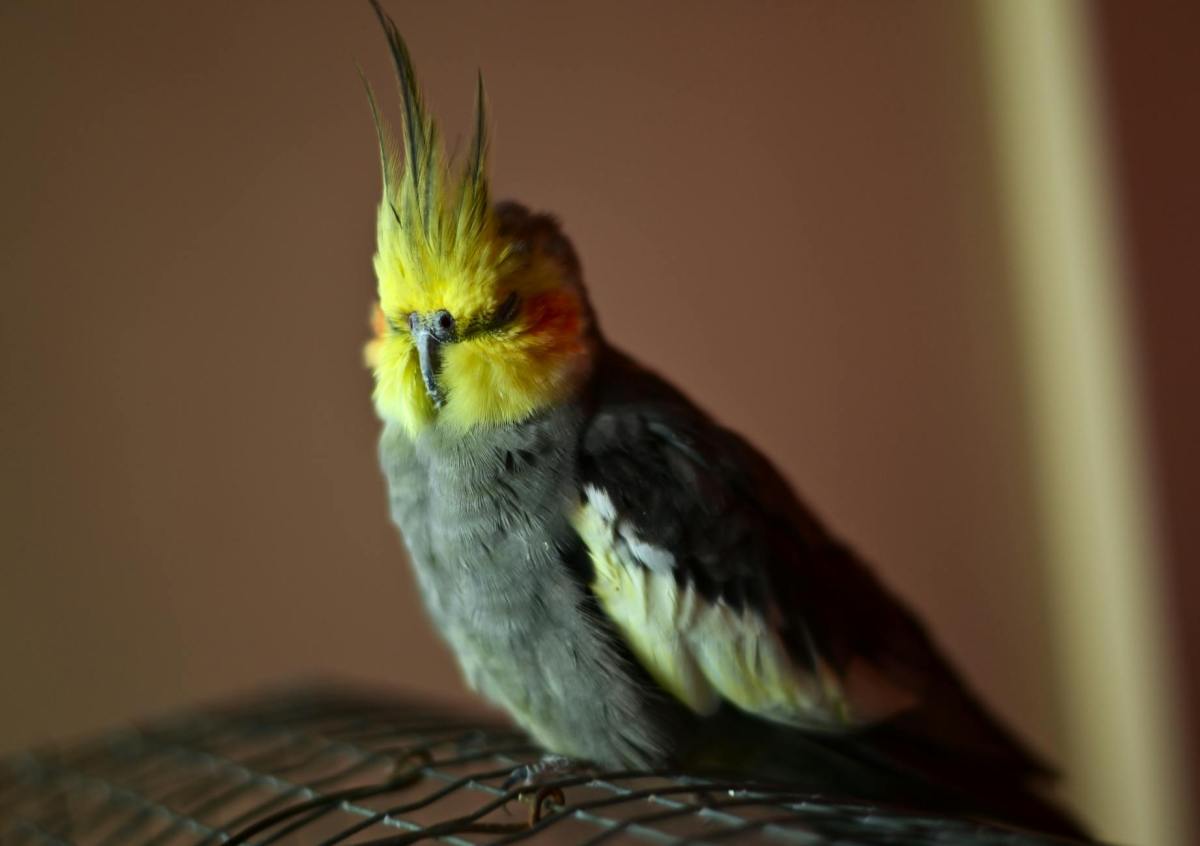
Meet Kiki the cockatiel, a bird who loves Earth, Wind and Fire so much that he sings the band’s classic hit, September, regularly — whether he’s just chilling by himself, singing along to the recording or driving his human crazy by whistling the catchy hook at ungodly hours.

“Kiki, it’s seven in the morning!” she tells him in one clip, raising an admonishing finger. “Silence!”

Kiki regards her for moment as if her request is absurd, then launches right back into September.

Hey, hey, hey
Ba-dee-ya, say, do you remember?
Ba-dee-ya, dancin’ in September
Ba-dee-ya, never was a cloudy day

In another video Kiki’s human sets her phone to record and leaves the room, and Kiki busts out his favorite song again. He’s got great taste in music!

I’ve always thought parrots are a fascinating example of animal cognition and further proof that we share our planet with billions of other minds who think and feel.

Humans and birds last shared a common ancestor more than 300 million years ago. That means between them there’s been more than 600 million years of divergent evolution resulting in radically different physiology, abilities and minds.

Yet parrots can speak while non-human primates (apes and monkeys) cannot!

For decades scientists thought apes and monkeys, by virtue of their relative similarity to humans, possessed an inmate affinity for language and that the physical limits of their vocal apparatus is what keeps them from speaking.

But a 2016 study by a team from Princeton University found monkeys do possess the vocal “hardware” to speak, meaning their mouths and throats are capable of making the sounds necessary for human language. It’s the lack of associated brain circuitry that prevents them from talking.

If the ability to speak and the ability to dance/appreciate music and rhythm is uniquely human among the primate order, and birds arrived at it at a different point in their evolutionary history, that means language and appreciation for music/rhythm developed separately along two divergent evolutionary lines!

That’s incredible and has intriguing implications for the cognitive abilities of animals.

A common argument is that birds with the ability to form human speech are simply mimicking sounds and don’t understand what they’re saying. That’s a natural assumption given what we think we know about non-human capacity for understanding language, but research suggests it’s wrong.

Take a look at this video of the famous late African grey parrot, Alex:

When Dr. Irene Pepperberg asks Alex how many blue blocks are present on a tray with a random assortment of blocks, balls and triangular toys in different colors, Alex can’t give a rote answer. First he has to understand that a question is a request for information and not part of the strange human ritual called small talk. He can’t simply count or guess at the number of blocks either.

Instead, Alex has to perform two calculations. He must tally the blue objects and count the number of them that are blocks, or he’s got to count the number of blocks and figure out how many of them are blue.

If he was simply repeating information in context — like saying “Hello!” when a person walks into a room — Alex wouldn’t be able to correctly answer the questions, and Pepperberg’s research funding would have dried up. Instead, Alex became a focal point of research that persisted for decades.

There’s no indication Alex could master syntax, which has proven elusive for even the smartest animals. But the African grey, who died in 2007 at 31 years old, was curious, asking questions that were unique and unexpected of an animal. He once asked his caretakers to describe his physical appearance, and the night before he died, he told Pepperberg: “You be good. I love you. See you tomorrow.”

We’ve talked about parrots before on PITB, including Snowball the dancing cockatiel who not only appreciates music and has a great sense of rhythm, but also has an entire repertoire of unique dance moves. Then there’s my personal favorite, Ruby the African grey, who has demonstrated mastery of absolutely vile, uniquely British insults.

Sure, there may not be much research value in hearing Ruby hurl verbal abuse at her very loving human, Nick Chapman, but few things have made me laugh as hard as that extraordinarily foul-mouthed bird. She has to be seen and heard to be believed. (But if you’ve got kids in the room, stick with the wholesome Snowball. He’s got serious moves.)
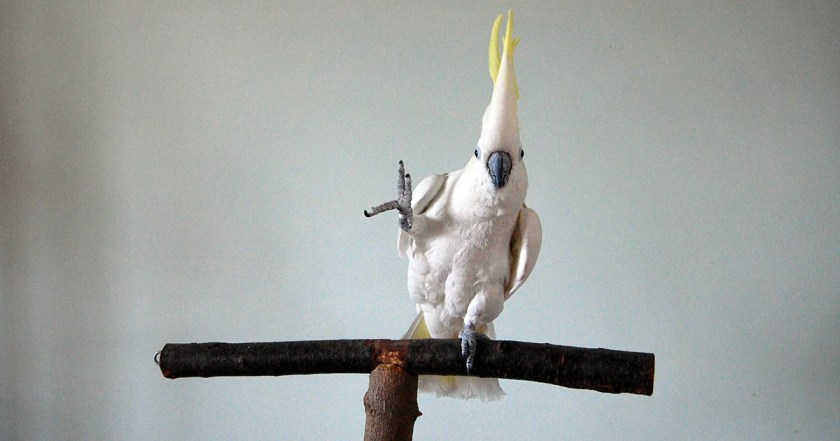
Snowball the dancing parrot
Scientists credit Snowball with choreographing his own dance routines, with dozens of individual dance moves and combinations, and moves that change depending on the song he’s rocking out to.

Now if you’ll excuse me, I’m off to teach a certain feline a few Earth, Wind and Fire songs in the hope that he’ll give up on the screeching meows and use his natural falsetto for a more gentle wake-up experience.

Hey, hey, hey
Ba-dee-ya, hey there my Big Buddy
Ba-dee-ya, Little Buddy’s hungry!
Ba-dee-ya, get your lazy ass up and feeeeeed me!
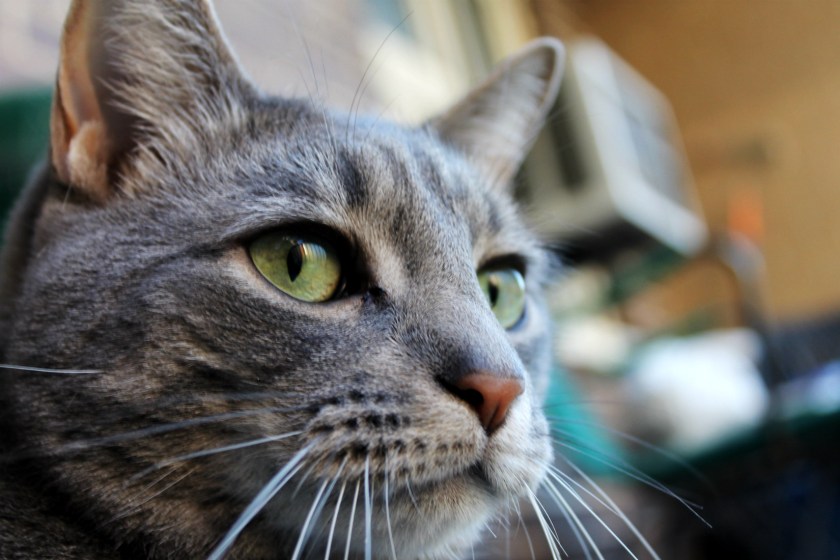
Bud close up

Animals Teach Us Our Self Worth Isn’t Tied To What We Do

We could learn a lot from our feline friends, who live in a default state of contentment, according to a philosopher who muses on cats in his new book.

NPR has an interesting article about the very human tendency to peg our self worth to our careers and our egos to our accomplishments, something most of us are guilty of to one degree or another.

I know I’m guilty of it, and I’m often unhappy when I’m not meeting some arbitrary level of creative output.

But Devon Price, a social psychologist, told NPR a pet chinchilla named Dumptruck — “the opposite of productive, and frankly, rather destructive” — led to a revelation Price had about intrinsic worth.

“I would never look at him and think of his life in terms of, ‘Has he justified his right to exist?'” Price told NPR. “He’s not paying rent. He’s not performing any service. And it would be absurd to even think about his life in those terms.”

The article prompted me to think about Bud, of course. He’s just Bud. A gray-furred, mercurial, amusing little guy whose favorite activities are eating, sleeping and hanging out with his Big Buddy.

How Buddy pulls his weight

Does he do anything to “justify” his existence? Well, according to him, he does.

“What services do I provide?” Buddy repeated when asked. “Well, first of all, I’m delightful. I’m responsible for like 95% of the delightfulness around here, let’s be honest. Yes, delightfulness is a word. Because I say it is!”

He also claims he provides security — “no burglar in their right mind would break in knowing I’m here” — as well as daily wake-up services, and “annoyingness desensitization.”

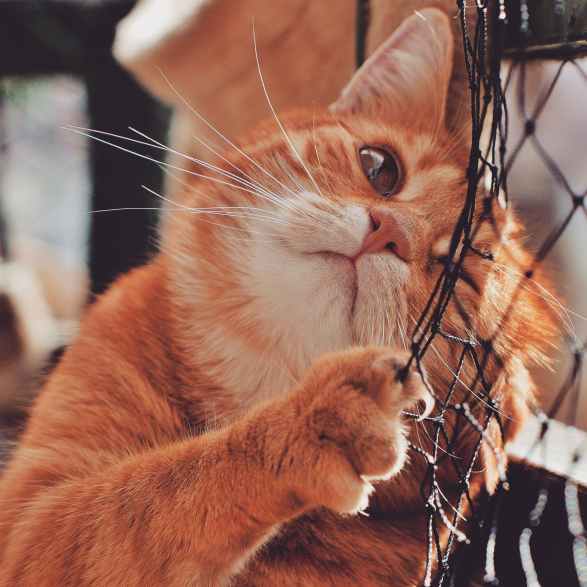
orange cat on focus photography
Credit: Alexas Fotos/Pexels

Price’s observations are not far from those of John Gray, the British philosopher who published a new book, Feline Philosophy: Cats and the Meaning of Life, earlier this year.

Cats live in the moment, Gray points out, and don’t stress themselves obsessing over “an imagined future.” Some people, especially those who don’t appreciate the full scope of animal cognition, would say cats are so adept at enjoying the present because they’re simple creatures incapable of thinking in the abstract or planning for the future.

That, of course, isn’t true: Cats develop abstract thinking skills early in their development, they understand object permanence, and anyone who’s seen a mother cat care for her babies — fretting over hiding spots, frequently moving her kittens and checking in on them when she must hunt for food — knows our feline friends are most certainly capable of planning and worry. (Or you can just watch my cat when his dinner’s late.)

Human anxiety is compounded by existential concerns, which cats aren’t burdened by. They’re not worried about their place in the world, and it probably never occurs to them that trying to be happy acknowledges the possibility of failure.

Contentment is a cat’s natural state

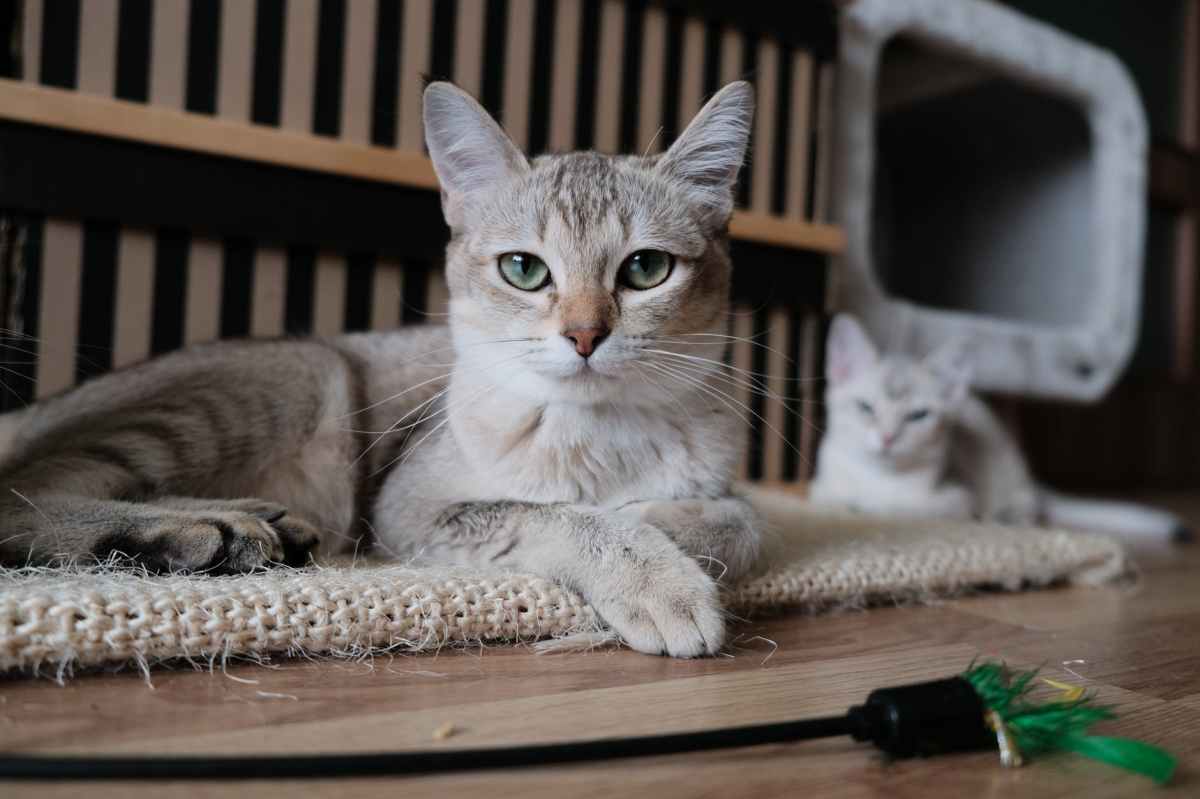
Cats, Gray points out, just do what makes them happy, whether it’s playing with a favorite toy or shredding a roll of toilet paper. They’re not worried about whether they could have more fun doing something else, or whether they’re making the best use of their time. Cats are “among the wisest animals because they’re spontaneous and playful and content with whatever life presents them,” as one reviewer of Gray’s book put it.

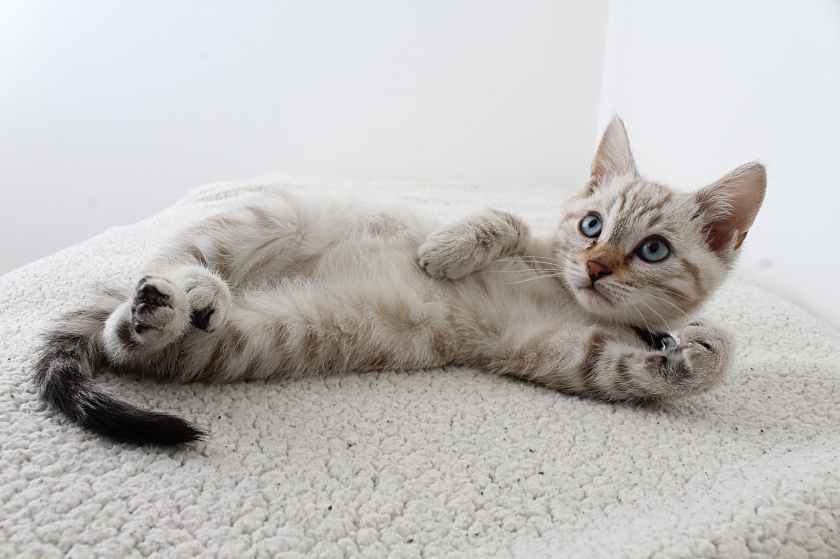
photo of grey tabby kitten lying down
Credit: Anel Rossouw/Pexels

“I would say that a lot of torment in our lives comes from that pressure for finding meaning,” Gray told The Guardian earlier this year. “Unless you adopt a transcendental faith which imagines a wholly other world where meaning is secure from any accident, most of the things that happen to us are pure chance. We struggle with the idea that there is no hidden meaning to find. We can’t become cats in that sense – we probably will need to always have the disposition to tell ourselves stories about our lives – but I would suggest a library of short stories is better than a novel.”

In response to questions about what cats might say to us if they could truly talk, rather than simply communicate, Gray responds with a question of his own: “If they could talk, would they find us sufficiently interesting to talk with?”

Would they consider us buzz kills? Would they roll their eyes, say nothing and return to gleefully knocking beverages off tables?

“Unless cats are hungry or mating or directly threatened, they default to a condition of rest or contentment or tranquility — basically the opposite of humans,” Gray told Vox. “So if cats could philosophize, my guess is they’d do it for their own amusement, not because of some deep need for peace.”

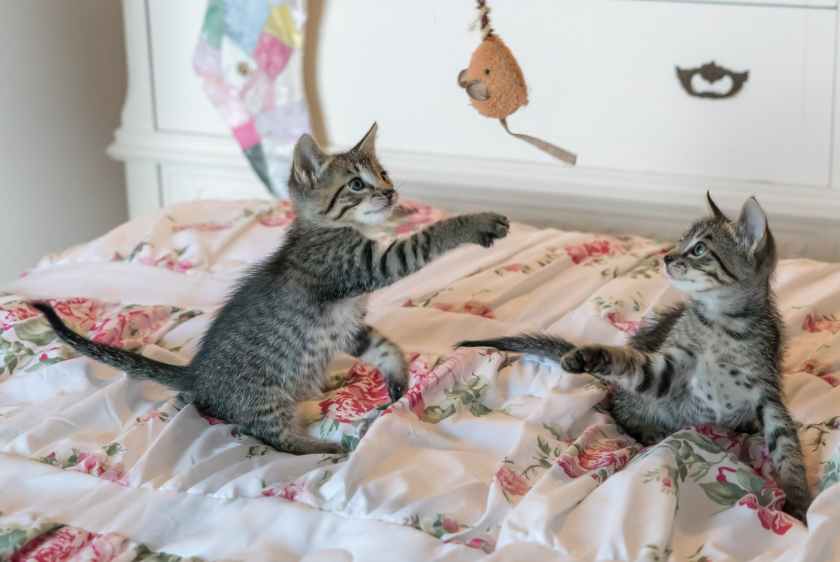
tabby kittens on floral comforter
Credit: Pixabay/Pexels