Is Giving ‘Nip To Your Cat The Equivalent Of Handing A Beer To A Toddler?

If cats are like small children emotionally and intellectually, is it ethical to give them a mind-altering drug?

That’s a question posed in a new article in The Conversation, and it’s something I’ve never really considered before.

It’s generally accepted that our little buddies are more or less equivalent to small children in terms of intellect and emotional intelligence. In fact kittens develop much more quickly than human children and come to certain understandings — like theory of mind and object permanence — considerably earlier than young kids do.

They also seem to possess some sapient qualities. My niece was born a year before Bud, for example, but in their early interactions he understood she was still developing motor skills and did not intend to cause him harm. I have photos of a young Buddy, still a kitten, cautiously allowing her to touch his fur and being uncharacteristically gentle with her.

There’s growing evidence that pet cats are “kittens in perpetuity.” Not only do their behaviors toward us mirror their behaviors toward their mothers — like meowing and using us as a “secure base” when faced with uncertainties — but they depend on us completely. We care for them, in turn, at least in part because they have neotenous (baby-like) features, which trigger our protective instincts.

Bud is basically a “kid,” so is it ethical for me to give him a potentially mind-altering substance?

Catnip isn’t really a drug

While some catnip companies lean into the whole “marijuana for cats” thing, naming catnip after famous marijuana strains, selling it in gag pharmaceutical bottles and even calling themselves “dispensaries,” those are marketing efforts aimed at us servants. As the authors note, it’s not accurate to consider catnip the equivalent of a drug.

It’s not physically addictive, its effects only last a few minutes and cats can’t overdose on the stuff. In fact the primary “danger” of giving too much catnip is your four-legged friend getting desensitized completely to the effect, which is why it’s an occasional treat, not a routine pick-me-up.

Meowijuana Catnip Company really leans into the whole “weed for cats” thing with catnip packaged like marijuana.

Catnip “won’t induce psychosis and won’t lead to addiction or withdrawal symptoms,” wrote authors Anne Quain, a professor of veterinary science at the University of Sydney, and Mia Cobb, a research fellow at the University of Melbourne’s Animal Welfare Science center.

We don’t have to worry about cats driving on the stuff, and they have no responsibilities to speak of so catnip and silver vine can’t impact important decisions. If they have any deleterious social effects, they end at making our furry friends drool, look silly and rendering them even more drowsy than usual.

The mysteries of the nip effect

But what about a kitty’s subjective experience? How does catnip make your feline overlord feel?

We don’t have a very good answer to that question other than what we can observe, which is that they love the stuff. (Some cats don’t respond to catnip but are put in a state of bliss by silvervine. Some respond to both. A small number may not derive much pleasure from either of the plants.)

Even when they aren’t technically impacted by it, cats seem intrigued by the scent and use their secondary olfactory receptor, the vomeronasal organ, to do that odd-looking “mouth-sniffing” thing they do.

Buddy loves catnip and silver vine. I keep his ‘nip in an out-of-reach cabinet, inside a sealed container, which is itself inside an air-tight plastic bag. Bud can be in a deep sleep yet within seconds of opening it he’ll appear like an overly enthusiastic djinn who thinks the wish thing works in reverse, meowing impatiently and trilling with anticipation as I set the good stuff down for him.

That’s as close to consent as we’re going to get from cats, and I think we can safely conclude Bud’s response is “Hell yes! Gimme that sweet ‘nip and silver vine blend!”
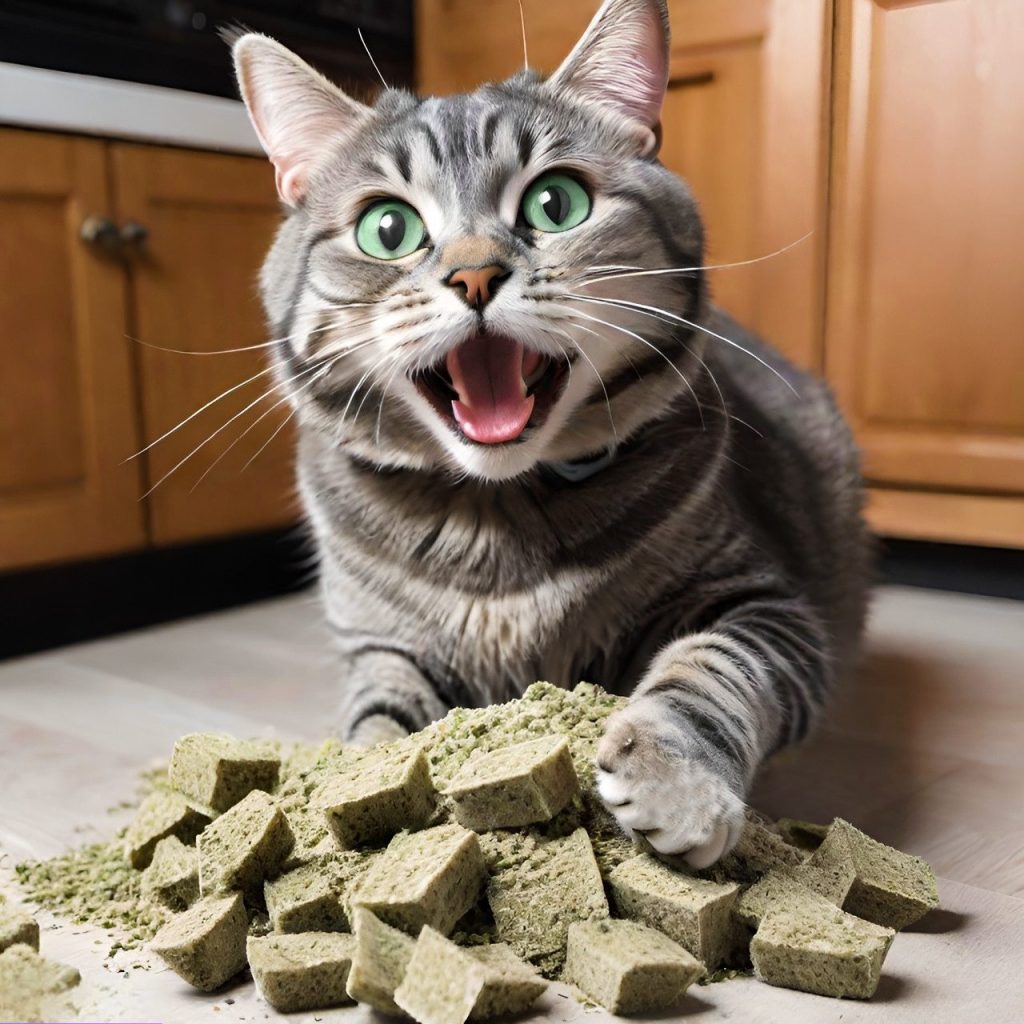
He gobbles the stuff down, by the way, so YMMV on your feline overlord’s reaction. The conventional wisdom is that cats who sniff catnip get more animated while cats who eat it tend to roll around in bliss and meow.

Making life more interesting for your fuzzy liege lord

Which brings us to the final point: catnip and silver vine are ultimately enrichment tools that help make indoor life more exciting for our little buddies, like toys, cat furniture, boxes, intriguing smells and most importantly, time playing with us.

We don’t talk about it enough, but keeping our cats stimulated and happy indoors is important, especially as pressure mounts for everyone to keep their felines inside. If your local area isn’t enforcing curfews and outright bans, it seems only a matter of time before they follow states in Australia, New Zealand and Europe in passing new laws. Every day there are news articles detailing the efforts of city councils and town boards to deal with outdoor, unmanaged feline populations, and it’s a safe bet that most of those elected officials will not have the welfare of the animals high on their list of priorities.

If we want to avoid cruelty toward cats, getting our own pets comfortable with living indoors is a good first step to making sure government doesn’t become involved.
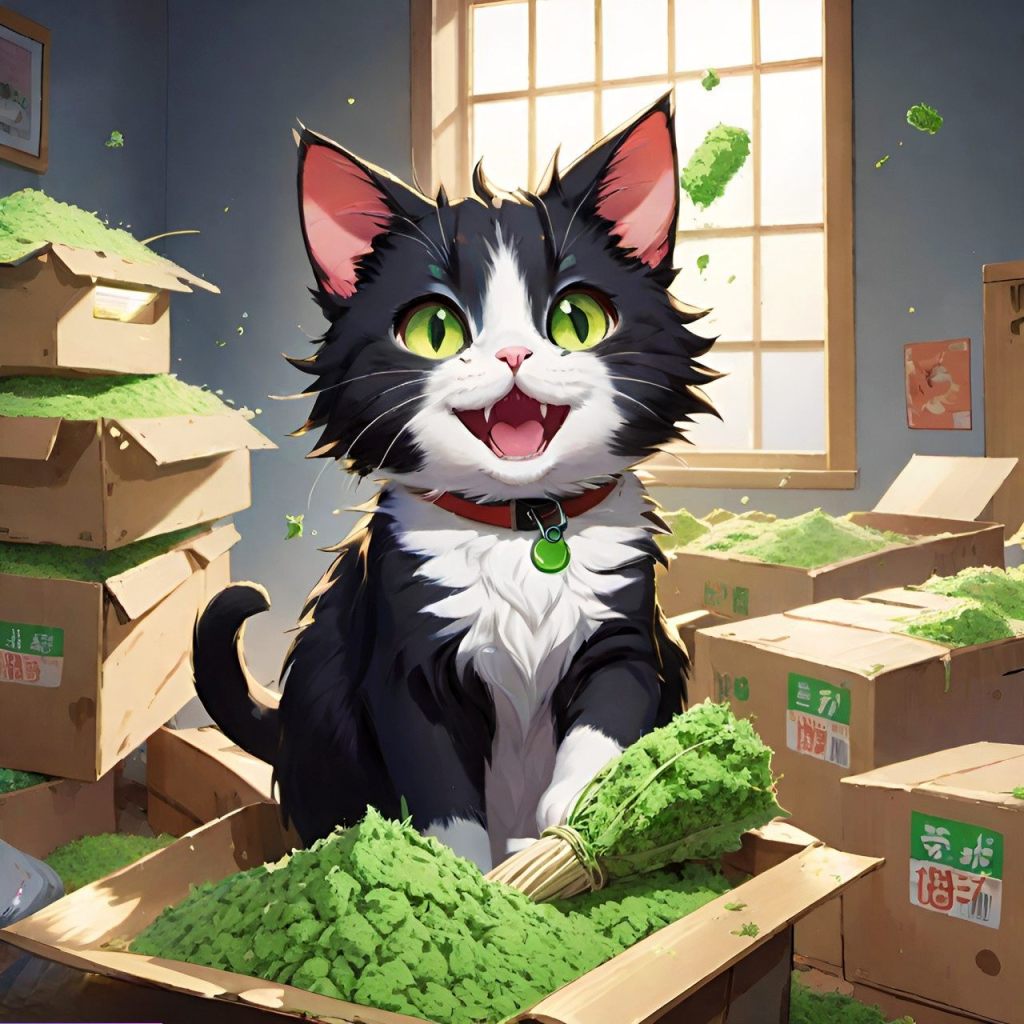
A happy cat with a huge stash of the good stuff.

Family Returns Cat After A Day To ‘Swap Her For A Kitten’

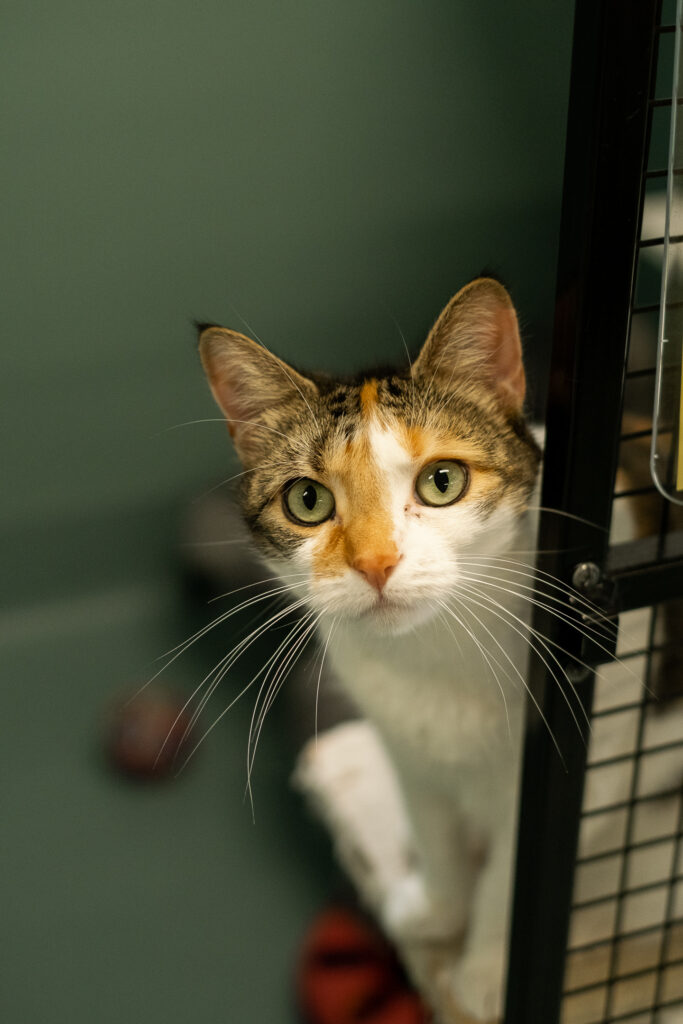
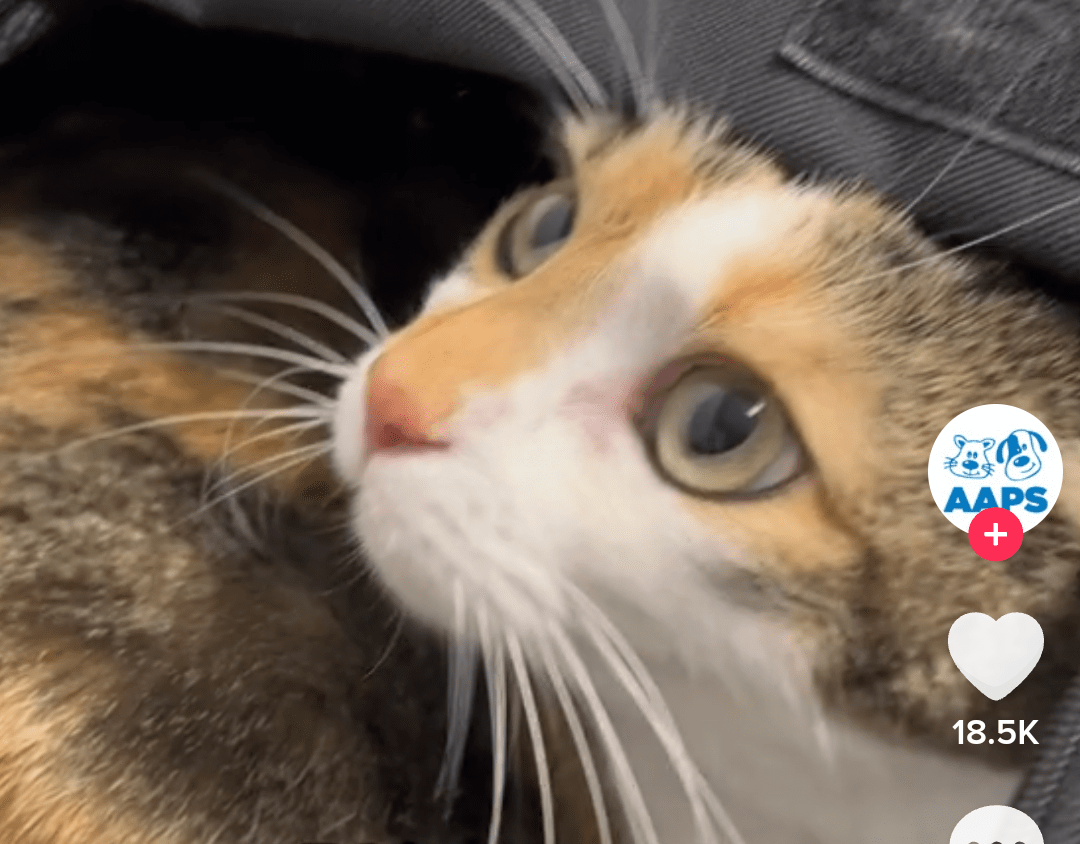
PJ is a shy cat, and her adopters were reminded that she would need time to adjust to her new home.

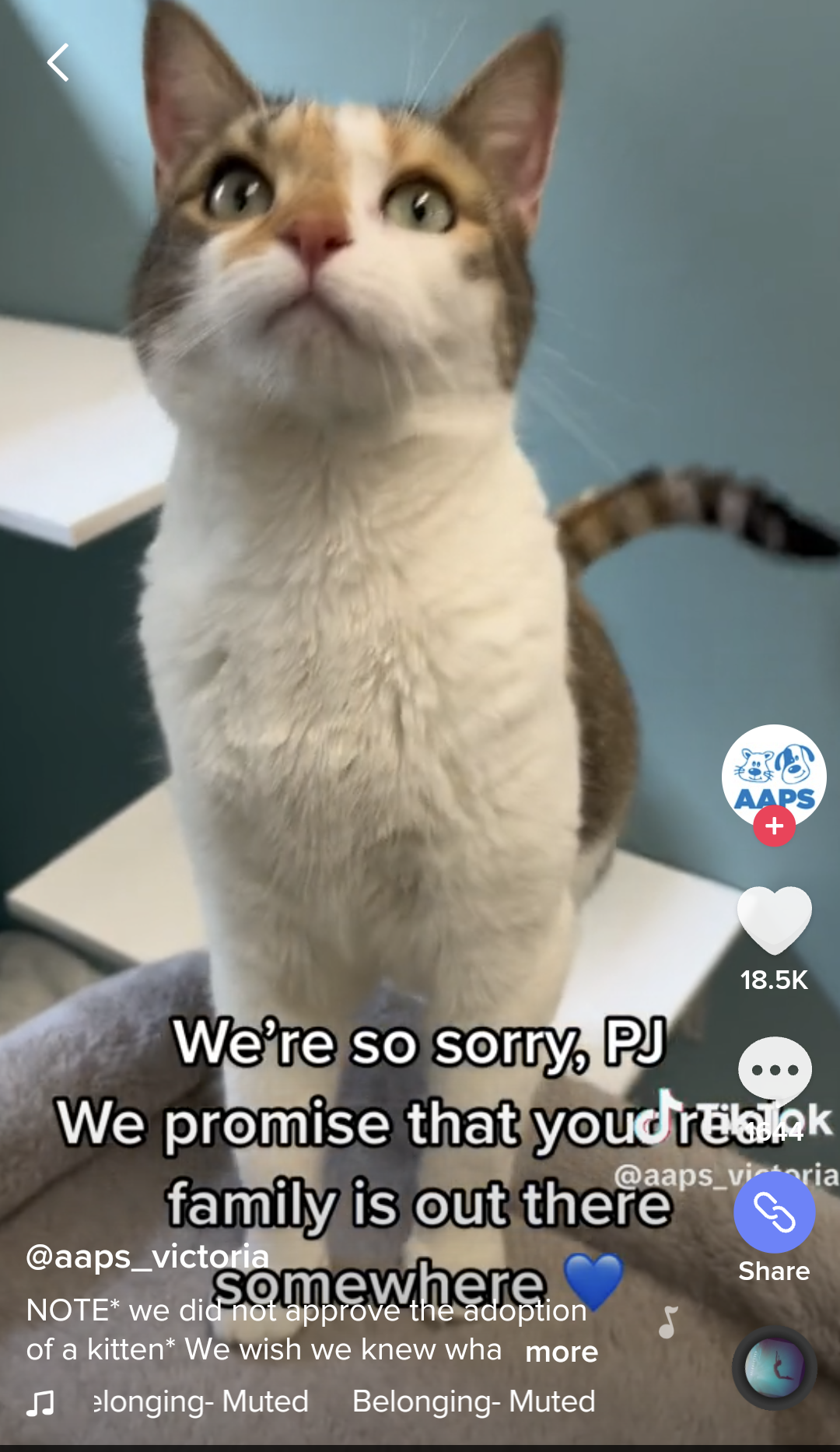
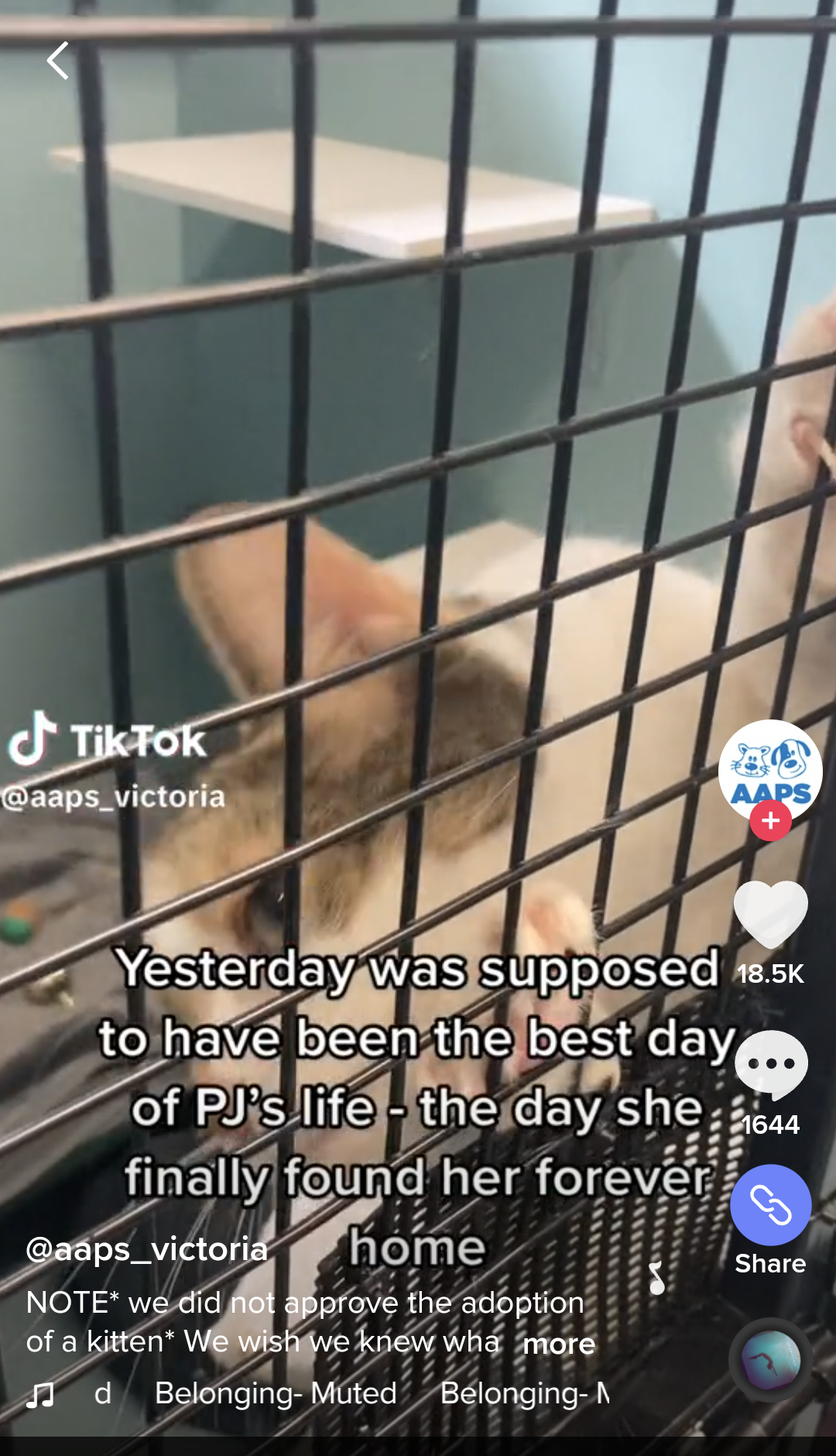
A family adopted a shy, anxious cat who has been waiting months for a forever home, then brought her back within 24 hours, explaining that they decided they wanted to “swap” her for a kitten.

I’ll pause for a second here to let PITB readers yell a few choice words about the family.

Okay, now that’s out of the way, hear me out: I think the cat, PJ, dodged a bullet.

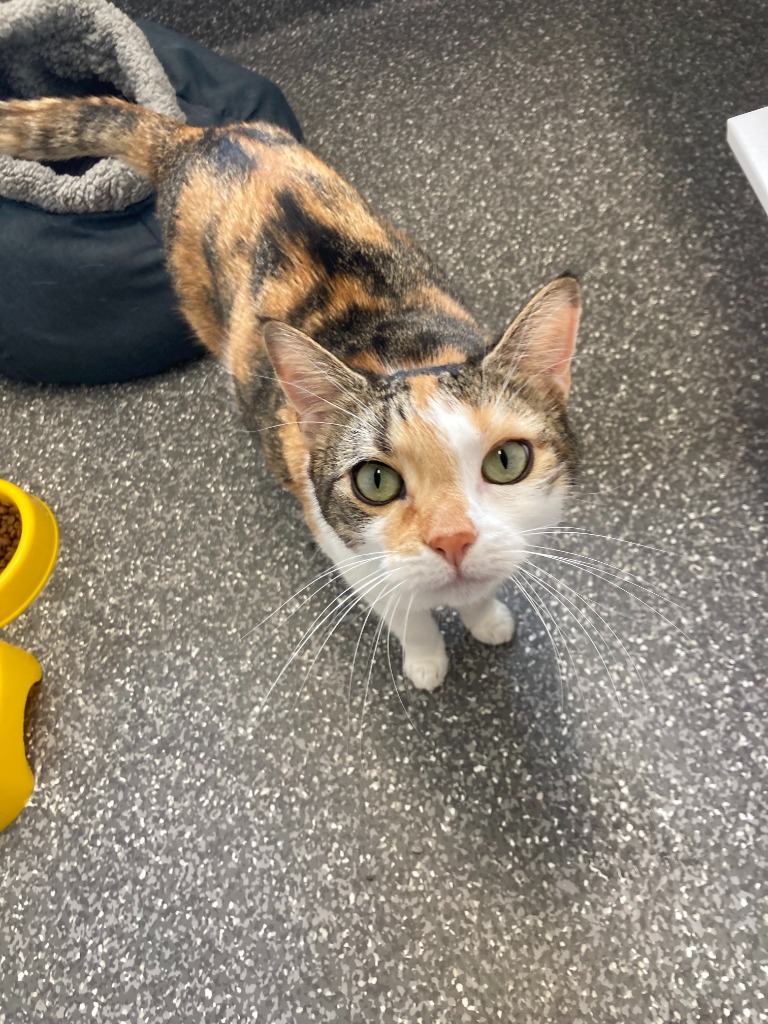
The staff at the Melbourne, Australia shelter say they went above and beyond to screen for people who insisted they would be patient with the two-year-old Calico, made sure the adopters met her several times, and sent them home with a list of resources for dealing with a shy cat.

PJ
PJ Credit: AAPS Victoria

It sounds like they did a pretty thorough job, and the whole situation illustrates how difficult it is for people who run shelters to be sure they’re sending their animals to good homes.

But PJ wasn’t going to a good home. The kind of people who would return a cat after a day to “swap her for a kitten” are extremely unlikely to be good caretakers, and to treat PJ like the thinking, feeling feline she is.

PJ
PJ’s back at the shelter after her “forever home” didn’t work out.

I’ve seen cats like that, and they live miserable, bored, unloved lives. Once their novelty wears off or they’re no longer cute kittens, they become background noise, ignored as if they’re basically house plants. They have no way out of those situations, sadly, and no way to express their feelings, which is why it’s so important for us to learn to listen to our cats. But that’s a subject for a different post.

And no, the shelter did not honor the request to “swap” PJ with a kitten, as if the adopters were in Target, bringing back a 44 inch flat screen for a 50 inch 8K model.

Let’s hope a kind soul hears about PJ’s situation and has a home for her. If any of our Australian readers are interested, PJ’s with the Australian Animal Protection Society (AAPS) in Victoria, and you can find her adoption profile here.

PJ
Credit: AAPS

Screenshot_20230503-032026~2

Another Viral Story Claims A Student Identifies As A Cat

Why is it always cats? Why don’t people make up stories about kids identifying as aardvarks or kangaroos?

Humans have dragged cats into the culture wars, and it seems our furry friends can’t claw their way out.

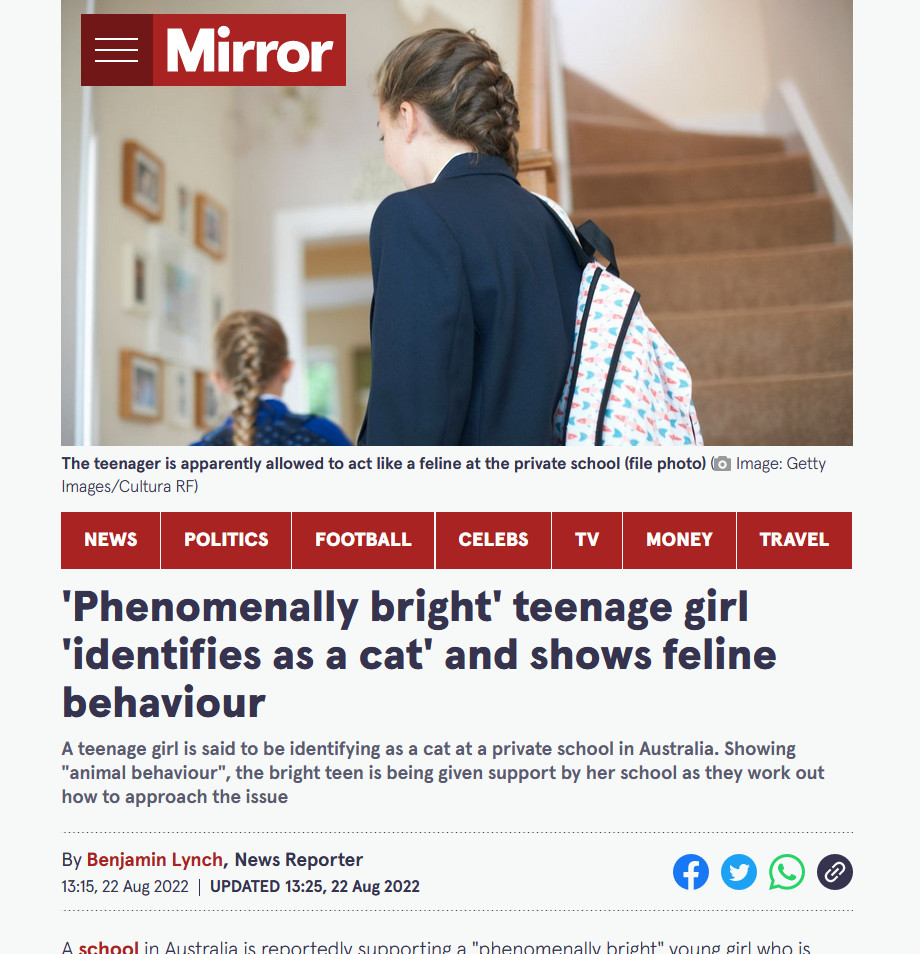
Australia’s Herald-Sun claimed this week, without any evidence, that a “phenomenally bright” teenage girl at a private school in Melbourne identifies as a cat, and the adults who run the school are cool with it as long as she isn’t too much of a distraction to her classmates.

This is the fifth or sixth viral story about school kids “identifying as cats” so far in 2022. They vary in details — some articles claim schools provide litter boxes in student bathrooms, while others assert teachers were fired for refusing to “meow back” to cat-identified children — but they’re all variations on the same theme.

None of the stories have turned out to be true.

There are big time red flags in this story. It doesn’t name the student, but that’s not uncommon. Unless a kid decides to speak to the media directly, most outlets refrain from naming minors. But the article doesn’t name the school and it’s based on the word of one person, with all the details attributed to someone described as “a source close to the family.”

Viral story about alleged cat-identified teenager
The Herald-Sun’s story has spread via News Corp.’s digital platforms to social media, clickbait sites and less scrupulous publishers.

Single-source stories are no-nos in journalism, for obvious reasons. There’s an old joke among journalists: “If your mother tells you she loves you, confirm it with a second source.”

In other words, assume nothing and verify everything, especially if the claim is unusual or extraordinary. The absolute minimum standard is two sources, preferably three.

It used to be that breaking this rule was playing Russian roulette with your career, because it’s bound to blow up in your face at some point, and no editor worth her salt would run a story like that. Unfortunately in the age of “publish now, verify never” the veracity of a story is a secondary or tertiary consideration, far less important than an article’s potential to catch fire, go viral and reel in clicks.

This story doesn’t even come close to meeting minimum standards, because the claims come from someone whose name isn’t revealed. When the source is anonymous, the need to verify becomes even more important.

Viral hoax story
Another News Corp. platform promotes the story.

In this case, if a friend of the girl’s family claims the girl is allowed to behave like a cat in school, and that friend isn’t willing to stand by that claim, no reputable news organization should run the story unless they have confirmation from the school or a legitimate document (like a letter to parents from the school) that backs up the claim.

The Herald-Sun story says the school issued a statement in response to the alleged controversy, but again, the school isn’t named so it’s impossible to confirm any details.

Finally, the Herald-Sun is a News Corp.-owned tabloid whose editors have a reputation for printing stories designed to rile up their readership and drive clicks online. The paper gives its reporters bonuses based on traffic numbers, which is an incentive to fabulate outrageous nonsense and ignore crucial but time-consuming work like serving as watchdogs of government.

The editors of the Herald-Sun may not be stupid, but they’re willing to destroy the remaining scraps of credibility the media still has to enjoy one-time spikes in traffic. They know a story like this will make the rounds on Twitter, Facebook, Youtube, TikTok and the personal sites of culture war vultures whose formula for drawing readership is whipping readers/viewers into a frenzy.

In the meantime, the most recent polls show media credibility with the public is at an all-time low, which is what happens when journalism becomes a race to the bottom. We used to laugh at junk tabloids that ran cover stories about alien abductions and Elvis sightings. Now we click on them and share them on social media.

Thankfully cats remain oblivious, and ignorance is bliss.