‘Study’ Claiming Vegan Cats Are Healthier Is A Mockery Of Science

A new paper claims cats are healthier when fed human diets, but the “study” is activism masquerading as science.

We have a science problem in this country.

Tens of millions of adults are scientifically illiterate and cannot articulate a simple definition of the scientific method.

That includes the usual suspects, the people who don’t understand the difference between anecdotes and hard data and say things like “Evolution’s just a theory” or “I don’t believe in science” as if it’s an ideology or religion. It also includes people who like to declare they’re “into science” as if it’s a band or a genre of cinema, and often post articles from sites like “I F—-ing Love Science,” which routinely mistakes natural phenomena like stars, interstellar space and the animal life for “science.”

To quote Sam Kriss’ wonderful essay on the subject: “‘Science’ comes to metonymically refer to the natural world, the object of science; it’s like describing a crime as ‘the police,’ or the ocean as ‘drinking.'”

Science is a formalized method for studying the natural world. That’s it. No more, no less. It isn’t natural phenomena itself, it isn’t something that requires faith. It’s meant to be challenged, with each piece of knowledge hard-won as the scientific community collectively chips away at the vast edifice of things we don’t understand.

The lack of scientific literacy is an indictment of the American education system, but the science and journalism communities are also big contributors. A flawed academic publishing system encourages researchers to make grandiose claims in abstracts and press releases to increase the chances their work will get positive coverage in the press. Few journalists are more scientifically literate than the general population, so they report dubious claims credulously and present individual studies as the final word on subjects instead of tentative first steps in contributing to the corpus of human knowledge.

We see this all the time with reporting on the environmental impact of felines, but it’s certainly not limited to that subject. How many times have you seen your local news anchors or newspapers tout studies saying coffee is healthy, only to report the next week that a new study says coffee isn’t healthy after all?

“Those scientists can’t make up their minds,” they’ll say with a forced chuckle before handing the broadcast over to the weatherman, oblivious to their own failure to provide context.

The effort to rebrand cats as vegans

A new “study,” given prominent play today by major news outlets like Newsweek and aggregators like Drudge, is a classic example of misleading claims given the veneer of scientific authority. The paper claims vegan cats are “healthier” than their meat-eating counterparts. The study — which is actually a survey — says no such thing, and its authors are surely aware that the way it’s been packaged for media consumption will cause confusion, but they’ve gone ahead with it anyway.

The research involved asking 1,369 cat owners to fill out surveys about their cats, the cats’ diets, and their veterinary health histories.

Of those surveyed, there were 123 reported “vegan cats” in their households (about nine percent of the total), and while the abstract and media pitches claim the surveys show vegan cats are healthier, the differences are statistically insignificant. The sample size is too small to draw any conclusions from, and the fact that the details are self-reported means the “data” is worthless: People who put their cats on vegan diets despite knowing felines are obligate carnivores have a vested interest in defending their decision. They’re not impartial, and their survey answers aren’t either. (The paper acknowledges that 91 percent of the respondents are female, and 65 percent are vegans, vegetarians or pescatarians themselves. Those are admirable choices for a human diet, but not for a cat.)

Relying on self-reported “data” also means the research team doesn’t actually know the true veterinary histories of the cats in question, nor does it know anything about the nutrient content of the vegan “cat food” given to the 123 cats who have been deprived of meat. It also cannot account for possibilities like the so-called vegan cats slipping out at night to hunt rodents.
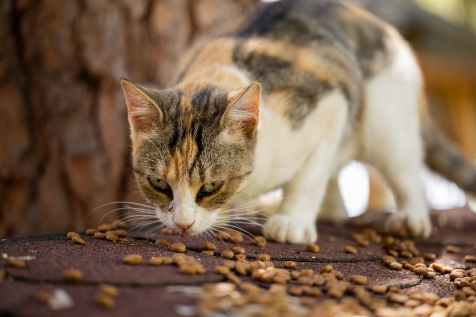
a close up shot of a cat eating
Credit: Engin Akyurt/Pexels

That’s especially important because of “vegan cat food’s” dubious history. Evolution, the brand that popularized the concept, is owned and operated by a man named Eric Weisman, who has been prosecuted and repeatedly sanctioned for misrepresenting himself as a physician, veterinarian and scientist — and continues to misrepresent himself.

Weisman, a chiropractor by trade, racked up a long list of violations in his chosen field before his chiropractor license was pulled, then was charged and convicted criminally for, among other things, practicing veterinary medicine and regular medicine without a license. Weisman’s list of offenses include “treating” cancer patients, “treating” and misdiagnosing animals, and posing as a physician for years, including in advertisements and literature related to his pet food and fake veterinary practices.

Weisman is still calling himself a physician in violation of his plea agreement, and he’s still selling “vegan cat food.” Would anyone in their right mind weigh the claims of that man against the tens of thousands of veterinarians and pet nutritionists who are horrified at the idea of restricting cats to vegan diets?

(In case you’re tempted to think chiropractors are legitimate to begin with, you should know that chiropractor was founded by a lifelong quack who claimed its methods were taught to him by the ghost of a physician, which allegedly appeared to him during a seance. Chiropractor’s founder dodged accountability for years by claiming his practice was a “religion.” The fact that it’s now a $15 billion industry despite its origins, and decades of research that has found no benefit to the practice, illustrates how eager people are to believe just about anything.)

The consequences of bad science

Not only will the “study” and press coverage of it mislead people into believing its claims, it’s another black mark on the scientific community. Trust is hard-won, easily lost, and for better or worse the misdeeds of a few scientists reflects on the entire field.

Others will simply believe it, especially when major news outlets like Newsweek report the results without question, without acknowledging that it’s a lazy effort masquerading as science by a research team that already knew what result it wanted before handing out the surveys. (The “study” was funded by ProVeg, an NGO that promotes plant-based consumption and is involved in the development of plant-based foods.)

Lastly and most tragically, cats will suffer for it. Cats who are denied meat suffer slow and agonizing deaths, with health problems accumulating due to the lack of certain proteins until they go blind, become chronically malnourished and eventually suffer organ failure.

And for what?

Because some people believe human morals apply to cats?

Because, despite all common sense, they think they can change a species that has been dependent on meat for so long in their evolutionary history that their bodies literally cannot synthesize certain proteins and cannot extract nutrients from most plant material?

How would we like it if we were dependent on giants to feed us, and those giants decided we could and should live on a diet of marshmallows? We’d suffer horribly and we’d die, but at least we’d know why.

Cats don’t have that luxury. They depend on us to do right by them, and when we adopt them it’s our basic responsibility to keep them healthy and well-fed. Let’s not fail our little friends by pretending human ethics is applicable to a species that can’t understand it, or consent to participating in it.
PITB Reviews: Shadow And Bone Is Netflix’s Best Epic Fantasy

A look at Shadow and Bone, one of Netflix’s most exciting original fantasy epics ahead of its second season.

Title: Shadow and Bone (season 1, 2021, season 2 March 16, 2023)
Genre:
Fantasy
Medium:
Netflix

Shadow and Bone begins with a well-worn YA premise: A young girl lives a drab existence, dreaming of a better life, when she unexpectedly discovers via extraordinary circumstances that she’s Special.

Jealous rivals don’t like the fact that she’s Special and try to tear her down as she leads a revolution in a society ruled by idiotic adults, who Just Don’t Understand the complicated lives of teenagers.

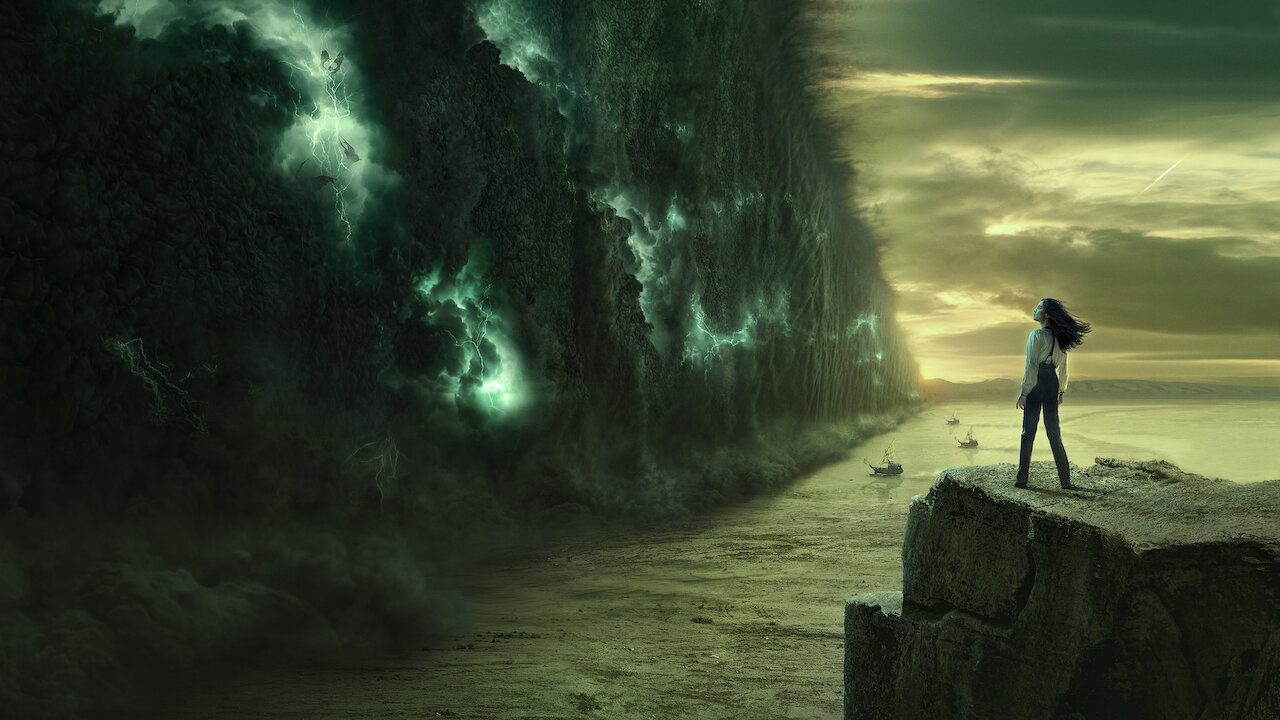
Normally that would be enough for me to steer well clear of a movie or TV show, but a teaser for Shadow and Bone tickled my interest: It shows the protagonist, Alina, on a boat that’s about to cross the Fold, also called the Unsea — a pitch-black, swirling mass of cloudy mist smudged right across the middle of her country, dividing it in two.

As the ship approaches, Alina and the other passengers can hear the shrieks of the unseen nightmares that populate the Fold. The bow of the boat penetrates the Unsea, Alina closes her eyes, holds her breath, and the preview ends.

That short scene was enough to convince me to give the series a shot. At the very least I wanted to know what The Fold was, how it came into being, and what kind of creatures stalk its gloom.

The Fold
The Fold is a wall-like scar that splits the country of Ravka in two, and many ships are lost trying to cross it. Credit: Netflix

While Shadow & Bone uses YA tropes as its jumping off point, it quickly sheds them in favor of clever world-building, affable characters and a well-established mythology that sets up the overarching heroic journey of its protagonist. It also ages its cast so they’re mostly in their twenties and thirties, and while Netflix may have played up the YA template while marketing the series to appeal to younger views, the show itself is geared toward adults of all ages.

The action is centered on a country called Ravka, which is modeled on Czarist Russia and has been split in two by the Fold. Ravka’s capital, Os Alta, is located to the east of the Fold while its major port cities and trading centers, Os Kervo and Novokribirsk, are situated to the west of the dangerous no-man’s land.

As a result, and despite the dangers, Ravka’s economy and unity depends on ships that regularly cross the Fold to move food from the breadbasket to the east and trading goods from the port cities to the west. Losing ships is the cost of doing business, not unlike crossing the Atlantic was during the days of colonial America, and it has a human toll as well: Alina, her best friend, Mal, and all the other children at the orphanage where they grew up lost their parents to the Fold’s horrors.

But Ravka has its blessings as well: A class of conjurors called Grisha who have the ability to manipulate elements. Grisha Tidemakers can control and shape water, Squallers can control wind, Healers can repair human bodies in ways normal medicine cannot, and Heartrenders can sense and manipulate hearts. They can sooth a person’s anxieties or ease them into a restful sleep, but they can also stop a person’s heart or tell if someone is lying by feeling the subtle shifts in their heartbeats.

The Grisha can mitigate the chances of a ship being lost to The Fold but they’re not immune to its dangers, and many of their number have been lost to its hazards as well. Making the crossing is a grim prospect for anyone aboard one of many ships that regularly journey across the so-called Unsea.

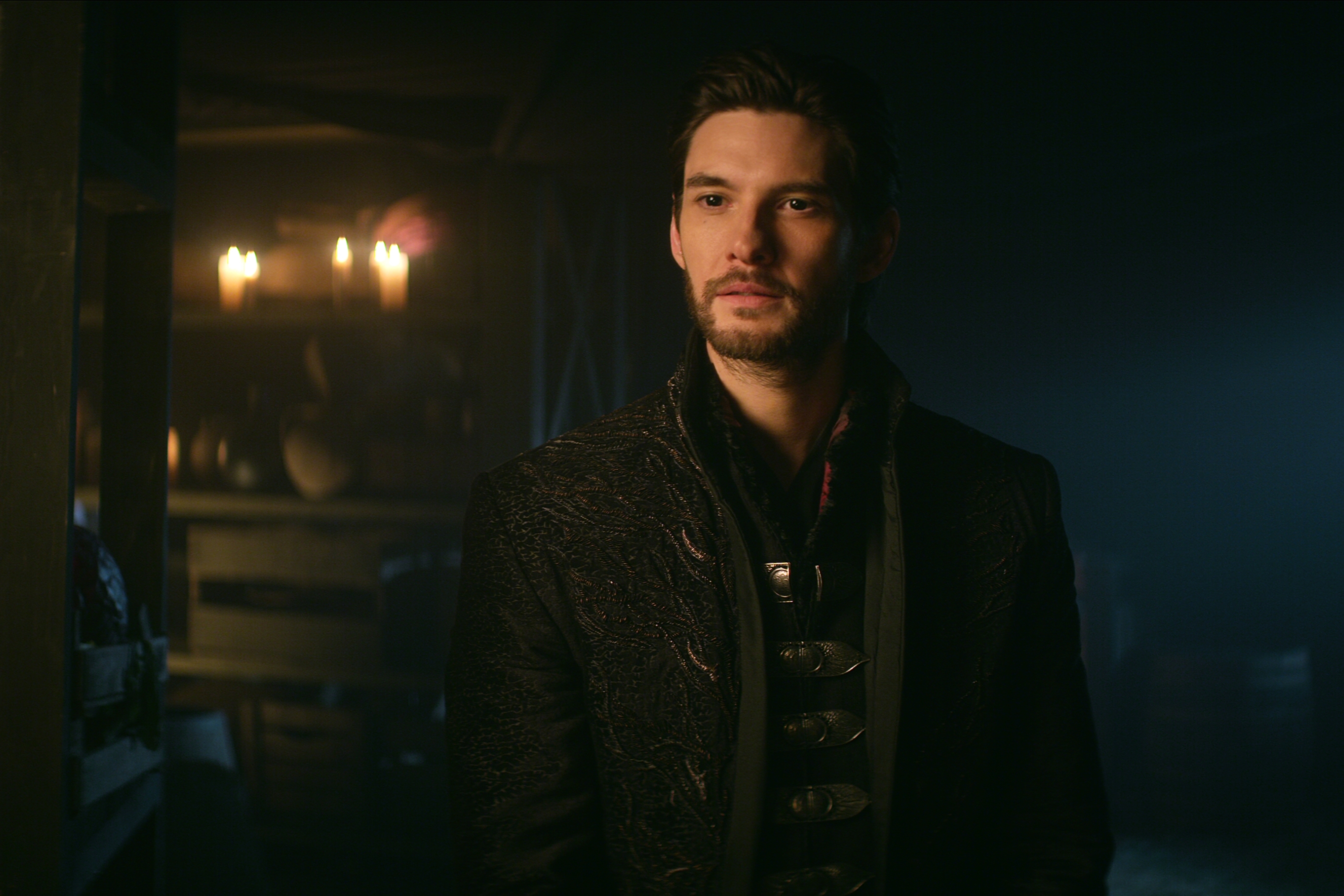
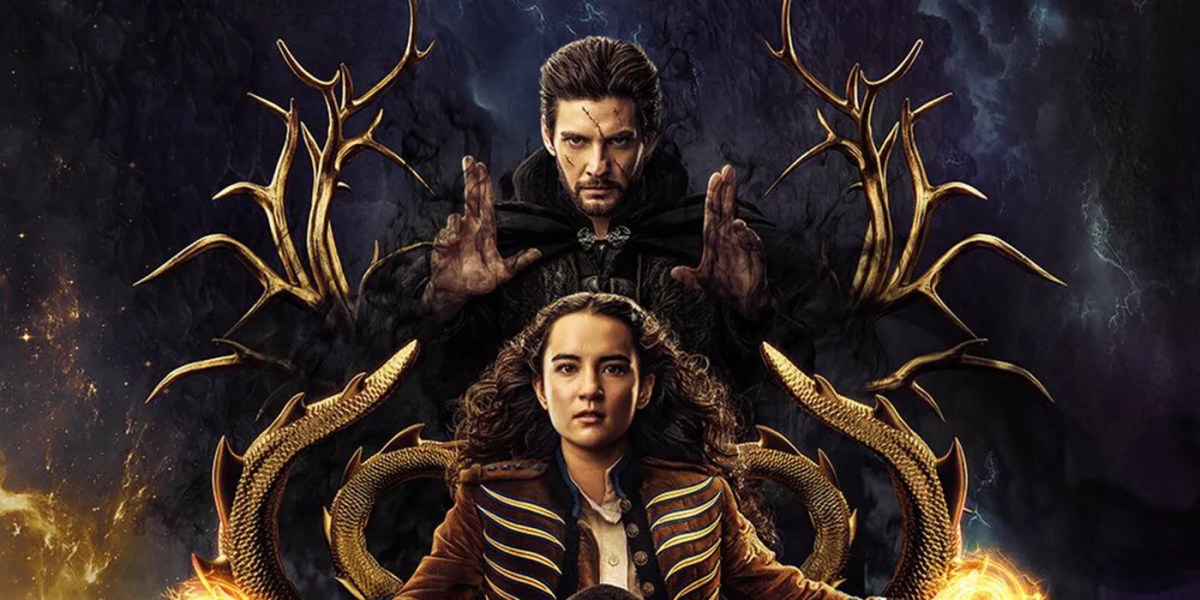
The Grisha are led by General Kirigan (Ben Barnes of Westworld and Narnia fame), who has the unique ability to manipulate shadows and destructive energy. It was Kirigan’s ancestor, the Black Heretic, who created the Fold, and Kirigan has vowed to redeem his family by destroying it.

kirigan
Ben Barnes is General Kirigan, Ravka’s military commander and its most powerful Grisha, or conjurer.

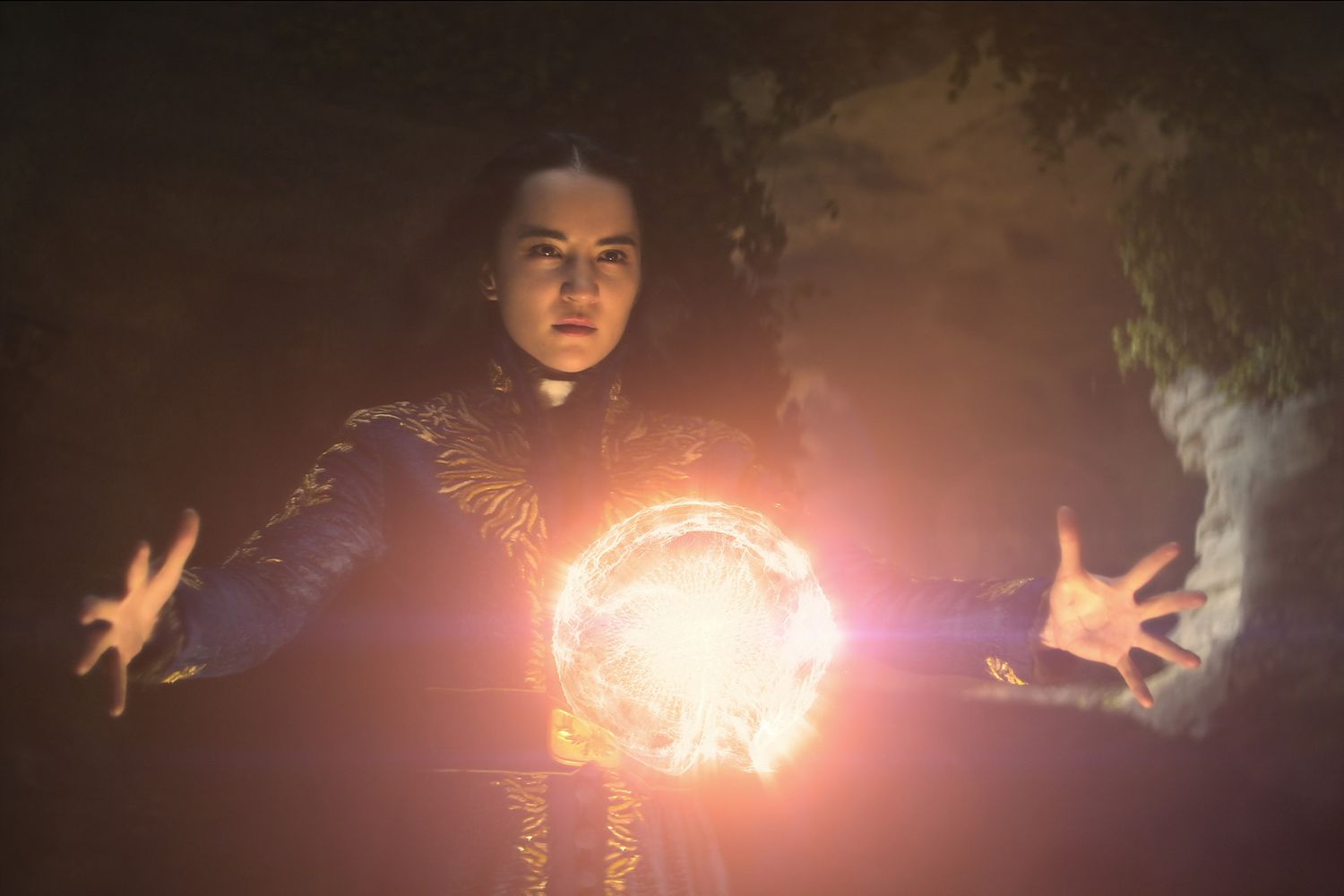
Prophecy foretold a new kind of Grisha — the Sun Summoner, who has the power to call on the sun’s energies and manipulate light. It’s said the Sun Summoner will be the one to finally destroy the Fold and emancipate Ravka from the terrible toll it takes. In addition to protecting Ravka against her many enemies as its general, finding the Sun Summoner has been Kirigan’s life’s work.

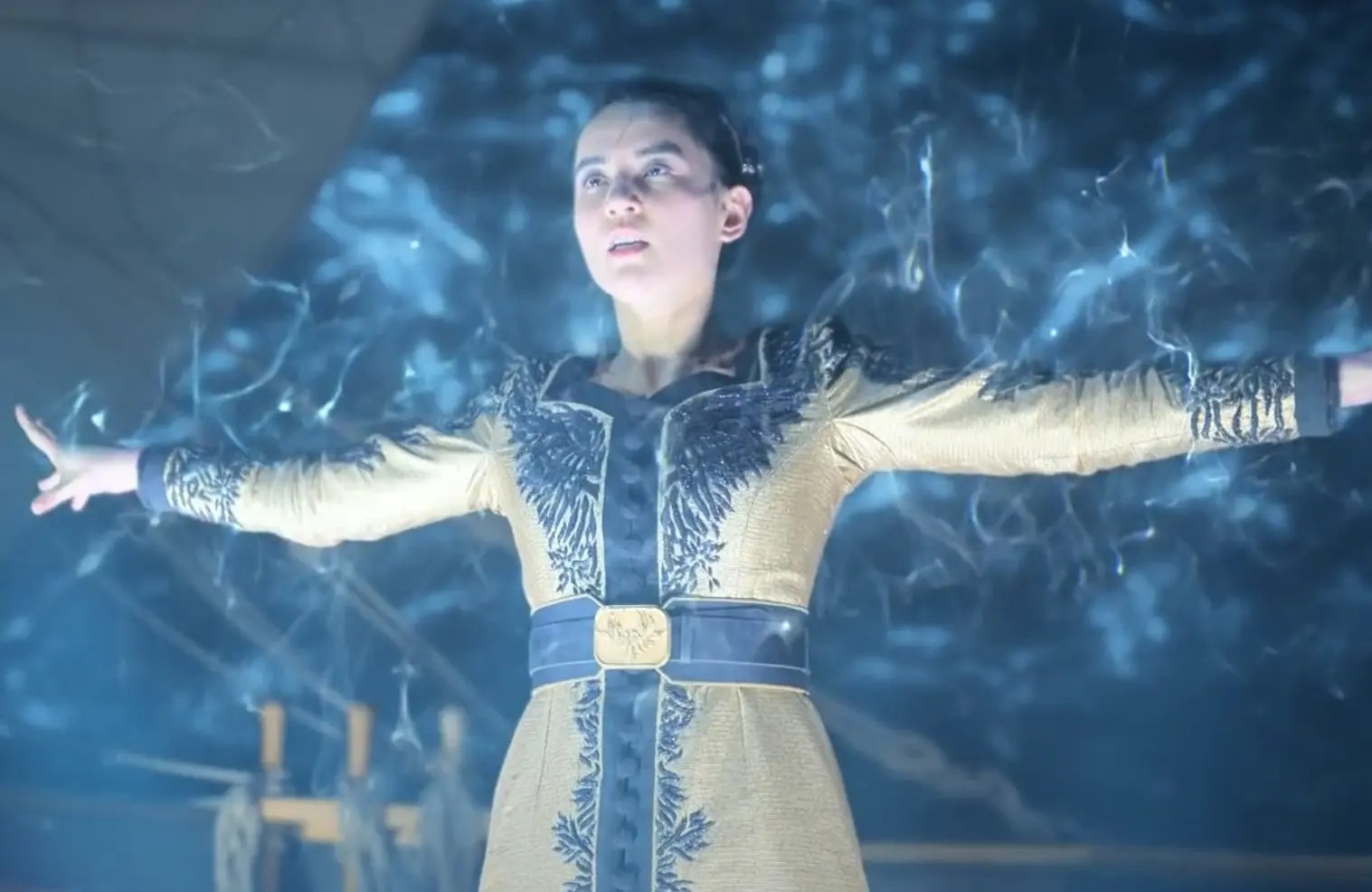
Alina is the Sun Summoner, but you already knew that because Shadow & Bone is based on a YA series of books. But she doesn’t know it until she’s forced to cross the fold and one of its nightmarish creatures is about to kill her beloved Mal, drawing out her latent powers in a moment of desperation. The sudden burst of energy and light as she intercedes is so powerful that it’s spotted for miles outside the Fold, and soon survivors of the ill-fated ship arrive at the docks, telling of a woman who can call upon the power of the sun.

alinastarkov
Alina Starkov, an orphan who occupies a lowly position as an assistant cartographer in the Ravkan army, learns she has the ability to summon the power of the sun.

In the series, Alina and her friends are aged up and appear as young adults. Mercifully, Shadow & Bone doesn’t mirror its genre’s traditional portrayal of adults as idiots, and unlike other big-time YA franchises, like Veronica Roth’s incoherent Divergent series, it doesn’t ask its audience to buy into an absurd society. Novelist Leigh Bardugo has clearly put a lot of thought and research into crafting her fictional universe. There’s rich lore, varied nations with their own distinct customs, prejudices and beliefs, a believable economy and conflict perpetuated by very human motivations and circumstances. Most of the characters we meet are just trying to get on with their lives and are caught up in the central drama.

Alina, played by 26-year-old British actress Jessie Mei Li, is mixed race, part Ravkan and part Shu. Shu Han, a nation based loosely on dynastic China and the Middle East, is in a perpetual state of conflict with Ravka, and Alina’s Shu appearance makes her the object of disdain, ridicule and ignorance even among her countrymen.

“I was told she was Shu,” the queen says in a later scene, when Alina is presented to the royal family and the court of Ravka for the first time. “I guess she’s Shu enough. Tell her… Oh, I don’t know, ‘Good morning.'”

Alina speaks up before a man by the queen’s side can translate.

“I don’t actually speak Shu, your highness,” she says.

“Then what are you?” the queen asks.

There’s a long pause, with Alina clearly unsure how to answer, before General Kirigin steps in.

“She is Alina Starkov, the Sun Summoner, moya tsaritsa,” Kirigin says. “She will change the future. Starting now.”

And with that, Kirigin claps his hands, enveloping the throne room in unnatural gloom with his shadow-manipulating ability. He turns to Alina, takes her hand, and there’s an eruption of ethereal light so powerful that the assembled aristocrats, guards and Grisha gasp and shield their eyes. The light solidifies into a bubble around Alina and Kirigin, its elements twinkling and orbiting them like stars, and the overjoyed king is convinced his nation has indeed finally found the prophesied Sun Summoner.

Becoming the Sun Summoner isn’t all flowers and rainbows. Alina feels the weight of expectations upon her. The king of Ravka is impatient for her to learn to control her newfound powers so she can tear down The Fold. Ravka’s aristocrats, as well as ambassadors and powerful figures from other countries, initially suspect she’s a fraud. Regular people, who have suffered the most from The Fold’s impact on Ravka, begin to venerate her as a living saint. And there are plenty of people who don’t want her to succeed or see her existence as a way to profit.

Shadow and Bone also has a parallel narrative following three lovable rogues from Ketterdam, an island nation west of Ravka. It’s clear early on that their journey will intersect with Alina’s at some point, but the series never feels predictable in the way the characters approach that point.

The Ketterdam trio, who call themselves the Crows, are led by Kaz, the owner of a tavern-slash-gambling den called the Crow Club. Kaz is practical, calculating and focused on making money, legitimately or not. Inej is another orphan of the Fold who was sold to a brothel in her early teens. She was bought out by Kaz, who recognized her intelligence, her light step and her talent for spying. Last but not least is Jesper, a wise-cracking, life-loving and fiercely loyal friend with uncanny sharpshooting abilities.

The Crows
The Crows, lovable rogues of Shadow and Bone: Sharpshooter Jesper, spy and assassin Inej, and mastermind Kaz.

The Crows are the source of much of the series’ humor, despite being criminals and despite all of them having painful pasts. Jesper in particular is known for his wisecracks and his relentless, single-minded obsession with hiring “a demo man” — an explosives expert — for every job they do, regardless of whether the gig calls for it.

“Boss, I think we need a demo man for this one,” he tells Kaz at one point.

Kaz points out that the nature of their job is stealth, and the whole purpose is to get in and out without being heard or seen. You can almost see the gears moving in Jesper’s head as he thinks up reasons why they do, in fact, need someone to blow things up.

When word of the Sun Summoner’s appearance spreads to every corner of Shadow and Bone’s universe, the Crows catch wind of a contract offering a fortune to anyone who can abduct the Sun Summoner and bring her to Ketterdam.

Kaz believes the Sun Summoner is a hoax and views the job as a simple transaction, while Inej holds out hope that she’s the real deal, and if she is, the prospect of kidnapping a living saint weighs heavily on her conscience. Jesper is just content to go wherever there’s alcohol and explosions.

Alina Starkov
Once she’s revealed as the Sun Summoner, Alina feels the weight of expectations upon her, with everyone from the king to General Kirigan and regular people looking to her to save the kingdom.

A great strength of the series is that it begins from a familiar place and manages to regularly subvert expectations.

The production values are exceptional, and it appears Netflix spared no expense bringing Bardugo’s world to life. Ravka, Ketterdam and Novokribirsk feel like real places inhabited by real people, with authentic differences in culture, manner of speaking, dress and even the way they count money.

From imperial courts to military camps to the seedy underbellies of Ketterdam drinking clubs, the world feels like it continues to exist long after we turn our televisions off.

The first season takes several wild turns, which I won’t detail here because it’s very much worth watching, especially now: The long-awaited second season comes to Netflix on March 16, promising to expand on a series already bursting with lovable characters, thrilling adventures and political intrigue.

Of course all epic TV series will eventually be compared to the juggernaut that started it all. Shadow and Bone never tries to be Game of Thrones, and it doesn’t need to be — the first season carved out the show’s unique identity, and season two promises to make the world even bigger and more adventurous.

Buddy’s rating: 5/5 paws

paws55


The New York Times Is Back To Spread Misinformation About Cats

Protecting birds from extinction will take a lot more than passing laws requiring people to keep their cats indoors.

Prompted by the recent news that Polish scientists have added cats to a list of invasive alien species, the New York Times ran an enterprise story on Tuesday titled “The Outdoor Cat: Neighborhood Mascot Or Menace?”

I’m highly critical of print media stories on animals because I’ve been a journalist for almost my entire career, and I know when a reporter has done her homework and when she hasn’t. Unfortunately it looks like Maria Cramer, author of the Times story, hasn’t.

Her story identifies the stray cats of Istanbul as “ferals,” cites bunk studies — including meta-analyses based on suspect data — and misrepresents a biologist’s solutions “to adopt feral cats, have them spayed or neutered and domesticate them.”

Doubtless the biologist understands cats are domesticated, but Cramer apparently does not, and her story misrepresents the domestication process.

Individual animals can’t be domesticated. Only species can. It’s a long, agonizingly slow process that involves changes at the genetic level that occur over many generations. Domestication accounts for physical changes (dogs developing floppy ears while their wolf ancestors have rigid ears, for example) and temperamental ones. A hallmark of domestication is the adjustment to coexisting with humans.

agriculture animal beautiful cat
Photo by Pixabay on Pexels.com

In other words, if cats were wild animals it would take hundreds of years to fully domesticate them, and I’m sure no one’s suggesting we wait hundreds of years to solve the free-ranging cat problem.

Ferals can be “tamed,” but the majority of cats living in proximity to humans are strays, not ferals. The difference? Strays are socialized to humans and will live among us, while ferals are not and will not. Strays can be captured and adopted. In most cases ferals can’t, and the best we can hope for is that they become barn cats.

To her credit, Cramer does make efforts to balance the story and quotes the Royal Society for the Protection of Birds in the U.K., which places the majority of the blame squarely at the feet of humans, noting “the decline in bird populations has been caused primarily by man-made problems such as climate change, pollution and agricultural management.”

Even our structures kill billions of birds a year. That’s the estimated toll just from the mirrored surfaces of skyscrapers, and no one’s suggesting we stop building skyscrapers.

Indeed, Saudi Crown Prince Mohammed bin Salman al Saud (MBS), the de facto ruler of Saudi Araba, has been busy commissioning science fiction city designs when he’s not murdering journalists critical of his policies. The design he’s chosen for his ultra-ambitious future city, which he hopes will rival the pyramids in terms of lasting monuments to humanity’s greatness, is a 100-mile-long mirrored megacity called Neom, which is Arabic for “Dystopian Bird Hell.” (Okay, we made that up. Couldn’t resist.)

Take a look:

The point is, of the many factors driving bird extinction, humans are responsible for the majority of them, and if we want to save birds we have to do more than bring cats inside. Additionally, sloppy research portraying cats as the primary reason for bird extinction has resulted in cruel policies, like Australia’s effort to kill two million cats by air-dropping poisoned sausages across the country.

This blog has always taken the position that keeping cats indoors is the smart play, and it’s win-win: It protects cats from the many dangers of the outdoors (predators like coyotes and mountain lions, fights with other neighborhood cats, diseases, intentional harm at the hands of disturbed humans, getting run over by vehicles), ensures they’re not killing small animals, and placates conservationists.

At the same time, we don’t demonize people who allow their cats to roam free, and we recognize attitudes vary widely in different countries. Indeed, as the Times notes, 81 percent of pet cats are kept indoors in the US, while 74 percent of cat caretakers allow their pets to roam in the U.K.

We have readers and friends in the U.K., and we wouldn’t dream of telling them what to do, or suggest they’re bad people for letting their cats out.

Ultimately, tackling the problem depends on getting a real baseline, which Washington, D.C. did with its Cat Count. The organizers of that multi-year effort brought together cat lovers, bird lovers, conservationists and scientists to get the job done, and it’s already paying off with new insights that will help shape effective policies. To help others, they’ve created a toolkit explaining in detail how they conducted their feline census and how to implement it elsewhere.

Every community would do well — and do right by cats and birds — by following D.C.’s lead.