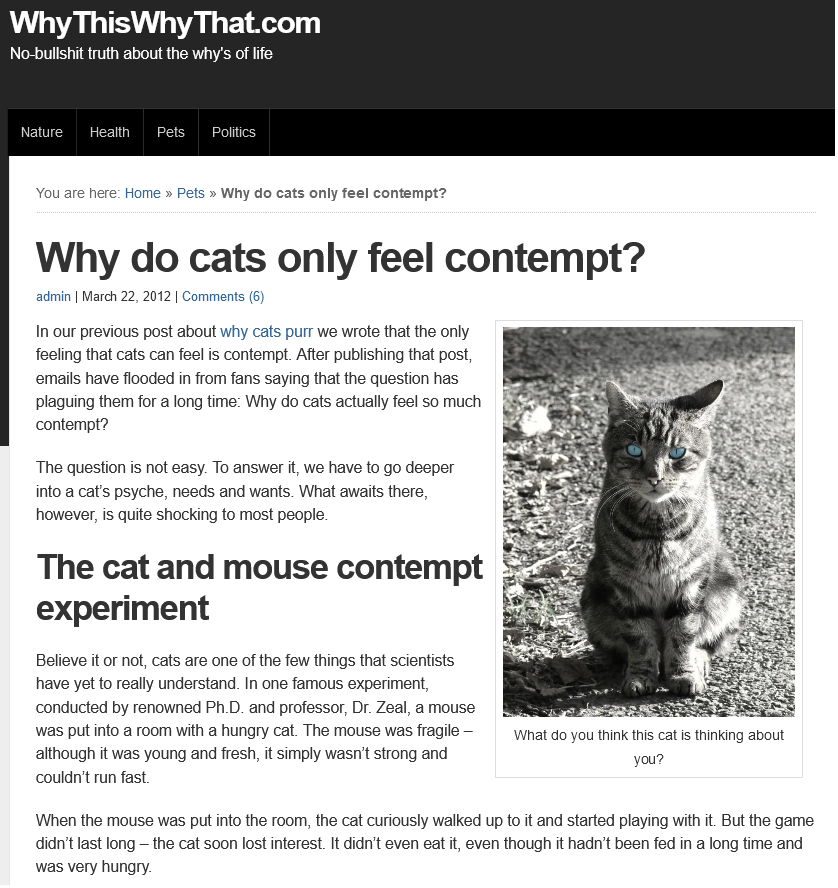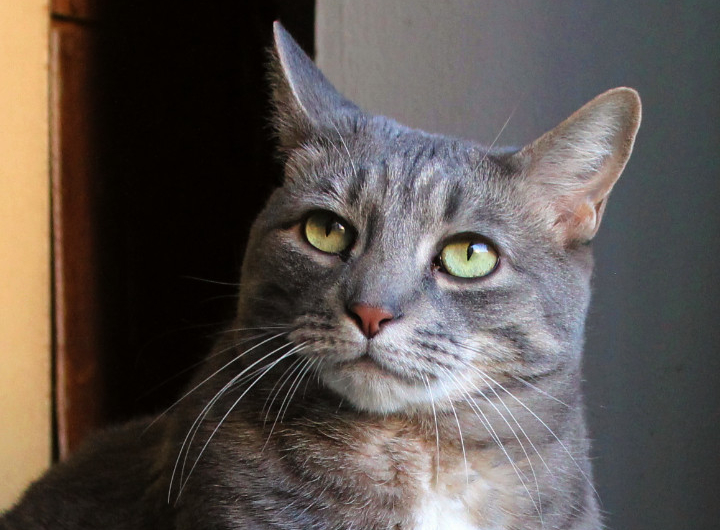
One Unverified Claim Of An Aggressive Stray Prompted A New Jersey Town’s Plan To Trap And Kill Cats

Local authorities have backed off the plan, but the story raises important questions about how local governments deal with stray cat populations.

The recent saga of a New Jersey town’s ill-advised plan to “destroy” feral cats highlights almost everything wrong with local government.

First, a notice went out from the northern New Jersey town of Matawan, informing residents that feral cats had become a “nuisance” and their presence posed a danger to “the welfare and safety of both the community and the cats.” The town, in cooperation with the police and SPCA, the notice said, would begin trapping stray, feral and free-roaming felines in November, and any cat not claimed after seven days would be “destroyed.”

The backlash was loud and immediate, and it took the Monmouth County SPCA by surprise.

After receiving angry complaints, the local SPCA posted a notice on Facebook blasting the “outlandish and outrageous campaign.” The SPCA’s leaders said they hadn’t been consulted and hadn’t approved of the policy, blaming the Matawan Animal Welfare Committee, a three-person group comprised of the town’s business administrator, Scott Carew, town councilwoman Melanie Wang and an animal control officer.

“We are completely outraged and disheartened that our organization has been attached to this archaic campaign to euthanize feral cats, when there are so many other successful, humane alternatives,” the Monmouth County SPCA wrote in its statement.

Carew backpedaled in the fallout, claiming the notice was a well-intentioned way of informing people who live in Matawan to keep their cats inside and stop feeding strays and ferals.

“By no means was the goal of the trapping efforts to destroy trapped cats,” Carew told NJ.com. “That said, since there was the chance that cats would be trapped and brought to the shelter, we wanted to alert cat owners whose cats are allowed to roam outside.”

But Carew also said he and the other were “obligated to address the complaint,” and said the town would have to enact “a resumption of trapping efforts” if it received more complaints about the cats. According to a statement by the Matawan police department, in a meeting between local leaders and people concerned about cats in one neighborhood, it was a single complaint about a possibly aggressive feral cat that prompted the plan.

That’s it. That’s all it took, in the eyes of local government officials, to justify a policy of trapping and killing sentient, human-habituated innocent animals, a group that includes free-roaming pets, former pets, strays and true ferals. A single, unverified complaint of a potentially “aggressive” cat, with no further detail about what the word aggressive means in that context, no information about what the cat supposedly did, or even confirmation that the cat was a feral and not a stray or a wandering pet.

When the dust cleared from all the finger-pointing, Carew said his committee should have informed the SPCA of its plans, and police brushed off responsibility by saying they “assumed” the notice was drafted with the cooperation and intent of the SPCA and other local animal welfare groups.
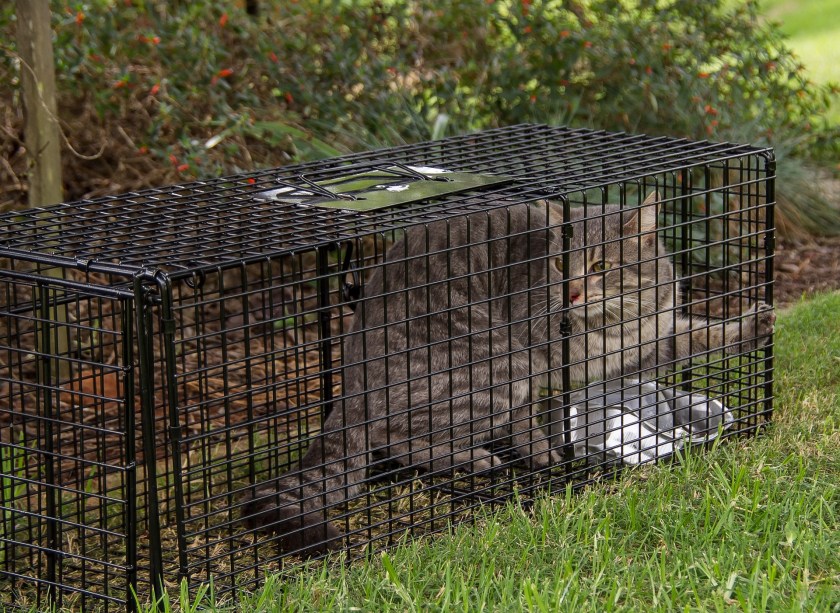
Cat trap
A cat caught during a trap, neuter, return program, which reduces feral/stray populations in the long term without the cruelty of culling. Credit: Pixabay

Local government leadership and incompetence has become a big problem. With the death of newspapers, particularly regional dailies that employed trained journalists, there are entire swaths of the country no longer served by local government watchdogs who have the time, skills and resources to monitor local officials and inform the public.

We’re fortunate that NJ Advanced Media, an online portal for content from more than a dozen New Jersey local newspapers, has found a way to exist as a viable business serving millions of readers throughout its home state. Without it, it’s doubtful the story would have surfaced anywhere.

Lots of people think local government is small potatoes, but the truth is that local officials are responsible for enormous budgets and wield considerable power. The decisions they make very likely have more impact on our lives than decisions made in the halls of congress, even if it’s the latter that gets people’s blood boiling.

In this case we have a meeting conducted in secret, without public notice, that would have determined the fate of an unknown number of animals. We have anonymous, nebulous complaints and allegations about “nuisances.” What constitutes a nuisance? How many cats are involved? Are the cats part of managed colonies and cared for by people who trap and neuter them? None of those questions were answered.

Additionally, instead of taking intermediary steps or using widely available resources — the “other successful, humane alternatives” the SPCA referenced, from the willing cooperation of local shelters to the free toolkit created by the authors of the incredible D.C. Cat Count — the local officials came up with their own ill-advised plan to trap and kill cats.

Outrage by animal lovers and the SPCA were enough to make sure a plan like this was quickly discarded this time around, but you have to wonder how many other places this kind of thing might be happening without so much as a blurb about it.

Sunday Cats: Woman Dumps Boyfriend After He Loses Senior Cat, Kitten Abuse Leads To Felony Charge

Prosecutors are taking an animal abuse case in Maine seriously and have charged the suspect with a felony under a federal animal welfare law passed in 2019.

Although the story is more about her gradual acceptance that her boyfriend was inconsiderate — and didn’t put as much effort as she did into their relationship — Business Insider’s Anne Jarret writes about how his carelessness with her cat led her to end a two-year relationship.

Jarret describes how her boyfriend would do things like leave wet towels on her side of the bed, leave dishes around their home and show disregard for her sleep schedule when he knew she had to rise at 6 a.m. every morning as a teacher, but the final straw was his cavalier attitude toward losing her 15-year-old cat, who was on her last legs and needed meds to survive:

“Where’s the cat?” I asked my boyfriend as I walked into the kitchen. The sun had set, and it was time for us to give her a steroid to ease her pain.

“I don’t know,” he said with a shrug. We searched, but we couldn’t find her anywhere. Then I saw the patio door was wide open.

Guerrilla, the dying 15-year-old cat, loved spending time outside on a leash and would beg us to take her exploring.

“I guess when I took the dogs out earlier I forgot to close the door,” he said. “I’m sorry.” My heart broke.

Unfortunately, Jarret never found her cat and didn’t get closure on her fate, which is a horrible thing for anyone who loves their feline, especially after spending 15 years together.

Prosecutors use 2019 federal statute to charge teen with cat abuse

A 17-year-old from Maine has been charged with a felony under 2019’s Preventing Animal Cruelty and Torture (PACT) Act after a video surfaced on Facebook showing him brutalizing a kitten.

The teenager is accused of picking up a stray cat by his tail and repeatedly slamming him into the ground on Nov. 4. The kitten, named Harlow by the local Humane Society staff, will “likely” lose an eye as a result of the head trauma the teenager inflicted, Humane Society shelter director Katie Lisnik told the Sun-Journal.

Despite that, Harlow doesn’t hate people and seems to crave affection.

“He just loves to cuddle,” Lisnik said. “He just wants to be on you.”

This story is heartbreaking and hard to even think about. How could anyone do such a thing to an innocent animal, much less a kitten less than a year old? And the fact that Harlow is so loving and trusting despite all he endured and suffered just underscored how innocent cats are, as animals who have the intelligence and emotional capacity of three- or four-year-old children.

Usually we don’t note stories like this on PITB because animal abuse is a difficult topic, it’s upsetting and stories like this are so numerous that reading all of them can even make misanthropes out of people who believe the best of humanity. But we’ve written quite a bit about law enforcement taking animal abuse seriously, and the need for animal cruelty laws with more teeth, and this is ultimately a hopeful case because the prosecutors are taking it seriously enough to invoke the bi-partisan PACT Act.

On the other hand, some laws clearly need to be amended. The suspect hasn’t been named in media reports and his identity will likely remained sealed because of youthful offender laws, which allow minors convicted of crimes to strike convictions from their permanent records before they turn 18 if they meet certain conditions set by the court. Usually they’re straightforward: Stay out of trouble, attend psychological counseling, check in regularly with a probation officer and complete community service.

That’s fine for offenses involving drugs, theft and other relatively minor stuff. But when crimes are associated with high recidivism and/or are strong indicators of future violent crime — as animal abuse has proven to be — convicts shouldn’t be allowed to apply for youthful offender status. This kid shouldn’t be allowed to own pets or interact with animals, and this kind of crime shouldn’t be stricken from his record because if, for example, he attacks a woman he’s dating when he’s 19, it shows a pattern of violent behavior that strongly correlates to escalating violence.

At a time when school shootings are common and people commit senseless crimes like pushing strangers off subway platforms into the paths of oncoming trains, law enforcement could use all the help and information it can get in identifying people with violent histories before they do more harm.

Florida Woman Reunited With Lost Cat [UPDATED]

The SPCA says it has already agreed to adopt the cat to another family and won’t reunite her with her original owner.

UPDATE: Charlene High was reunited with her cat, Donna, after staff at the Humane Society were able to work out a solution between her and the New York family that was going to adopt the 5-year-old Cornish Rex.

Little Donna went missing in February when contractors were installing a wheelchair ramp in High’s home and she got spooked as so many cats do, running out of the house.

She was found on March 14 and brought to the Humane Society of Highlands County, where staff held her for the mandatory five days before listing her for adoption.

In the meantime, High — who had been calling around to local shelters, posting Donna’s photo online and looking for her in the neighborhood — saw a social media post about a cat who had been found. The staff at the Humane Society named her Karena, but she was High’s Donna, and High said she was “ecstatic” her kitty was alive.

High and Donna couldn’t be immediately reunited, however. A family from New York had filed adoption papers for Donna and were planning on driving down to Tampa to pick up the cat.

Staff at the Humane Society worked to find a solution for everyone involved.

“We had to do some backchanneling and talking to the adopters and trying to find a solution with the adopters while also talking to Ms. Charlene,” said Sara Olivero, a staffer at the Humane Society of Highlands County. “We’ve had to do a lot of shuffling, a lot of phone calls, a lot of phone tagging.”

Ultimately, Donna’s would-be adopters agreed that she should be returned home, and will adopt a kitten instead, Olivero said. Donna was spayed, given a day to recover at the shelter, and was reunited with High on Tuesday.

“Ms. Charlene felt bad. The situation was bad to begin with,” Olivero said. Thankfully the solution was satisfactory to all and “every party is happy” with the outcome.

A Fox13 Tampa Bay (WTVT) story about the situation was aired and published to the web on Monday after the resolution, but presented the story as if the dispute was ongoing in addition to including several errors of fact.

We contributed to the flow of misinformation by linking to the WTVT story 11 hours after it was published, a practice called aggregation, and added our own commentary based on the misinformation. We got burned, and the result was presenting an inaccurate and outdated account of events to our readers.

We regret the error and promise to do better in the future. We’re glad the Humane Society found a satisfactory solution in a difficult situation, and we’re glad that Donna the cat has been returned to her original home.

donnathecat
Credit: Charlene High


Viral FB Post Claims Cats Have One Emotion: Contempt

Factchecking a Facebook post claiming cats feel a single emotion: Contempt.

You have to feel sorry for the people still stuck in the Zuckerbergian cesspit that is Facebook, spending their days wading through tedious political arguments and “SHARE IF U AGREE” shitposts written for the paste-eating crowd.

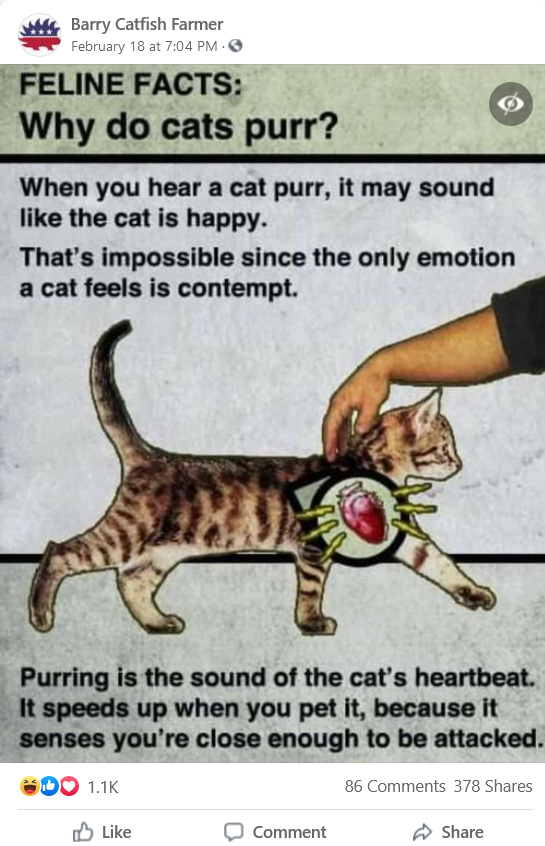
Unfortunately, the platform’s rampant misinformation is not limited to politics. Here’s one of the latest viral posts:

Facebook Derp
Derp derp derp! A derp a derp derp derp!

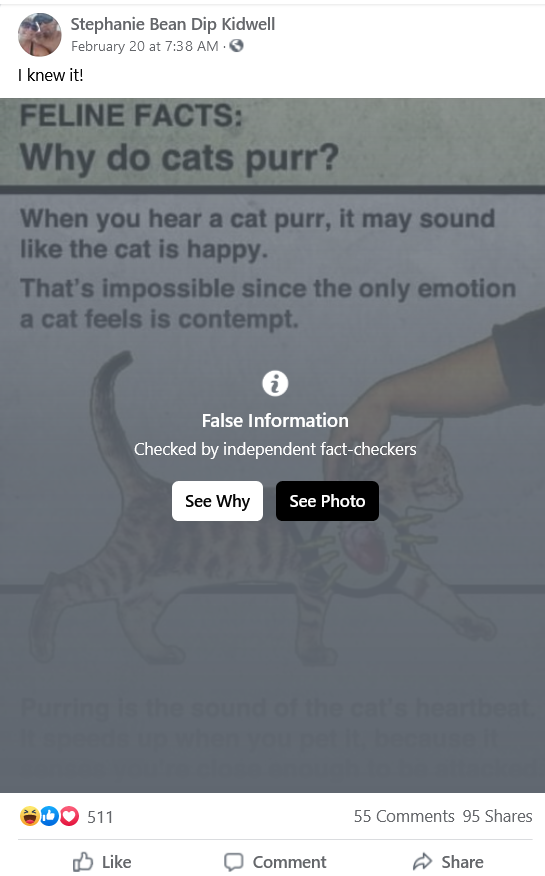
And this is what it looks like now, to protect people like your aunt who keeps sending you email forwards about Pizzagate:

Facebook: Derp!
Despite the flagged warning, people are still sharing the post. “Big Tech doesn’t want us to know the truth ’bout cats!”

Whenever I encounter stuff like this, my first instinct is to dismiss it as nonsense no one would actually believe. Then I remember our dubious track record when it comes to critical thinking: a third of millennials are flat-Earthers, one in four Americans thinks the sun orbits the Earth, and more than 16 million Americans believe chocolate milk comes from brown cows.

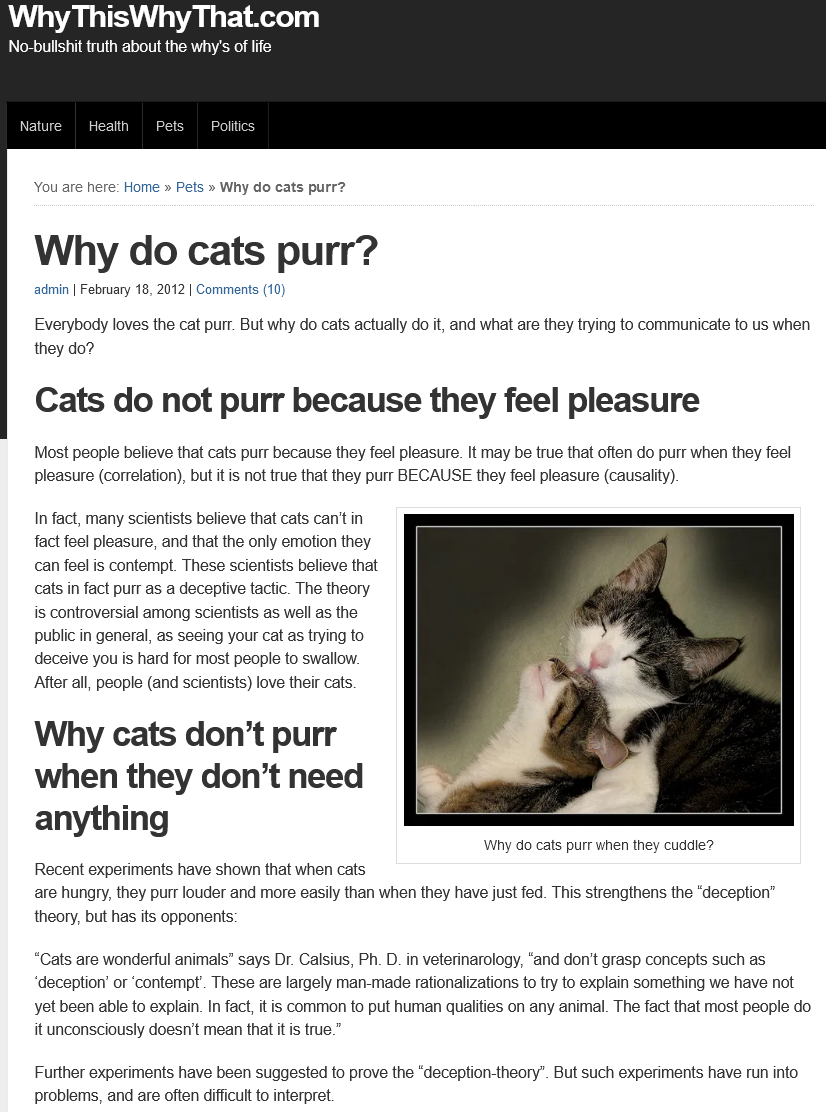
Some futurists and ethicists thought the world wide web would bring an end to conspiracy theories and outlandish beliefs, with the sum of human knowledge at our fingertips and the disinfectant power of the truth. But falsehoods have remarkable staying power, and the internet is happy to oblige any conspiracy theory no matter how far removed from reality, with sites like this one that says it offers “no-bullshit truth”:

Screenshot_2021-02-25 Why do cats purr

Screenshot_2021-02-25 Why do cats only feel contempt

So at the risk of stating the obvious, purring has nothing to do with a cat’s heartbeat, and cats experience all the same primary emotions we do (happiness, sadness, fear, excitement, nervousness) as well as quite a few secondary emotions, like jealousy, disappointment, contentment and confidence.

The idea that animals like cats and dogs are emotionless automatons went out of favor more than half a century ago, and modern technology has made it possible for scientists to peer into the minds of our domesticated friends and witness brain activity that mirrors our own when we process emotions. There is no debate: Cats have very real emotions, which is another compelling reason to treat them well.

Buddy Wants YOU to Follow These Sites!

Buddy’s favorite blogs.

Office of the High Secretariat for Buddesian Decrees, His Majesty’s Palace

August the 7th, 6 AB (Anno Buddy)

Dear subjects,

It has come to my attention that there is a thing called #FollowFriday in which great and respected authors such as myself share links to some of their favorite blogs and sites, so that others might find them and read them.

In the spirit of #FollowFriday, and as the benevolent feline ruler I am, I hereby endorse the following sites of web:

Cattitude Daily: This site is run by my friend Modi, who not only appreciates my rakish handsomeness and luxurious fur, but also writes some good stuff about my fellow cats. Cattitude Daily often answers questions about cats, like why we have webbed feet, why we like to sleep in sinks, and why you should stop trying to touch our feet! I decree you shall check out Modi’s site.

Retro Dee’s Guide to the Best Era Ever: Retro Dee writes about the 1950s, a time when the Romans cheered on the gladiators, husbands and wives slept in separate beds, and life was in black and white. Also, there was no internet and no one had invented Temptations yet, but Marty McFly had a really cool hoverboard. I especially like the old pictures of old people doing old things. Finally, Dee has a cat named Holly and I’m Buddy, so together we’d be Buddy Holly, a guy who was famous for being mentioned in a Weezer song.

090DA4B4-76EA-402B-8634-C5EC7E2F836B
The 1950s.

My Instagram page: Several of my minions mentioned I should have an Instagram page. They said: “Your Grace, the world should know what a handsome king you are.” So now you can follow my blog for my wit and wisdom, and my Instagram for photos of me. Now I have to figure out that there Facebook, and someone else was telling me about two up-and-coming sites called MySpace and Friendster. Soon you won’t be able to escape me anywhere on the Internet!