New York Times Ethicist: ‘My Boyfriend Said He’d Save Our Cat but Not a Stranger if Both Were Drowning’

As Charles Darwin pointed out, the difference between humans and animals is one of degree, not kind. That should factor into discussions on the value of animal life.

The headline — ‘My Boyfriend Said  He’d Save Our Cat but Not a Stranger if Both Were Drowning’ — comes from the New York Times via its Ethicist column, in which NYU philosophy professor Kwame Anthony Appiah answers questions from readers about moral rights and wrongs.

Here’s the full text of the question:

My boyfriend and I were talking about protecting human life, and he said that he doesn’t believe that human life is necessarily worth more than any other kind of life. For example, he said that if one of our cats were drowning next to a human who was a stranger to us (who was also drowning) and he could save just one, he would choose our cat. Is this morally wrong?

Appiah, in his very first sentence in response, regretfully calls pets “fictive kin” before pointing to a study by an experimental psychologist in which participants were asked whether they’d save their pets or a foreign tourist if both stepped in front of a bus at the same time. Forty percent of respondents picked the pet.

To his credit, Appiah notes the people who chose their pets don’t have “some grave defect of character,” and said the impulse to save a companion pet is “very human,” given all we share with our animals, including “affection, companionship, loyalty, all twined around a whole lot of memories.”
Buddy
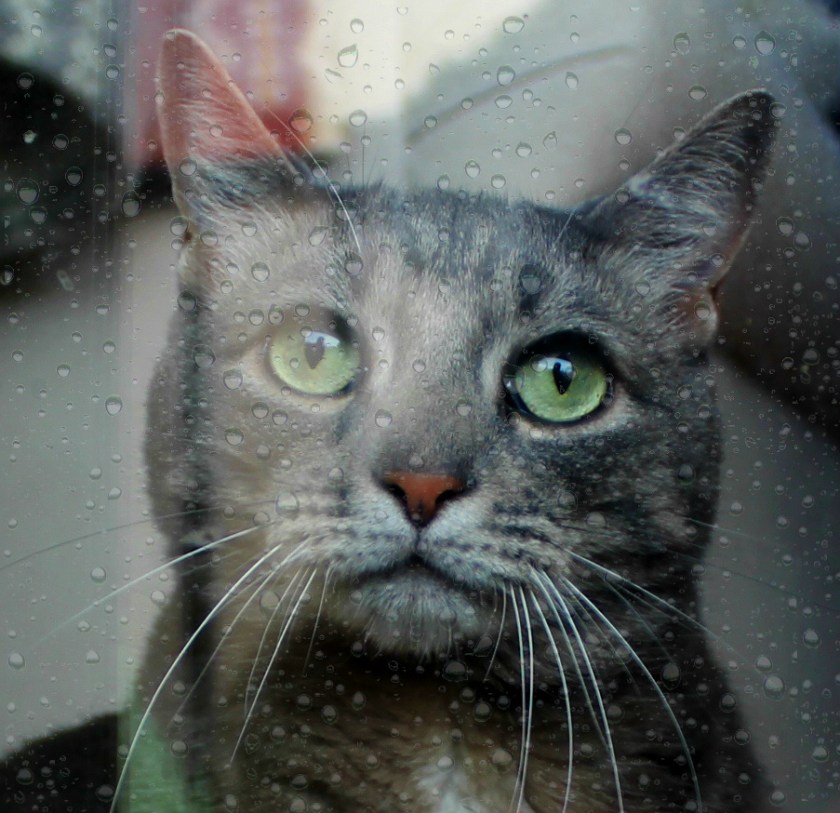
“Buddy sad. Buddy needs snack.”

That said, Appiah says human life is more valuable:

“But yes, it’s very wrong. (In states with “duty to rescue” laws, it could be illegal too.) Those human strangers? They had rich emotional lives and they had plans, short-term and long-term, big and small; it’s a good guess that they were also part of other people’s plans, other people’s emotional lives.”

I’m not going to get into the question of whether human or animal life has more value. That’s a mine field, I don’t subscribe to the idea that we should work out hierarchies of life’s value as if we’re ranking favorite ice cream flavors, and it seems to me these “what if?” questions involving oncoming buses or trains don’t have much value in gauging reality.

After all, how many people do you know were forced to make life or death decisions in a millisecond, let alone decisions involving a complex moral and emotional calculus? Appiah seems to agree, while also pointing out that what people say in a questionnaire doesn’t necessarily predict what they’d do in the moment.

Life is life. It’s all valuable, and the survey doesn’t have much use outside the classroom or ethics columns.
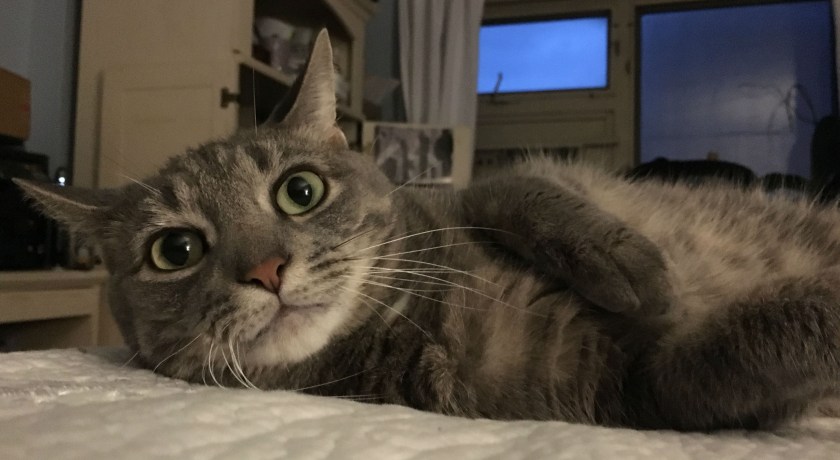
Buddy the Handsome Cat
Buddy the Cat: Brains as well as brawn.

However, I do think it’s worth pointing out that much of what Appiah assumes is the difference between human and animal life — particularly rich emotional lives, cognition and value to others — can indeed be attributed to animals.

There’s been a seismic shift in the way most scientists view animal cognition over the past decade, and in many ways the acknowledgement of non-human sentience and potential sapience is long overdue  — there are literally thousands of studies confirming animals are conscious, sentient, and possessed of the full range of primary and secondary emotions.

Every time we set new barriers for what distinguishes human from non-human, we’re forced to change the goalposts. When behaviorism was the dominant model, the distinction was internal thought processes. In dismantling behaviorism, Noam Chomsky helped launch the cognitive revolution. Then it was  emotion and love, which crumbled with the ugly Harry Harlow studies into maternal deprivation in monkeys. Then it was capacity to reason, tool use, innovation — and every time, we’ve revised our definitions, solid in our conviction that we’re fundamentally different.

In fact, the only thing that’s held up is Charles Darwin’s original observation in 1871 that “the difference in mind between man and the higher animals, great as it is, certainly is one of degree and not of kind.”

In other words, humans aren’t some higher order of being. We are animals. Upjumped animals in some sense, but animals all the same, subject to the same diseases, physical limitations and helplessness in the face of greater forces like nature.

We may live in an age when our planet is blanketed in satellites, scientists are on fusion’s doorstep and each one of us has the entire sum of our species’ knowledge at our fingertips, but it’s shocking how quickly the veneer of civilization can collapse when people are scared, the food runs out, social order breaks down and those primal motivations — the ones we think we’ve out-evolved — drive our actions again. The early days of the COVID pandemic was just a small reminder of that.

We don’t like talking about these uncomfortable truths because they lead to more uncomfortable truths about the billions of non-human minds we share the planet with, and how we treat them.

I can’t claim to be a philosopher, although I minored in the subject over the objections of my advisor. (He should have warned me off journalism!) But when it comes to animal cognition I do have a great teacher, an 11-pound ball of fur who won’t let me forget he’s got his own wants, needs and strong emotions. Doesn’t he deserve consideration too?
TikTok’s Latest Viral Trend Is Popping Cat Pimples: Can We Ban This App Already?

Each viral trend on the app is more grotesque than the last.

I’m all out of withering sarcasm, so I’ll just say it: The newest trend on TikTok involves close-up videos showing people popping their Sphynx cats’ pimples.

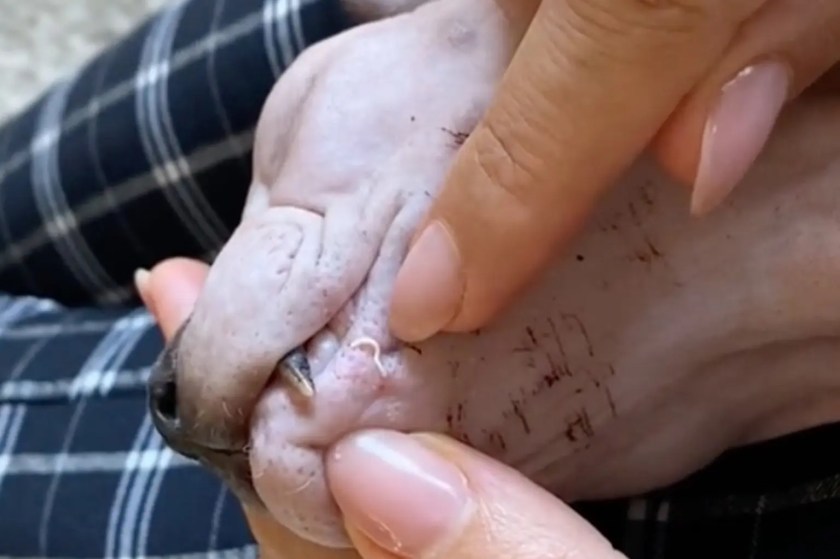
The PewDiePie of the craze, if you will, is one @Sphynx.cleaner, whose videos show a woman’s carefully manicured hands holding a defeated-looking Sphynx cat and popping its pimples between her formidable fingernails.

Tens of millions of people have watched her videos of puss pimple-popping, not including the millions of other views accumulated by lesser practitioners of the grotesque genre.

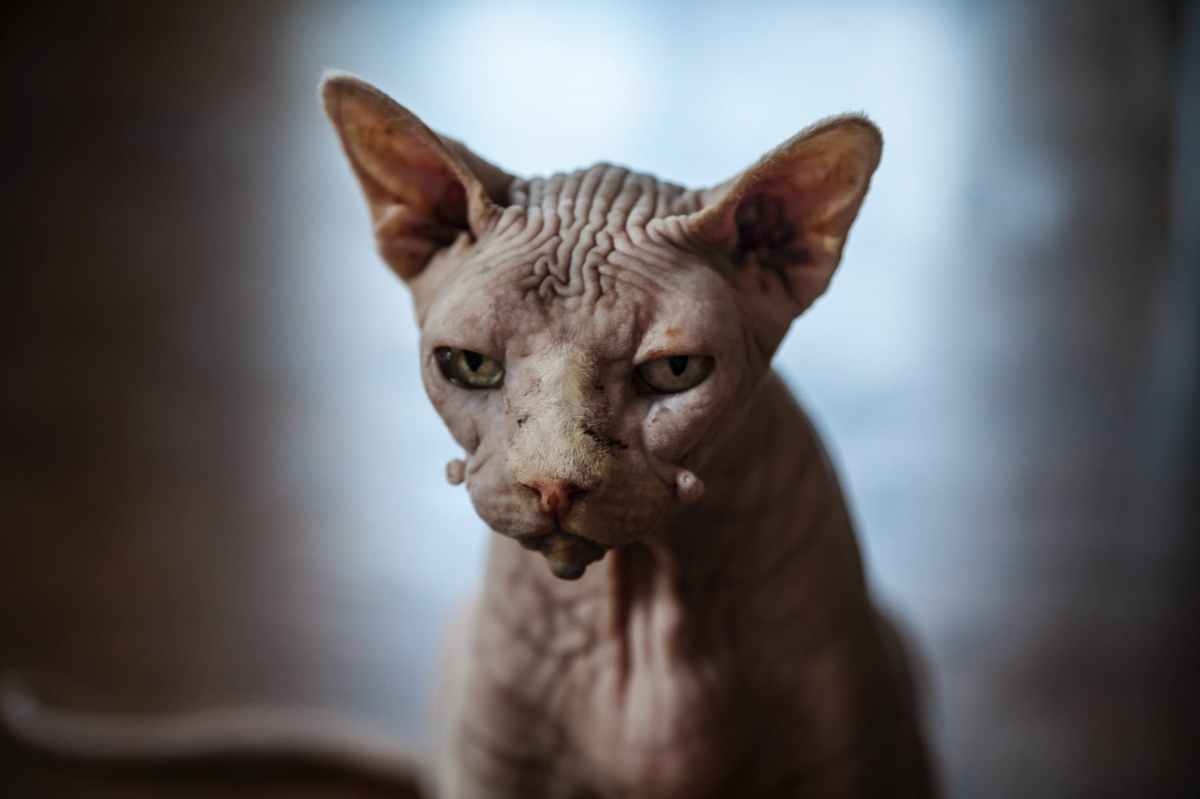
Sphynx cats lack fur and have skin often compared to chamois leather. Fur helps cats absorb and redistribute naturally-occurring oils secreted by the skin, so felines of the Sphynx breed are much more susceptible to acne problems than typical short- and long-haired cats. Without fur to help redistribute them, the skin oils can create a “film” that clogs pores, according to Jessica Taylor, a veterinarian in North Carolina.

Sphynx pimples
Uh, no. Credit: Sphynx.cleaner/TikTok

Not surprisingly, popping a cat’s pimples makes things worse and is not pleasant for the kitty.

“These lesions indicate a disruption in the skin and skin barrier, and squeezing or poking them can introduce bacteria, potentially worsening the lesion, causing pain and infection,” Taylor told Newsweek. “If the lesion is already infected, handling it could spread bacteria to the pet parent.”

As for TikTok, this is not the first time one of the app’s trends has been detrimental to the health and safety of felines, although most of its inanity is focused on humans. I suppose you can view it as some sort of advanced Darwinian engine, accelerating the self-removal of human beings from the gene pool. Among the trends that have gone viral on the app:

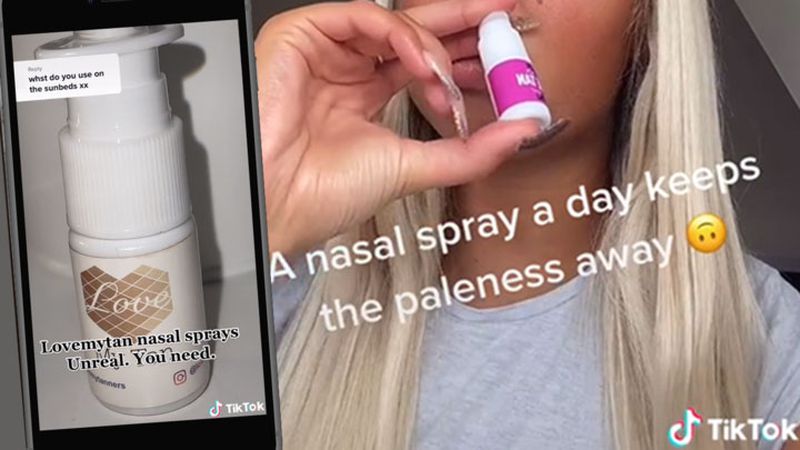
  • People who use self-tanning bottles as nasal spray out of some misguided belief that ingesting the stuff will not only achieve the desired effect, but somehow lead to a more even, natural-looking distribution of tanner. It reminds me of former President Donald Trump’s impromptu suggestion, during a national press conference, that ingesting hand sanitizer could be a “tremendous” way to stop COVID.
  • Videos instructing women to eat the tablets inside Clearblue pregnancy tests as a “contraceptive hack,” claiming the tablets — which are designed to absorb urine during the chemical test — are actually morning after pills.
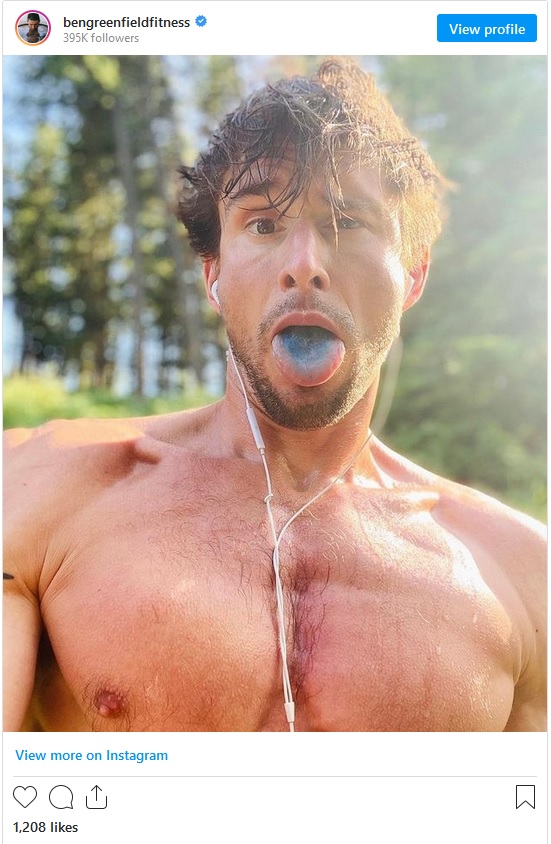
  • People ingesting methylene blue — an anti-fungal fish tank cleaner — because “fitness influencers” say it can “cure” COVID-19, boost metabolism and slow the aging process. Think of the triumph of critical thinking here: These are people who won’t get a vaccine that’s been through three-stages of trials before getting FDA approval, and whose efficacy and safety have been the subjects of rigorous peer review, but they’re willing to drink a chemical manufactured and sold as a cleaning solution for fish tanks.
  • The so-called Nyquil Challenge, in which people use Nyquil instead of cooking oil to cook chicken in a frying pan.
  • Period blood face masks, which are self-explanatory. Another grotesque and potentially dangerous trend started by “influencers” who claim some sort of nebulous expertise and know that “hacks” will net them attention and clicks. The more outrageous, the better.
https __prod.static9.net
“Did you know that urinal cakes are made by Carvel? It’s true! They’re deliciously chocolatey, with just a hint of vanilla, cinnamon and industrial strength anti-bacterial. Mmmmmm!”

Of course, we’ve known for years that Chinese companies are beholden to the Chinese government according to Chinese law, which means the government — and the communist party — can help itself to TikTok user data whenever it wants.

After TikTok’s US-based executives insisted to congress that American users’ data is firewalled and cannot be accessed by the company’s employees in China — and, by extension, the Chinese government — a series of leaks confirmed that China’s government was in fact regularly accessing that data. Absolutely no one, except maybe the politicians who think the internet is a “series of tubes,” were surprised by this revelation.

China’s government can use the data to track journalists, exploit American and European users, program its algorithm to shuffle them toward harmful content, censor content the Chinese government doesn’t like, and even coerce individuals by threatening to release information on their viewing habits.

So can we evacuate TikTok’s US headquarters already, raze it to the ground, and ban the app from every mobile store?

methblue2
“Mr. Darwin! Mr. Darwin let him go! Magnifico!”