
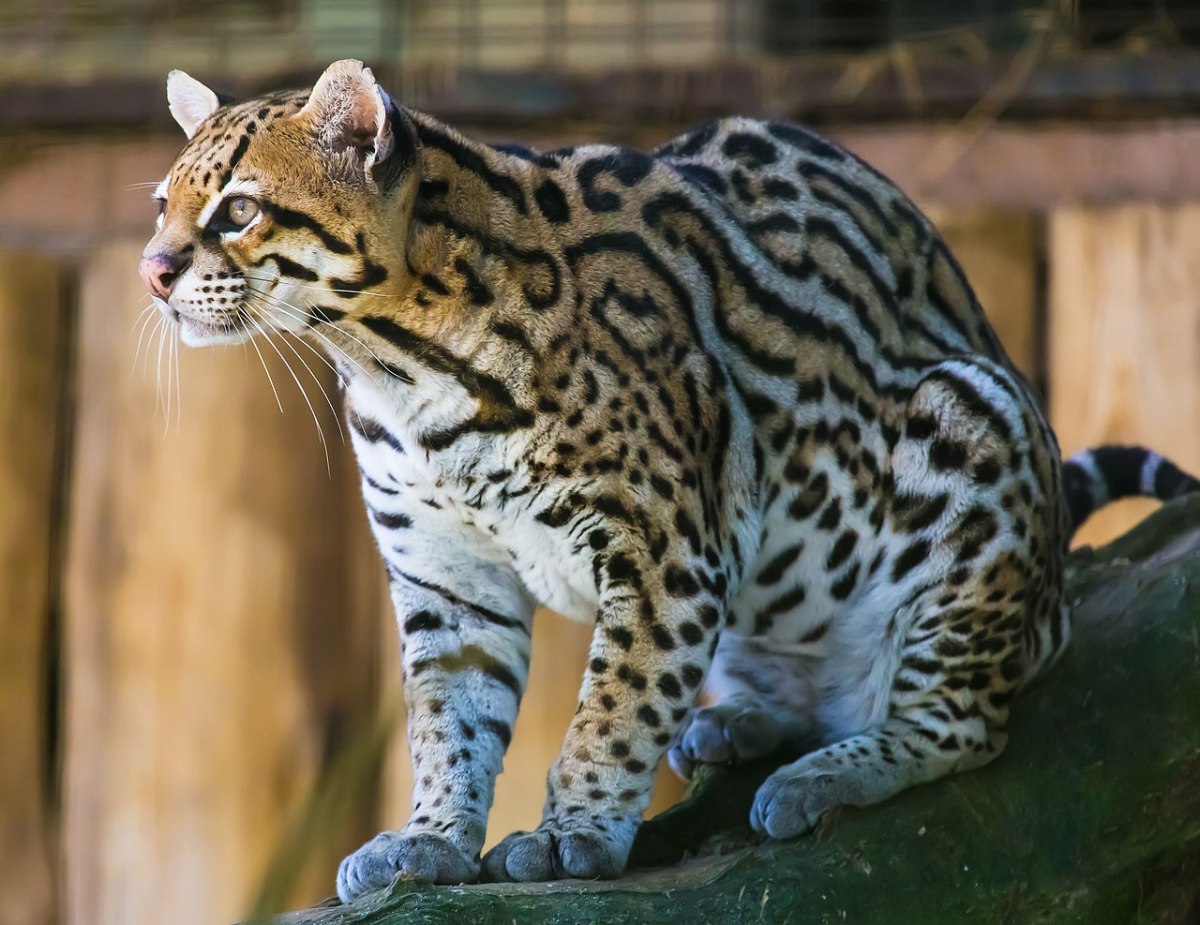
In 1999 biologists from the Dallas Zoo were lending a hand on a project to monitor and protect America’s ocelots, who primarily range in southern Texas.
With limited resources, the team was trying to keep the wild cats in a protected area and get them to use paths where camera traps had been installed. One tried and true method was to use scents, but what could attract ocelots?
“Sort of on a lark, one of our research assistants produced a bottle of Obsession,” Dallas Zoo’s Cynthia Bennett said at the time.
The felines loved it. Members of the research team watched astounded as the scent magically transformed previously ignored objects into items of sudden fascination.
The cats happily rubbed their cheeks and bodies against anything sprayed with the stuff.
“It´s a little embarrassing to watch, actually,” Bennett said. “It does make you wonder what´s in the perfume.”
(It’s probably civetone, a synthetic version of a pheromone produced by civets used as a binder in the Calvin Klein scent.)

In addition to their predilection for cologne, ocelots are known for enjoying water, hunting by twilight, and napping in trees. The medium-size felids, who weigh up to 40 pounds in the wild, are also easily recognizable by their big eyes, the dark rings that surround them, and the way those markings become twin stripes that sweep over their foreheads.
Perhaps most striking are their large, wavy rosettes, which sometimes get them confused for young jaguars. In several indigenous South American languages, ocelots and jaguars share a name or have very similar names.


Ocelots have another quality that may lead people to confuse them with jaguars: they’re fond of water and they’re considered strong swimmers. That allows them to master their habitats, which often include rivers winding through rainforests and mangrove swamps.
The resourceful cats are adept predators on land and they can also pluck fish out of rivers.

Ocelots are categorized as a species of “least concern” by the IUCN (International Union for Conservation of Nature) but that doesn’t mean they’re thriving. Like pumas, the species is adaptable and can survive in varied surroundings. Still, ocelots contend with the same pressures other species experience, including habitat loss and fragmentation, hunting and poaching.
And while they can’t get enough of Calvin Klein’s Obsession for Men, maybe that’s a good thing.
According to zookeepers and wild cat experts, ocelots have a uniquely funky body odor which is amplified by their prodigious scent-marking. They want everyone to know where their territory is.
For zookeepers, the cats’ Obsession obsession could pull double duty as olfactory enrichment in their habitat — and a way to mitigate the stink.

Name: Ocelot (leopardus pardalis)
Weight: Up to 40 pounds, with limited sexual dimorphism (males are slightly larger)
Lifespan: Up to 20 years in captivity
Activity: Crepscular, nocturnal
Habitat: Claims territory in places where prey, water and dense ground cover are plentiful but the species is adaptable and survives in varied biomes
Want more Amazing Cats?
Amazing Cats: The ‘Fire Tiger’ Is The Stuff Of Legend
Amazing Cats: The Adorable Colocolo, Feline Of The Pampas
Amazing Cats: The Sunda Clouded Leopard
Amazing Cats: The Mysterious Marbled Cat
Amazing Cats: The Rusty Spotted Cat
Amazing Cats: The Jaguar, ‘He Who Kills With One Bound’
Amazing Cats: The Puma, Adaptable Survivor
 Pain In The Bud