

Congratulations to Buddy for cracking Feedspot’s Top 100 Cat Blogs, and thanks to Feedspot for including us!
Check out the list for some other great cat blogs and cat-centric publications.
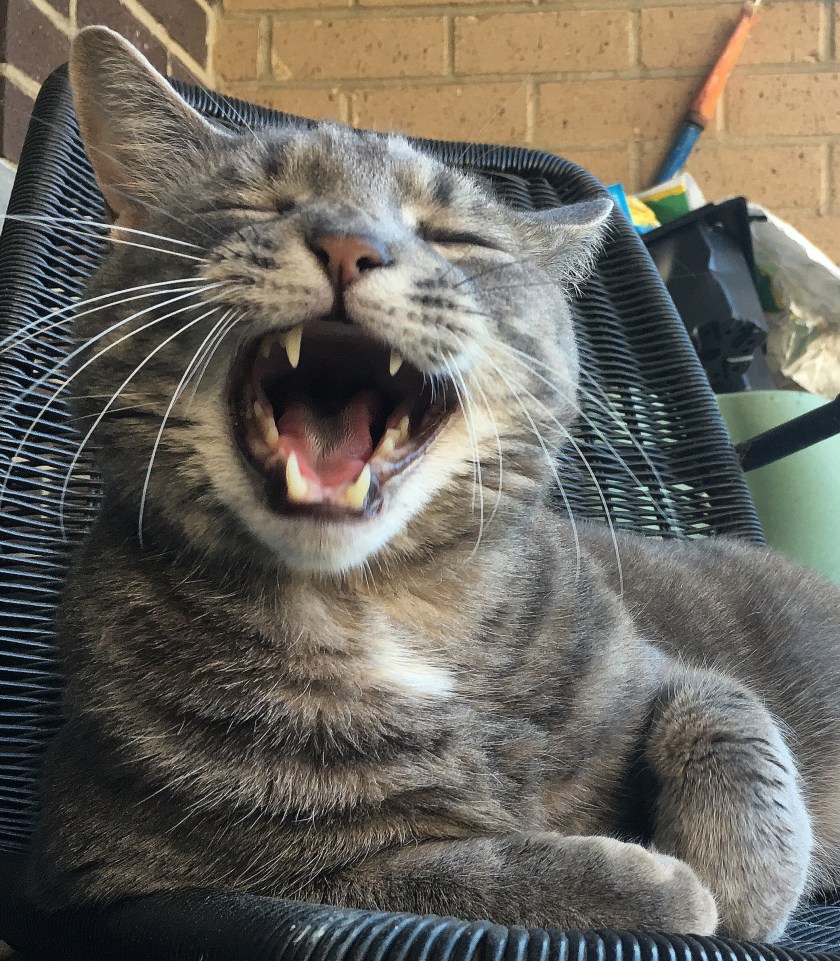
Buddy celebrates his inclusion on the 100 best cat blogs on teh internets!
Congratulations to Buddy for cracking Feedspot’s Top 100 Cat Blogs, and thanks to Feedspot for including us!
Check out the list for some other great cat blogs and cat-centric publications.
Buddy advises a cat from the North Pole on how to wake his sleepy human.
Dearest Most Excellent Buddy,
May I say, sir, you are looking very ripped these days. You are totally not fat and your human is a criminal for putting you on a diet!
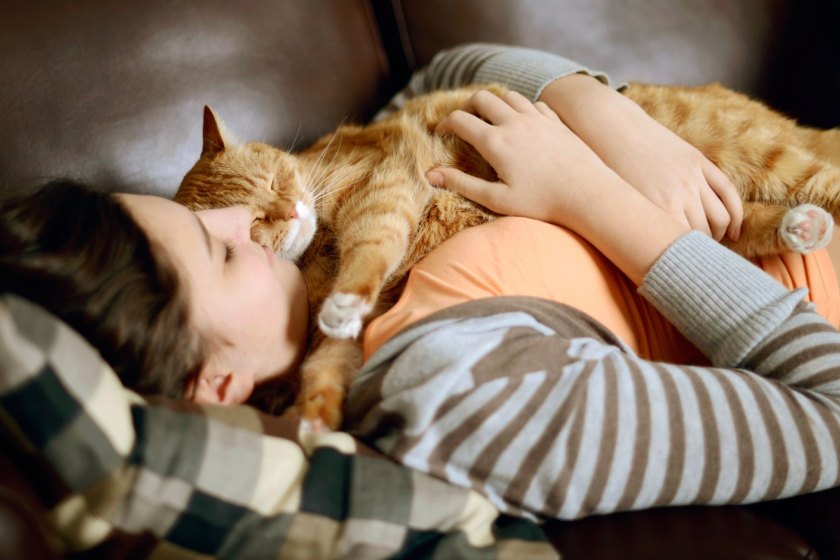
Food happens to be the subject of my distress as well. My human sleeps through things that would wake the dead, and she won’t get out of bed no matter how hungry I am! Sometimes I can see the bottom of my bowl and I’m literally starving, yet she won’t stir. What can I do?
Famished in Finland
Dear Famished,
Ooh! I’ve heard of Finland, the snowy realm where Santa Claws and his marsupials make toys for kitties who are good. I would like to visit some day.
Okay, you have yourself a situation. Luckily, Buddy has the answers.
You see, my Big Buddy is incredibly stubborn when I wake him up. Sometimes he throws pillows at me, and usually he yells that he’s going to take me to a place called Szechuan Garden II and sell me to them for $15 if I don’t shut up.

In order from pretty annoying to scorched Earth, here are my patented methods to wake sleepy humans:
– The Endless Yowl: Best delivered as close to your servant’s ear as possible. Requires quick reflexes for when your human tries to swat you away, and lots of stamina. You may be forced to yowl for upwards of 40 minutes.
– The Gentlemanly Slap: Okay, pretend you are French. Then pretend you are challenging your human to a duel. Then pretend you have gloves on, and you take one glove off and slap your human in the face with it. The slapping your human in the face part is the most crucial.
– The Face Pillow of Doom: Lay down on her face, making sure your fur covers your human’s nose and mouth. When she starts shaking, you’re close to winning.
– The Bellyflop of Utter Destruction: Find the highest perch in the room and climb to it. Face your human, aim for her tummy and jump, yelling “Geronimo!” You should hear a satisfying slap as you land, followed by a gasp from your human, who should pop right up like a piece of bread in a toaster! Then meow, “Feed me, bitch!” Mission accomplished!
Any of these methods should serve you nicely.
Your friend,
Buddy
DISCLAIMER FROM BIG BUDDY: Please don’t get upset at the Chinese food joke! I would NEVER sell Buddy to a Chinese restaurant for $15. He’s worth at least $20!
My cat’s been teleporting to Russia, apparently, where he’s become a muse to a pair of witty Russian ladies.
Dear readers, I think we’re close to proving what we’ve long suspected, that cats can indeed teleport!
I used to think Buddy could only teleport short distances. One time, for example, I stepped over the little guy while chastising him for lounging in the middle of a doorway. I raised my foot, careful not to step on him, took another step…and looked up to find him sitting on a table 10 feet ahead of me, his head cocked at an angle, staring back at me with an amused expression on his face.
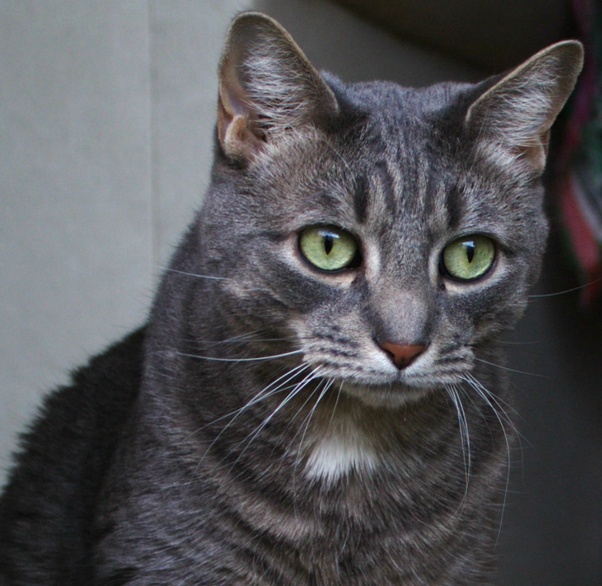
I did a double take, looking back at the spot on the floor where he had just been, absolutely sure there must be a second gray tabby, a Buddy imposter helping my cat play a joke on me. How can anything move that fast?! He must have teleported!
Now it seems Buddy’s powers of space-time manipulation are greater than I ever imagined.
Enter Lingvistov, a creative team comprised of artist Landysh and writer Asia, who became friends while studying English at a Russian university. After they graduated they decided to put their skills to good use by penning short comic strips and illustrations about cats and their many weird and wonderful habits.
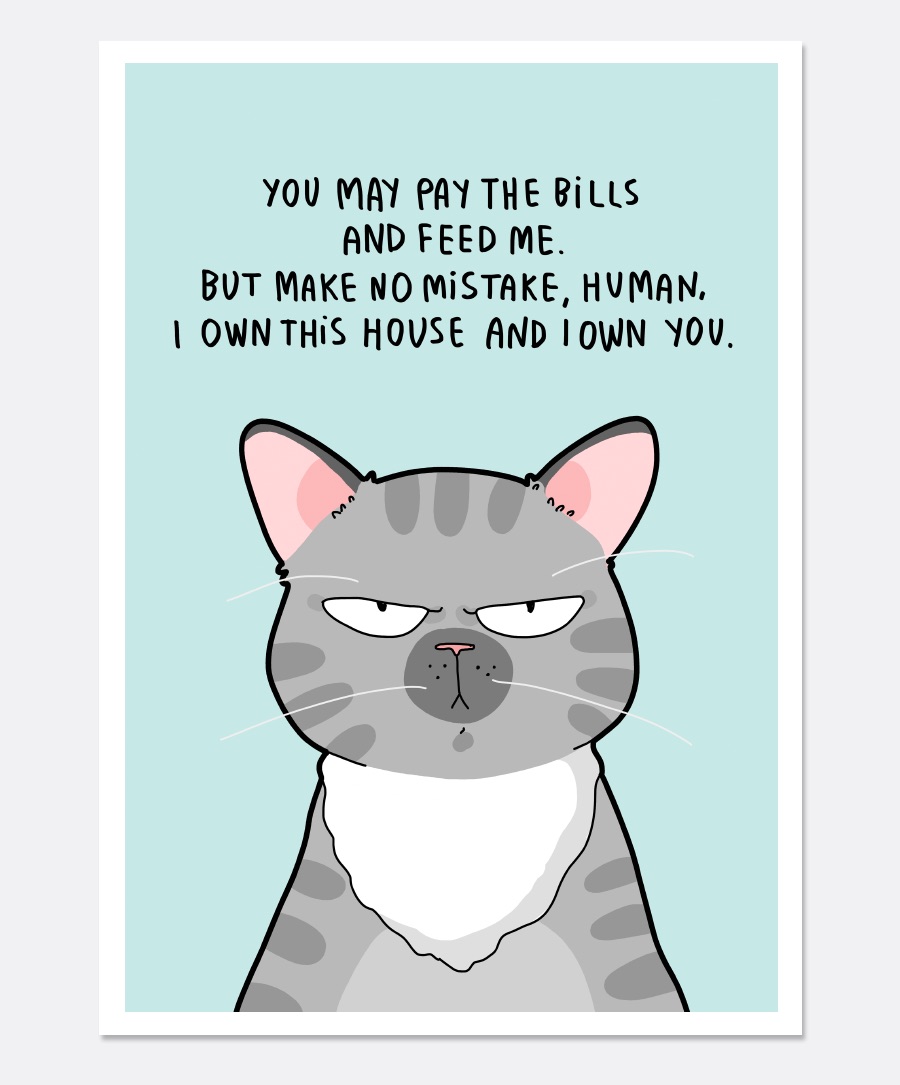
Somewhere along the way, Buddy must have used his powers of teleportation to meet them and serve as a muse, because they’ve got him down to a tee:

The sneaky little bastard has been fluent in Russian this whole time and hid it from me! That, and his ability to manipulate space-time and teleport at will.
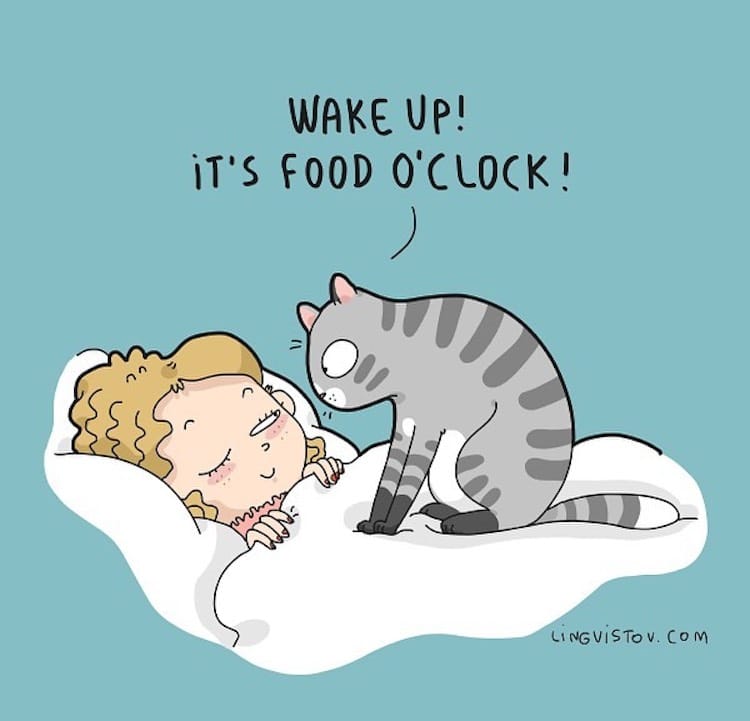
Buddy must have napped with them as well. He loves sleeping between my legs, in the “valley” formed by the blanket, and he uses me as his human mattress. He must have demonstrated his preferred sleeping positions for his Russian friends:

Of course there will be skeptics. The teleportation thing doesn’t quite stand up to Occam’s razor, after all. What’s more likely, that Buddy can teleport, or that a woman in Russia has a gray tabby who is just as uniquely obnoxious as my little dude?
Still, I choose to believe he can indeed teleport and one day, when I finally train him to do my bidding, he can put his powers to good use by teleporting to the store to get me a six-pack of beer.
In the meantime, if you’re looking for a gift for the cat servant in your life, you can’t go wrong with a Lingvistov print or stationery reminding them of their allegiance to our furry overlords.
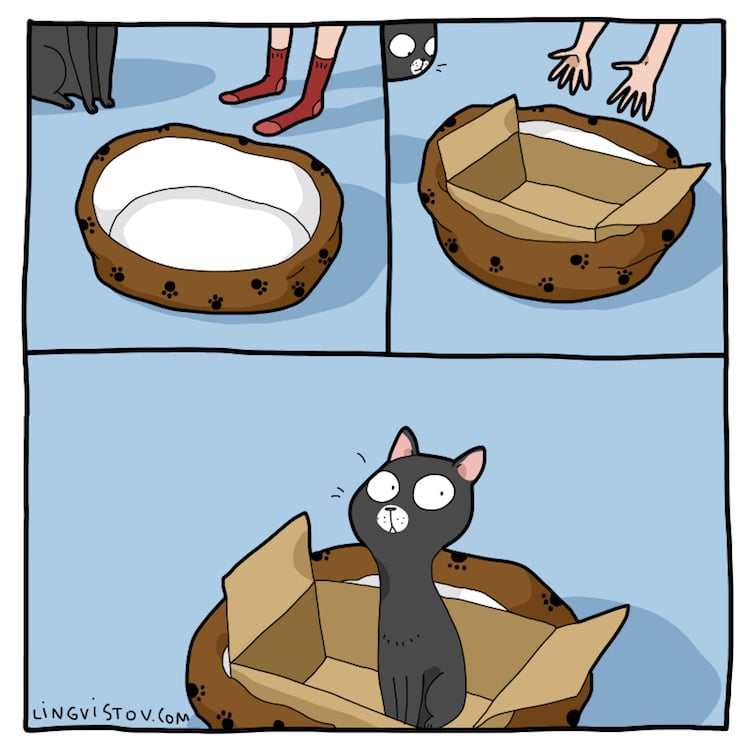
The doggist lobby is creating fake news about cats. Those scoundrels shall be dealt with.
Buddy would like the public to know that vile anti-cat lies have been printed in the Charlotte Observer.
The newspaper alleges a burglar broke into a cat cafe called Gatos and Beans on Oct. 6 “and the cats did what cats do: absolutely nothing.”
The burglar smashed his way in by hurling a rock through a window while the cats “sat and watched,” the newspaper claimed.
As many as a dozen felines were inside Alabama’s first cat cafe at the time of the crime, with names like Velvet and Miss Tilly. None broke a nail during the ordeal, but were stressed out and needed a “snuggle” in the days that followed, the shop posted on Facebook.
Did absolutely nothing? Sat and watched?! Didn’t break a nail?!? Needed a snuggle?!?!?
These are outrageous lies perpetrated by a newspaper that clearly takes money from pro-dog lobby, which has a vested interest in making cats look bad.
Buddy rejects the insinuation that cats lay around and do nothing all day. A typical cat’s day is highly regimented and filled with activities such as eating, sleeping, grooming, sleeping, eating and sleeping, punctuated by energy-consuming bursts of important activity such as laser dot hunting and box-sitting.
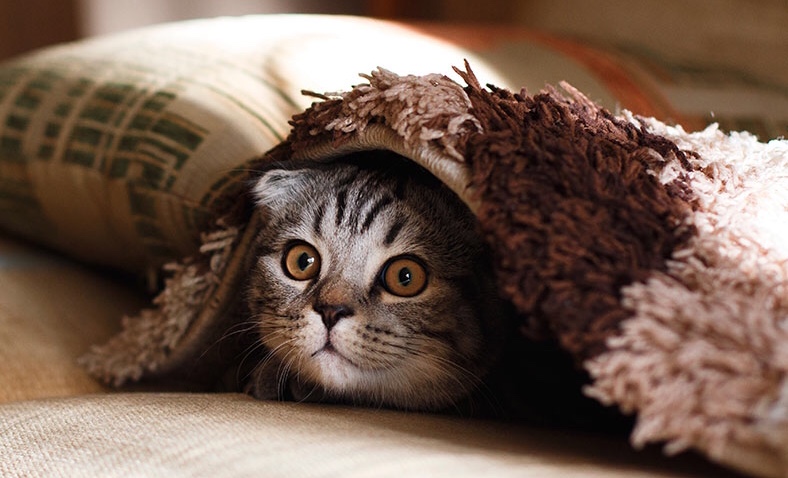
If the burglar had broken in during a reasonable time, the kitties would have totally mauled him and held him down until the police arrived. Unfortunately, it appears the burglar was privy to the cats’ schedule and timed his break-in to coincide with Fourteenth Nap.
Buddy would like to remind everyone that cats are just as competent and badass as dogs when it comes to guarding and defending human abodes. Now if you’ll excuse him, it’s nap time.
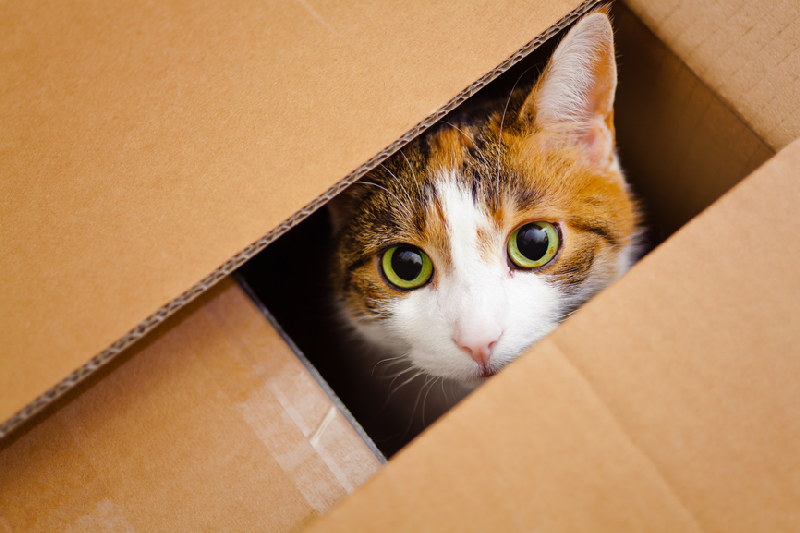
Calling all cat-loving artists!
Hey, palicos! We’re pleased to announce the second annual Buddy Portrait Contest, a prime opportunity for artists around the world to show off their talents with illustrations of Buddy.
Let’s look at last year’s winners for inspiration!
3rd place:
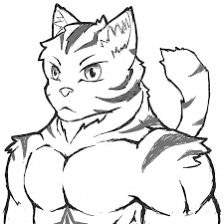
This one’s a bit too manga for our particular tastes, but the artist deserves credit for getting Buddy’s musculature right. This sketch takes a naturalistic approach, eschewing exaggeration in favor of stark realism.
2nd place:
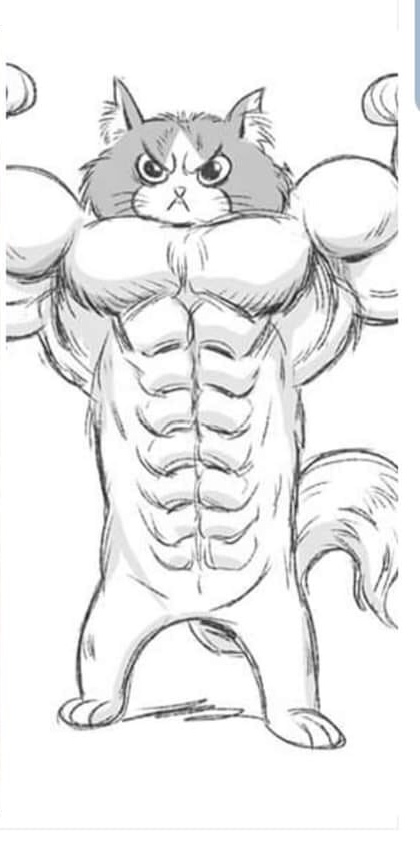
The judges absolutely fell in love with this pencil illustration, which renders Buddy’s hulking frame in dramatic greyscale tones. Buddy’s visage is fierce and his shaggy tail suggests virility and power. The drawing is centered by his considerable biceps and his fourteen-pack. Bravo!
1st place:
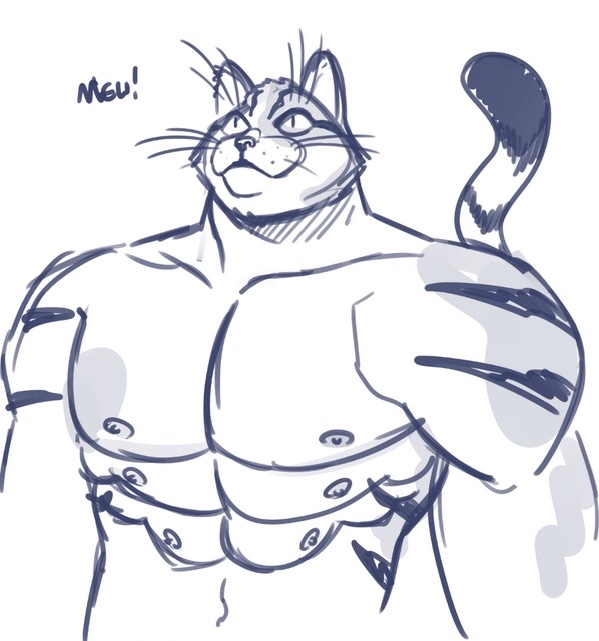
This is the Buddy we all know and love: Regal, majestic and powerful. In this awe-inspiring piece, Buddy looks toward an unseen horizon, his whiskers and tail alert and broadcasting unshakable confidence. His symmetric handsomeness is reproduced faithfully by the clearly inspired artist, and his broad shoulders are framed by jagged stripes in homage to Buddy’s heritage as a terrifying tiger. Superlatives fail us. This is the very picture of feline grace and power.
Honorable mention:
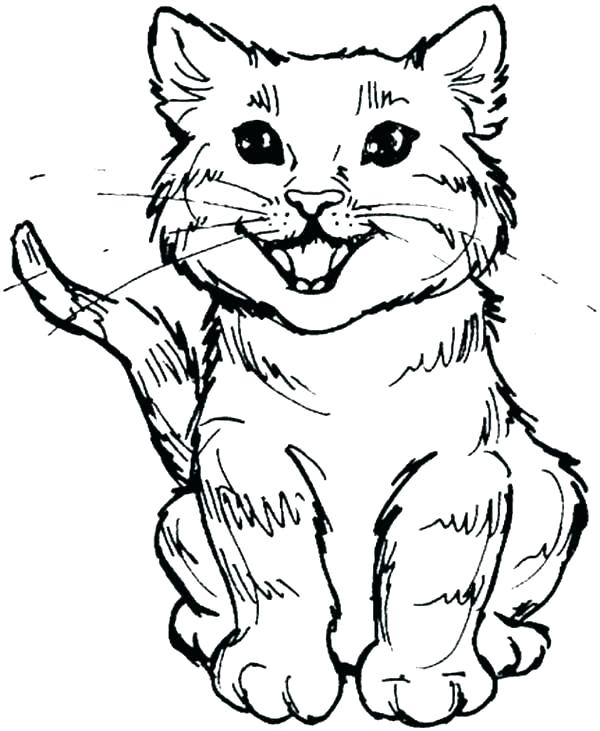
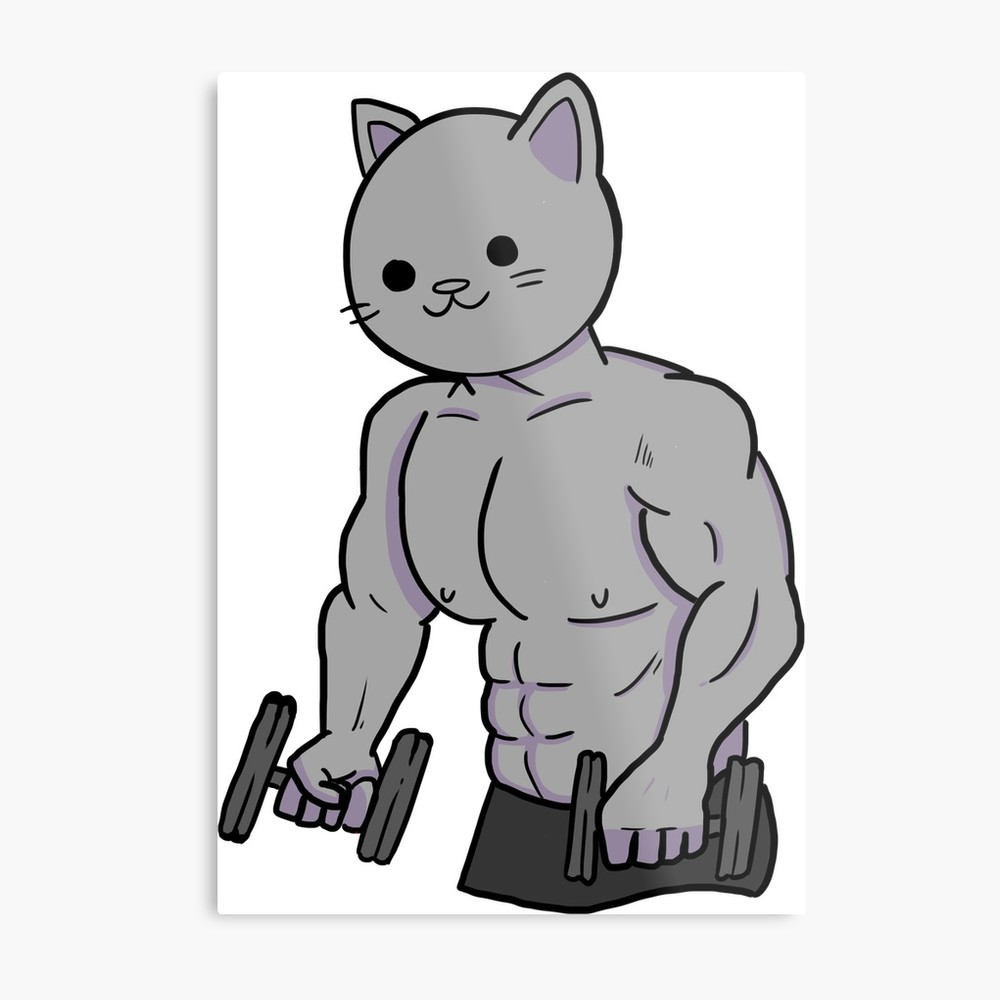
We think this is an attempt to portray Buddy as a Pokémon, shrinking him and his muscles down to a kawaii style more popular with children.
How to enter this year’s contest:
Submit a high-resolution illustration or portrait of Buddy no later than Nov. 30, 2019, with “Buddy the Handsome Cat” in the subject line. Portraits that don’t adequately capture how ripped Buddy is will be disqualified.
 Pain In The Bud