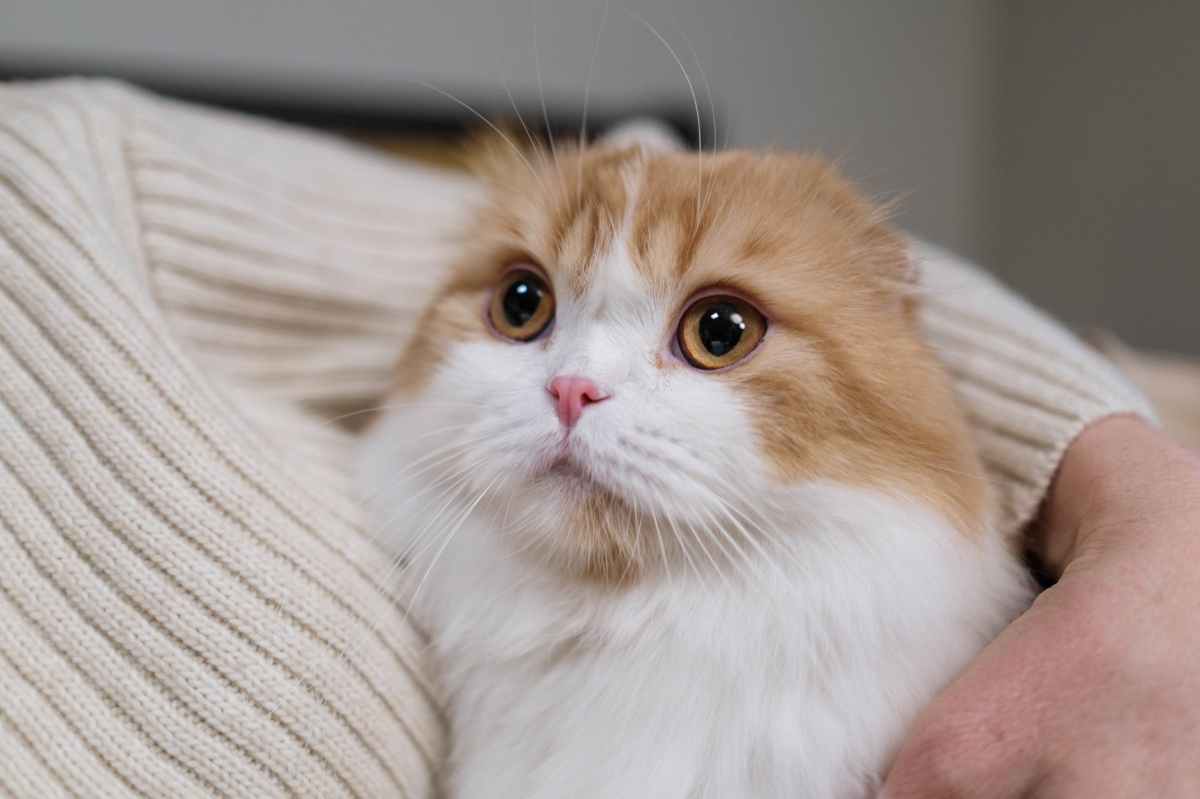
Do You Consider Your Cat Your ‘Child’?

Why do people expend so much time, money and effort on raising the young of other species? An anthropologist weighs in.

The Washington Post has an interesting story from an anthropologist who’s taken an interest in studying the relationships between people and their pets.

Anyone familiar with evolutionary biology has heard the oft-repeated idea that we’re hardwired to propagate our DNA, and every decision we make — from who we date, when we get married, whether we put career goals on the line to take care of children — is ultimately dictated by that goal.

If that’s true, then “parenting” pets doesn’t make sense. They aren’t our biological children. They won’t carry on our family names and history after we’re gone, they won’t go to college and have careers and take care of us when we’re old. In stark terms, we’re “wasting” resources on raising — and often pampering — the offspring of other species.

Yet we do it, so the question is: Why?

Shelly Volsche, an anthropologist at Boise State University, thinks the explanation can be traced back to our roots in pre-agricultural hunter-gatherer societies, when alloparenting — cooperative parenting — was key to raising children.

“If people evolved to alloparent, and our environment is now making caring for children more difficult or less appealing to some, it makes sense for people to alloparent other species entering their homes,” Volsche wrote. “Alloparenting companion animals can offer a way to fulfill the evolved need to nurture while reducing the investment of time, money and emotional energy compared to raising children.”

As readers of this blog know, I don’t refer to my cat as my “child” and I don’t see him as some sort of child replacement. He’s Buddy, my buddy. We’re best buds. Other people choose to “parent” their children, and that’s cool. Whatever works for you.
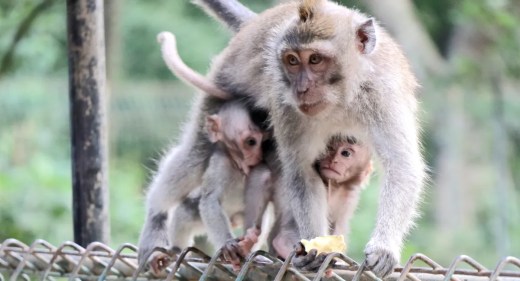
A female macaque takes care of two babies. Alloparenting is common in macaque troops.

I think Volsche’s ideas are interesting, especially in the context of our primate cousins and the way they raise their young. Orangutans are quasi-solitary, and children stick with their moms for about eight years because it takes that long for them to mature and learn how to survive in the jungle on their own.

But more social primates, like chimpanzees, Capuchin monkeys, macaques and vervet monkeys, live in groups and cooperative parenting is a major part of how they handle raising “kids” when there’s no daycare or schools.

A mother who goes out to forage, for example, might leave her baby with an aunt or a trusted female of the troop, and it’s common to see female monkeys caring for babies that aren’t theirs.

Human and proto-human hunter-gatherer societies were essentially upjumped primate troops, so it’s that ingrained behavior we’re talking about here.

Ultimately, Volsche says we’re driven by a “need to nurture.”

“Although the details may look quite different — attending training classes instead of school functions, or providing smell walks for dogs instead of coloring books for children — both practices fulfill the same evolved function,” she wrote. “Whether child or pet, people are meeting the same evolved need to care for, teach and love a sentient other.”
Cats Know Where We Are Even If It Seems Like They’re Not Paying Attention

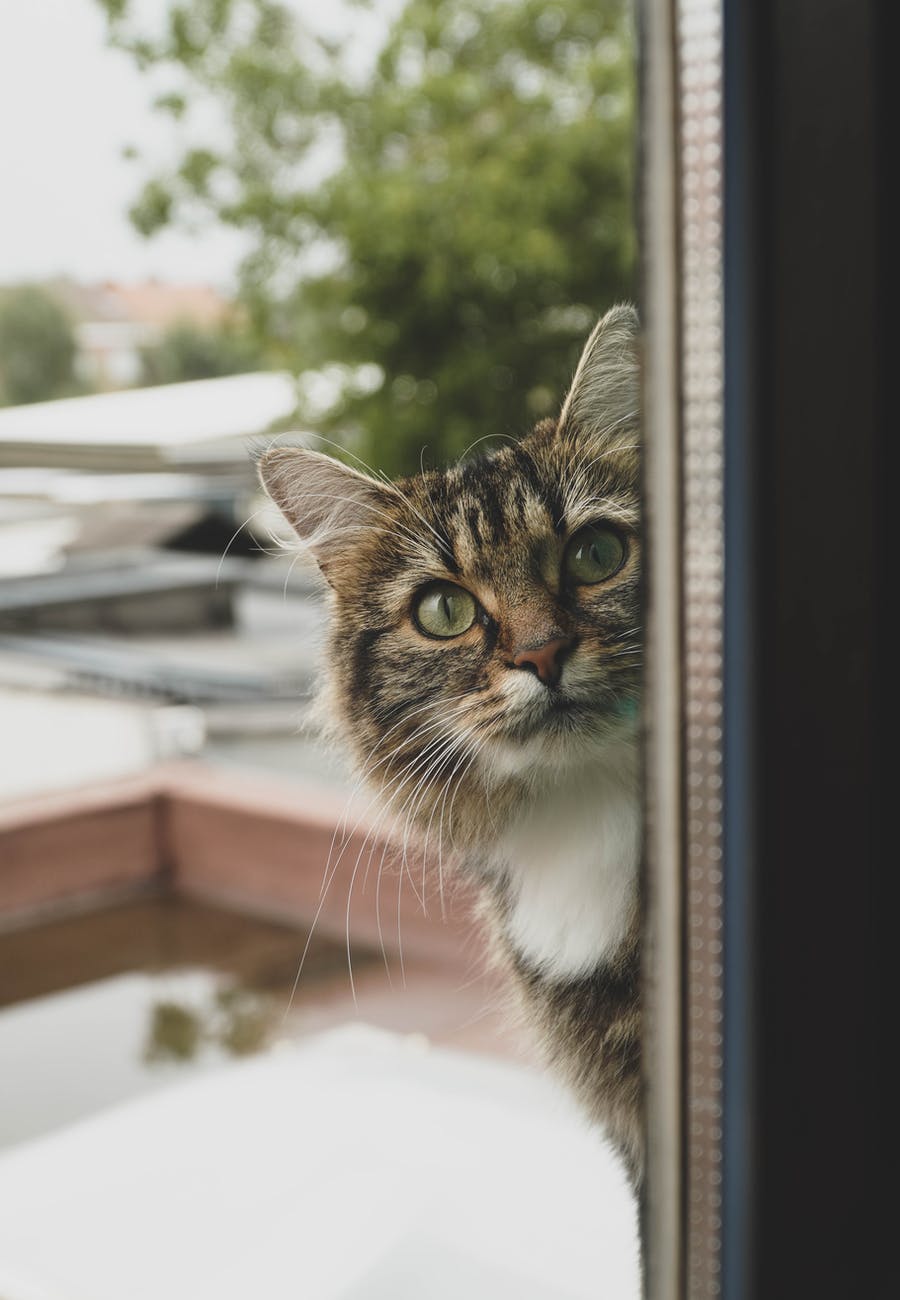
New research offers more evidence that despite their poker faces, cats do care about where their humans are and what they’re doing.

A new study from Japan found cats keep track of their humans even when they’re not looking at them.

A research team from the University of Kyoto conducted the experiments in a cat cafe and in individual cats’ homes. Each cat was placed in a room without their humans. Then the researchers tested the way felines reacted to hearing their people calling their names from outside the room, followed by their reactions to hearing them inside via speakers.

When the cats heard their humans calling them from inside the room the furballs were surprised, expressing their confusion with ear twitches, whisker movement and uncertain body language.

On the other hand, when cats heard “non-social stimuli” — scientist-speak for sounds other than familiar people calling to them — they didn’t react to changes in the location and direction.

Some people might shrug and wonder what the fuss is about, but the experiment actually confirms a great deal about feline intelligence. It’s a test of what scientists call “socio-spatial cognition,” meaning cats form a mental map of things that are important to them, and nothing’s more important to a house cat than the person who provides food, security and affection.

That’s significant because it’s confirmation that cats understand object permanence, and that they are more than capable of abstract thought. Abstract thought — the ability to picture and think about something mentally, without having to see it — is hugely important in intelligence, allowing everything from creativity to understanding that other animals and people have their own points of view. For context, it takes about two years for human children to develop rudimentary abstract thinking skills.

Cats “may be thinking about many things,” Saho Takagi, the study’s lead author, told CNN.

“This study shows that cats can mentally map their location based on their owner’s voice,” Takagi said, per The Guardian. “[It suggests] that cats have the ability to picture the invisible in their minds. Cats have a more profound mind than is thought.”

Things like object permanence and spatial awareness were necessary for cats to thrive as hunters for the millions of years they’ve existed on Earth.

The results aren’t surprising from an evolutionary perspective, biologist Roger Tabor said.

“That awareness of movement – tracking things they cannot see – is critical to a cat’s survival,” Tabor told The Guardian.

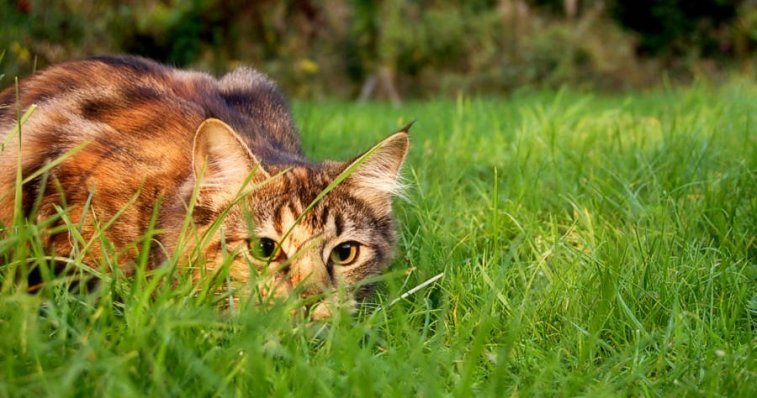
“A lot of what a cat has to interpret in its territory is an awareness of where other cats are. It is also important for hunting: how could a cat catch a field vole moving around beneath the grass if it couldn’t use clues, such as the occasional rustle, to see in its mind’s eye, where they are? A cat’s owner is extremely significant in its life as a source of food and security, so where we are is very important.”

The study is also another piece of evidence showing cats are just as aware of — and concerned about — their people as dogs are, even though the conventional wisdom says they don’t care most of the time. That has implications for the way people bond with their cats, and the decisions we make about caring for them — like, for instance, how long we’re willing to leave them on their own while planning a trip.

“This is a great example of elevating our expectation of the cat a little bit,” cat behavior consultant Ingrid Johnson told CNN, “and realizing that they do have the capability of having that bond in that relationship where they actually will take comfort in their people.”

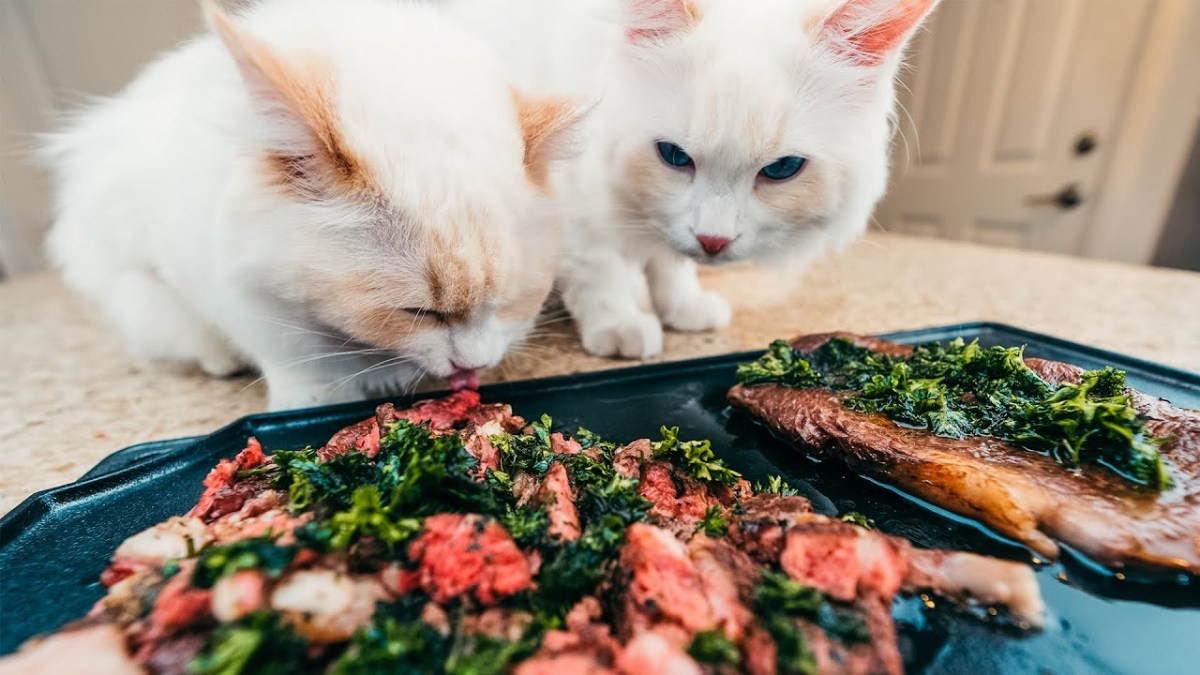
Unlike Other Animals, Cats Always Take The Free Meal

When given a choice between an easy meal and food in a puzzle feeder, cats opt for the low-effort yums.

When presented with a simple tray of food and a food puzzle that requires a little work to get at the yums inside, every animal ever tested has opted for the latter.

Except cats.

Rhesus monkeys, rats, chickens, bears, starlings, gerbils, chimpanzees and a wide range of other animals are drawn to food puzzles, perhaps because the food tastes sweeter to them if they’ve had to work for it, or maybe because it’s just something amusing to do.

“There is an entire body of research that shows that most species including birds, rodents, wolves, primates – even giraffes – prefer to work for their food,” said Mikel Delgado, a cat behaviorist and lead author of the newest study on the phenomenon known as contrafreeloading. “What’s surprising is out of all these species cats seem to be the only ones that showed no strong tendency to contrafreeload.”

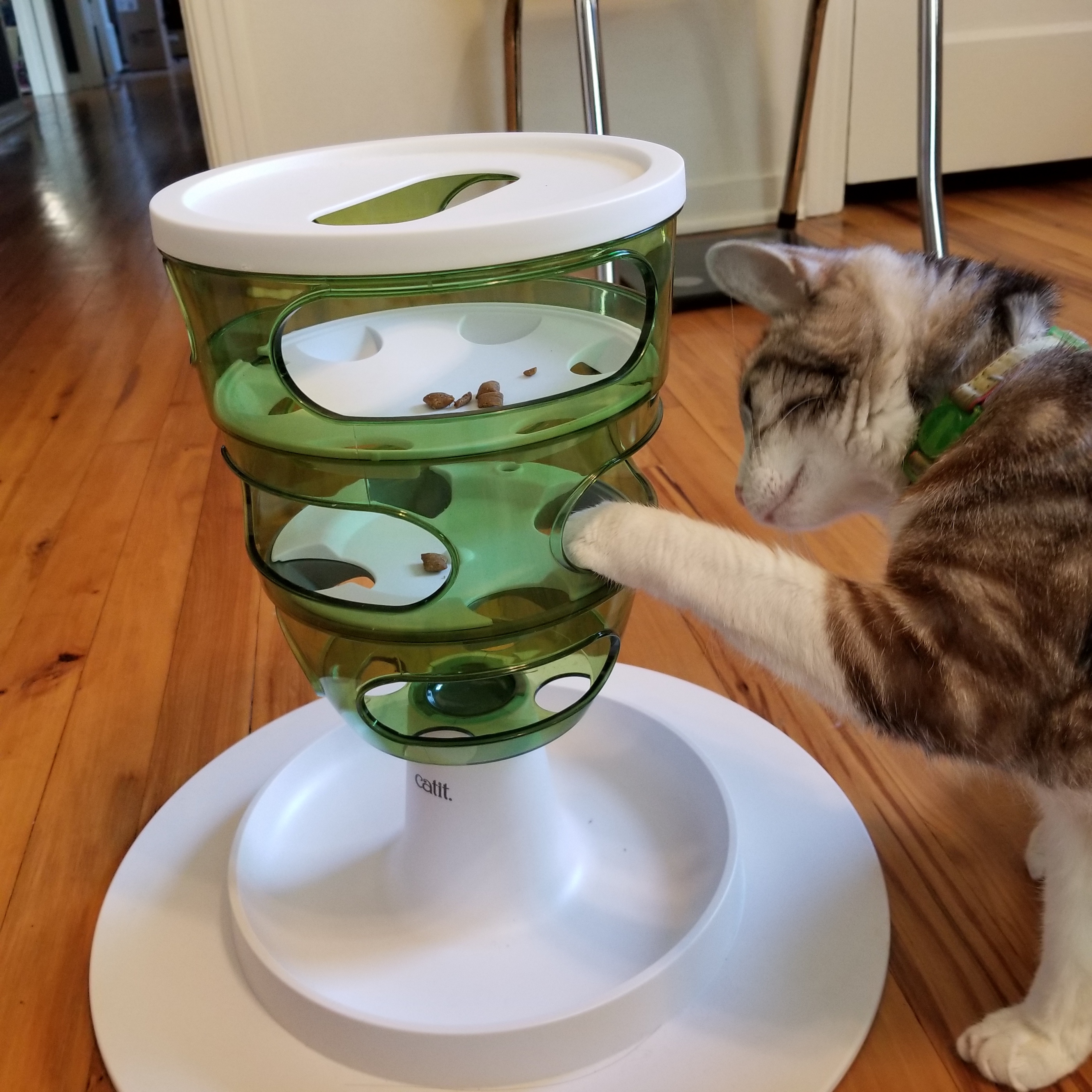
Puzzle feeder
A puzzle feeder used in the study. Credit: UC Davis

Delgado, a research affiliate at UC Davis’ School of Veterinary Medicine, used a clear puzzle feeder so the cats in her study could see the treats inside. A few feline study participants gave it a shot, but only after grabbing themselves some easy grub first. Other cats just ignored the food puzzle and munched exclusively from the tray.

While this is at least the second study to specifically test whether cats “freeload” their meals, the why of this particular feline behavior remains a mystery. Delgado cautioned against the obvious conclusion — that cats are just lazy — and pointed out that several cats in the study were active and expending energy, just not with the puzzle feeder.

One possible explanation: As hunters and obligate carnivores, cats simply may not enjoy games that simulate foraging the way omnivores and herbivores do.

The study was published on July 26 in the academic journal Animal Cognition. Read it here.

Screenshot 2021-08-13 at 08-31-22 MikelDelgadoProfile jpg (WEBP Image, 800 × 800 pixels)
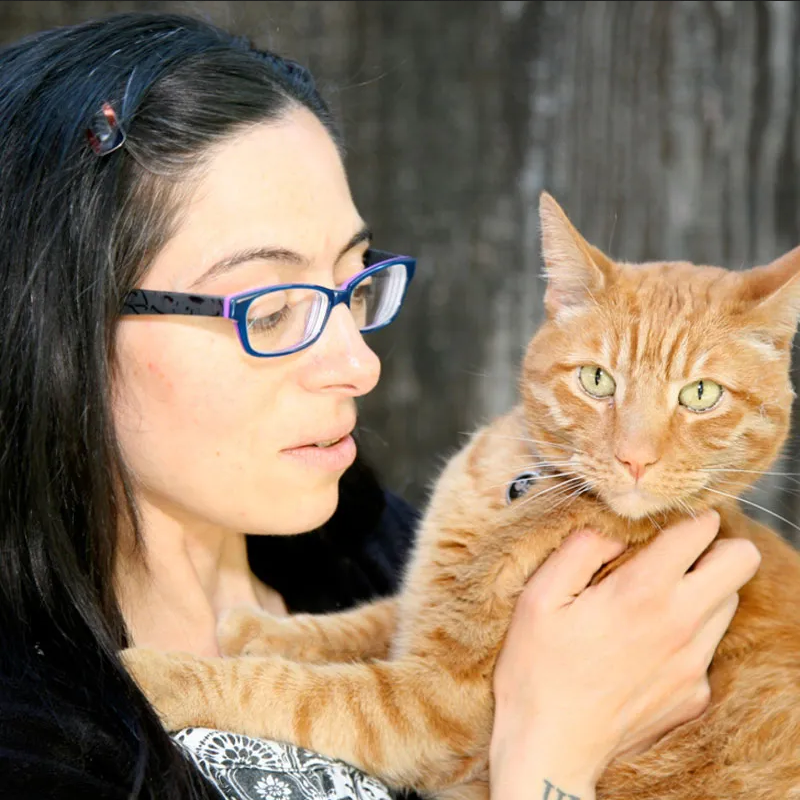
Mikel Delgado with a kitty. Credit: Community Cats Podcast

Ever Wondered How Many Surfaces Your Cat’s Butt Touches? A Kid Has The Answer

Cats are well known for grooming themselves, but are they as clean as we think?

I remember the first time I saw my brother’s dog drag his posterior across the living room carpet.

The friendly little good boy, a terrier-Chihuahua mix, had just returned from a walk with my brother. He hopped up onto the couch, then down, leaning back into an odd-for-a-dog sitting position.

Then, with his little back legs spread, he used his front paws to drag his butt across the carpet with a heavy exhale, the canine equivalent of an “Oh yeah!” sigh of relief.

I know there are many feline behaviors that gross out dog loyalists, but thank God we don’t have to watch our kitties use carpets and area rugs as butt-scratchers.

Cats have more dignity than that. Cats are legendarily fastidious animals.

Or are they?

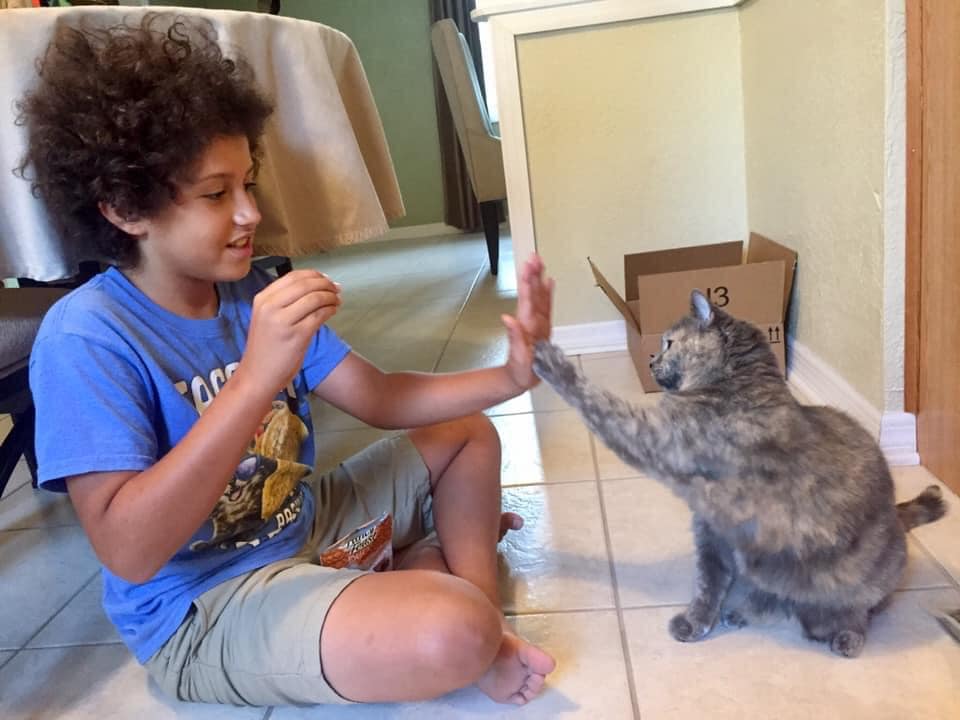
Kaeden, an enterprising sixth-grader from Florida, set out to “tackle the challenging task of answering the internet’s most burning question, drum roll please,” his mother, Kerry Griffin, wrote on Facebook. “Does your cat’s butthole really touch all the surfaces in your home?”

He would go on to present his findings and methodology at his school’s science fair.

Kerry has a doctorate in animal behavior with a concentration in feline behavior that she says she “never used.” She put it to good use for the project, helping her son come up with a plan: They’d use non-toxic lipstick and apply it to the cats’ “bum-bums.” Then they’d place each cat on a sheet of paper and run through commands.

“Both cats have been trained since kittenhood with a variety of commands. They also know how to high-five, spin around, and speak,” Kerry wrote. “They were compensated with lots of praise, pets and their favorite treats, and the lipstick was removed with a baby wipe once we collected our data in just under 10 minutes.”

They tested each cat on soft surfaces, like carpet and bedding, and on hard surfaces like tiled floors. If the cat left lipstick residue on the sheet of paper, it was counted as positive contact.

The results?

“Long and medium haired cat’s buttholes made NO contact with soft or hard surfaces at all,” Kerry wrote. “Short haired cats made NO contact on hard surfaces. But we did see evidence of a slight smear on the soft bedding surface.”

So there you have it. If your cats are long- or medium-hair, congratulations. Now if you’ll excuse me, I’ve got to have a little chat with the short-haired Buddy…catbuttproject

Can You Tell The Real Cats From The Computer-Generated Kitties?

How can you tell a rel cat from a computer generated cat?

There’s a new tool that uses algorithmic artificial intelligence to create random images of cats, and the results are virtually indistinguishable from the real thing.

Can you tell which cats are real and which ones are computer-generated? (Kindly share your answers in the comments, numbering them from left to right. The person with the best score gets bragging rights!)

We’ll follow up with the answers after everyone’s had a day to make their guesses or informed choices, as it were.

The algorithm was created by a process called machine learning, which you’ve probably heard at some point even if you haven’t sought out information about artificial intelligence. 

In simple terms, machine learning means the creators fed massive amounts of data — millions of photos of cats — to the software algorithm. The algorithm analyzes the data and learns how patterns in the data create accurate images of felines.

Crucially, the algorithm never learns what a cat actually is. It doesn’t know a cat is an animal in the real world. It doesn’t know what the real world is, and it doesn’t know what animals are. All it knows is that data, organized a certain way, produces images that look like the photos it’s been fed.

That’s a key difference because, while we have made huge strides with machine learning, that’s not the kind of artificial intelligence the Elon Musks of the world freak out about when they smoke pot and watch The Matrix. We’ll never have to worry about our cat-generating algorithms rising up and eliminating humanity. 🙂

Artificial general intelligence — or AGI — is the potentially dangerous form of AI, but that’s a whole other piece of business: It involves recreating consciousness and the mind on a machine substrate.

We can’t even define consciousness and we know shockingly little about how the brain works, so that’s not happening any time soon. And even if we could it off, there’s a growing body of evidence supporting the concept of embodied cognition. That’s the idea that the mind cannot be separate from the brain, and the brain cannot be separate from the body, as well as a recognition that everything from pain signals to gut flora has an effect on our cognitive routines.

The bottom line: “AI” can get pretty good at making pictures of cats, but it’s not taking over the world any time soon.