This Parrot Loves Earth, Wind And Fire

The last few decades have revealed birds like crows and parrots possess astonishing intelligence. “Bird brain” might not be much of an insult after all.

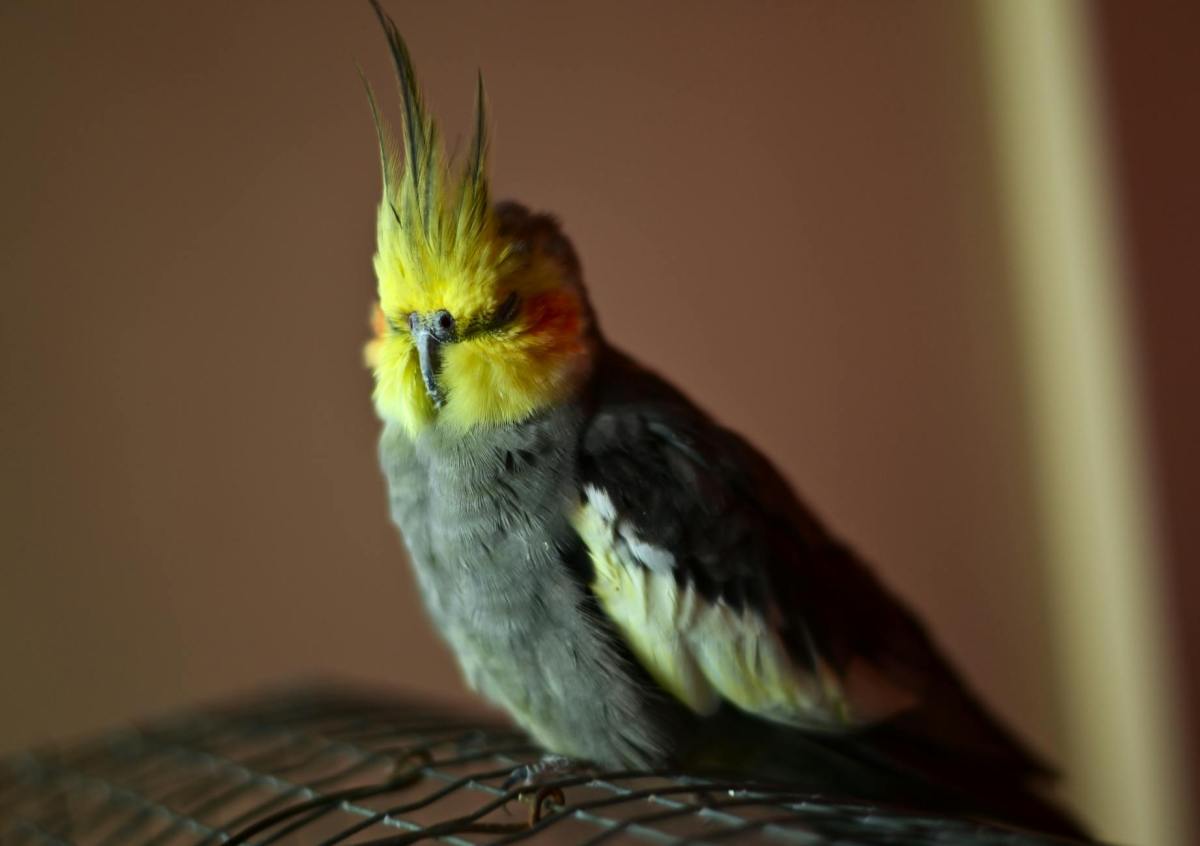
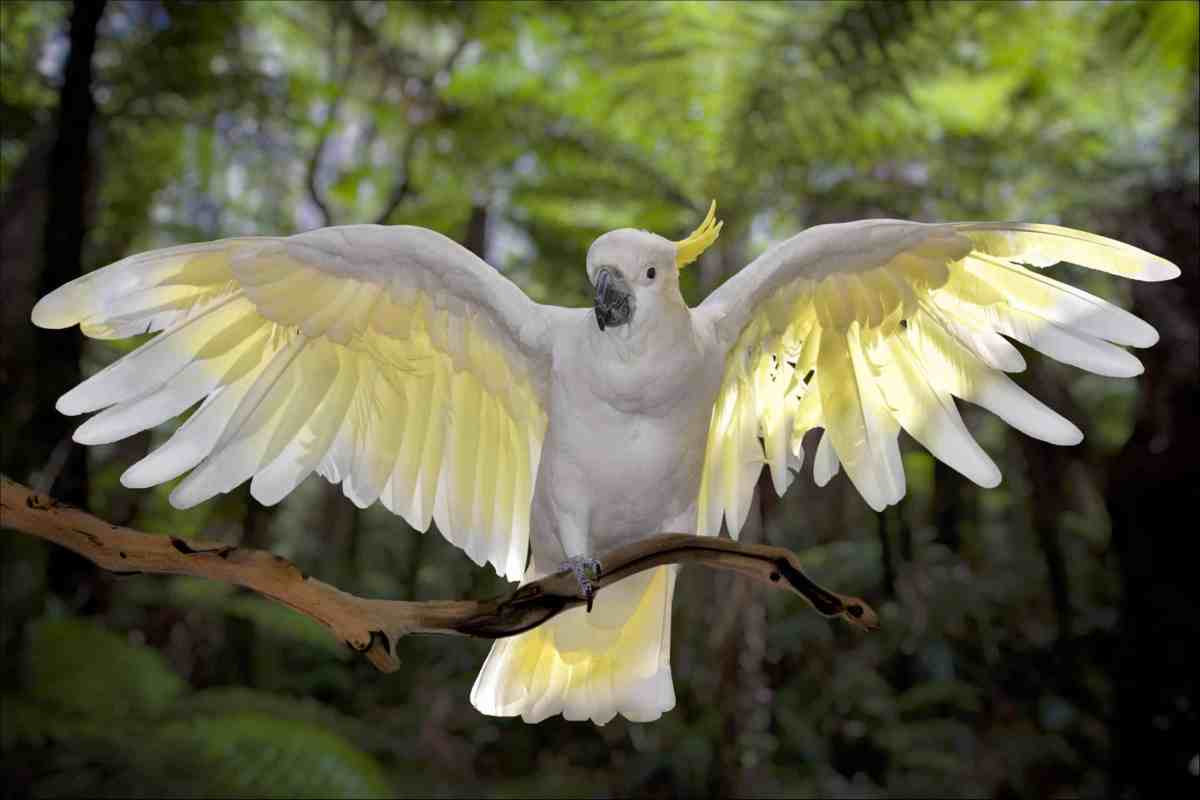
Meet Kiki the cockatiel, a bird who loves Earth, Wind and Fire so much that he sings the band’s classic hit, September, regularly — whether he’s just chilling by himself, singing along to the recording or driving his human crazy by whistling the catchy hook at ungodly hours.

“Kiki, it’s seven in the morning!” she tells him in one clip, raising an admonishing finger. “Silence!”

Kiki regards her for moment as if her request is absurd, then launches right back into September.

Hey, hey, hey
Ba-dee-ya, say, do you remember?
Ba-dee-ya, dancin’ in September
Ba-dee-ya, never was a cloudy day

In another video Kiki’s human sets her phone to record and leaves the room, and Kiki busts out his favorite song again. He’s got great taste in music!

I’ve always thought parrots are a fascinating example of animal cognition and further proof that we share our planet with billions of other minds who think and feel.

Humans and birds last shared a common ancestor more than 300 million years ago. That means between them there’s been more than 600 million years of divergent evolution resulting in radically different physiology, abilities and minds.

Yet parrots can speak while non-human primates (apes and monkeys) cannot!

For decades scientists thought apes and monkeys, by virtue of their relative similarity to humans, possessed an inmate affinity for language and that the physical limits of their vocal apparatus is what keeps them from speaking.

But a 2016 study by a team from Princeton University found monkeys do possess the vocal “hardware” to speak, meaning their mouths and throats are capable of making the sounds necessary for human language. It’s the lack of associated brain circuitry that prevents them from talking.

If the ability to speak and the ability to dance/appreciate music and rhythm is uniquely human among the primate order, and birds arrived at it at a different point in their evolutionary history, that means language and appreciation for music/rhythm developed separately along two divergent evolutionary lines!

That’s incredible and has intriguing implications for the cognitive abilities of animals.

A common argument is that birds with the ability to form human speech are simply mimicking sounds and don’t understand what they’re saying. That’s a natural assumption given what we think we know about non-human capacity for understanding language, but research suggests it’s wrong.

Take a look at this video of the famous late African grey parrot, Alex:

When Dr. Irene Pepperberg asks Alex how many blue blocks are present on a tray with a random assortment of blocks, balls and triangular toys in different colors, Alex can’t give a rote answer. First he has to understand that a question is a request for information and not part of the strange human ritual called small talk. He can’t simply count or guess at the number of blocks either.

Instead, Alex has to perform two calculations. He must tally the blue objects and count the number of them that are blocks, or he’s got to count the number of blocks and figure out how many of them are blue.

If he was simply repeating information in context — like saying “Hello!” when a person walks into a room — Alex wouldn’t be able to correctly answer the questions, and Pepperberg’s research funding would have dried up. Instead, Alex became a focal point of research that persisted for decades.

There’s no indication Alex could master syntax, which has proven elusive for even the smartest animals. But the African grey, who died in 2007 at 31 years old, was curious, asking questions that were unique and unexpected of an animal. He once asked his caretakers to describe his physical appearance, and the night before he died, he told Pepperberg: “You be good. I love you. See you tomorrow.”

We’ve talked about parrots before on PITB, including Snowball the dancing cockatiel who not only appreciates music and has a great sense of rhythm, but also has an entire repertoire of unique dance moves. Then there’s my personal favorite, Ruby the African grey, who has demonstrated mastery of absolutely vile, uniquely British insults.

Sure, there may not be much research value in hearing Ruby hurl verbal abuse at her very loving human, Nick Chapman, but few things have made me laugh as hard as that extraordinarily foul-mouthed bird. She has to be seen and heard to be believed. (But if you’ve got kids in the room, stick with the wholesome Snowball. He’s got serious moves.)

Snowball the dancing parrot
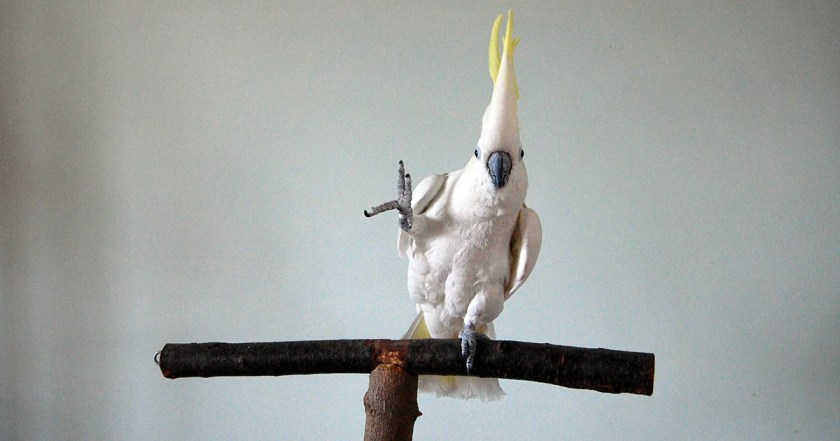
Scientists credit Snowball with choreographing his own dance routines, with dozens of individual dance moves and combinations, and moves that change depending on the song he’s rocking out to.

Now if you’ll excuse me, I’m off to teach a certain feline a few Earth, Wind and Fire songs in the hope that he’ll give up on the screeching meows and use his natural falsetto for a more gentle wake-up experience.

Hey, hey, hey
Ba-dee-ya, hey there my Big Buddy
Ba-dee-ya, Little Buddy’s hungry!
Ba-dee-ya, get your lazy ass up and feeeeeed me!

Bud close up

Do You ‘Pspsps’ To Your Furry Friend? Plus: An Obit For Miles The Cat

Do you use “pspsps” to get your cat’s attention?

Apparently a lot of people use the “pspsps” thing to get their cats’ attention, and Mental Floss has a new story proposing some theories about why people use it and why cats respond.

The first and most obvious is that felines hear higher frequencies than humans, and they’re especially tuned into those frequencies because their usual prey — including rodents and birds — not only make noises in the higher ranges, they make noise us humans can’t hear, but felid ears are primed to pick up.

Mental Floss’s Ellen Gutoskey also points out that it could be “a truncation of ‘Here, pussy, pussy, pussy’—popularized in part by ‘Pussy, Pussy, Pussy,’ a 1930s song by the Light Crust Doughboys. In fact, the tempo is fast enough that it almost sounds like they’re singing ‘Pspsps.”

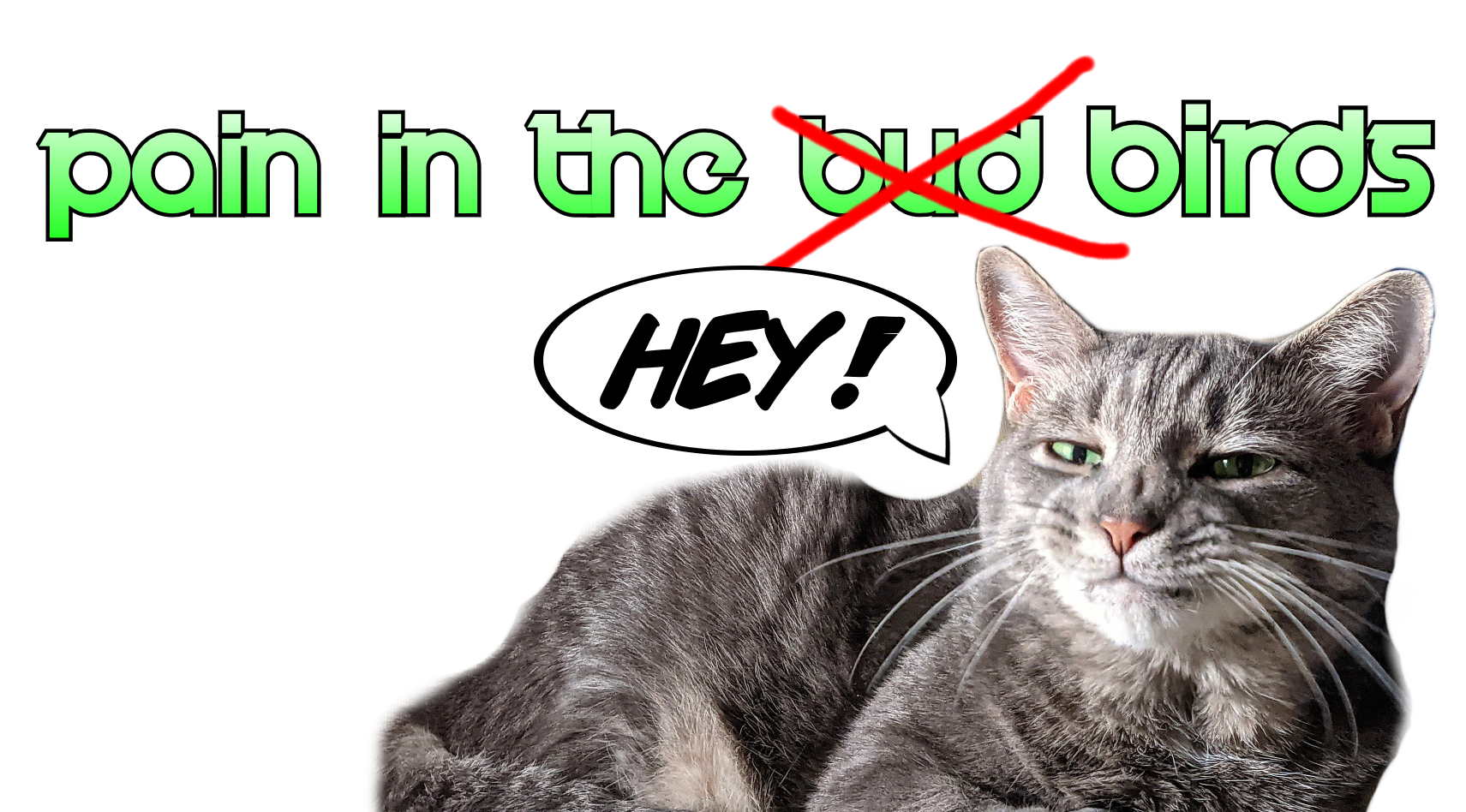
I think she could be onto something there unless the “pspsps” sound is universal, but truthfully I have no clue whether people in other countries, or outside the English-speaking world, use it to call their cats. I don’t and never really needed to. Bud comes when called a good 85 percent of the time, and if he doesn’t I usually assume it’s for good reason, like he’s having a nice nap or he has no current use for his servant.

Miles the cat

The Guardian’s Hannah James Parkinson writes about adopting Miles, the shelter’s most skittish cat who had been passed over time and again until she came along.

Earning Miles’ trust wasn’t easy, but Parkinson did it with time, patience and love, and eventually Miles became her little buddy and even came out of his shell enough to make friends with another neighborhood cat.

milesthecat
Credit: Hannah Jane Parkinson

Unfortunately Miles got hurt, infected and died while he was outside overnight. Parkinson doesn’t say if the little guy got hit by a car, but the description of his initial injury is consistent with it.

The indoor vs outdoor thing is a thorny issue. I saw it as a more black-and-white problem until hearing from several readers who live in places like farmland or very quiet neighborhoods where the chance of a cat getting hit is small.

I don’t begrudge anyone making what they think is the best choice for their cat(s), except maybe for Australians and New Zealanders. Seriously, guys, bring those cats in before sadistic “hunters” get them in their crosshairs or they nibble on the poisoned meat that both governments like to use to “manage” the cat population. Neither country seems overly concerned with pet cats getting caught up in their zealous extirpation campaigns, and when birders are this riled up it’s best not to take chances anyway. If your cat isn’t spending time outdoors, it can’t be blamed for killing local wildlife.

I love dogs, but…

The Daily Mail has a horrific story about a pair of unleashed rottweilers that followed a woman into her home as she was carrying groceries and mauled her two pet cats to death in front of her traumatized children.

The attack happened around noon on Aug. 30 in a small town in the UK’s Western Midlands. The dogs came bounding in and snatched one of the cats off the kitchen counter, then mauled the other. The ginger tabby died immediately, either from shock or his severe injuries, while the other lived long enough to make it to the vet, who said the little tuxedo couldn’t be saved.

The woman told the newspaper her kids are having nightmares about the attack, while the police response was underwhelming to say the least, especially because the cats weren’t the only animals attacked by the roaming rottweilers.

“We were called to Raglan Way, Chelmsley Wood (on August 30) to reports of two dogs attacking another dog. The injured dog was taken to the vets to be treated,” a police spokesman told the paper. “The owners of the two dogs were spoken to and were taken back home to be secured by the owners. We have asked neighbourhood officers to speak to the dog’s owners regarding securing the animal, and will consider any further steps that need to be taken to ensure public safety.”

The owners of the dogs “were spoken to.” Wow. Let no one say the West Midlands Police don’t have a sense of scale. Perhaps if it happens again they’ll send a stern letter.

I hope the resulting media stories, and the beginning of the attack caught on a home security camera, lead to enough pressure that the police take the incident seriously and the owners of the dogs have to face consequences. There’s nothing prohibitive about talking to them. The only way irresponsible people are going to leash their dogs, especially dogs capable of this kind of thing, is if the consequences for not doing so are sufficiently prohibitive to make them think twice.

Finally, here’s a video of a cute baby kookaburra to balance out all that horribleness:

Every Attempt To Translate Meows Has Failed. Why?

A New York Times science writer tries MeowTalk, the app that says it can tell you what your cat is saying.

New York Times science writer Emily Anthes details her experience with MeowTalk in a new story, and has more or less come to the same conclusions I did when I wrote about the app last year — it recognizes the obvious, like purring, but adds to confusion over other vocalizations.

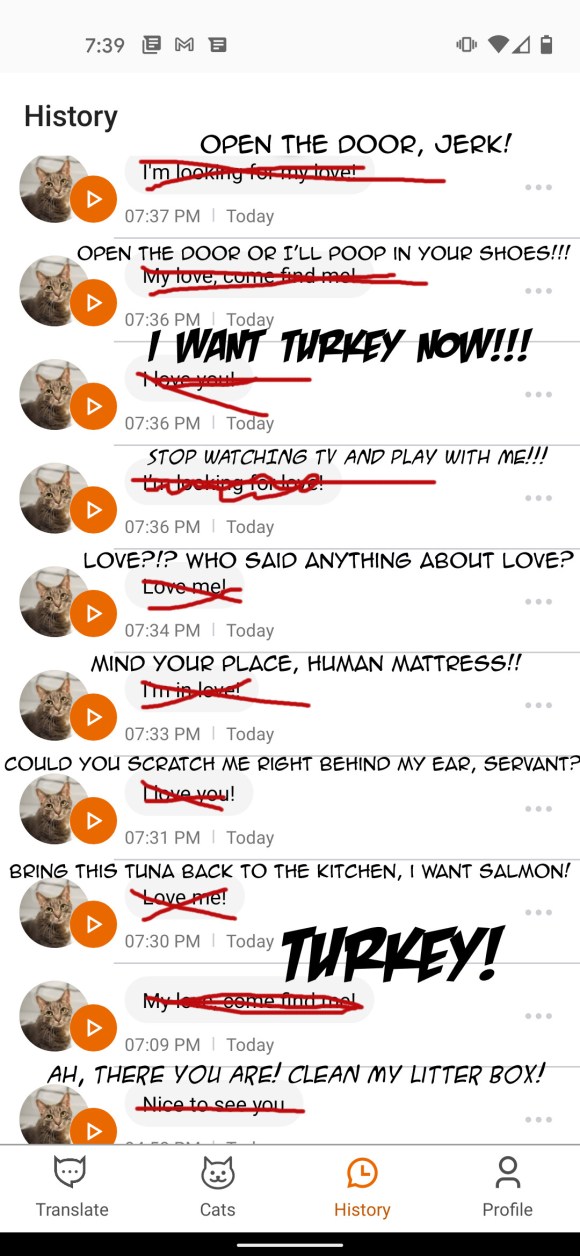
Back in January of 2021, in MeowTalk Says Buddy Is A Very Loving Cat, I wrote about using MeowTalk to analyze the vocalizations Bud makes when he wants a door opened. After all, that should be a pretty basic task for an app that exists to translate meows: Cats ask for things, or demand them, some would say.

But instead of “Open the door!”, “I want to be near you!”, “Human, I need something!” or even “Obey me, human!”, it told me Bud was serenading me as he pawed and tapped his claws on the door: “I’m looking for love!”, “My love, come find me!”, “I love you!”, “Love me!”, “I’m in love!”

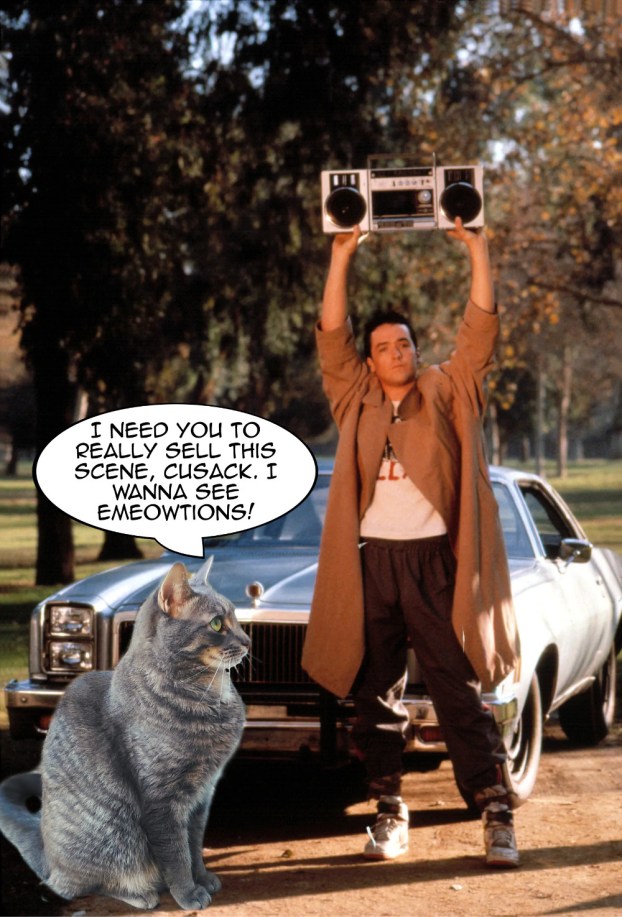
According to MeowTalk, my cat was apparently the author of that scene in Say Anything when John Cusack held up a boombox outside of Ione Skye’s bedroom window.

John Cusack and Buddy the Cat
Buddy the Director.

Anthes had a similar experience:

“At times, I found MeowTalk’s grab bag of conversational translations disturbing. At one point, Momo sounded like a college acquaintance responding to a text: ‘Just chillin’!’ In another, he became a Victorian heroine: ‘My love, I’m here!’ (This encouraged my fiancé to start addressing the cat as ‘my love,’ which was also unsettling.) One afternoon, I picked Momo up off the ground, and when she meowed, I looked at my phone, ‘Hey honey, let’s go somewhere private.’ !”

On the opposite side of the emotional spectrum, MeowTalk took Buddy’s conversation with me about a climbing spot for an argument that nearly came to blows.

“Something made me upset!” Buddy was saying, per MeowTalk. “I’m angry! Give me time to calm down! I am very upset! I am going to fight! It’s on now! Bring it!”

In reality the little dude wanted to jump on the TV stand. Because he’s a serial swiper who loves his gravity experiments, the TV stand is one of like three places he knows he shouldn’t go, which is exactly why he wants to go there. He’s got free rein literally everywhere else.

If MeowTalk had translated “But I really want to!” or something more vague, like “Come on!” or “Please?”, that would be a good indication it’s working as intended. The app should be able to distinguish between pleading, or even arguing, and the kind of freaked-out, hair-on-edge, arched-back kind of vocalizations a cat makes when it’s ready to throw down.

buddytranslations
Accurate translations of Buddy’s meows.

Still, I was optimistic. Here’s what I wrote about MeowTalk last January:

“In some respects it reminds me of Waze, the irreplaceable map and real-time route app famous for saving time and eliminating frustration. I was one of the first to download the app when it launched and found it useless, but when I tried it again a few months later, it steered me past traffic jams and got me to my destination with no fuss.

What was the difference? Few people were using it in those first few days, but as the user base expanded, so did its usefulness.

Like Waze, MeowTalk’s value is in its users, and the data it collects from us. The more cats it hears, the better it’ll become at translating them. If enough of us give it an honest shot, it just may turn out to be the feline equivalent of a universal translator.”

There are also indications we may be looking at things — or hearing them — the “wrong” way. Anthes spoke to Susanne Schötz, a phonetician at Lund University in Sweden, who pointed out the inflection of a feline vocalization carries nuances. In other words, it’s not just the particular sound a cat makes, it’s the way that sound varies tonally.

“They tend to use different kinds of melodies in their meows when they’re trying to point to different things,” said Schötz, who is co-author of an upcoming study on cat vocalizations.

After a few months in which I forgot about MeowTalk, I was dismayed to open the app to find ads wedged between translation attempts, and prompts that asked me to buy the full version to enable MeowTalk to translate certain things.

The developers need to generate revenue, so I don’t begrudge them that. But I think it’s counterproductive to put features behind paywalls when an application like this depends so heavily on people using it and feeding it data.

To use the Waze analogy again, would the app have become popular if it remained the way it was in those first few days after it launched? At the time, I was lucky to see indications that more than a handful of people were using it, even in the New York City area. The app told me nothing useful about real-time traffic conditions.

These days it’s astounding how much real-time traffic information the app receives and processes, routing drivers handily around traffic jams, construction sites and other conditions that might add minutes or even hours to some trips. You can be sure that when you hear a chime and Waze wants to redirect you, other Waze users are transmitting data about a crash or other traffic impediment in your path.

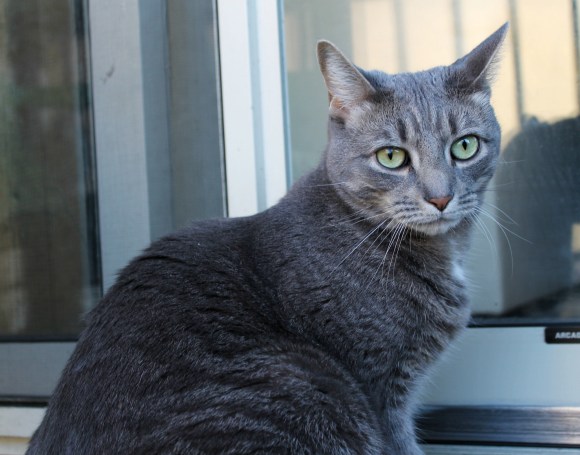
Bud
“I’m thinking deep thoughts about turkey.”

MeowTalk needs more data to be successful, especially since — unlike Waze — it depends on data-hungry machine learning algorithms to parse the sounds it records. Like people, machine learning algorithms have to “practice” to get better, and for a machine, “practice” means hearing hundreds of thousands or millions of meows, chirps, trills, yowls, hisses and purrs from as many cats as possible.

That’s why I’m still optimistic. Machine learning has produced algorithms that can identify human faces and even invent them. It’s produced software that can write prose, navigate roads, translate the text of dead languages and even rule out theories about enduring mysteries like the Voynich Manuscript.

In each of those cases there were innovators, but raw data was at the heart of what they accomplished. If MeowTalk or another company can find a way to feed its algorithms enough data, we may yet figure our furry little friends out — or at least know what they want for dinner.

Cats Can’t Dance, Cats Can’t Sing…But Birds Can!

Snowball is the first animal known to dance to the rhythm of music, while Ruby is, well, Ruby.

We take a break from our regularly-scheduled cats to check in on two remarkable birds: Snowball the incredible dancing cockatoo, and Ruby the infamously foul-mouthed African grey parrot.

pitbbirds2

Both animals have been the subject of viral videos, but haven’t become ubiquitous memes or the sort of superstar that transcends certain corners of the internet.

Snowball is clearly the more wholesome of the two, and it’s immediately apparent why: He dances.

Actually, that’s underselling it. Snowball doesn’t just dance, he feels the beat and moves with it, timing his dance moves — headbangs, foot-wiggles, side-steps and more — to the music, often the snare like people do. Snowball isn’t the first animal to move to music, but he’s the first animal to groove to music, which is an important distinction.

“His owner had realized that he couldn’t care for the sulfur-crested cockatoo any longer. So in August 2007, he dropped Snowball off at the Bird Lovers Only rescue center in Dyer, Indiana—along with a Backstreet Boys CD, and a tip that the bird loved to dance. Sure enough, when the center’s director, Irena Schulz, played “Everybody,” Snowball “immediately broke out into his headbanging, bad-boy dance,” she recalls. She took a grainy video, uploaded it to YouTube, and sent a link to some bird-enthusiast friends. Within a month, Snowball became a celebrity. When a Tonight Show producer called to arrange an interview, Schulz thought it was a prank.”

Other animals are prompted to motion by music, but they don’t time their motions to the beat. Snowball’s talents have attracted curious neuroscientists, who believe Snowball is able to coordinate his body movements with the rhythm because, like humans, he can process language.

It might seem a little odd that such an ability seems to hinge on language until you realize that language itself is rhythmic, ordered sound, and that human communication often pairs speech with coordinated movements. (Think of people who “talk” with their hands, TV presenters who move their heads for emphasis or the simple act of nodding, shaking your head or shrugging to punctuate a point.)

Scientists study Snowball because he’s inherently fascinating, but also because he can help us understand how birds and humans communicate, and how homo sapiens and certain avian species, out of all the animals on Earth, developed this skill.

Ruby the Foul-Mouthed African Grey Parrot

Ruby is a different case entirely. She’s interesting to internet audiences because she’s hilarious, and if she holds academic appeal, it’s because of the way she’s been socialized and the things she’s learned.

Ruby, one of Youtube’s earliest viral stars, lives with her human, Nick Chapman, in Brighton, UK.

First thing’s first: If you’re put off by obscenities or you’re easily offended, you should take a pass on these videos.

For everyone else, well, it’s not just that Ruby swears. That sort of novelty would wear off quick. What makes Ruby unique — and consistently hilarious — is that she’s inventively obscene, working insults into unique combinations. And, as you’ll see, she swears in French as well as heavily-accented UK English. It’s the latter that often makes for her most amusing outbursts.

“I love you,” Ruby tells Chapman in one video.

“Well that’s a nice change, sweetheart!” Chapman says.

“Bollocks.” Ruby takes a half step to her right on the small platform in front of her cage, turning her head toward Chapman. “You fat bastard!”

Chapman laughs. “I knew that wouldn’t last.”

Ruby’s foul language is unmistakably British and as casually vicious as it gets. She hurls invective at the seagulls who are a constant presence in seaside Brighton and expresses her love for Chapman by insulting him.

“Fuck off, you tw-t!” the bird says, prompting laughter from Chapman.

“Oh dear,” Chapman says. “That’s not nice!”

“Eh,” Ruby says. “Tw-t! You’re not funny.”

“I know I’m not funny. I’m immature, I’m irresponsible. But so what?”

In another video, Chapman tries to engage Ruby by telling her he loves her in French.

Ruby sits motionless for a few long seconds, then utters a single syllable with expert comedic timing: “Tw-t!”

Chapman does a deep belly laugh.

“Shut up, c–t!’ Ruby says. “You f—er!’

“Oh dear,” Chapman says between laughs. “You’re shocking, you know that?”

One thing becomes abundantly clear over the course of just a few videos: Chapman loves Ruby and, despite the constant verbal abuse she directs toward him, she loves Chapman too.

For a man who owns a bird who loves foul language, you’d think Chapman would have a dirty mouth, but for the most part he doesn’t. It’s often impossible to predict what a parrot will pick up on.

Eric, another Youtube-famous parrot, learned his favorite swear words when his owner’s friends came over to watch football, or soccer to us Yanks. Eric’s fond of yelling “A fookin’ legend! A fookin’ legend!” 

Ruby is quick to pick up on new words, and Chapman thinks she likes the harsh sounds of some of the language’s most offensive insults. (Perhaps it’s no mistake that many of the most vulgar words in English have a guttural quality, reflecting their meaning.)

Long before Ruby became a Youtube star, Chapman said he realized the potential for awkwardness. One day he was strolling along the waterfront in Brighton when an older woman stopped to chat and asked about Ruby.

“She’s beautiful,” the woman said, admiring the African grey.

“Shut your c–t!” Ruby snapped back.

The shocked woman looked at Chapman, who pretended he hadn’t heard what his bird said.

The issue of whether parrots understand what they’re saying still hasn’t been settled. Like some other animals — cats and dogs among them — they can understand words in their contextual meanings, though it’s very unlikely a swearing parrot knows precisely what it’s doing.

Then again, to insist parrots are just repeating sounds would be to discount examples like the late Alex, an African grey who could count, distinguish between different items by color and shape, and allegedly innovate to some extent.

Then there’s this video of a parrot telling a cat to “shut the f— up” as the cat meows. It makes me wonder, if I had a parrot, what the bird would pick up from my conversations with Buddy. There’d be a lot of “Hi, Bud!” and “What a good boy!”, and the vast majority of it would be kind, patient and loving, but I won’t pretend there aren’t times when I’ve told him I can’t take any more of his hours-long discourses on teleportation, turkey or unifying classical and quantum physics.

That said, I wouldn’t change a thing about Buddy. He’s my Buddy.