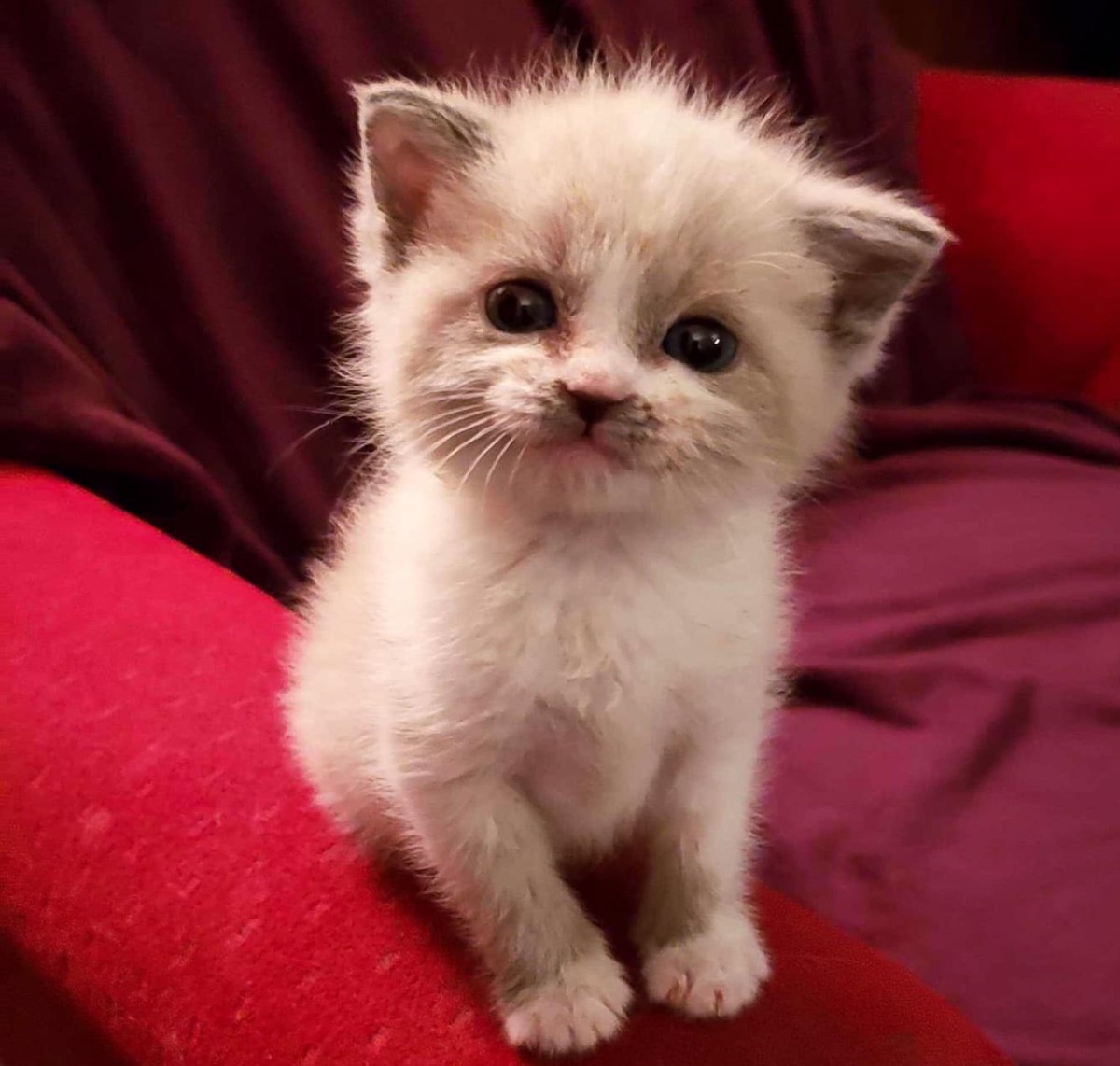
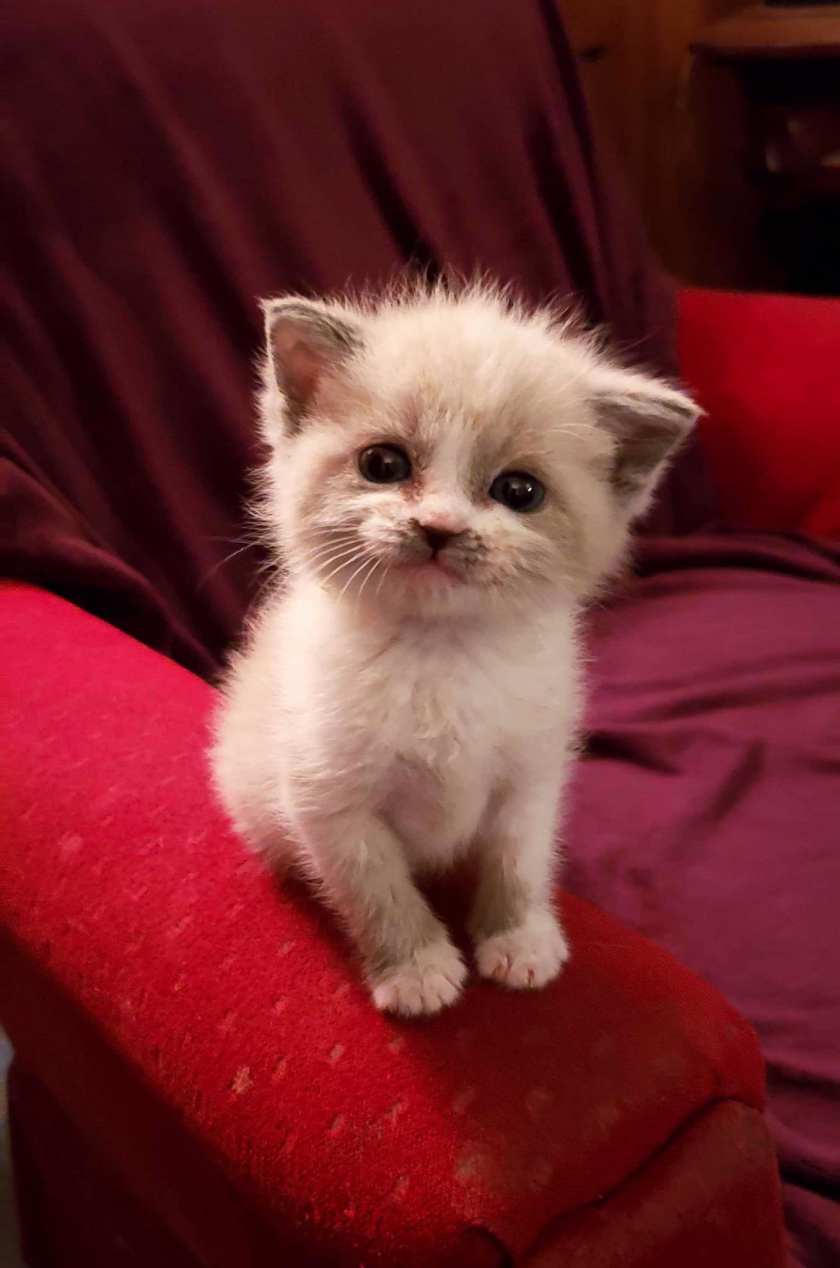
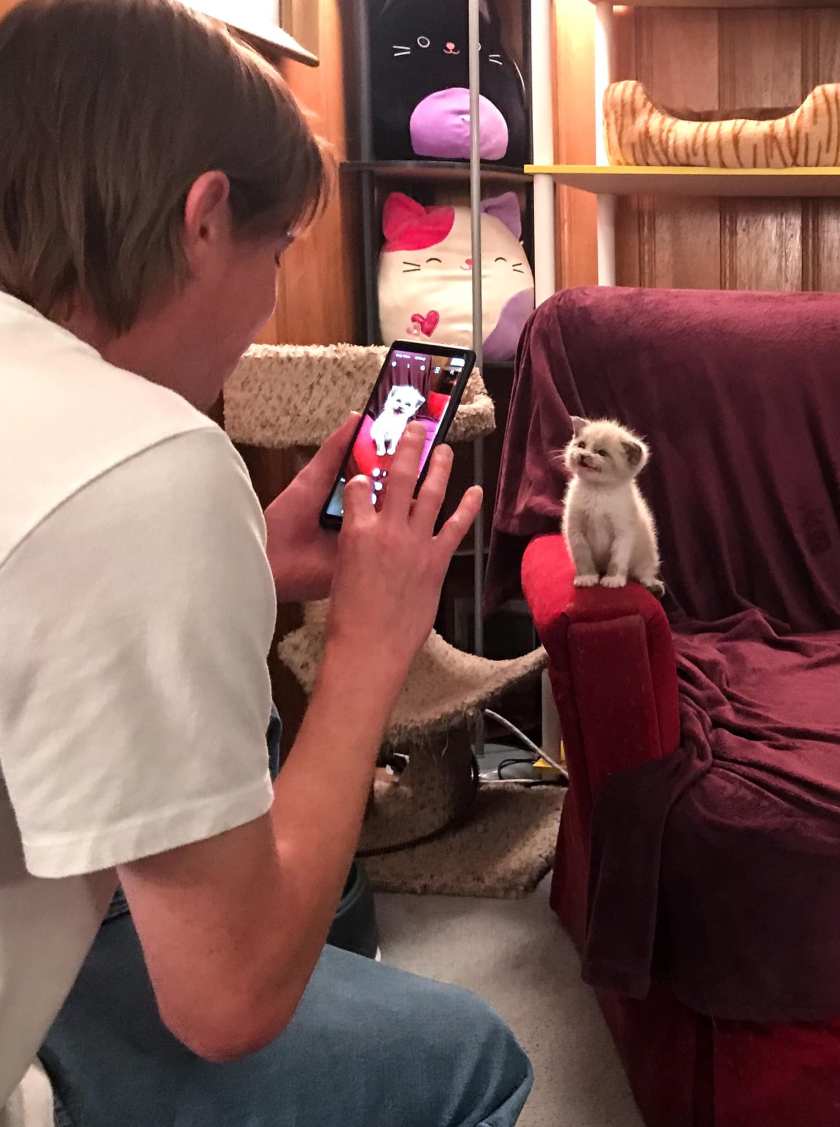
This kitten can’t hide her smile as she poses for the camera.
Do cats understand and appreciate when humans rescue them?
It’s a question that comes up often, even though cat owners servants are quick to answer in the affirmative based on their own experiences with thankful felines.
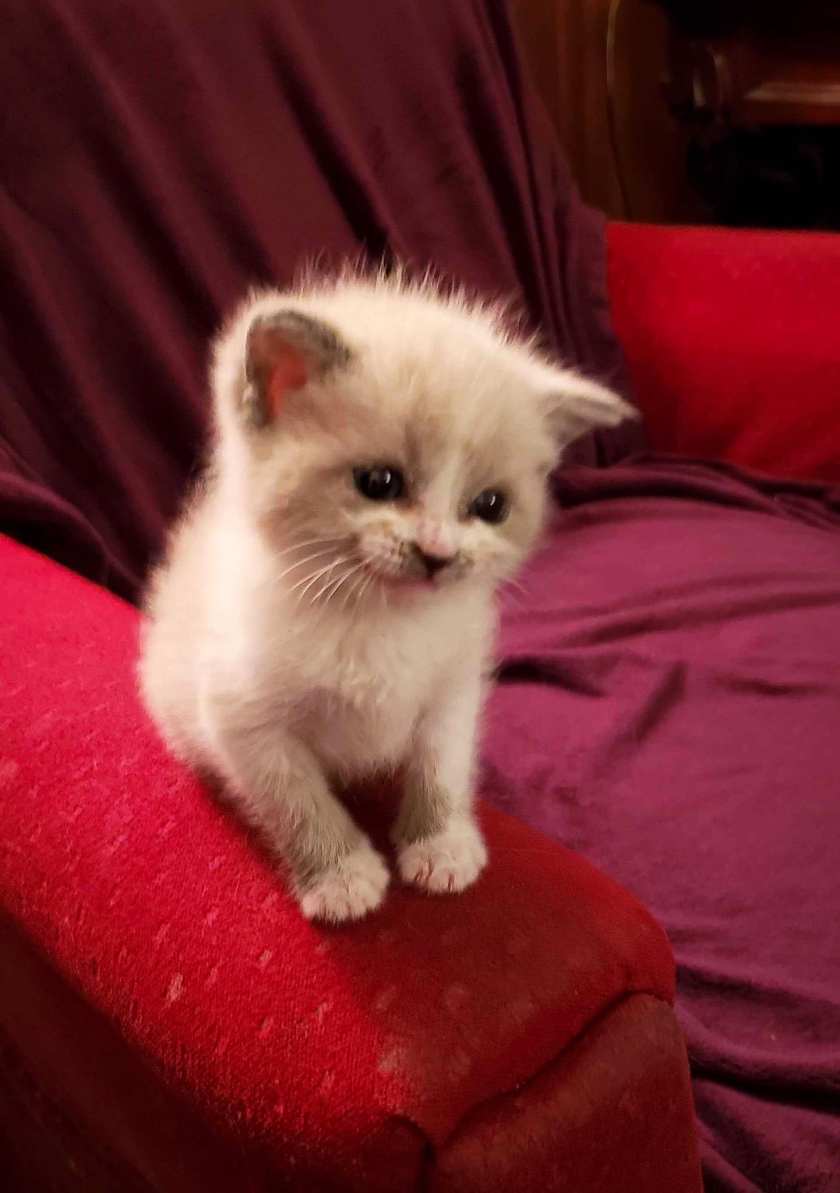
Thanks to a tiny rescue kitten named Blossom and her beaming smile, any doubts can be officially put to rest. Here’s Blossom happily posing for the camera in the home of her foster mom, Lauren Boutz of New Mexico:
“Get my good side! Got it? Good!”
Blossom and her two sisters are receiving round-the-clock care from Boutz and her boyfriend, who have taken over mom duties for the orphaned trio.
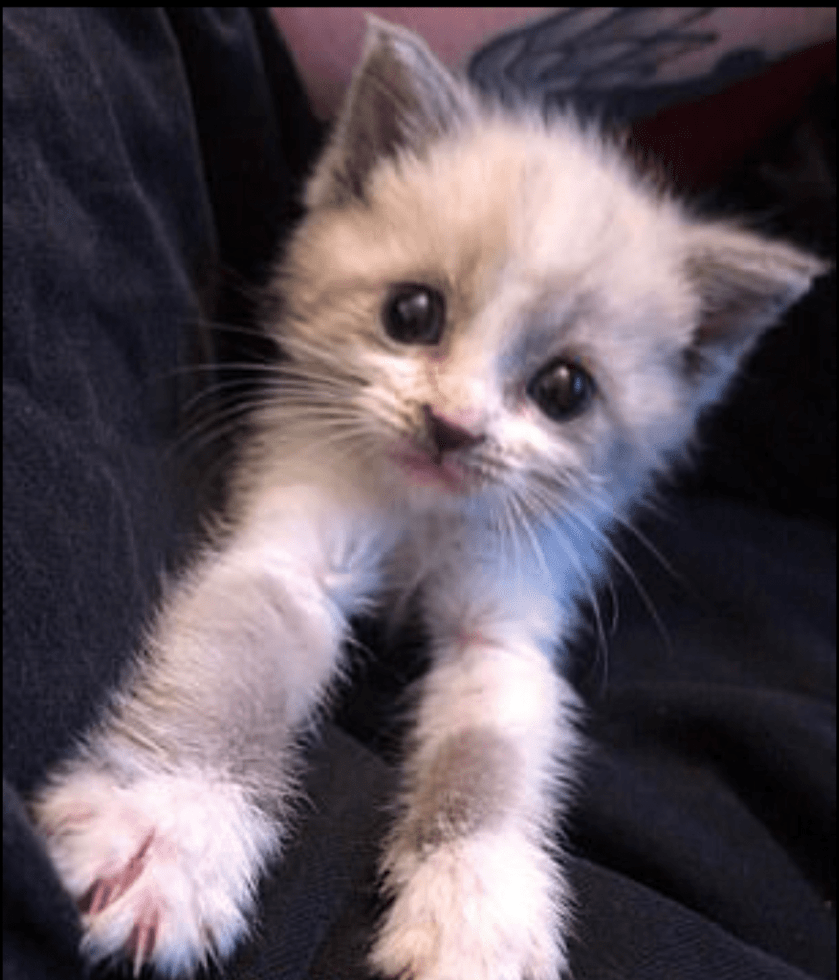
The grateful kitty’s sunny mug has been shared a few thousand times since Boutz shared the photos to Facebook. Like all good models, Blossom has several looks.
“My other good side!”
“You cannot resist my cuteness…play with me!”A natural in front of the camera.
Now if we could only get a certain grouch around here to smile…Why so serious all the time, Bud?
Buddy’s having a difficult time adjusting to his new diet.
Day 1: I meowed for treats for two hours and 37 minutes this morning, to no avail. Has Buddy the Larger suffered a stroke? This could pose serious problems for my snacking requirements.
Day 2: This must be a joke. A bad, totally-not-funny joke that’s gonna end with my teeth and claws delivering the final punchline. I WANT MY TREATS NOW.
Day 3: This new kibble is tasteless. Blue Buffalo Wilderness, my ass. More like Brown Cardboard Inside. Thank God I still get turkey. Oh, turkey, I love you.
Day 4: It has been 93 hours, 22 minutes and 17 seconds since my last treat, a creamy, moist morsel of manufactured goodness that activated the reward pathways in my brain like only the finest kitty crack can. You got any on you, bro?
Day 5: By employing my own talents of stealth and acrobatics, I’ve discovered not only is Big Buddy withholding snacks from me, they’ve all disappeared from the snack cabinet! What horrible sorcery is this?
Day 6: Last night I helped myself to some of Big Buddy’s pasta when he left the room to refill his beverage. It’s awful, rubbery stuff topped with sauce made from tomato, that infernal vegetable. Yet I gulped it down. What’s happening to me?!
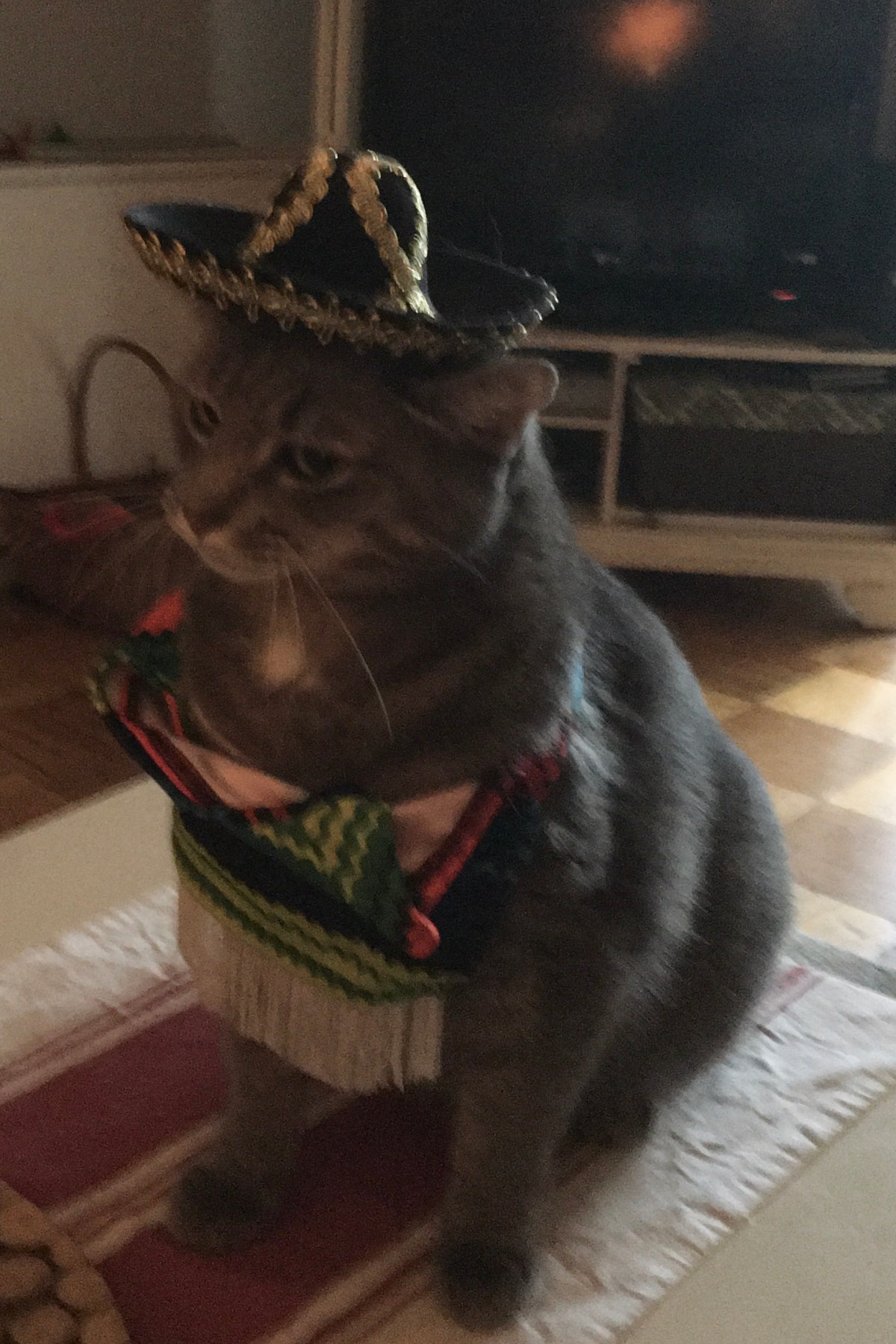
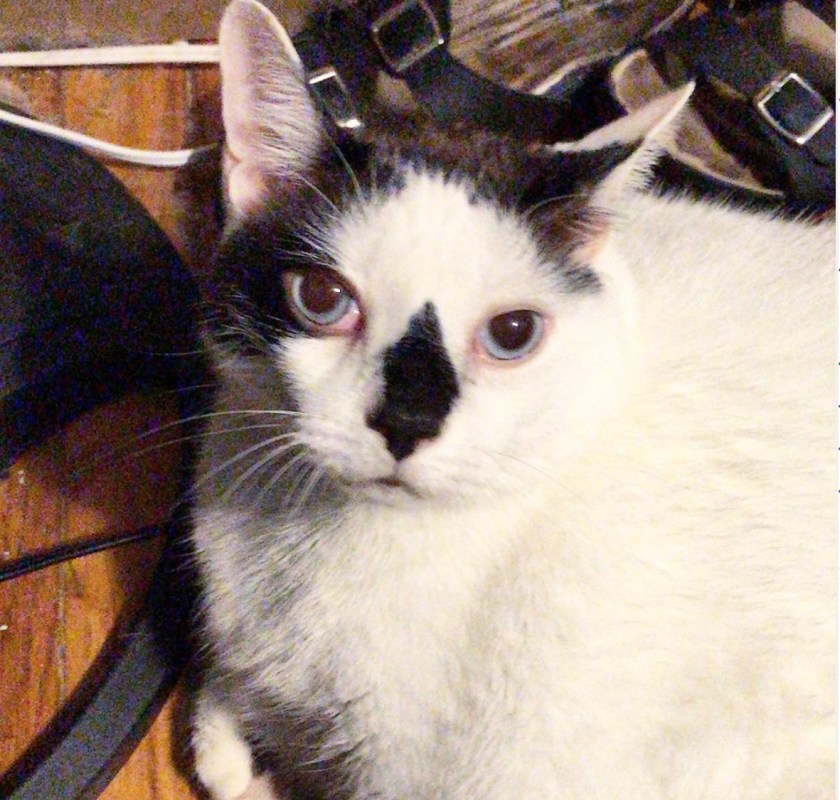
Buddy doesn’t like wearing his costume, but he loves greeting trick-or-treaters.
Buddy is my little helper this Halloween, as he is every year.
When the doorbell rings he runs excitedly over to the door like a dog, looking back at me like “Come on, dude! People are here! Open the door and give them candy!”
The kids love him.
“Oh, he’s so cute!” one little girl, dressed as a Disney princess, exclaimed just a few minutes ago.
“Look! A kitty cat!” another said, pointing happily.
Unfortunately Buddy will not wear his costume. Maybe that’s for the best, since he could be accused of cultural appropriation. Can cats appropriate culture?
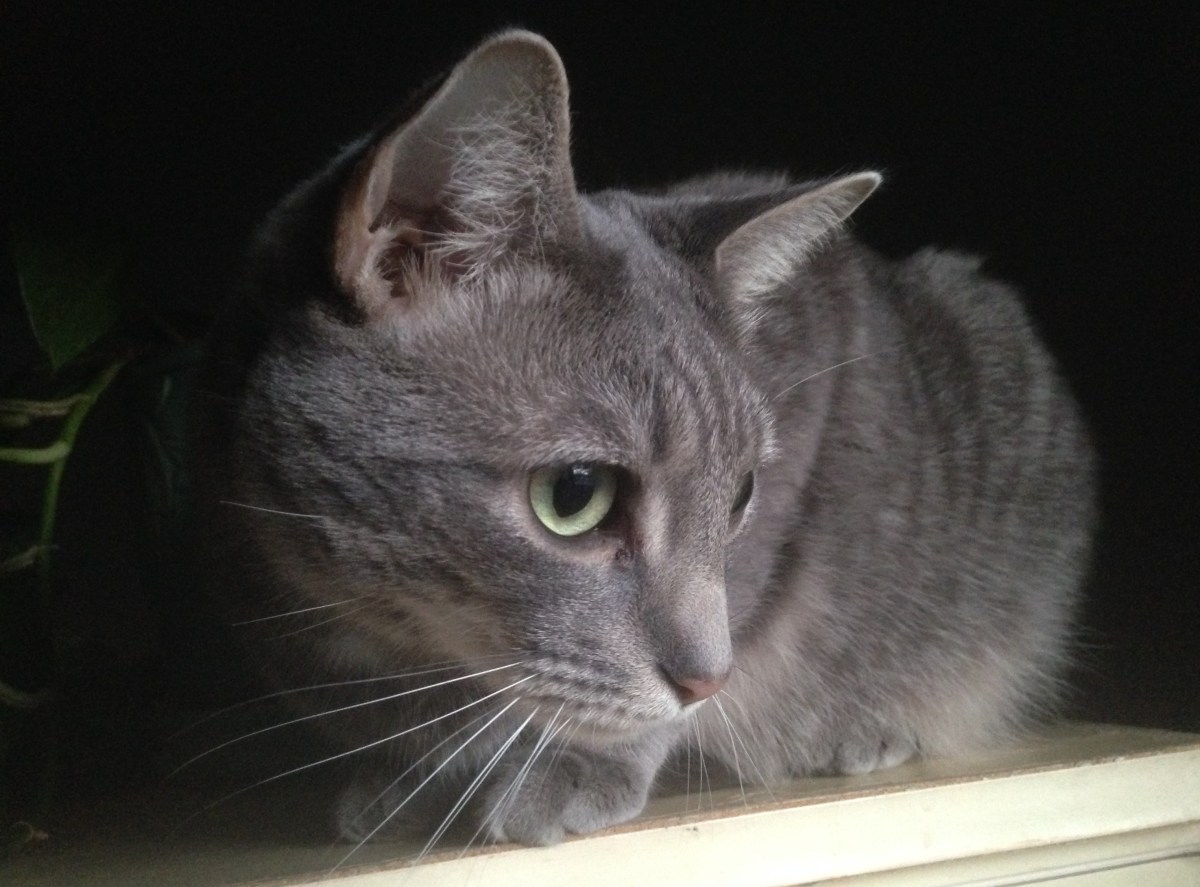
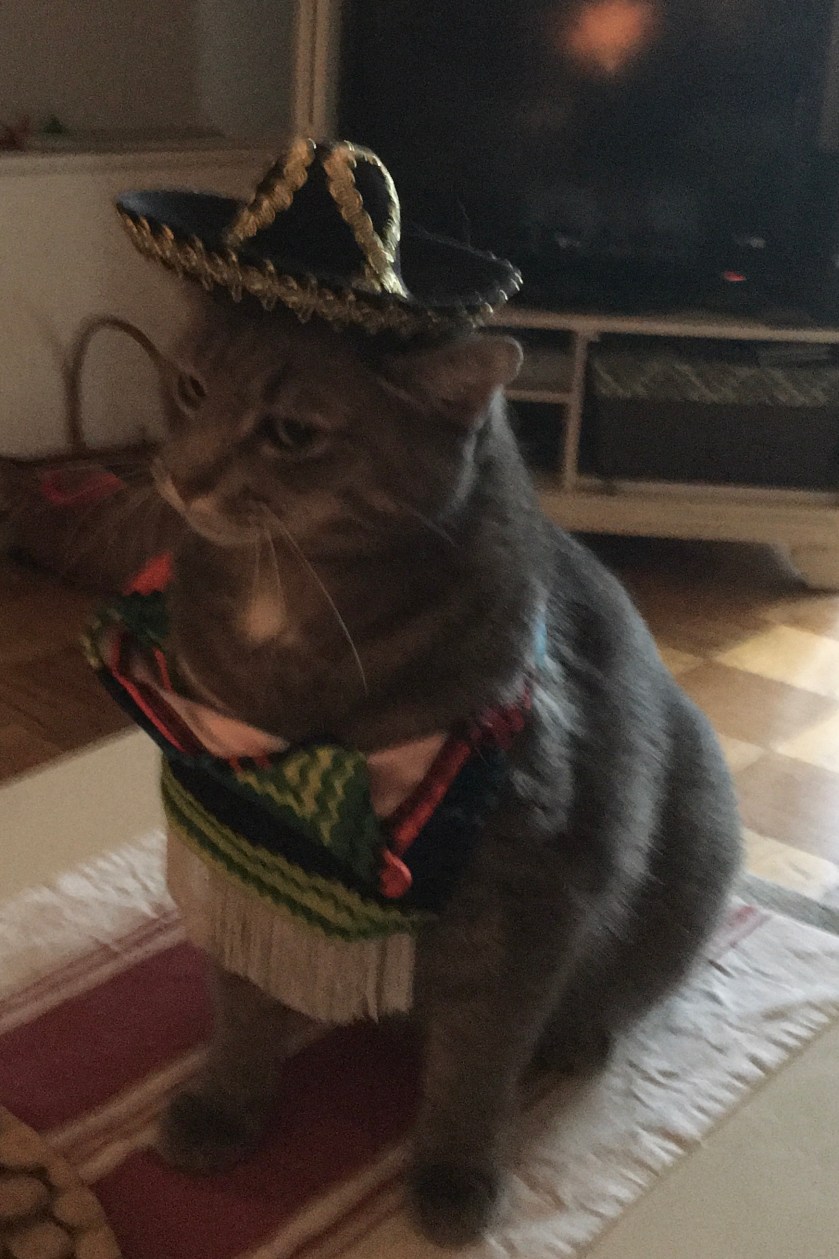
It was all I could do to get that grainy, poorly-lit iPhone photo above. Sorry! The little dude doesn’t like collars, clothes, costumes or anything else on his body. Not even snacks can bribe him.
I couldn’t get the hat to stay on his head more than a few seconds, and he’s a little escape artist with the poncho. There was no way he would have sat like that long enough for me to get a shot with the Canon, unfortunately.
But he is a good little helper with the trick-or-treaters, and later tonight he’ll nap in my lap as I curse myself for eating too many leftover Twix and Snickers. He’s my buddy!
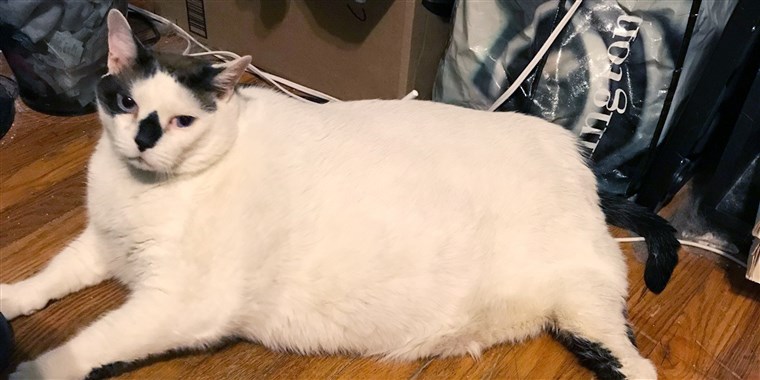
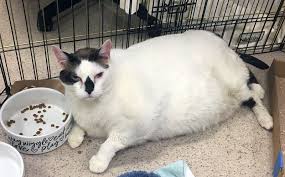
The chonktacular Barsik has shed almost a fifth of his body weight since he began a veterinarian-supervised diet earlier this year.
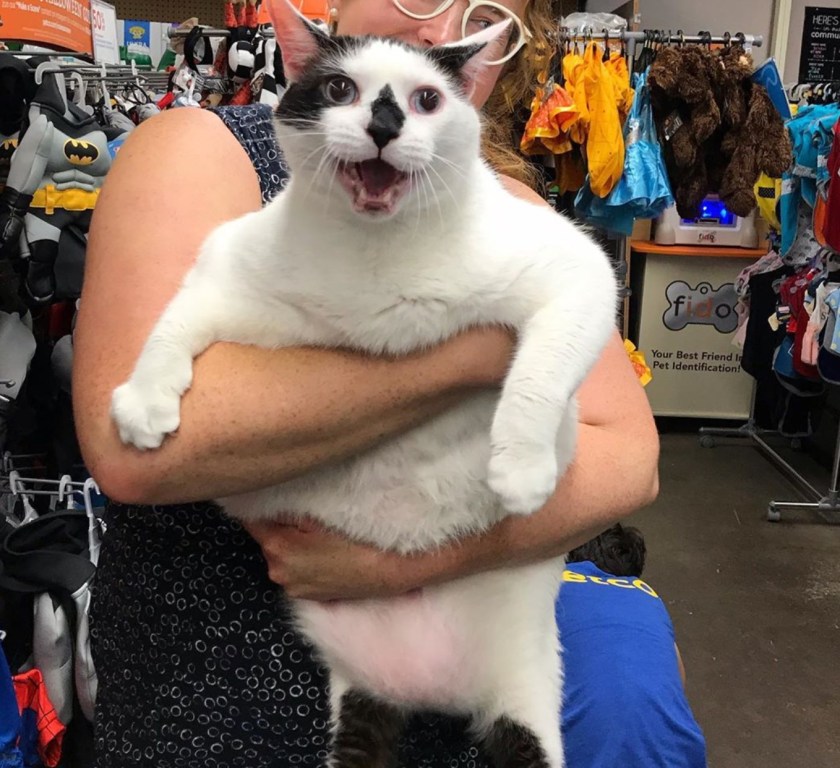
Barsik the cat made headlines about five months ago when he was surrendered to a Manhattan animal shelter at a whopping 41 pounds.
The five-year-old was kept in the shelter’s office because he couldn’t comfortably fit into a standard cat cage, and a regular carrier couldn’t contain him either so he was carted in a stroller, according to the New York Post.
An unamused-looking Barsik sits next to an empty food bowl.
To add insult to injury, when staffers at the shelter wheeled Barsik inside, an amused visitor dug out her cell phone, laughed as she snapped a few photos and asked: “Did he eat another cat?”
Barsik has come a long way since that depressing day.
The big guy has been in the foster care of Angelique Iuzzolino of New York’s Anjellicle Cats, and he’s been steadily dropping weight.
Barsik weighs 34.9 33.3 pounds, according to Iuzzolino, who has been posting updates on Barsik’s Instagram. He’s still extra chonk, but he’s no longer in danger of matching the 46-pound Guinness record for a cat. Most importantly, he’s making progress.
He certainly looks a lot happier than he did when he was abandoned by his former people:
Barsik has dropped about 19 percent of his body weight.Barsik is on a veterinarian-supervised diet.
Barsik will be up for adoption, but if you’re interested in the big guy you’ll have to wait. He’s got a few more pounds to lose before he goes to his forever home.
UPDATE: Barsik is now up for adoption! Prospective servants have until Nov. 10 to fill out an application.
Buddy goes into business with 411, the Nigerian Royal Family Cat. The offer almost seems too good to be true!
Dear Sir or Madam,
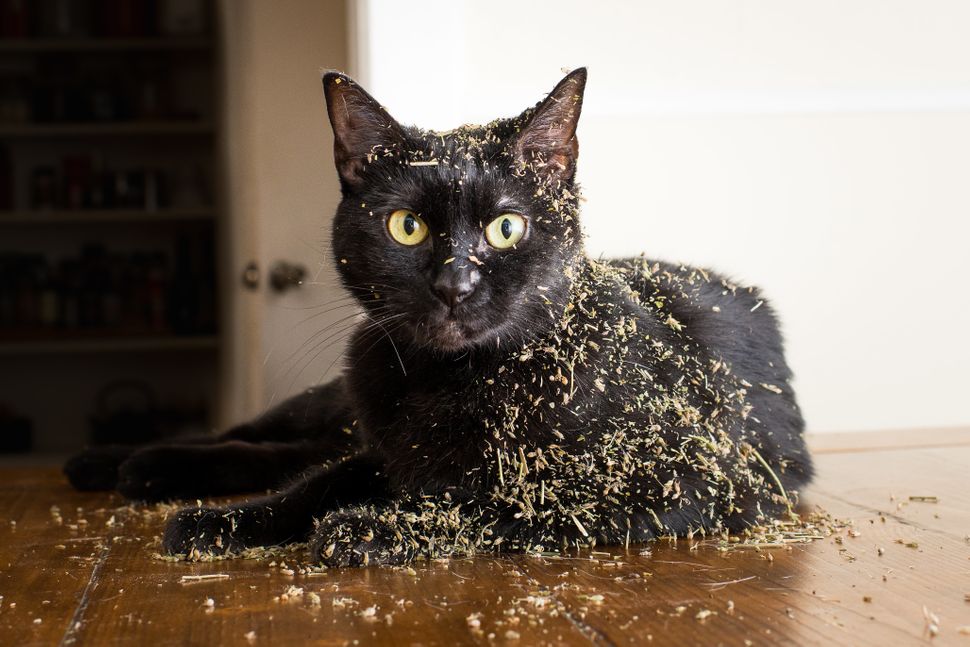
Warm salutations and greetings to you, my friend! I am writing to your most esteemed personage having just been informed by my attorneys that I stand to inherit more than 5,000 pounds of premium catnip, including Meowie Wowie, Purrple Haze, Kitty Kush and Mewbury OG.
However, due to the Byzantine inheritance laws of my homeland of Nigeria, I am unable to come into my considerable catnip fortune without an American bank account, which is needed to pay the inheritance fee to the Nigerian Office of Catnip Inheritance.
This is where I must humbly ask for your assistance, good sir or madame. It is my fervent hope that we may come to an agreement in which you allow me to make the inheritance payment from your account in exchange for a large portion of my inheritance. Would 2,000 pounds of catnip be acceptable recompense to you for this favor?
Yours truly, your friend,
Grand Prince Four One Nine, Nigerian Royal Family Cat
Dear 419,
Wow! Five thousand pounds of catnip! This sounds almost too good to be true! If I were you I’d build a big vault for all my catnip and go swimming in it daily, like Scrooge McDuck does with his money!
I don’t know where Nigeria is but it sounds like a wonderful country. I stole my human’s bank information and have attached it to this email. When will I get my 2,000 pounds of catnip?
Your friend,
Buddy
Photo by Andrew Marttila.
Dearest Most Magnificent Buddy,
Warm salutations! It is my life’s honor to count you among my friends and execute this business deal together. Good fortune smiles on us both, and soon we will be bathing in rivers of catnip, the envy of all other cats!
There has been a small hiccup with the Ministry of Inheritance. In order to process my payment, I am required to submit a small processing fee with the Royal Processing Fee Bureau of Nigeria. It is only a paltry sum of $2,000, but again I am only able to make this payment via an American bank account.
If you would be so kind as to authorize the payment, you shall be reimbursed of course and we will be basking in our new catnip fortunes shortly!
With great affection and respect,
Four One Nine, Feline of the Nigerian Royal Family
Dear 419,
If you can repay the $2,000 right away, I’m happy to help! I’ll look out for the check and the catnip in the mail!
Buddy
Photo by Andrew Martilla.
Most Marvelous Benefactor Buddy,
You, Sir, are my most valued and trusted friend! They say American cats are fat, lazy and selfish, but they are wrong, for you are not selfish at all! I have let it be known in my village that Buddy of America is a wonderful and wise cat. They sing songs about you and your generosity.
We are almost in possession of our catnip, my friend! All that remains is to cover the shipping fee and the Royal Nigerian Export fee. They are paltry sums, merely $4,000 and $3,500 respectively. I have already had my servant mail the $2,000 reimbursement for the processing fee, and will similarly return the funds promptly upon paying the export and shipping fees from your respected American bank account.
I received but a small sample of the Meowie Wowie this afternoon and raise a toast in your honor!
Your Loyal Friend,
Four One Nine, Cat Royal of the Family
Dear 419,
I’m fresh out of cash. What if I could scrounge up some cans of tuna and some old toys? Could we bribe the clerk to waive the export fee?
Buddy
Dear 419,
I haven’t gotten my $2,000 reimbursed and still no catnip! I know you probably forgot to write me back, but can you please tell me what the status is?
Buddy
Dear 419,
You tricked me! No catnip, no reimbursement, no village cats singing songs about me!
It just so happens I have a cousin in your country. He’s gonna pay you a visit!
Buddy
Photo by Andrew Martilla.
Dearest Most Esteemed Honorable Buddy,
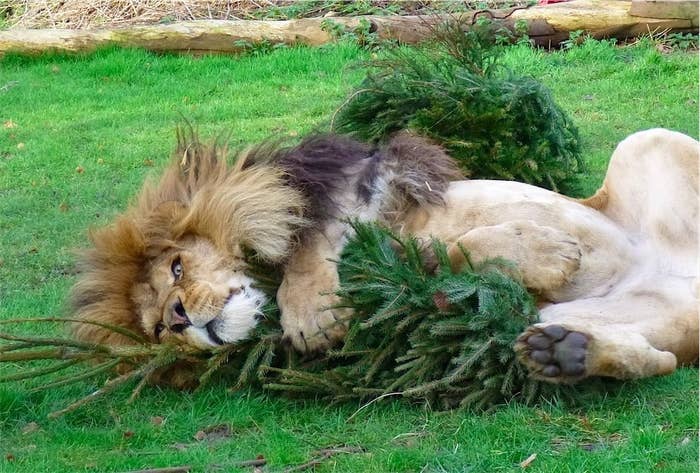
Your, ahem, cousin presented himself just minutes ago. Please, on my behalf, thank him again for not eating me! I did not know lions could be so merciful and had already emptied my bladder by the time I realized he would allow me to live.
Here is your $2,000 and the first 200 lbs of catnip you are owed. The rest will be delivered in installments for the next 24 months.
Lastly, I am instructed to inform you that, per your cousin’s direction, the music teachers have been drafting paeans to your majesty, and the kittens will stage a three-act play about how awesome you and your cousin are. But mostly your cousin.

 Pain In The Bud