
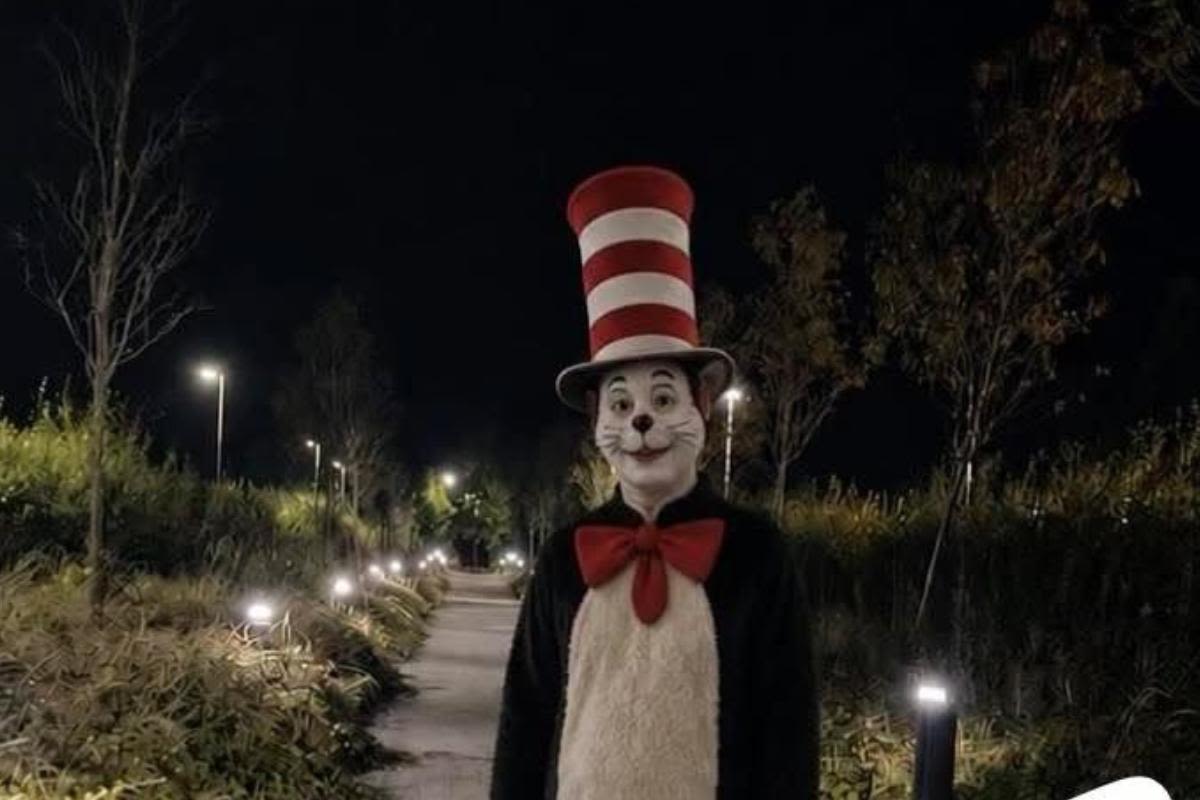
There’s a new freak-out among the terminally online, mostly relegated to Gen Z and people who spend significant amounts of time on TikTok – they think a Dr. Seuss character made flesh is popping up in the suburbs of the UK and Ireland to stalk and scare the pants off people.
Videos featuring the iconic children’s story character have gone viral on the platform in the last week or two, each of them showing similar scenes: it’s night, usually in some safe-looking suburb, and a person wearing a full size Cat In The Hat costume pops out of the bushes or from behind a car to terrify unsuspecting passersby.
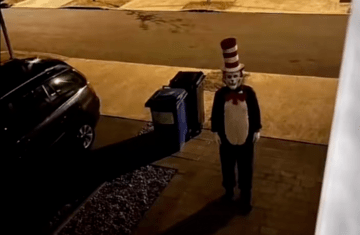
Others show the costumed creeps simply standing in driveways or in the middle of the street and silently observing people in their homes.
The alleged perps favor a more sinister look than the traditionally friendly-looking creation of Theodor “Dr. Seuss” Geisel in 1957. These cats in hats wear a disturbing grin or a sneer, and some videos depict the costumed weirdos leaping onto cars with feline athleticism or stalking the people they encounter.
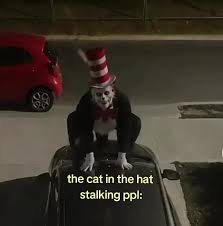
While the footage looks real enough that it initially fooled UK media as well as kids, police in several jurisdictions have looked into the reports and concluded the videos are AI generated, likely with Chinese-made tools like Wan and Skywork.
OpenAI, one of the leading AI companies in the US, shut down its Sora AI video generator earlier this year amid widespread criticism and abuse of the tool.
While Sora had guardrails preventing users from generating certain kinds of content or violating intellectual property (you could not, for example, generate a video of a laughing Mickey Mouse gunning down a crowd of people with an Uzi), many of the Chinese-made video generation tools do not place restrictions on videos.
Some western companies have tried to compete in that space, including TripleTaco, which runs quite possibly the creepiest ads touting “AI that never says ‘no.'”
In any case, the panic over the Cat In The Hat mirrors a similar freak-out in India earlier this year when social media was flooded with realistic videos showing tigers and leopards mauling people having their morning tea outdoors or snatching them from moving trains.
The Cat In The Hat videos haven’t really caught on in the US, possibly because it stretches credulity to believe trigger-happy ‘Mericans wouldn’t just shoot weirdos stalking through our neighborhoods.
Regardless, it’s a good reminder to take everything with a grain of salt, especially anything you see on social media.


Morons
LikeLiked by 1 person
Good thing i am not on social media. The chaos has just begun.
LikeLiked by 1 person
To be honest, the scary part of The Cat In The Hat is the human part. I remember watching the movie when I was a kid, and to be honest, I didn’t really pay much attention to the humanized face of The Cat in the Hat. But then, by chance, I came across some medieval illustrations, those little drawings that used to be done on the edges of books (I don’t know much about art, so I don’t know what they’re called), and I saw a couple that depicted cats, but they were cats drawn with malice; instead of their feline faces, they had human faces, and that made them look unsettling and ugly. That’s when I realized why so many people find The Cat in the Hat unsettling, because of that uncanny valley effect. Although people in the Middle Ages did it on purpose because they associated cats with the devil (morons), the effect of giving a human face or human features to something or someone that isn’t human doesn’t always turn out well.
LikeLike