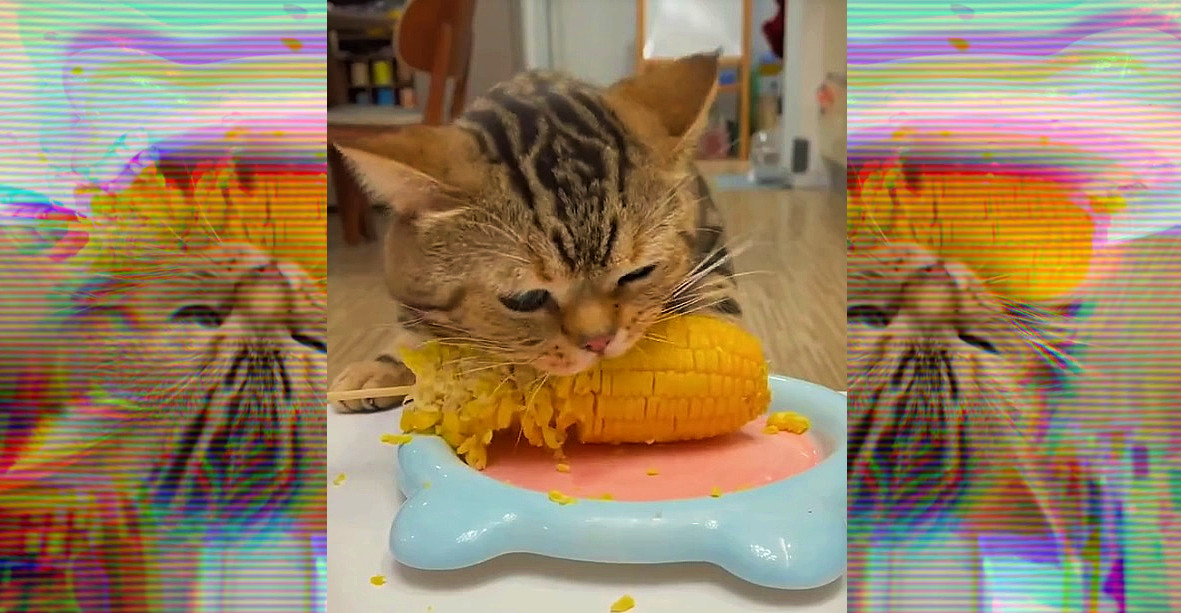
The English language does not provide the means to properly state how much this cat loves corn. To quote Dave Chappelle: “Look at him, he loves it!”
This isn’t just a video of a cute cat eating corn.
It’s a video of a cute cat who gives a cry of joy when he sees his human plop corn a cob of corn onto his plate, then tears into it with such gusto that he half-purrs, half-growls as he devours his yums. Seriously, make sure you turn the volume on, it has to be heard to be believed:
The Corn Kid, famous for declaring “When I tried it with butter, everything changed…I can’t imagine a more beautiful thing!” might be given a run for his money by this cat.
And if you haven’t heard about the Corn Kid, well, make your day brighter by checking out this songified version by the same guys who created a ridiculously catchy pop song out of the Bed Invader news segment back in 2010:
In case you’re wondering, corn won’t kill your cat. In fact, as veterinarians point out, your cat probably eats corn regularly because pet food companies use the stuff as filler in cat food despite the fact that, as obligate carnivores, cats don’t really get any nutritional value by eating it. However, it’s not meat, so if your cat likes corn, you should give it to kitty only in moderation as too much can cause an upset stomach and digestive problems.
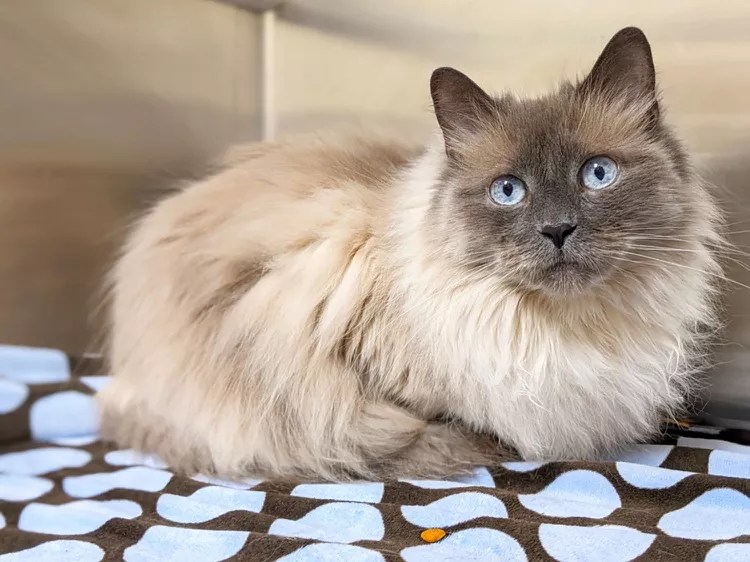
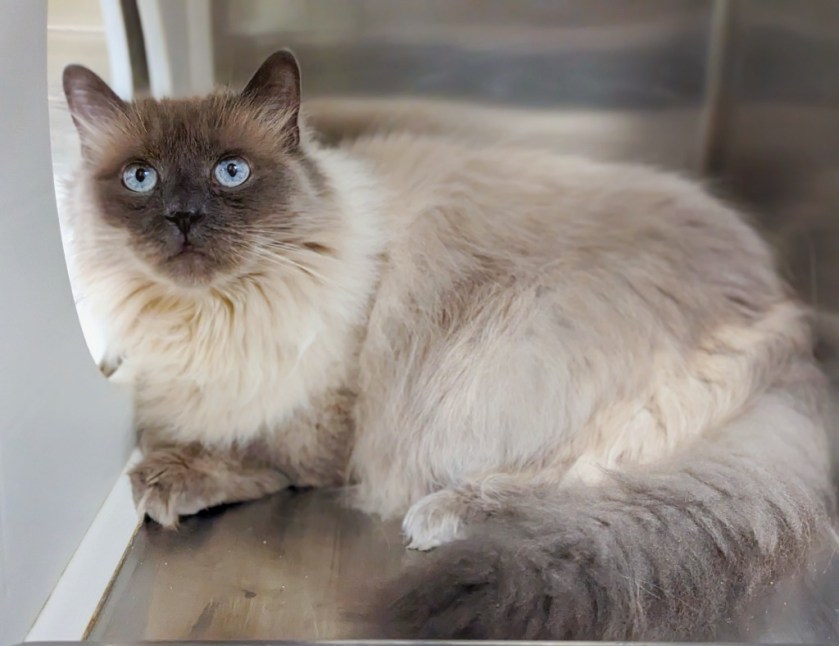
A veterinarian realized kitty was healthy and put her in the care of a local no-kill shelter, where she remains while hoping for a forever home.
Lulu is 13 years old and began eliminating outside her litter box last year after a long life of doing her business properly.
Instead of realizing that a change in behavior was almost certainly precipitated by health issues — and attempting to get those issues sorted out — Lulu’s “owner” brought her to a veterinarian to be euthanized.
The vet realized Lulu was healthy and her issues were easily remedied, wisely persuaded the woman to sign over ownership of Lulu and brought the Himalayan to the local SPCA. She’s been there since December.
Lulu had urinary crystals which were remedied after a change in diet, and she hasn’t had an “accident” in months.
Staff at the SPCA want people to know that they don’t have to surrender a cat for litter box issues or other behavioral changes even if they think they can’t afford veterinary treatment.
“If your pet is not behaving or their behavior has changed, the first step is to get them to a vet to see if something is medically wrong. Even if it is not a medical condition, there are numerous resources — many available at Dutchess County SPCA — to help resolve the issue and avoid both euthanasia and surrender to a shelter,” Lyne Meloccaro of the Dutchess County SPCA told People. “Medical assistance, expert guidance, and management plans, and training referrals are all available for you.”
Lulu has a regal bearing, an epic coat and beautiful coloring. Credit: Dutchess County SPCA
Dutchess County, which is about 75 miles north of New York City, happens to be the former college stomping grounds of Big Buddy. I graduated from Marist College and lived in the area for some years after. The SPCA there does good work, and its law enforcement division has handled some high profile animal-related crimes over the years.
It’s sad that Lulu lost her home after 13 years, but maybe it’s for the best if she ends up with a devoted servant who will really love her. Her caretakers at the SPCA say she’s stubborn, demands affection on her own terms and wants an “emotional support human.”
Lulu is still available for adoption. The SPCA says she’ll do best as an only cat in a quiet household, and we have no doubt she’ll bring joy to the lucky person who brings her home.
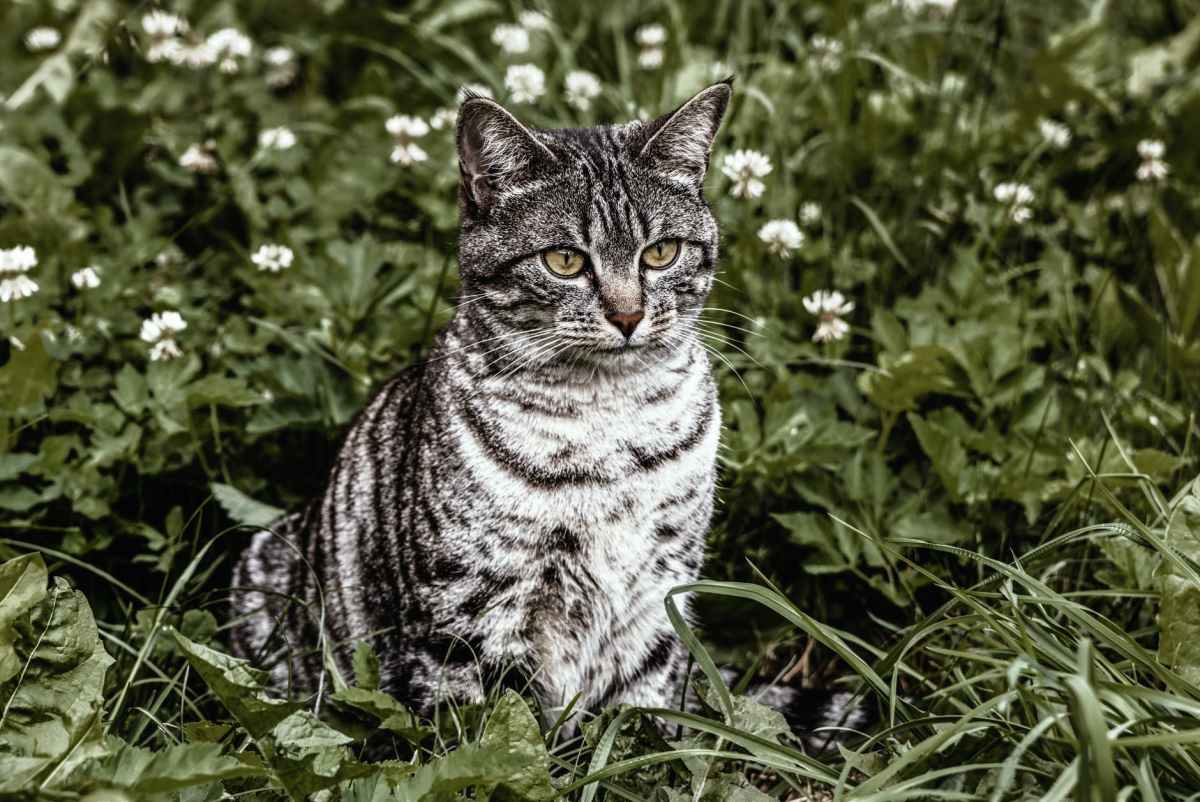
A cat in rural Colorado has tested positive for the Bubonic Plague. Health authorities say it was probably the result of an encounter with an infected rat.
A cat in Colorado has tested positive for the Bubonic Plague.
You read that right. The same bacterial infection that was called the Plague of Justinian back in the 6th century BC, killed one out of every four people living in the Mediterranean, then flared up occasionally every century or two before returning with a vengeance in 14th century Europe, where it was called the Black Death and killed a third of the population on the continent.
That plague.
The kitty ranges near a public park and likely caught the infection from a rat, local health authorities told KUSA, an NBC news affiliate.
Like many infections, it was never completely eradicated, and WHO statistics show about 100 people die annually of plague.
“While plague is a serious disease, and cases of animal-borne disease in household pets is never something we like to see, it is normal and expected for some animals to contract plague in Jefferson County each year,” said Jim Rada, director of Environmental Health Services for the county. “The good news is that modern antibiotics are effective against plague, and as long as it is treated promptly, severe complications, illness or death can be avoided.”
When we think of outdoor dangers to cats, we tend to think of abusive humans, vehicle traffic or poisons, but this is a reminder that nature can be lethal as well.
“Cats take care of themselves,” the conventional wisdom insisted for decades. These days we know that’s not true.
Back in the Dark Ages of kitty cognitive knowledge, when scientists wouldn’t go near a cat with a 20-foot pole because they were considered impossible to work with, the conventional wisdom was that as long as a cat was fed and watered, its needs were met.
Going away for three days? Leave a few bowls of dry food and water and you’re good to go, or if you really want to splurge, get an automatic feeder, the prevailing wisdom went. Gonna be away for a week or two? Get someone to check in on the cat a few times a week just to make sure food and water is available.
“If you want a dog but you don’t have time to meet all of its needs, get a cat,” people would say. “They take care of themselves.”
It didn’t take me long to realize how wrong the “prevailing wisdom” on cats really was, and thankfully in recent years we’ve seen a boom in research into cat behavior, intelligence and emotional needs. Among the many things verified by those studies is the fact that cats absolutely are emotional animals and are not the cold, indifferent automatons many people insisted they were.
One reason for that enduring myth may be cats’ famous stoicism. Ignore a dog and she might cry, become destructive or pee in your house, but one thing’s for sure — she’s going to let you know she’s not handling the isolation well. Ignore a cat, and he’ll just withdraw.
I’ve seen plenty of examples of the latter in the homes of friends and acquaintances. The cats are just sort of there, existing like the furniture or plants, interacted with rarely and given affection only occasionally. Those poor cats are quiet, seemingly indifferent, expecting nothing and sadly accepting of their place. They are neglected.
But when you pay attention to your cats they come out of their shells, so to speak. They warm to you. They reveal their hidden emotional core.
Of course, when you raise a cat with attention and love, that’s there from the very beginning, and they WILL let you know when they’re not happy with your absence.
Who do we know who’s like that? His name sounds like Bum, or maybe Bunny, or…oh yeah! God forbid I should ignore Buddy. I’ll never hear the end of it. In fact, he’s on my desk right now, butt parked next to the mouse, and I’m sure any minute now he’s going to decide that I’ve been writing for too long and declare it’s Buddy Time.
Of course, the little jerk attacked his own cat sitter, a friend who has been caring for him when I’m away since he was a kitten! That complicates things.
“Oh servant! Servant, come here at once! I’d like a massage!”
If you’ve made it this far, you might be wondering how long you can really leave your cat alone. The answer is no more than 24 hours without someone dropping by to check on kitty, refill the water and food bowls, and give him some attention.
If you’re gone longer you’re going to want to make concrete plans for a cat sitter to be there every day.
“You should not leave your cat alone for a prolonged period,” veterinary postdoc Mikel Delgado told Inverse. “Cats also have emotional and social needs that can’t be met when they are left alone for extended periods.”
If your cat likes to play, that’s great, but even if the little one doesn’t, your cat sitter can make things easier by simply hanging out, Delgado said.
Despite having real scratchers, including the biggest-available tower scratcher sturdy enough for him to stretch out completely, Buddy likes to scratch anything and everything he can get his paws on.
The couch, area carpets, the screen door leading to the balcony, even my brand new La Z Boy desk chair.
Without fail he gets his claws stuck on things he’s not supposed to scratch, and then he mews pitifully in his kitten voice until I find him and gently lift him up to get him unstuck.
After I free him he gets all affectionate, and then he forgets all about it until the next time he decides it’s a good idea to scratch on things he’s been snagged on before.
Today the little dude was having another go at the new desk chair and got his claws stuck on the protective cover that’s there to stop him from clawing the chair in the first place.
I stood up to help him and he yanked on the cover, pulling his paw loose but dislodging something in the process.
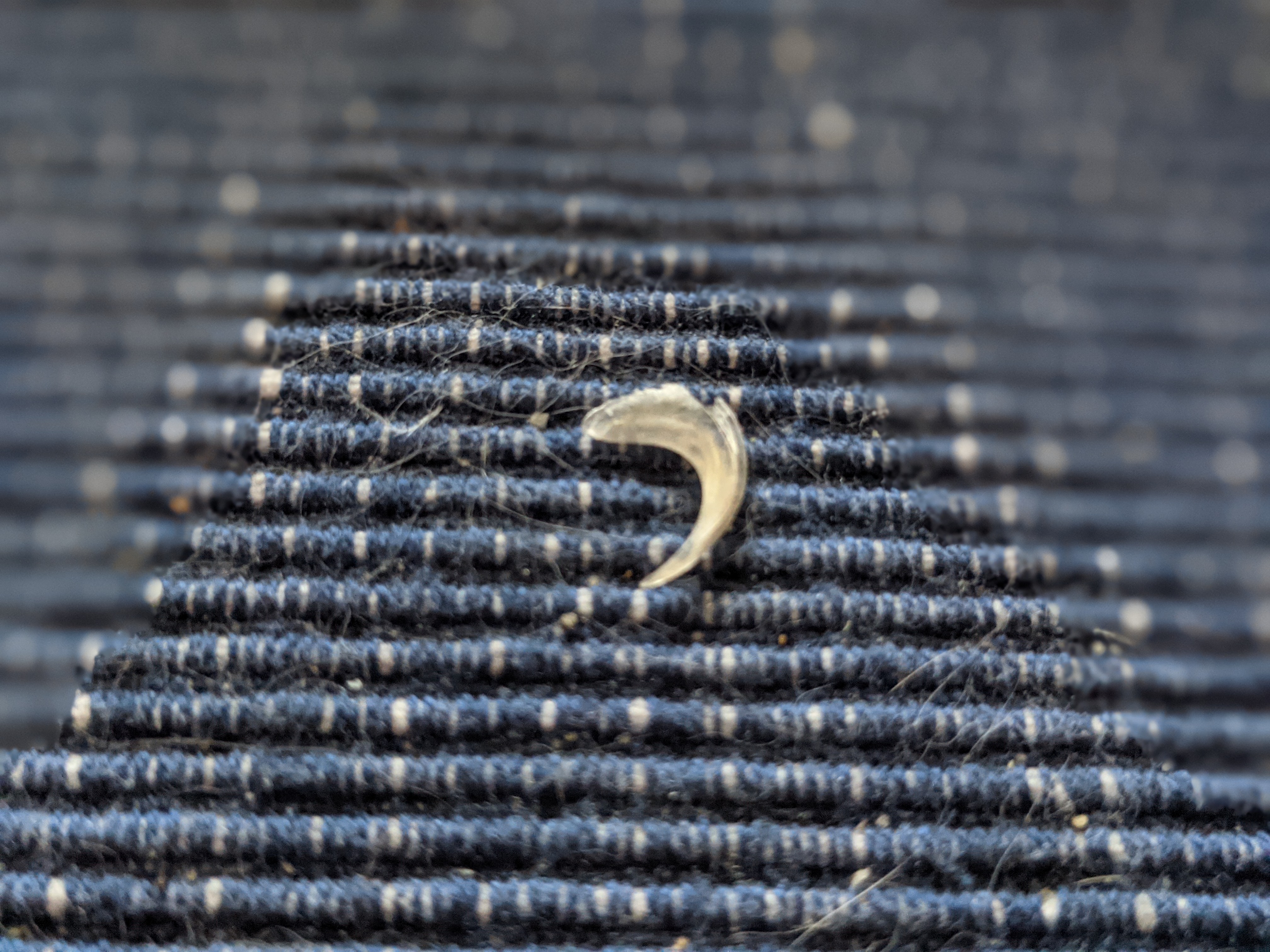
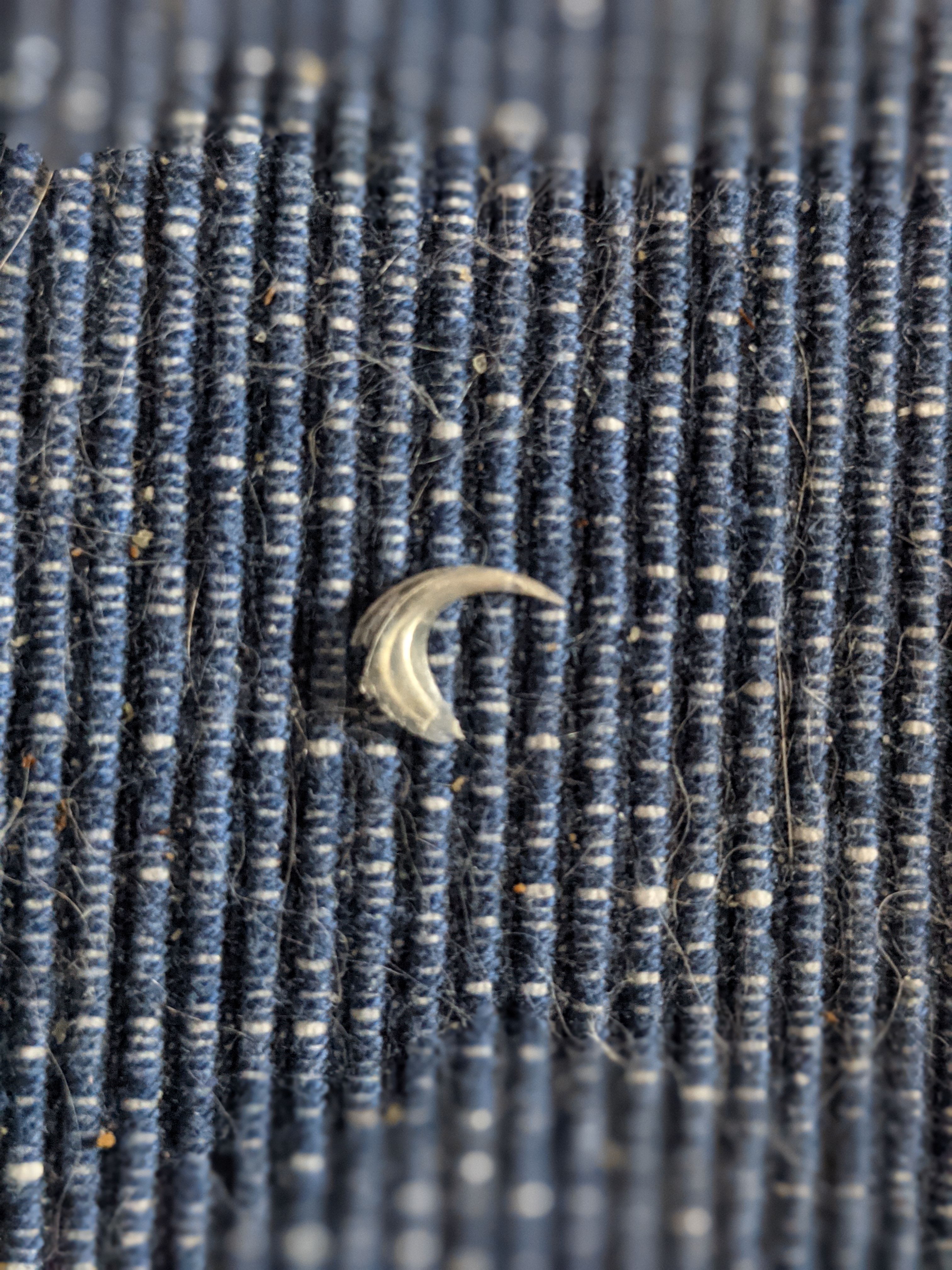
Sure enough, when I looked on the floor, this is what I found:
As you can see, he tore off his entire claw.
I’m surprised he didn’t give any outward indication of pain. He’s been walking around just fine without a limp. I know his instinct will be to hide the pain, like all other cats, but he doesn’t seem very good at that: Just last night he was crying for a few minutes because of an upset stomach, after he’d regurgitated his dinner. (I sat with him and scratched his head. He felt better within 10 minutes.)
I’m pretty sure the claw came from his right paw, but I haven’t had the chance to examine him yet. I’ll have to wait until he’s in a chill mood to handle his paw and take a closer look.
I don’t see anything to indicate the quick was ripped or dislodged in any way. Still, I can’t imagine it’s not bothering him.
Have any of you guys dealt with anything like this before? Is there any reason to worry?

 Pain In The Bud