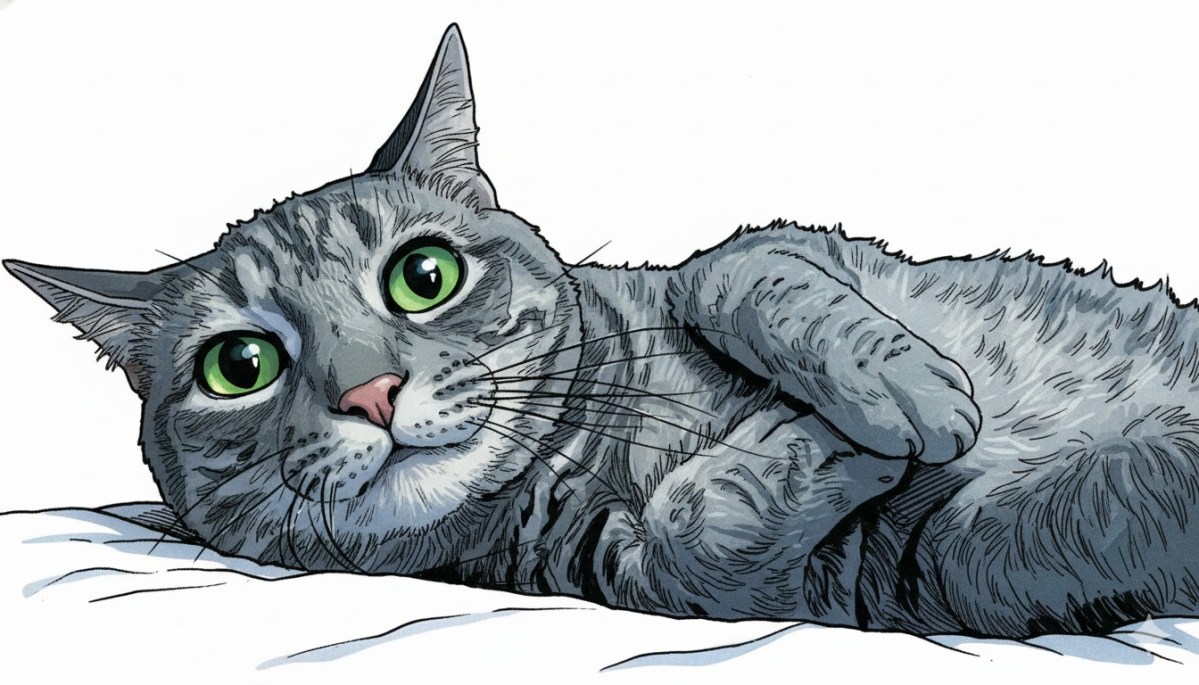
Happy National Cat Day From The Buddies!

Shelters are full of felines who need forever homes, and National Cat Day was founded to make sure they’re not forgotten.

The number of “cat days” keeps growing, with separate dates for national and international cat days, dates honoring black cats, tabbies, calicos and tortoiseshells, and more.

But National Cat Day is one of the OGs, beginning 21 years ago, and it’s endorsed by the ASPCA. The main purpose of National Cat Day, per its founders, is to help homeless kitties find forever homes by inspiring people to adopt.

So we’ll say what we always do: shelters are full of little buddies who are just as lovable and deserving as Little Buddy himself, and all they need is a home, some love and patience to help them feel secure. Once they know they’re safe and loved, their personalities shine through.

If you like feline-centric fiction, Mollie Hunt released her 12th Crazy Cat Lady Mystery novel today. It’s called Cold Case Cat and you can read more about it here.

Meanwhile over at Catwoods, Leah writes about — and includes great photos of — her “Halloween cat,” Shelley. She also revisits the Facebook hoax posts we wrote about a few weeks ago, in which users claim the big cat was spotted in places as varied as Louisiana’s bayou, the Houston region, West Virginia and Wyoming.

Finally, the satirists at McSweeney’s have a new post titled “A Brief Questionnaire Before You Adopt This Rescue Cat,” which takes aim at overzealous shelter/rescue operators who make the process of child adoption look easy by comparison, and are constantly at capacity because they’ve made perfect the enemy of good.

Wanna adopt this cat? Hand over a list of every person you associate with along with their addresses, phone numbers and social security numbers, prepare for a 30-day in-home evaluation by a shelter staffer, and agree to feed kitty a diet of sushi-grade tuna!

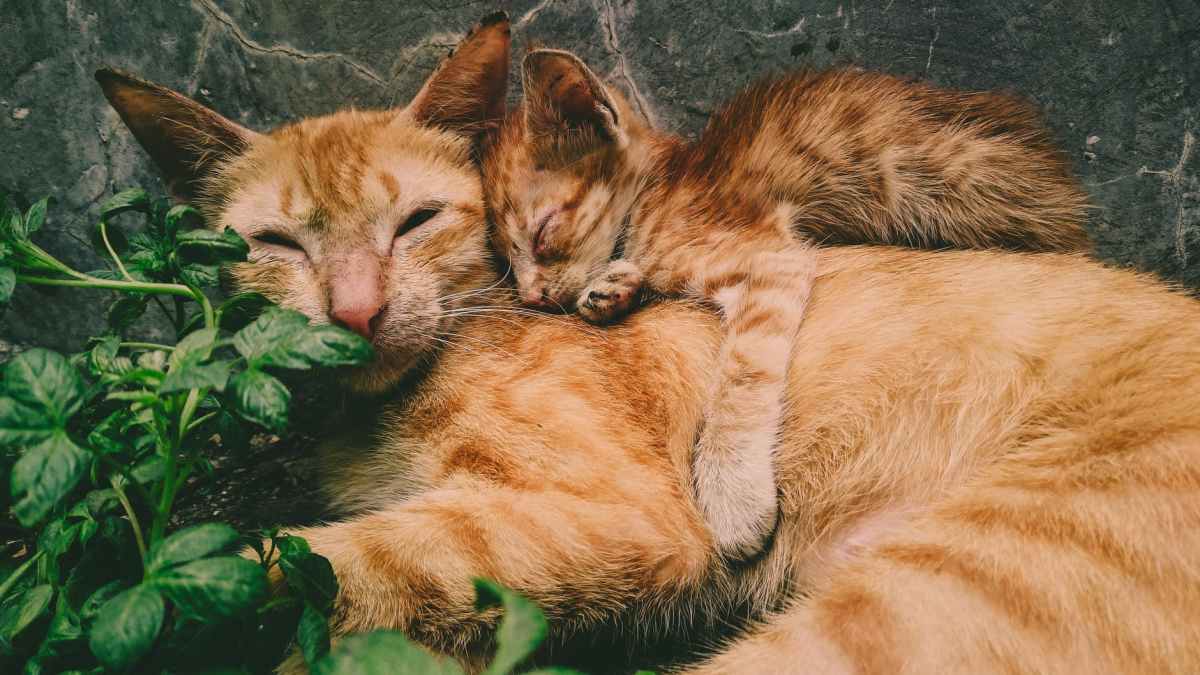
Credit: Denitsa Kireva/Pexels

While it seems outlandish, I encountered some contracts that were only slightly less onerous before I adopted Bud, and it’s obviously the McSweeney’s team has too.

Now I understand a bit more why some shelter staff are so cautious. They see some of the worst behavior, after all, including people who return cats because they’re too affectionate, animal abuse cases, and cats on death’s door because their humans ignored decades of research and tried to turn their obligate carnivore pets into vegans.

They want to make sure the cats go to good homes, which is admirable, but they shouldn’t overlook potential adopters who are well-intentioned and looking for a little pal.
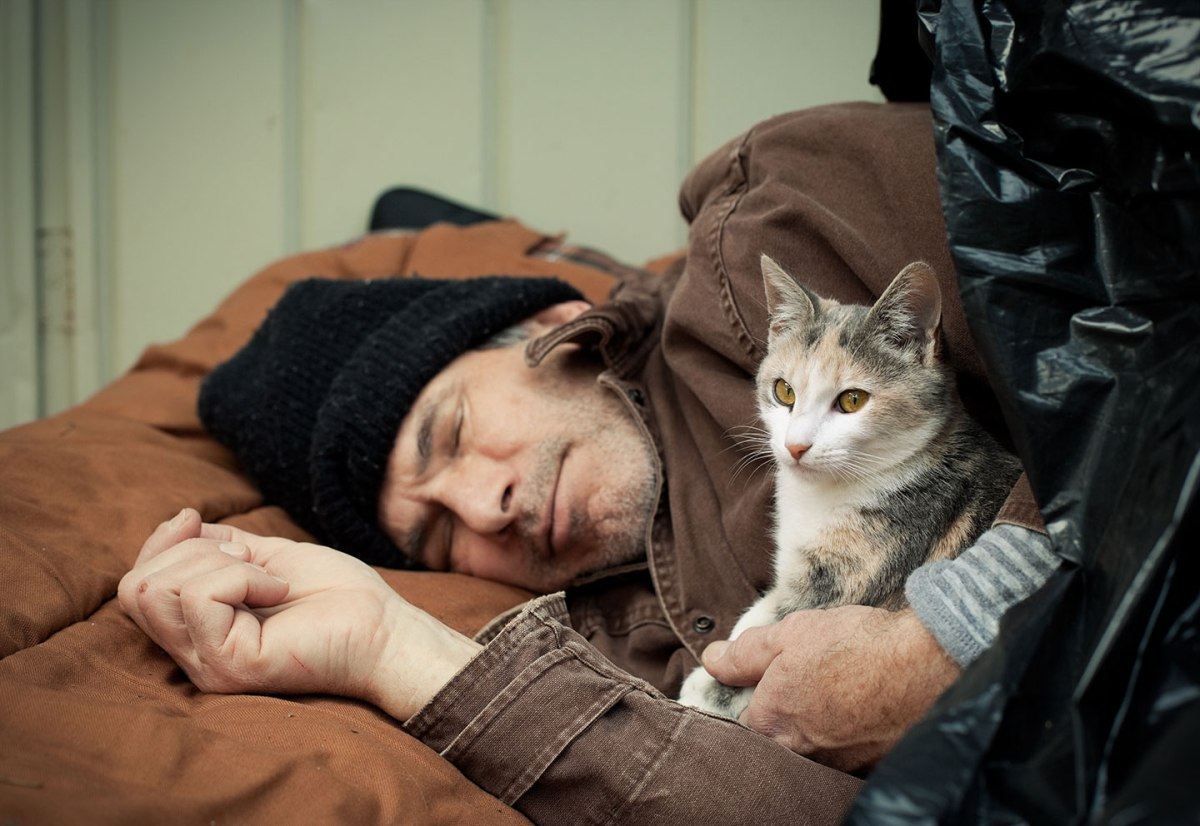
Separating The Homeless From Their Pets Is Cruel

The vast majority of homeless shelters force people to choose between their companion animals and warmth.

Fabrice Dube lives in a tent in a wooded area bordering I-95 in Connecticut.

He’s got a propane heater which he describes as “miraculous,” some baby wipes and a creek nearby where he washes his clothes. Even though it’s bitterly cold outside — it’s 34 degrees out as I type this, we just had our first snowfall of the winter and Dube lives only 12 miles or so from Casa de Buddy — Dube won’t stay in a shelter for one reason that means all the world to him.

That’s Cali, the four-year-old orange tabby who sleeps in his arms every night, has been with him since he lost his job and home, and is the only individual in the world who provides Dube with the unconditional love and companionship every person needs.

Dube’s situation, his love for Cali and a Connecticut lawmaker’s campaign to help him are detailed in a compassionate story by Angela Carella in CT Examiner. I recommend reading the whole thing, which explains why people with animals aren’t welcome in homeless shelters and ongoing efforts to change that by those who realize asking a person without a home to give up their companion is not only cruel, it’s a significant barrier to helping them get on their feet.

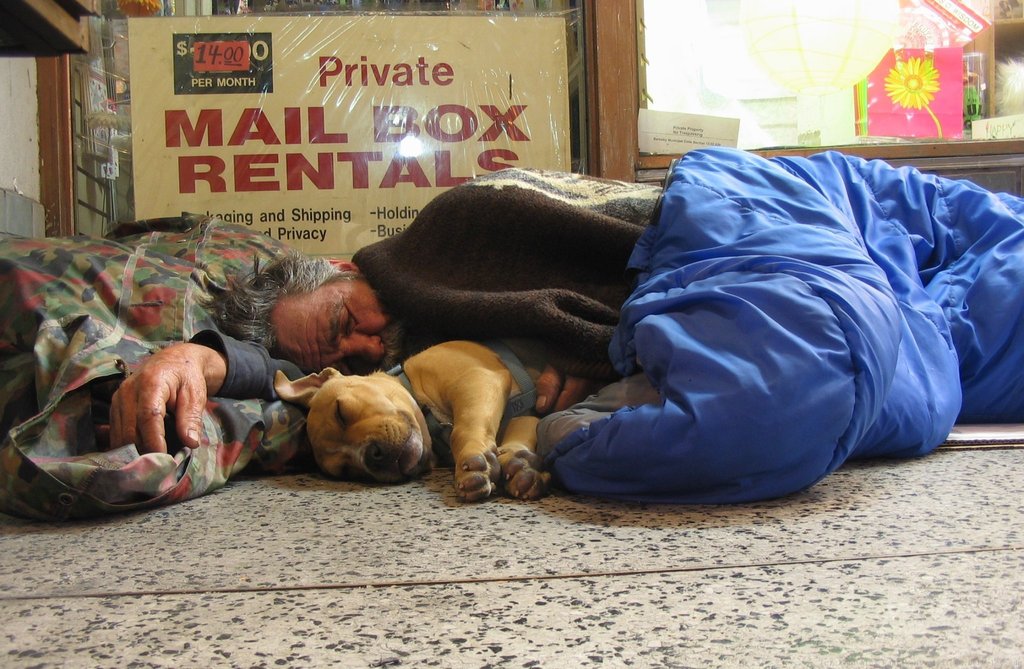
Homeless man and dog
A homeless man with his dog. Credit: GlobalGiving

David Michel, the aforementioned Connecticut state representative, experienced homelessness firsthand when he was a young man and lived on the streets of New York City one winter.

“What a lot of people don’t get is that, once you are homeless, your life is completely different. You have to stay awake at night to protect yourself,” Michel told Carella. “Without sleep, I couldn’t function in the day anymore. People can’t understand why homeless people can’t get out of it. But once you pass that threshold, the infrastructure of your life collapses, and getting back on your feet requires major help.”

If a condition of accepting help is giving up a beloved pet, many people, like Dube, will opt to tough it out in brutal conditions rather than trade their animal companion for warmth. Their struggles are compounded by the ignorance of some people who call them selfish for keeping pets while homeless, not understanding that those men and women will often go hungry if the choice is between feeding their cat or dog and themselves.

Think about all the times you’ve had a bad day or teetered on the edge of depression, and the non-judgmental love of your furry friend helped you get through it. Or the days when you didn’t want to get out of bed, but your responsibility to an innocent animal helped rouse you. Little Bud has done all that and more for me, and I can’t imagine asking a person without a home to give up one of the few sources of joy in their lives.

COVID, inflation and a bad economy have created the conditions for record homelessness in 2022, the most recent year for which statistics are available. Many people think the homeless are almost always drug or alcohol addicts, but that’s increasingly not the case. More often they’re people who, like tens of millions of Americans, live paycheck to paycheck and suffer a setback that pushes them across the threshold Michel mentioned.

“As with housed persons, the companionship, support and unconditional love provided by that pet is invaluable,” the ASPCA notes. “Studies have shown that people experiencing homelessness report that their pets provide a sense of responsibility and are a reason to live, reduce substance use, and motivated them to seek healthcare. Moreover, pets are viewed as a stable source of social support, companionship and security.”

NYC Cat Gets A Home After He Was Tied In A Trash Bag And Thrown In A Dumpster

Panda survived a traumatic experience but was rewarded with a happy ending in the home of a human who loves him.

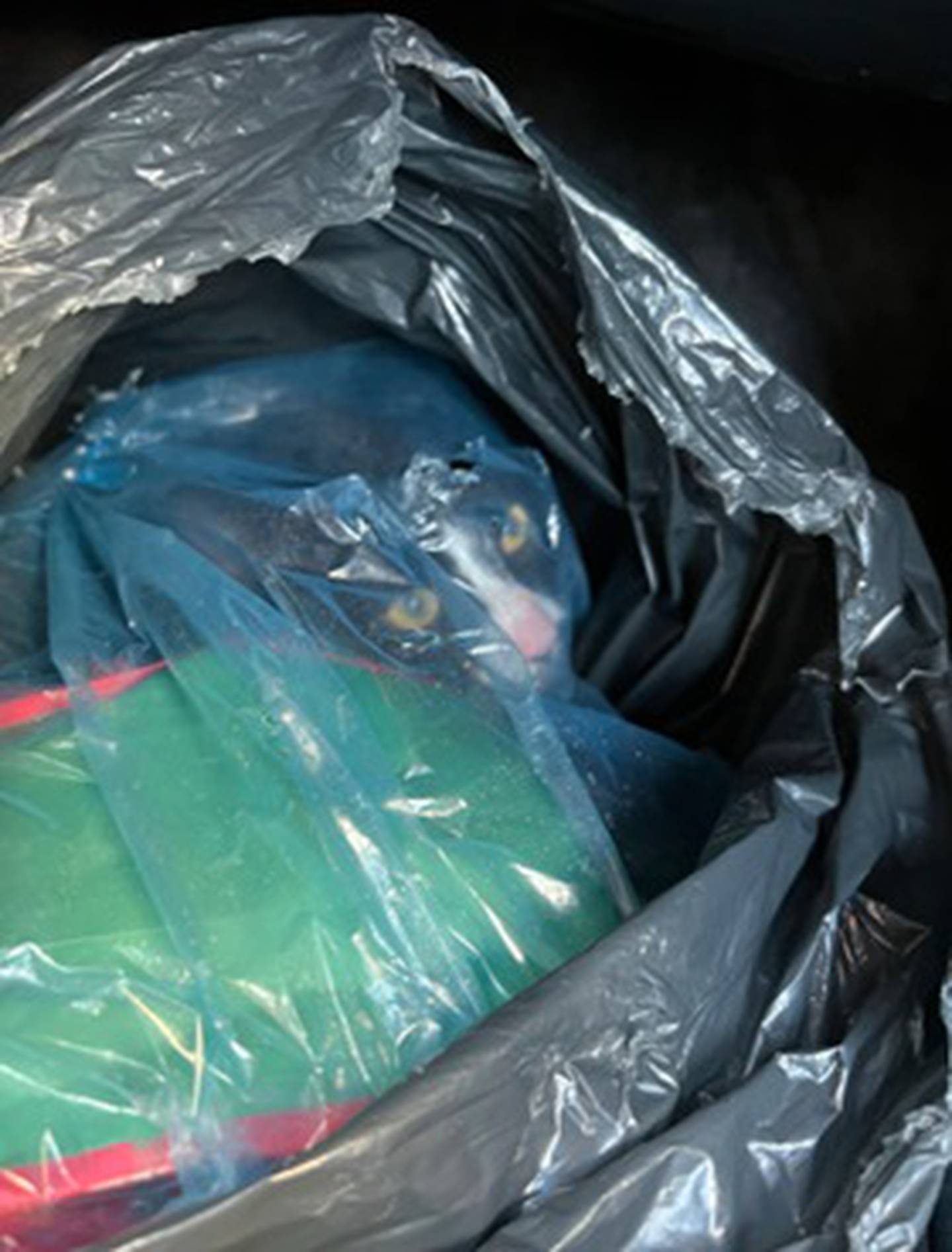
Panda the cat would have suffered a brutal death in the jaws of a trash compactor if not for an eagle-eyed can collector who spotted the handsome tuxedo among the trash.

The little guy was literally double-bagged in a blue plastic bag and a larger trash bag, then thrown in a dumpster in the Bronx. There were holes in the inner bag where Panda had tried to claw his way out — and bits of plastic bag caught on his claws — but he had been unable to free himself.

Thankfully, someone looking for cans to recycle opened the outer bag, saw Panda and called 911. NYPD cops brought Panda to the ASPCA Animal Recovery Center in Manhattan, where staff began treating him for malnutrition, skin disease and a “minor gastrointestinal infection,” the Daily News reported.

Panda the cat
Panda a few moments after he was spotted in a dumpster in the Bronx by someone looking for recyclables. Credit: ASPCA

Despite all he’d been through — the neglect, abandonment and trauma of being tossed out like a piece of garbage — Panda was “sweet and social” with his rescuers.

They placed him in a foster home under the care of 22-year-old Abigail Jasak, who decided to keep him after he quickly made himself at home and won over Jasak and her roommates.

“Initially I had no intention of adopting him,” Jasak told the Daily News. ”Then I realized how comfortable he was around us. He already believed he was home.”

Jasak told the paper she was disturbed by the casual cruelty of tossing a cat in the garbage.

“There are other options,” said the Pace University student. ” You can bring it to a shelter. I truly cannot comprehend how someone threw away such a sweet cat.”

Big Buddy’s note: I’ve been to the ASPCA’s Upper East Side facility and visited in 0 B.B. (Before Bud, aka 2014) while I was looking to adopt. It’s a beautiful, incredibly clean, bright facility where each animal has significantly more space than they would in a normal shelter, and the staff are friendly and helpful. As awful as Panda’s situation was, I’m glad they were able to help him and pair him with a human who really cares for the little guy.

Will California’s Bill of Rights for Cats and Dogs Make A Difference?

The proposed law would declare cats and dogs have rights, but it doesn’t do much besides that.

Declaring cats and dogs should have fundamental rights, an assemblyman in California has introduced a law that would create a Bill of Rights for the two most popular companion animal species.

The text of the proposed legislation covers the basics including the right to food and water, veterinary care and a life free from abuse, neglect and anxiety. It recognizes felines and canines as sentient animals who need mental stimulation, and says adopting means committing to caring for an animal for its entire life.

But it’s really about pushing for an even greater effort to spay and neuter both species to avoid euthanizing almost a million unwanted cats and dogs every year.

There’s been great progress in the last decade alone: In 2011, kill shelters and animal control departments in the US put down more than 2.6 million cats and dogs. In recent years that number has fallen to 920,000, including 530,000 cats, according to the ASPCA.

That’s still a staggering number of lives taken, and animal advocates think the US can continue the downward trend in euthanizing pets via efforts to educate people and execute trap, neuter, return (TNR) plans.

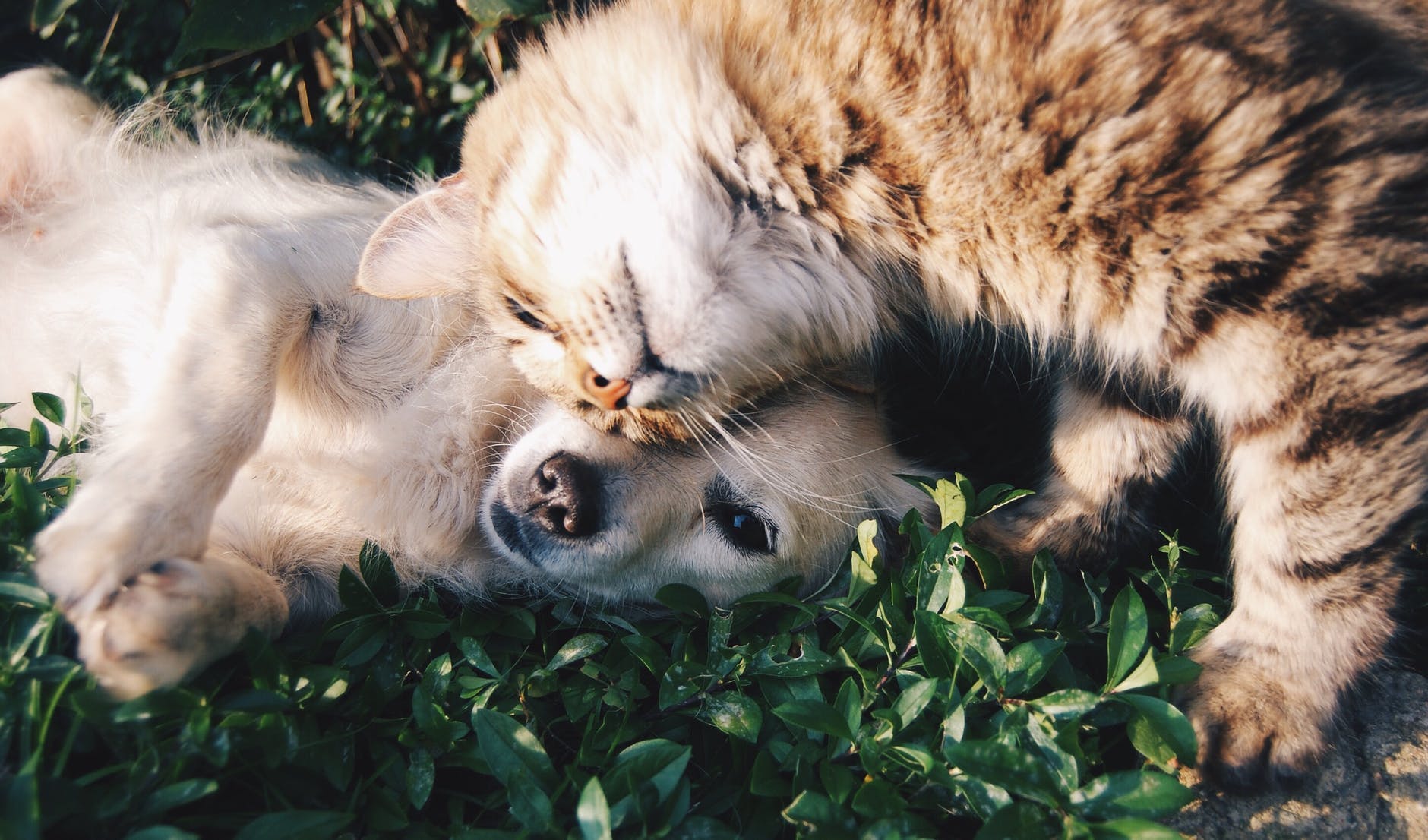
orange tabby cat beside fawn short coated puppy
An orange tabby and his puppy friend. Credit: Snapwire/Pexels

Whether Assemblyman Miguel Santiago’s bill would help accomplish that is unclear.

It’s already a crime in California to harm an animal as opposed to the majority of states, where pets are considered property and the consequences for hurting or killing someone’s beloved cat or dog don’t go beyond providing monetary compensation. (However, it’s notable that the proposed cat and dog bill of rights would be added to California’s Food and Agriculture Code, not the Criminal Code. The fact that animal welfare legislation continues to exist in agriculture law instead of criminal is a relic of times when the only laws concerning animals were written to regulate their ownership, sale and slaughter.)

Santiago’s bill doesn’t specify a new plan for spaying and neutering more felines and canines. It doesn’t include funds for TNR or fund new enforcement efforts, and it doesn’t provide welfare groups with new tools.

Mostly what it does is require shelters and rescues to display the pet bill of rights in “a conspicuous place” or face a potential $250 fine. It doesn’t even specify how money collected via fines would be used.

But a bill of rights “changes the conversation” around animal welfare, the lawmaker said.

“It sounds pretty simple,” Santiago said, “but we need to talk about it.”

Santiago’s proposed legislation has the support of Judie Mancuso, president of the animal advocacy group Social Compassion in Legislation.

“Those rights go beyond just food, water, and shelter. As stated in the bill, dogs and cats have the right to be respected as sentient beings that experience complex feelings that are common among living animals while being unique to each individual. We’re thrilled to be codifying this into law.”

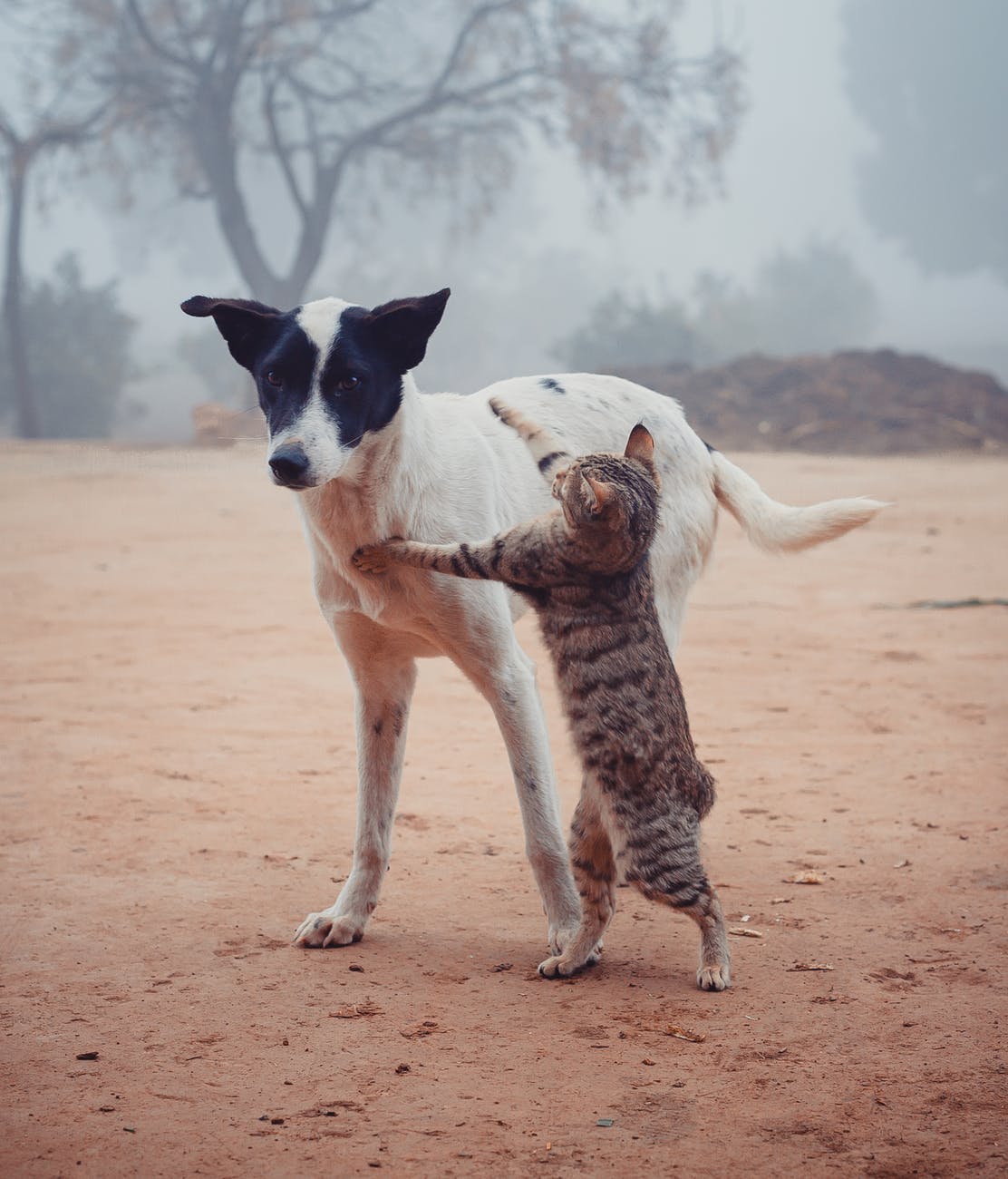
Dog and cat
“So did you hear about the new bill of rights for cats and dogs? It says I have a right to ride you like a horse. No, seriously. Crouch down so I can get up there!” Credit: Tehmasip Khan/Pexels

There’s a long way to go yet for the potential law.

The bill doesn’t have any co-sponsors and it’s not clear how much support it has among other lawmakers. Without significant support it might not be put forth for consideration at all. New York’s assembly, for example, declined to put a declawing ban on the floor for a vote for years until it finally garnered enough support among politicians on both sides of the aisle, as well as voters and organizations like the PAW Project. The declawing ban finally passed in October of 2019.

Even if Santiago gets co-sponsors and convinces enough colleagues to proceed, it would have to pass in the state senate as well. As for PITB, we think failing the first time around might not be a bad thing if it forces Santiago to think bigger and smarter so it includes real measures to get more pets spayed and neutered. A bill of rights is a nice sentiment, but it won’t change much the way it’s written.

If Santiago and future allies lay out a competent plan for tackling companion animal overpopulation, perhaps it could be a model for other state to follow.