Vet’s Urgent Warning Over Laser Toys, Plus: US Now Has 200+ Cat Cafes

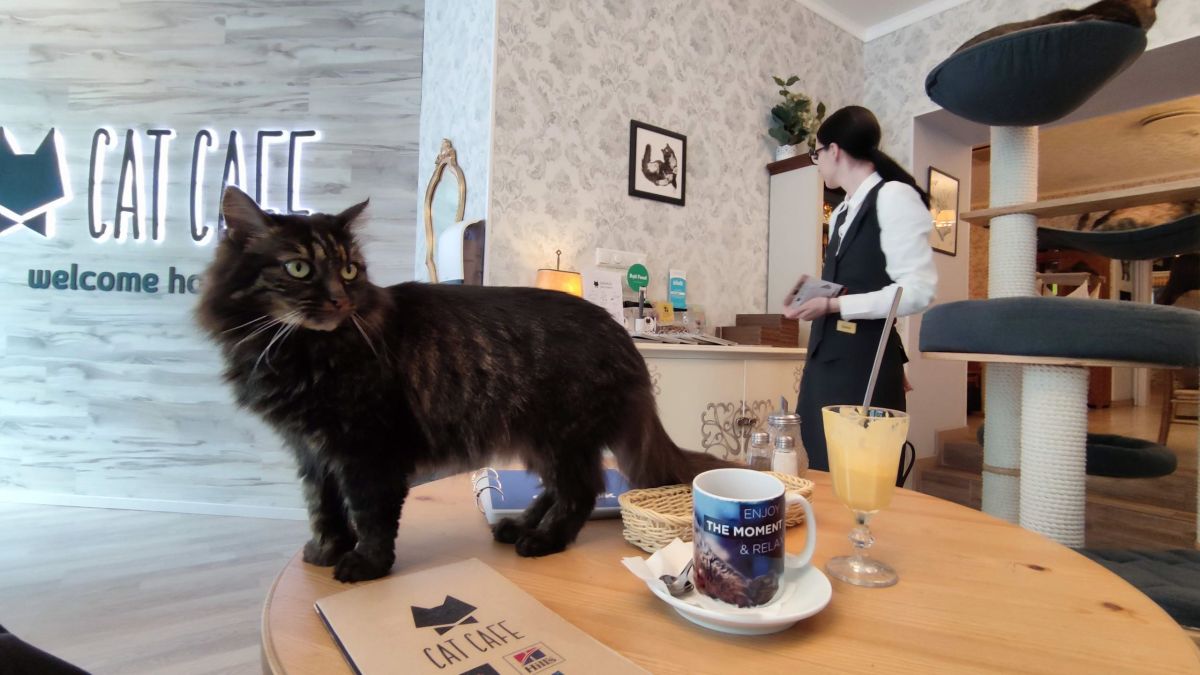
People who frequent cat cafes say they feel relaxed among the little ones. Hundreds of thousands of felines find their forever homes via cafes in the US, which are typically integrated with local shelter and rescue networks.

You may have noticed that most journalists don’t actually interview anyone these days, and the majority of “news” stories are either rewrites or lazily-assembled, 300-word virtual birdcage liners about which celebrity or influencer is “clapping back” at haters for “throwing shade” at them, with quotes directly copied and pasted from X or Instagram.

It’s cheap, easy content — far cheaper than funding war correspondents or impactful investigative journalism — and it doesn’t require reporters to leave their desks, speak to sources on the phone, or even fact-check what they’re writing.

“Well, they said it” is good enough for modern newsrooms, which is why we can’t have a national story or a disaster like the wildfires without waves of misinformation getting amplified by press and influencers alike. And the executives of the handful of remaining news companies wonder why trust in media is at historically low levels.

So these days, a veterinarian warning about laser toys via a TikTok video is considered international news. Nina Downing, a veterinarian with UK pet charity PDSA, took to the social media platform to warn about “laser pointer syndrome,” which she says can result in obsessive compulsive behavior in cats and dogs.

Our furry friends can become frustrated that they never actually capture the elusive red dot, according to proponents of the theory, and too much laser pointer play can result in a pet who barks at shadows or tries to tackle anything that moves.

“Cats have a hunting sequence to follow which is replicated in play, however if it doesn’t come to a successful capture at the end, this can cause them to become really agitated,” Downing warns.

Credit: WIkimedia Commons

Happily, Buddy is impervious to this alleged syndrome because he doesn’t actually have a “hunting sequence.” Born indoors, he’s known nothing but warmth and comfort, and food is something that’s served to him on a precise schedule, not something that needs hunting.

Accordingly, when we play with wand toys, Bud’s version of a “kill” is to grab the plush toy or feathers while dancing around on his back paws. He bobbles the toy while he dances, lets it go and resets the game.

The concept of a kill bite is completely alien to him, and apparently not even his feline instincts are enough to tell him there’s another step to “winning” the game. Still, I tell him he’s a good boy and a fierce little tiger because we can’t have fragile egos getting bruised.

That said, if you find lasers are one of the few reliable ways to get your kitty moving, it’s probably a good idea to wind down by switching to a wand toy. Let the little one simulate a kill, get a few rabbit kicks in and feel like a champ. There’s little or no research supporting the concept of laser pointer syndrome, but it still couldn’t hurt to give your feline overlord something tangible to “kill” at the end of a play session.

Cat cafes are more popular than ever in the US

USA Today has a story today about the apparent ubiquity of cat cafes in the US, and how they’re changing things for the better, for felines as well as people.

Using data from Yelp, the newspaper found there were 200 cat cafes, give or take, across the country at the end of 2024, up from about 75 in 2020.

“When we started, people weren’t quite sure what they were, there was a lot of explaining how they worked and what they were,” said Laura Konawalik, owner of a chain of three cafes featuring felines in North Carolina. “Nowadays people come in knowing the general concept.”

The same data shows searches for strings like “cat cafes near me” have increased 78,700% between February of 2020 and February of 2024, USA Today reported.

Patrons playing with cats at a cafe in Osaka, Japan. Credit: Wikimedia Commons

While cafes in some other countries are populated by felines owned by the proprietors, most cat cafes in the US are integrated with their local shelter and rescue networks, so patrons can adopt if they fall in love with the little ones they meet while having a cup of coffee or tea.

That means some of the oldest cat cafes in the country have facilitated thousands of adoptions and continue to find forever homes for their animals.

About 330,000 cats were euthanized in the US in 2023, the most recent year for which complete statistics are available, according to Shelter Animals Count, a national database that keeps track of shelter intakes and cat/dog euthanasia figures. Data for the first half of 2024 showed a decrease from the previous year’s numbers, but numbers from the latter half aren’t available yet.

Jet Taylor, a regular at Konawalik’s Mac Tabby cafes, says he keeps coming back to destress and feel calm.

“I would be willing to bet,” he said, “you could put a heart rate monitor on me and when I’m sitting there petting a cat, my heart rate goes down.”
Will California’s Bill of Rights for Cats and Dogs Make A Difference?

The proposed law would declare cats and dogs have rights, but it doesn’t do much besides that.

Declaring cats and dogs should have fundamental rights, an assemblyman in California has introduced a law that would create a Bill of Rights for the two most popular companion animal species.

The text of the proposed legislation covers the basics including the right to food and water, veterinary care and a life free from abuse, neglect and anxiety. It recognizes felines and canines as sentient animals who need mental stimulation, and says adopting means committing to caring for an animal for its entire life.

But it’s really about pushing for an even greater effort to spay and neuter both species to avoid euthanizing almost a million unwanted cats and dogs every year.

There’s been great progress in the last decade alone: In 2011, kill shelters and animal control departments in the US put down more than 2.6 million cats and dogs. In recent years that number has fallen to 920,000, including 530,000 cats, according to the ASPCA.

That’s still a staggering number of lives taken, and animal advocates think the US can continue the downward trend in euthanizing pets via efforts to educate people and execute trap, neuter, return (TNR) plans.

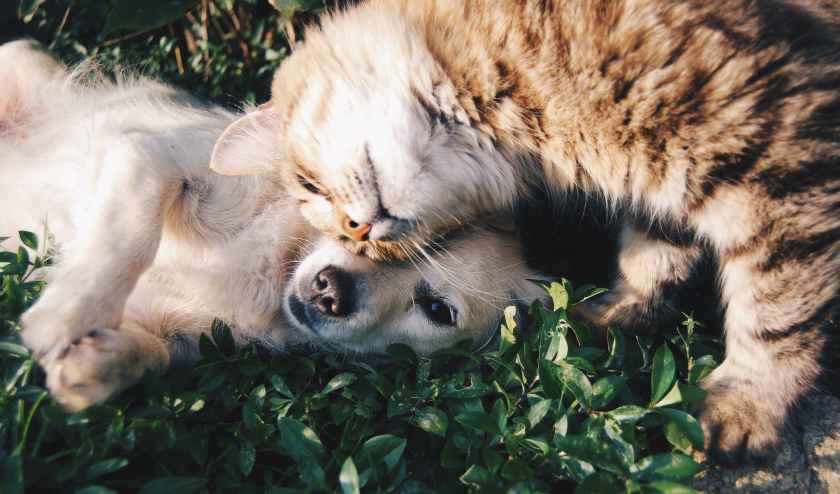
orange tabby cat beside fawn short coated puppy
An orange tabby and his puppy friend. Credit: Snapwire/Pexels

Whether Assemblyman Miguel Santiago’s bill would help accomplish that is unclear.

It’s already a crime in California to harm an animal as opposed to the majority of states, where pets are considered property and the consequences for hurting or killing someone’s beloved cat or dog don’t go beyond providing monetary compensation. (However, it’s notable that the proposed cat and dog bill of rights would be added to California’s Food and Agriculture Code, not the Criminal Code. The fact that animal welfare legislation continues to exist in agriculture law instead of criminal is a relic of times when the only laws concerning animals were written to regulate their ownership, sale and slaughter.)

Santiago’s bill doesn’t specify a new plan for spaying and neutering more felines and canines. It doesn’t include funds for TNR or fund new enforcement efforts, and it doesn’t provide welfare groups with new tools.

Mostly what it does is require shelters and rescues to display the pet bill of rights in “a conspicuous place” or face a potential $250 fine. It doesn’t even specify how money collected via fines would be used.

But a bill of rights “changes the conversation” around animal welfare, the lawmaker said.

“It sounds pretty simple,” Santiago said, “but we need to talk about it.”

Santiago’s proposed legislation has the support of Judie Mancuso, president of the animal advocacy group Social Compassion in Legislation.

“Those rights go beyond just food, water, and shelter. As stated in the bill, dogs and cats have the right to be respected as sentient beings that experience complex feelings that are common among living animals while being unique to each individual. We’re thrilled to be codifying this into law.”

Dog and cat
“So did you hear about the new bill of rights for cats and dogs? It says I have a right to ride you like a horse. No, seriously. Crouch down so I can get up there!” Credit: Tehmasip Khan/Pexels

There’s a long way to go yet for the potential law.

The bill doesn’t have any co-sponsors and it’s not clear how much support it has among other lawmakers. Without significant support it might not be put forth for consideration at all. New York’s assembly, for example, declined to put a declawing ban on the floor for a vote for years until it finally garnered enough support among politicians on both sides of the aisle, as well as voters and organizations like the PAW Project. The declawing ban finally passed in October of 2019.

Even if Santiago gets co-sponsors and convinces enough colleagues to proceed, it would have to pass in the state senate as well. As for PITB, we think failing the first time around might not be a bad thing if it forces Santiago to think bigger and smarter so it includes real measures to get more pets spayed and neutered. A bill of rights is a nice sentiment, but it won’t change much the way it’s written.

If Santiago and future allies lay out a competent plan for tackling companion animal overpopulation, perhaps it could be a model for other state to follow.