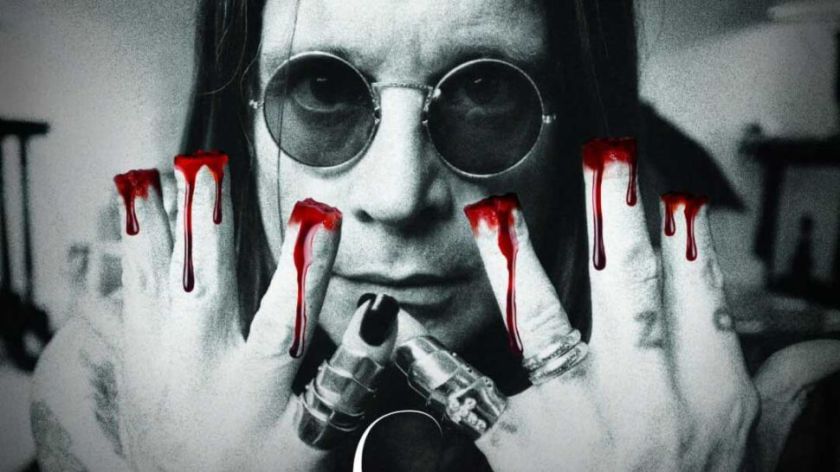
Osbourne poses for a cartoonishly bloody ad denouncing declawing.
A ban on declawing passed a key committee vote in Florida this week, while Black Sabbath frontman and reality TV star Ozzy Osbourne has become the new face of a PETA campaign against the harmful practice.
Florida aims to become the second US state to ban the elective and harmful procedure after our home state, New York, passed the country’s first statewide ban on declawing in 2019.
The Florida bill, which was introduced in August, was approved by the state senate’s agricultural committee by a 4-1 vote on Tuesday. It’s expected to pass two more committee votes before it goes to a final vote on the senate floor.
The ban would levy relatively stiff penalties for owners and veterinarians who ignore the law. The former would face fines of $1,000 per cat, while veterinarians would be fined $5,000 per cat, as well as discipline from the state’s Board of Veterinary Medicine.
Meanwhile, Osbourne and People for the Ethical Treatment of Animals have teamed up for a public announcement campaign aimed at increasing awareness of the damage declawing does to cats.
The ads feature a striking image of Osbourne holding up both hands, with his fingers severed at the first knuckle to illustrate what’s done to cats during the procedure. It’s bloody, like Osbourne’s long-time stage antics, and controversial, like many PETA campaigns.
“Amputating a cat’s toes is twisted and wrong,” Osbourne said, per PETA. “If your couch is more important to you than your cat’s health and happiness, you don’t deserve to have an animal! Get cats a scratching post—don’t mutilate them for life.”
Ozzy Osbourne poses for a bloody anti-declawing ad in cooperation with PETA. Credit: PETA
A viral adoption ad proves it’s possible to find homes for even the most difficult cats.
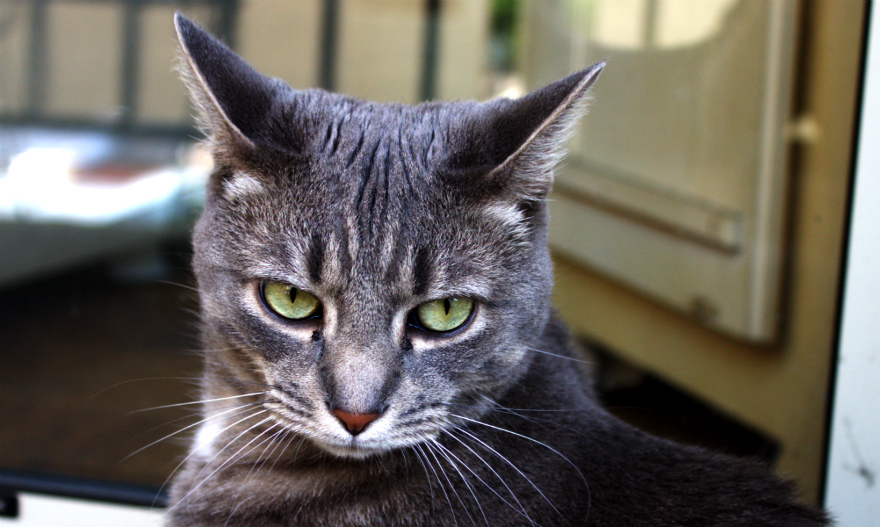
Meet Buddy: Not for people who enjoy peace, caretakers with autoimmune diseases, or anyone who dislikes being smacked in the face.
What this 10-pound grey tabby lacks in size, he makes up for in unmitigated douchebaggery.
LIKES: Turkey, mind-controlling you with toxoplasma gondii, never shutting up, destroying expensive personal belongings (particularly musical instruments), dipping his tail in your beverage just to piss you off. He occasionally enjoys rending human flesh with his claws as well.
DISLIKES: People who don’t give him treats. People who don’t treat him like the center of the universe. Vacuums, tardy service, acts of kindness, substandard service, mirrors, birds, dogs.
Come and meet Buddy, who is free to the first person who’ll claim him! In fact, we’ll play you, and he comes with a litter box, food/water bowls, toys, a harness, treats, scratching posts and heavy duty gloves.
Okay, so clearly I’m not giving Buddy away or taking applications for him. Anyone who wants Buddy will have to pry him from my cold, dead hands. He’s my Buddy.
But this adoption ad from an animal shelter in North Carolina got me thinking about how cats are described to prospective adopters:
Adoption ads for house cats are perfunctory affairs peppered with the same handful of descriptors: Every cat is a sweet, loving cuddle bug looking for a “furrever” home.
If you knew nothing about cats and based your opinion on adoption ads only, you’d think they’re basically cuddly pillows with no variation in personality or disposition.
The person who crafted Perdita’s adoption ad managed to cut through the noise with a funny, brutally honest description of the cat and her many quirks.
World’s worst cat? Even the veterinarian thinks she’s a major jerk? I have to know more.
The ad worked. Not only did it go viral, amassing thousands of shares, upvotes and comments on social media, it’s been talked about on TV and written about in major publications.
Most importantly for little Perdita, the clever ad also prompted more than 50 enthusiastic applicants, and the shelter says it’s “carefully considering” the would-be servants, no doubt trying to find the perfect match for the “World’s Worst Cat.”
At a time when thousands of charitable organizations are competing for donations and deserving pets languish in shelters, Perdita’s story proves rescues can cut through the noise and find homes for even the grumpiest of cats.
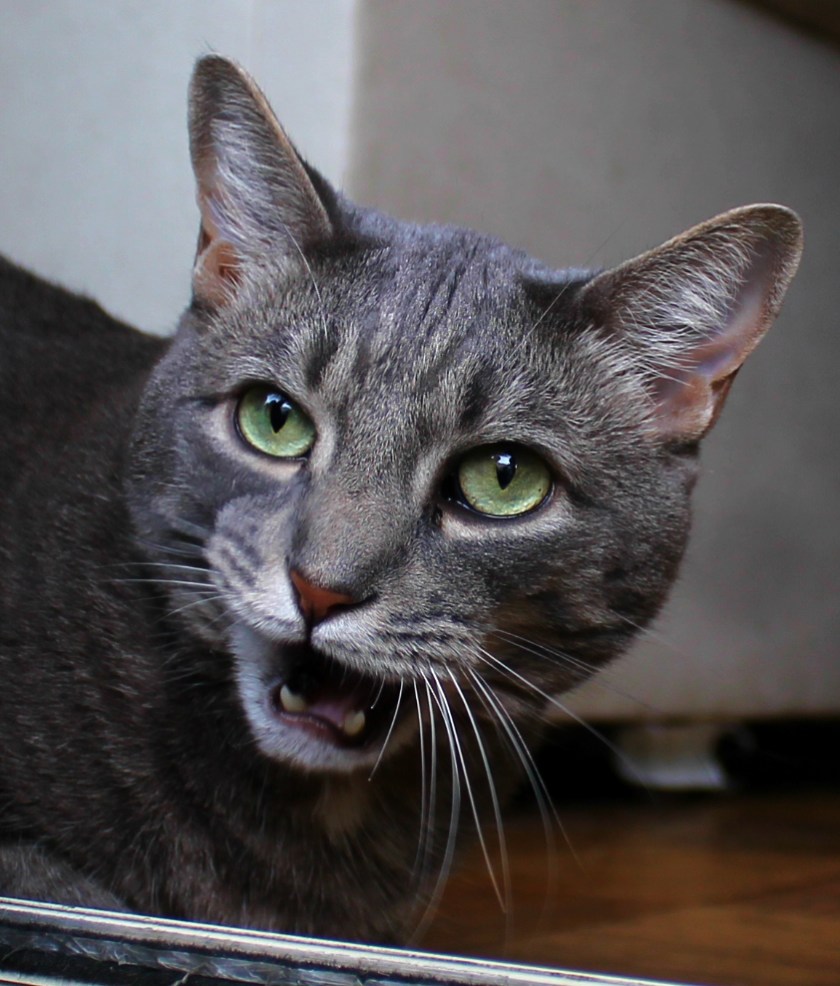
“Buddy doesn’t do hugs, okay? Buddy speaks in the third person, Buddy meows insistently for dinner, but Buddy does not do hugs. Deal with it, human.”
The sickly cat still needed veterinary care and wasn’t ready to go to a forever home yet.
Two weeks after a sickly stray named Joy was rescued off the streets, someone stole the still-ailing animal from the local Humane Society.
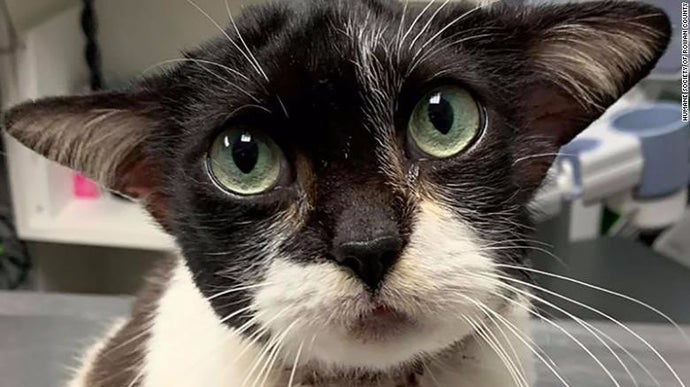
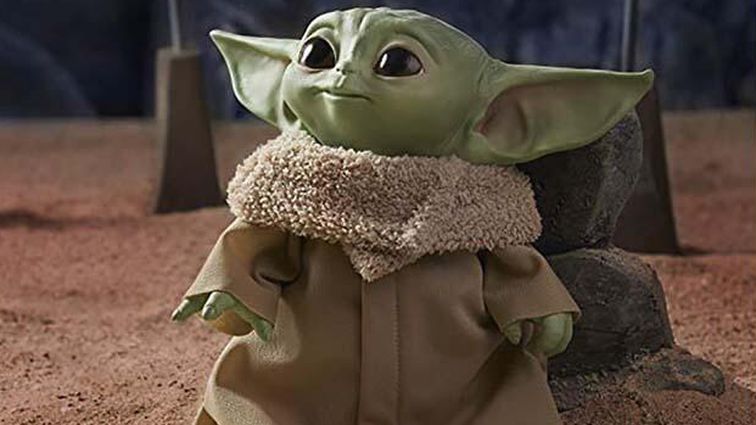
Thanks to her resemblance to the Internet-breaking Star Wars character, Joy and her story went viral, with kind donors opening up their wallets to help pay for the kitty’s veterinary bills. Per New York’s ABC affiliate:
A North Carolina woman found Joy with a large neck wound and an upper respiratory tract infection in mid-December. The woman asked Humane Society of Rowan County for help, and one of the non-profit’s veterinarians started treating Joy for her injuries. In the meantime, Joy captured the hearts of internet users for her resemblance to “The Child,” the breakout star from the “Star Wars: The Mandalorian” series.
In six days, Facebook users donated over $1,250 to help Humane Society of Rowan County pay for Joy’s medical bills.
But the story didn’t just attract the attention of the kind-hearted, and a few days ago someone made off with the viral feline after claiming Joy was their long-lost pet, according to the Humane Society of Rowan County.
A Star Wars fan who couldn’t wait to hand his or her money to Disney for a Baby Yoda doll decided to steal a cat who bears a resemblance to the character instead.
Making matters worse, Joy wasn’t ready for her forever home yet, and was supposed to remain under veterinary care and supervision while the Humane Society took applications from potential adopters.
It is with heavy hearts that we announce that Joy is no longer in our care. Joy was released without our knowledge or consent to a person claiming ownership.
It is likely that HSRC will still be responsible for Joy’s vet bills.
We wish we could provide more details but are unable to at this time. We pray that Joy, still with unhealed wounds and not fully recovered, will be given proper medical care and make a full recovery.
Return the cat, nerd! And while you’re at it, consider switching your allegiance to a decidedly more feline-friendly science fiction franchise. You’ll live long and prosper! 🙂
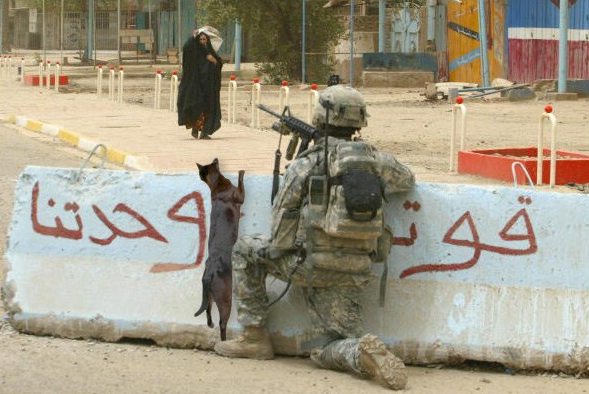
The plight of stray cats and dogs in war-ravaged countries tugs at the hearts of animal-loving service members.
With so much human suffering in war-torn countries, the animals often get overlooked.
For every family huddled in a basement during an air raid there’s a mother cat trying to get her kittens to safety as forces she can’t comprehend rend the sky and shatter the Earth. For every shoeless kid playing in the mud, there’s a rib-thin dog nosing through the trash for a morsel.
But not everyone looks past them: More than 1,000 American service members have adopted cats and dogs from Afghanistan alone, according to the country’s only animal shelter.
“When you think about a soldier that’s been on the front lines for years, away from family and friends, that animal has probably been one of the only positive things throughout the whole process,” said Pen Farthing, a former member of the UK’s military who founded Nowzad, the sole clinic and shelter for animals in Afghanistan.
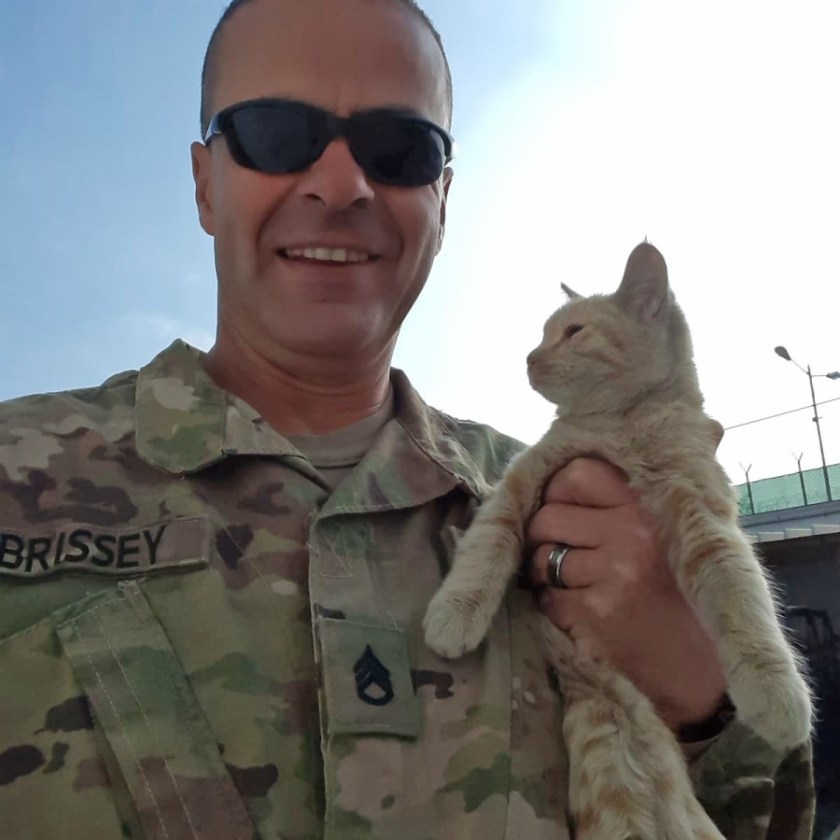
Staff Sgt. Dan Brissey is one of them. The Delaware man, who was deployed to Kabul with the Maryland National Guard as an engineer, found himself caring for an orphan kitten during his deployment.
He named the kitten Sully and, knowing he couldn’t leave Afghanistan without her, reached out to Farthing and Nowzad.
Brissey and Sully, the cat he adopted after caring for her in Kabul, Afghanistan. Credit: Dan Brissey
Taking an animal back home is prohibitively expensive, Farthing said, with airlines charging a premium to fly animals from countries like Iraq and Afghanistan.
They don’t provide discounts for the service, and in all it costs more than $3,000 to bring a cat back to the US and more than $5,000 for a dog.
Brissey paid a hefty sum, then turned to the internet to help raise the rest, and raise people did: Not only have they covered the cost to bring Sully back, there was enough left over to bring her more feral sister to the US as well. Both kittens will live with Brissey and his family.
Sully will be reunited with Brissey after a brief period in quarantine. Credit: Dan Brissey
A common response to stories like this is “Why are we helping animals when so many people need help?”
The truth is, they’re not mutually exclusive things. A guy like Brissey spends his entire deployment working on civic projects to benefit the locals. Service members build critical infrastructure like water lines and power stations. They repair roads, keep neighborhoods safe and restore schools.
And in addition to the humanitarian aid distributed directly by the US, thousands of NGOs are on the ground in those countries, using private donations to staff medical clinics and build new housing. Americans are exceedingly generous when it comes to charitable giving.
So it’s not one or the other. We can help people as well as animals. A thousand dogs and cats helped by Nowzad in Afghanistan might not seem like much, but to each of them it makes a life of difference.
For people accustomed to living in peace, with well-funded animal charities taking cats and dogs off the streets, it’s difficult to imagine the reality on the ground in war-torn countries.
“There has been no form of stray animal control in Afghanistan now for nearly 40 years, because of various ongoing conflicts,” Farthing said. “There are stray dogs on every single street corner.”
For American service personnel — many of whom are animal lovers — helping just seems like the right thing to do.
“I just want to do what I can for her,” Brissey told military.com “Take care of her and give her a good home.”
It turns out cat owners are no better than random people when it comes to this task.
Most of us completely suck at deciphering our cats’ facial expressions, according to a new study.
That might come as a surprise to some because it’s often claimed cats don’t have facial expressions, or they can’t be read. They do, and they can.
The researchers from Ontario’s University of Guelph used a series of short clips selected from YouTube cat videos. They stripped all the context and blacked out everything but each cat’s face so participants wouldn’t be able to read body language or identify what the cats were doing.
The people who participated in the study — more than 6,000 in all — had only the faces to go on, and they were asked to assess whether each cat’s facial expression was positive or negative.
It turns out reading feline facial expressions is especially difficult: On average, participants got only 11.85 out of 20 questions right. That’s less than 60 percent.
Here’s the crazy part: Researchers found cat owners were no better at interpreting cat expressions than random people. Veterinarians scored the highest, a result that makes perfect sense.
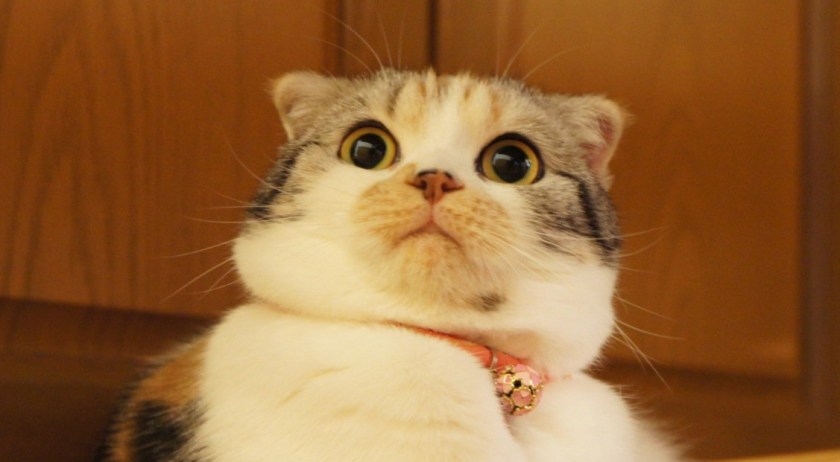
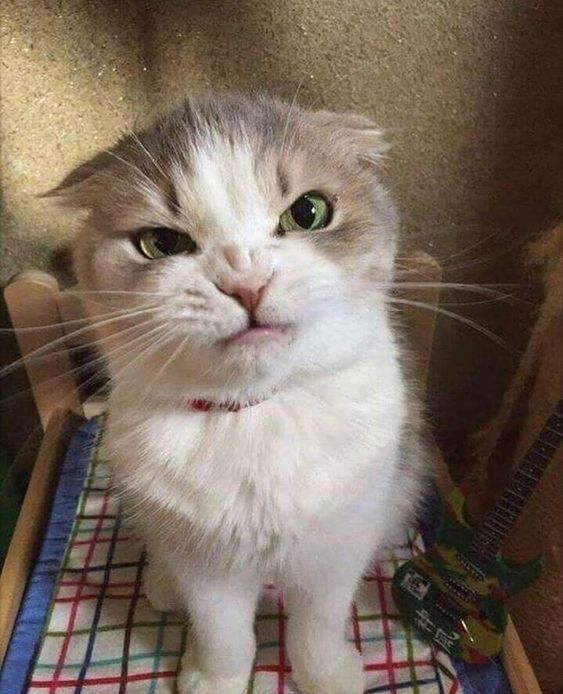
“No, I did NOT drink from the toilet! How dare you impugn my character with such vulgar accusations, good sir!”
Less than 15 percent of people are “cat whisperers,” study author Georgia Mason said, and can correctly interpret a cat’s mood based on the face alone.
“Anyone who writes cats off as sort of moody or distant is probably underestimating them,” Mason said. “The point is they are signaling, it’s just subtle and you need expertise and maybe intuition to see it.”
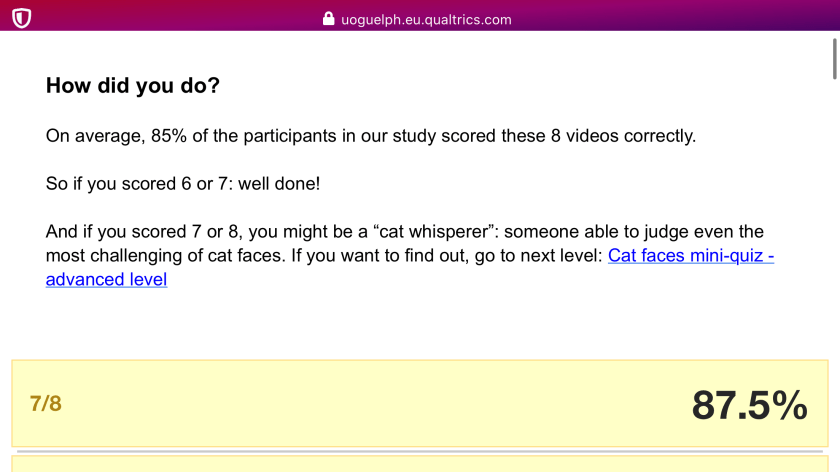
If you’re wondering what the test looks like, you can take an abbreviated version of it online. Here’s my score:
I’m a cat whisperer! Okay, not really. I scored a lousy four out of eight in the advanced version of the test.
I’m accustomed to reading feline body language — whiskers, ears, tails and fur provide a wealth of information about a cat’s mood — and absent most of that information, I found it difficult to gauge based on their faces alone.
On the positive side, scientists say the lessons from these studies can be applied to our companion cats eventually.
“We’re hoping [to conduct] more research to develop tools to help people read their cat better,” Mason said. “That would make living with a cat more rewarding.”

 Pain In The Bud