The subject of fat cats has come up quite a bit lately here on Pain In The Bud.
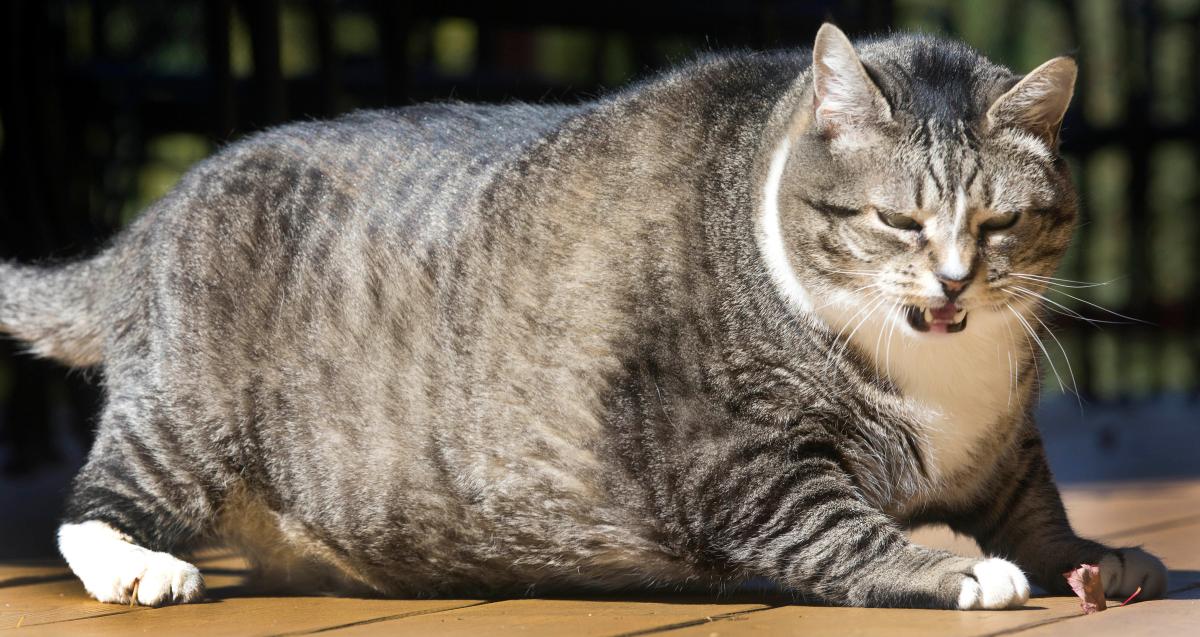
First we wrote about Barsik, the 40-pound chonkster who requires a stroller for transport because he’s too big for a carrier. On Thursday we blogged about Mikhail Galin, who hatched an elaborate plan to board his 22-pound tabby on a flight after Russian Airlines told him his feline was too fat to fly. And we’ve been following the struggles of Cinder, a 25-pound kitty who really hates treadmills.
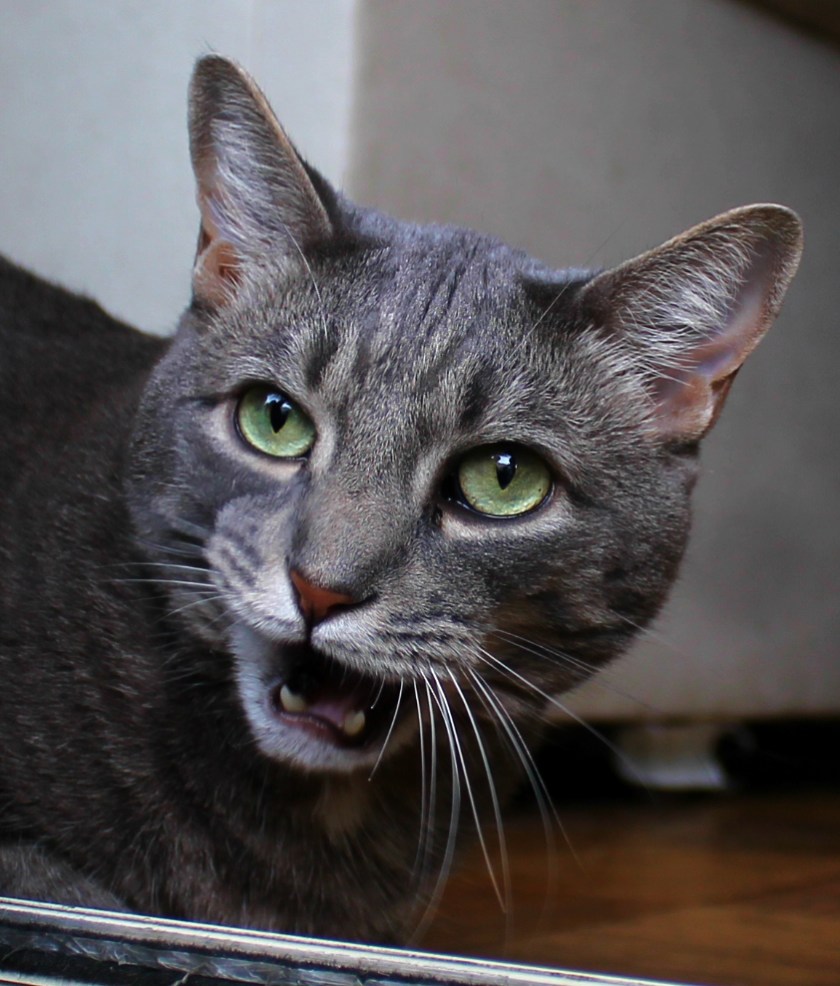
Much to his chagrin, Buddy is in on the action too: I’ve cut back on his treats and portion size more as a preventive measure. He’s not fat, but he’s not as ripped as he thinks he is either.
So how do we deal with the feline obesity crisis? We asked Julia Lewis, DVM, who knows a thing or two about cats: Dr. Lewis graduated from UC Davis School of Veterinary Medicine, the nation’s top veterinary school, and has 25 years’ experience working with shelters, universities and most recently in public health, where she provides wellness care to pets of the homeless on the west coast.
This interview has been lightly edited for length and clarity.
Pain In The Bud: A new study says more than half of all US pet cats are overweight or obese. Why are so many cats so chonky?
Dr. Lewis: We Americans like everything big: cars, houses, and unfortunately pets. Too many people equate food with love for themselves as well as their kids and pets. Yet another reason for people to have a family veterinarian that they trust is to have someone objectively tell them if their pets are in the healthy size range.
PITB: How do cat owners react when you broach the subject?
Dr. Lewis: I’m glad I’m not in private practice. I feel uncomfortable telling people their pets are overweight because I happen to pack too many extra pounds myself. I’m nervous that when I tell pet owners their pets should lose weight, the owners will think to themselves that I should practice what I preach. (Although I try really hard to keep my own pets in decent weight so that I can practice what I preach from a professional perspective). However, when I have told people their pets can stand to lose some weight, I try to do it with humor so that the owners realize that I’m not making a judgement about them. Descriptions I’ve used to broach the subject include the pets appear Rubenesque. (One used by a particularly flamboyant resident that I had when I was a student.) I’ve also used roly-poly and fluffy. When the weight is in the severely large range, I have used round as a descriptor. Mostly, owners who realize their pets may have a problem really only want advice and that’s what I try to do for them, like I did for you when you wanted to put Buddy on calorie restriction. I also try to understand that it’s hard to lose weight, for oneself as well as their loved ones, whether two-legged or four.
PITB: What about cat owners? What’s the best way for those of us who aren’t veterinarians to determine if our cats are heavier than their ideal weight?
Dr. Lewis: Body condition is very subjective. Pets come in all sizes. This is especially true for dogs since there are such diverse breeds. Think about the extreme size and weight differences between a Chihuahua or Yorkie compared to a Great Dane or a Mastiff. Cats do have breeds, but for the most part there the size difference isn’t as extreme. Yet cats come in petite, average, and large frames. It’s not unusual for certain breeds like oriental short hairs to average only about 6 to 8 pounds and breeds like the Main Coon to average in the teens up to 25 pounds.
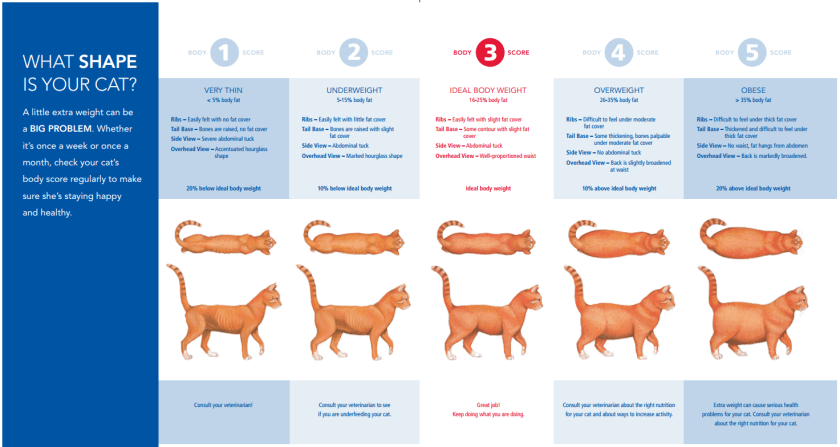
That’s why it’s important to have an objective determination of body condition. Use of the body condition scoring charts puts everyone on the same page when describing a pet’s body condition.
PITB: What about fur? Does the eye test work for long-haired and extra fluffy cats?
Dr. Lewis: Beyond having a chart, owners need to be trained on how to assess their pet’s body to compare to the chart beyond just a visual measurement. Fur can interfere with accurate visual assessments of how much fat a pet may be carrying. Pet owners should have their veterinarian show them how to feel (palpate) their pets to determine how much padding beyond the fur their pets have.
PITB: Okay, so let’s say we’ve committed, we’ve talked to the veterinarian and we have a plan. How should we handle the sometimes incessant meowing and crying from a hungry cat? After all, we wouldn’t be their servants if they weren’t so persuasive.
Dr. Lewis: Dealing with pets that show their displeasure in not eating whenever and whatever they want is difficult. I have my own pets so I can really empathize. My dogs are pretty good about only eating when they’re fed but my cat is another story. But as hard as it is, ignoring them does work. I don’t react to my cat when he starts screaming. I’ve certainly not given in to him by giving him food. So, he doesn’t usually bother to yowl at me when he thinks he should be fed. My husband does give in and when my cat sees my husband, he gets incredibly vocal and demanding. So we’ve each trained the cat to give us very different behaviors. In an effort to get my cat to stop being so demanding, I’ve trained him to dance for his food. He now knows that even when we get up to feed him, he still can’t just dive right into the food, he has to do some spins. I tend to make him spin more than my husband, and that’s another reason he isn’t quite as insistent about making me feed him. One thing my cat is really good about is that he doesn’t get physical with us when he wants food. He’s just loud. If a cat does tend to get physical, owner may have to engage them in a vigorous play session before feeding to dissipate some of that pent-up frustration and energy.
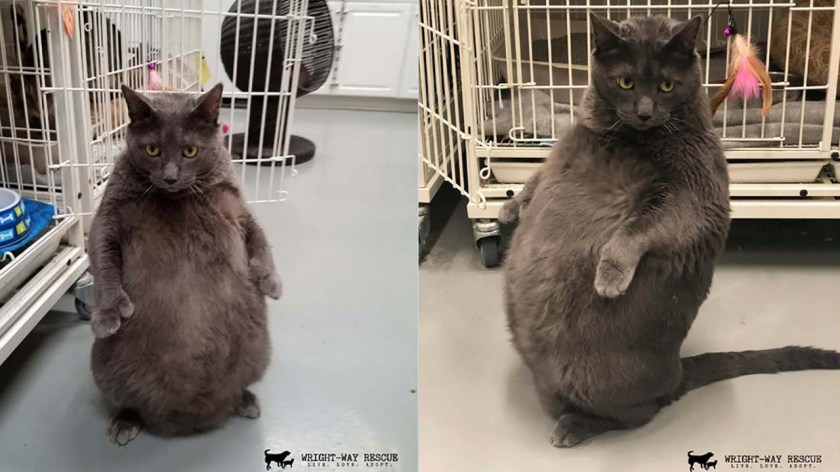
We’d like to thank Julia for taking the time to answer our questions and provide expert advice on a tough subject. Buddy, however, would not like to thank Julia for being complicit in the Great Treat Famine of 2019. He considers it a crime to come between a cat and his snacks.
Has your cat struggled to keep the pounds off? Tell us about it in the comments!