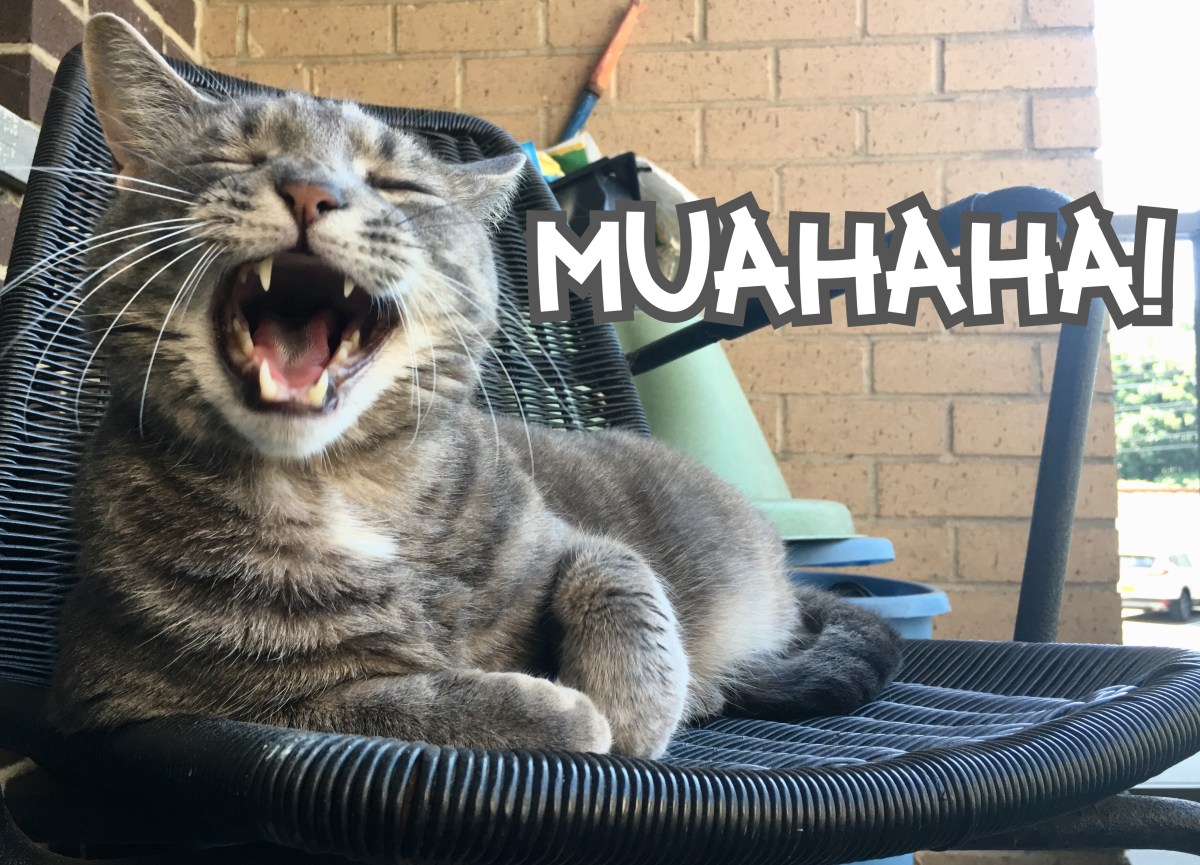
Buddy gave me the cold shoulder after I returned from Japan and it lasted all of 30 seconds before he couldn’t contain himself and began rubbing up against me to mark me with his scent.
Cats have scent glands all over their body, including their cheeks and foreheads, and scent is one way they establish familiarity and “ownership.” They’re comforted by the presence of their own pheromones, which is why products like Feliway — an artificial cat pheromone in a spray bottle — can help anxious cats chill out.
When a cat rubs up against a human or another cat, they’re essentially saying “These are my people!”
Or in Buddyspeak: “This guy is my servant! My servant has returned!”
Upon my return from an extended absence Buddy will not let me out of sight and will cry loudly and incessantly if I so much as use the bathroom without allowing him in, as is tradition. And this time around he puked when I returned, as is tradition.
I suspect it’s his way of processing relief, similar to the way some animals shake when overcome with anxiety or emotion. I try to remind myself that if it feels like I’ve been away a long time, for Buddy it must feel like a much longer time has elapsed — and there’s no way I can communicate to him that I’ll be back soon, so there’s an additional element of anxiety-provoking uncertainty.
Regardless, the king is happy again. Long live the king! Now if you’ll excuse me, I have a plate of turkey pate to serve…
Some 30 million visitors a year come to see Tokyo’s oldest Buddhist temple, which has been a religious site for more than 1,000 years.
And making a whip of cords, he drove them all out of the temple, with the sheep and oxen. And he poured out the coins of the money-changers and overturned their tables. And he told those who sold the pigeons, “Take these things away; do not make my Father’s house a house of trade.” – John 2:13-16
Growing up Catholic, I heard the story of Jesus furiously expelling the money-changers and merchants from the temple at least a few times a year in church gospels.
“Christ casts out the money-changers” by Danish painter Carl Heinrich Bloch.
The message was clear: Houses of worship are supposedly to be solemn and hushed places where people can speak to God in peace.
Sensō-ji temple is quite the opposite.
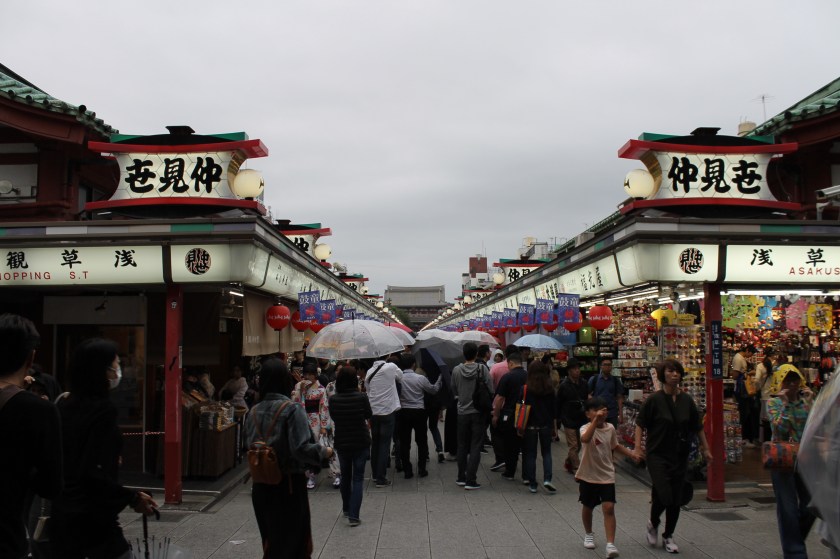
Sellers hawk overpriced gifts for tourists en route to Sensō-ji temple.
Sensō-ji is not only Japan’s oldest temple, it’s one of the most-visited spiritual sites in the world, with an estimated 30 million annual visitors.
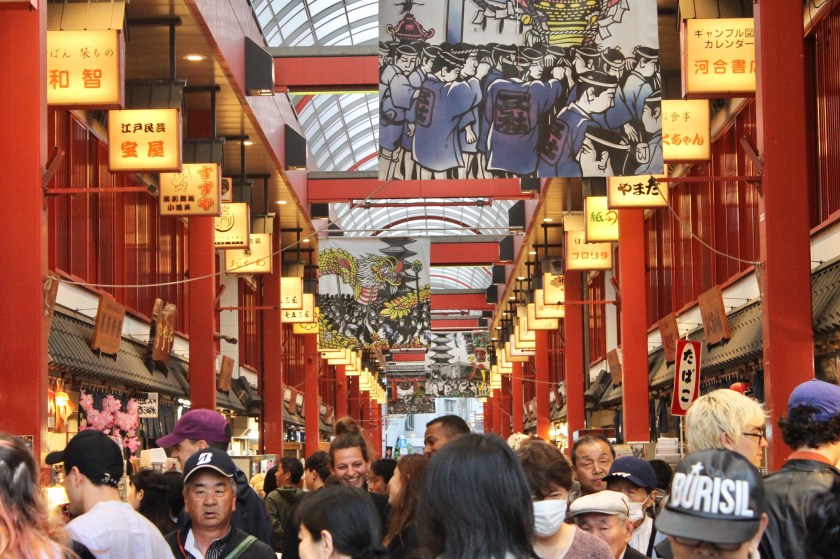
It’s also one of Tokyo’s most-accessible shrines, just a short walk from a subway stop in Asakusa. All that foot traffic makes it irresistible for local merchants, who sell everything from traditional lanterns to t-shirts, stuffed animals, shoes, bags and hats.
On the day I visited a steady rain hadn’t put a dent in the mixed crowd of locals and tourists.
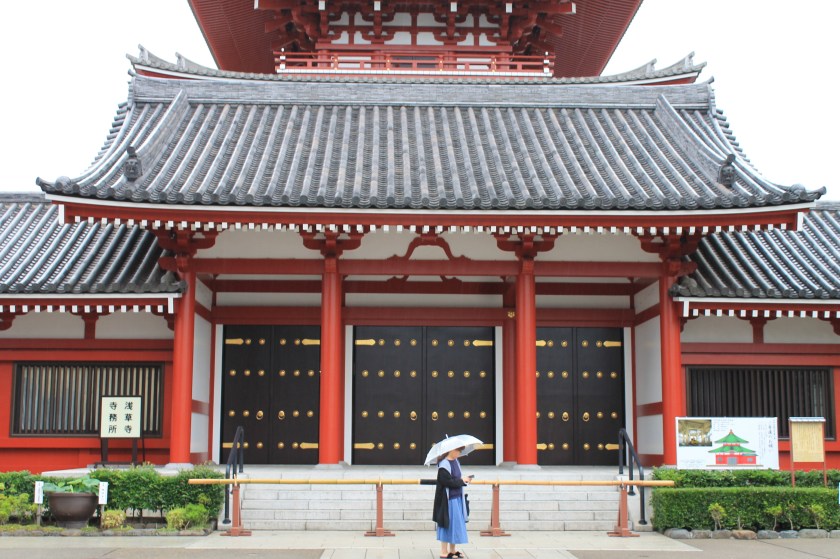
A giant lantern hangs beneath the temple gate, which was rebuilt in 1960 after a fire destroyed its predecessor. While most of the structures at Sensō-ji are reproductions, the area has been a religious site for more than 1,000 years.
The temple grounds are a popular spot for tourists and locals alike.
A shopping mall featuring eateries, gift shops and a sword smith.
I turn to look. This is the first bit of English I’ve heard all evening, and sure enough it’s directed at me, the blue-eyed, red-brown-haired, bearded ‘Merican who couldn’t blend into the crowd if I had a human-size Cuisinart.
“Come check it out,” says the speaker, a sharply-dressed guy in his 30s, gesturing toward a drinking establishment just off one of Shinjuku’s busiest streets. “I’ve got the girl of your dreams inside. You like Japanese women?”
“We’re good,” my brother says.
The salesman ignores him, singing his pitch like an R&B ballad.
“You like Japanese women, man? I know you do. We got Japanese women waiting to meet American guys.”
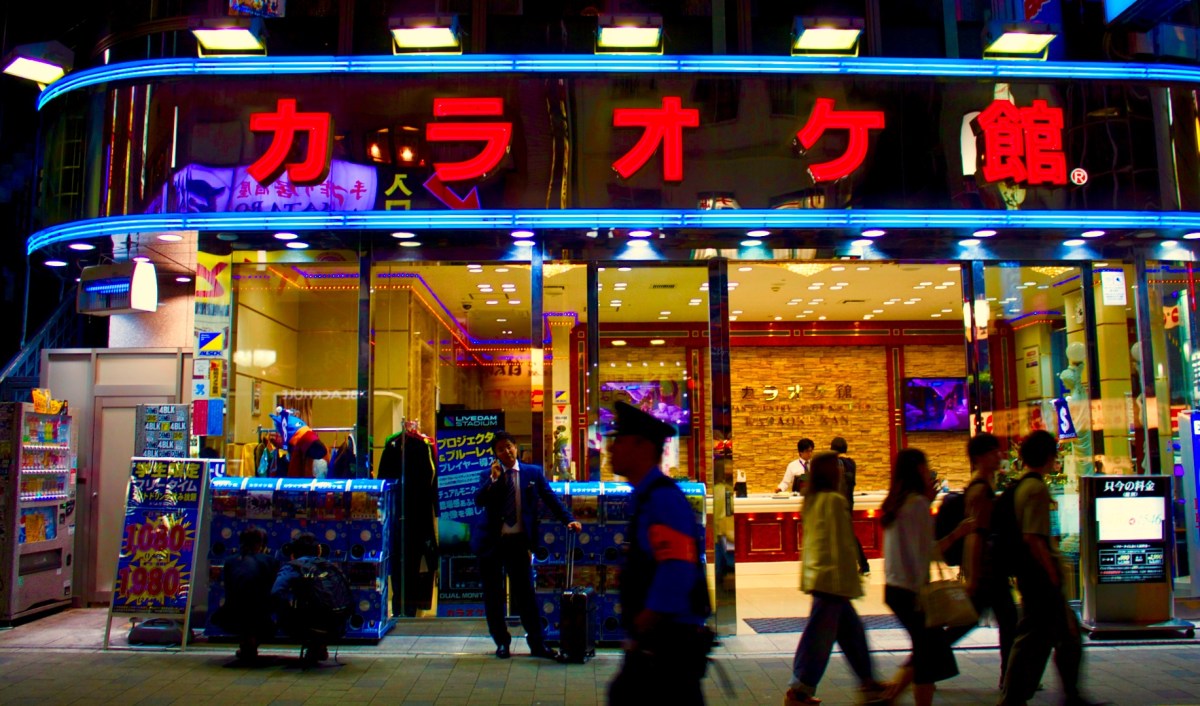
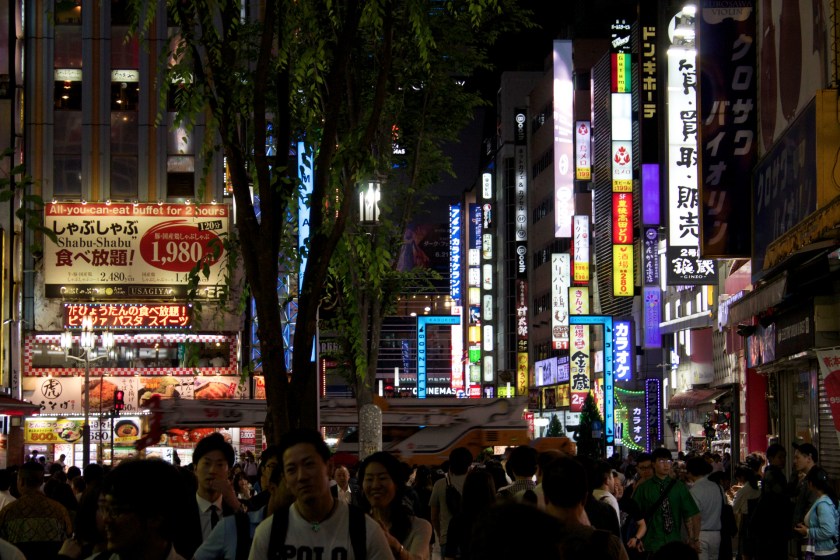
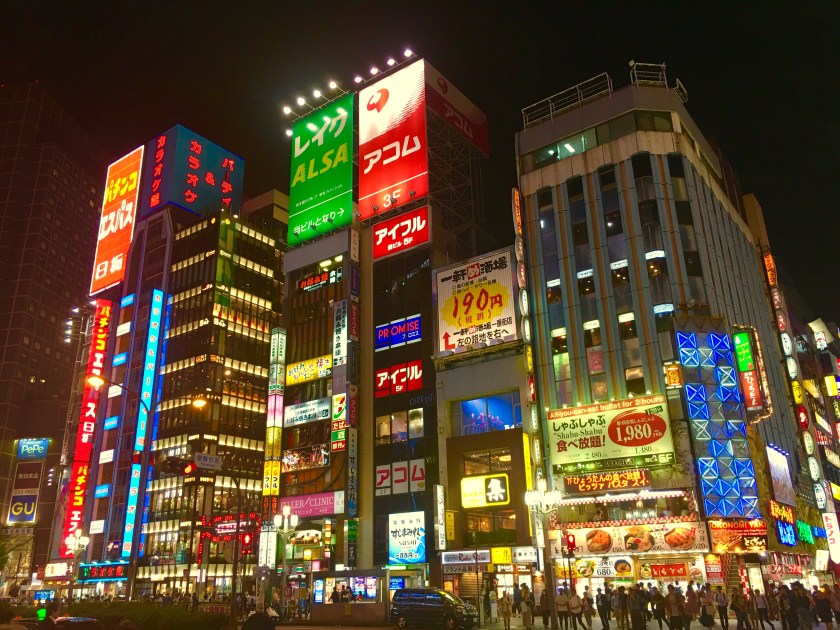
Shinjuku at night.
My trust in my brother is absolute, this bar dude is acting sketchy as hell, and I’m not that much of an idiot, so I take my bro’s cue and follow him toward the intersection.
“What was that all about?”
The guy who approached us was an extortionist, my brother explained. They’ll invite you into the club, let you order a few drinks but neglect to tell you the drinks are 10,000 yen each, or about $90 USD. If you refuse to pay they’ll call Tokyo police, who will take the word of a local business owner over the word of a tourist in what they see as a legitimate dispute.
“Or they’ll spike your drink,” my brother said, “take all your cash and run your credit cards to the limit.”
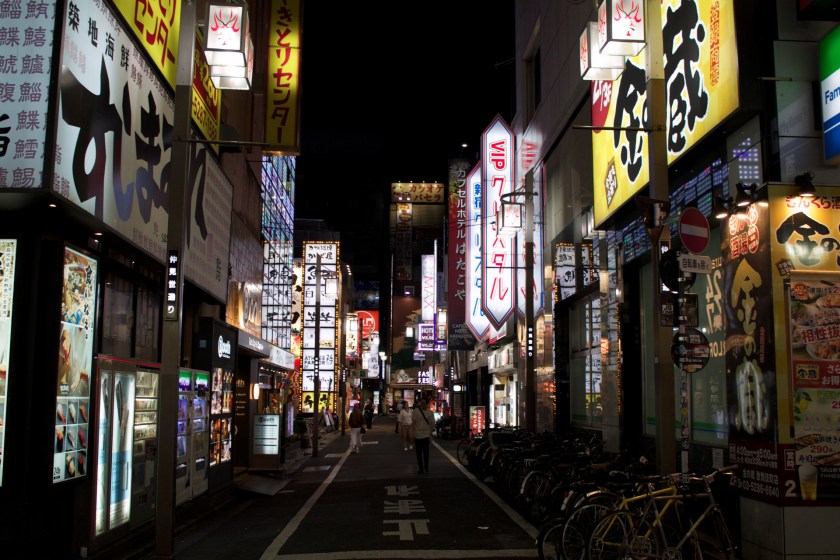
In Shinjuku even the side streets are illuminated.
Japan’s not the kind of place where you worry about pickpockets or getting jumped by local thugs, but it’s a mistake to assume crime doesn’t exist here.
Tokyo may be one of the world’s safest cities, a place where you can leave your door unlocked or leave your bike unattended while confident no one will steal it, yet tourists are universal easy prey.
While walking through Shinjuku’s busy streets I was reminded of an interview with the great novelist David Mitchell, who spent several years in Japan teaching English before returning to the UK.
Moving through Tokyo as a westerner unable to decipher Japanese writing, Mitchell noted, is like being cocooned in your own personal anti-advertising buffer. All that hiragana and katakana written in neon might as well be mood lighting — it’s there, but if you can’t understand it, it can’t invade your headspace.
Mitchell said he found that obliviousness calming and conducive to keeping to his own thoughts on writing. Being there in person and experiencing it for myself, I could appreciate his point.
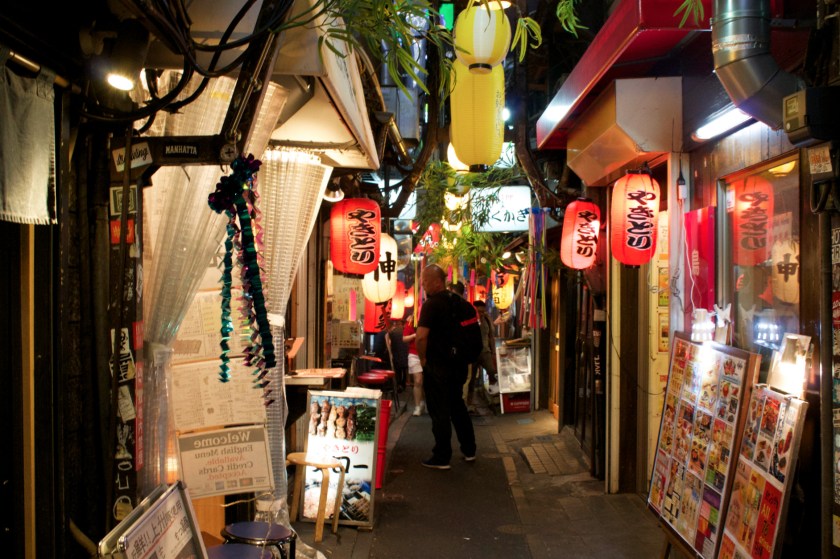
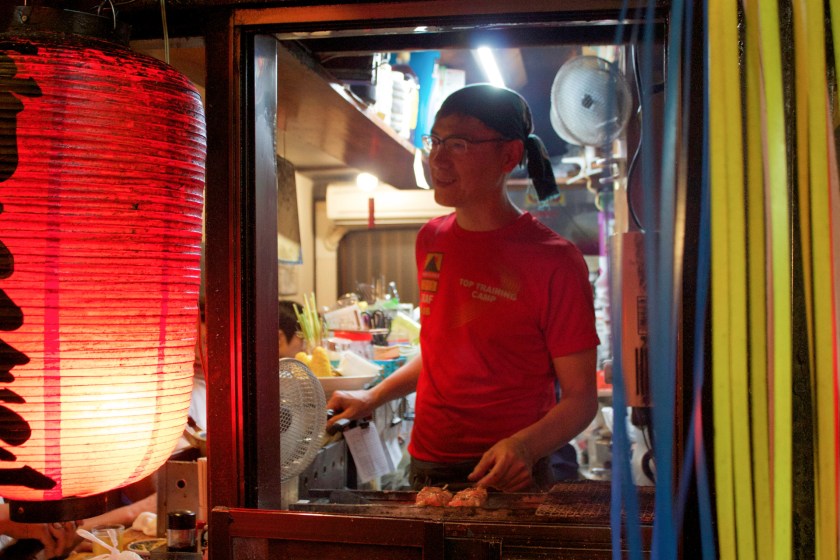
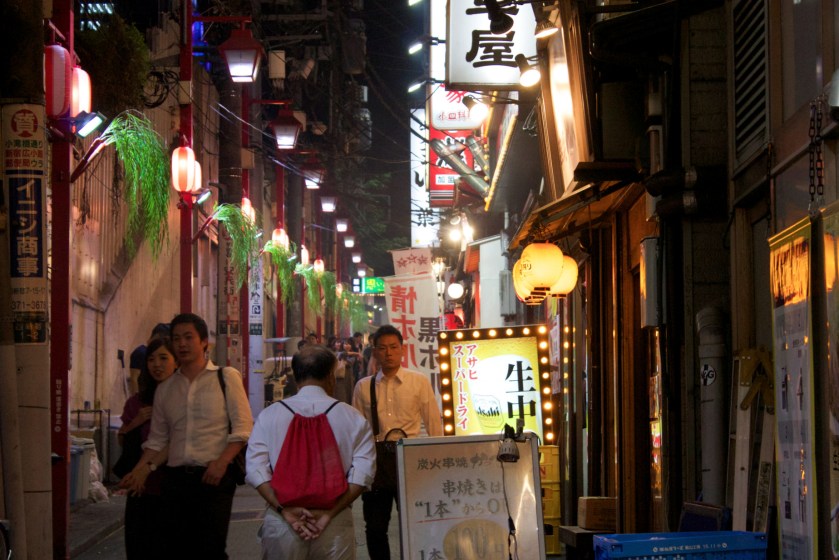
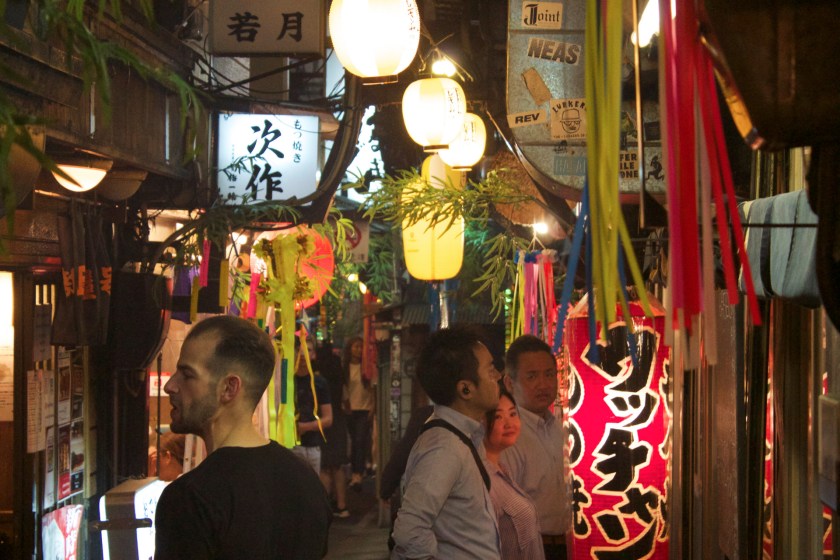
Memory Lane, also known as Piss Alley, is lined with tiny restaurants.A cook preps skewers of meat in one of Shinjuku’s narrow-alley barbecue spots on Memory Lane, which are only big enough to accommodate a few patrons at a time.Another alley leading out of Memory Lane, a narrow alley lined with tiny eateries specializing in yakitori (barbecue skewers).Memory Lane is narrow, smoky and heavy with the smell of grilled meat.
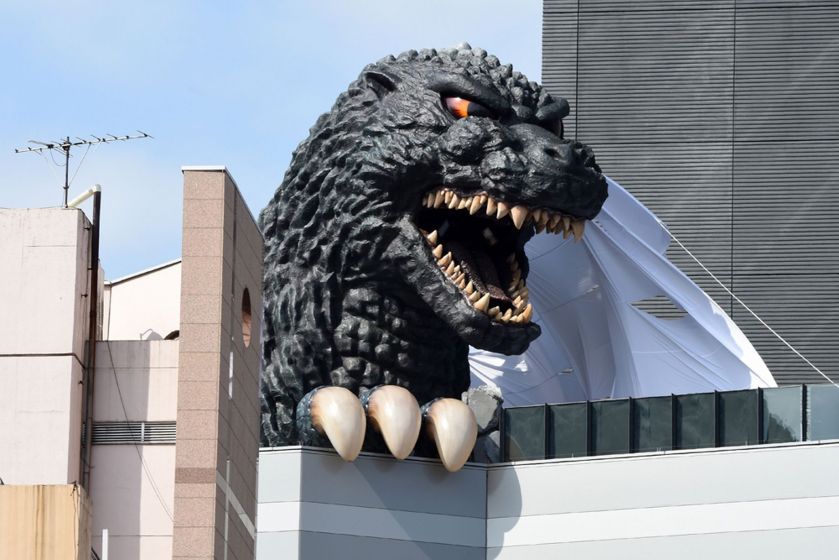
Another famous feature of Shinjuku is the giant Godzilla head, which looks like the King of Monsters is looming just behind a pair of buildings overlooking the neighborhood’s central crossing.
Godzilla himself peeks out from behind a pair of buildings overlooking Shinjuku. Photo credit: Tokyo Creative
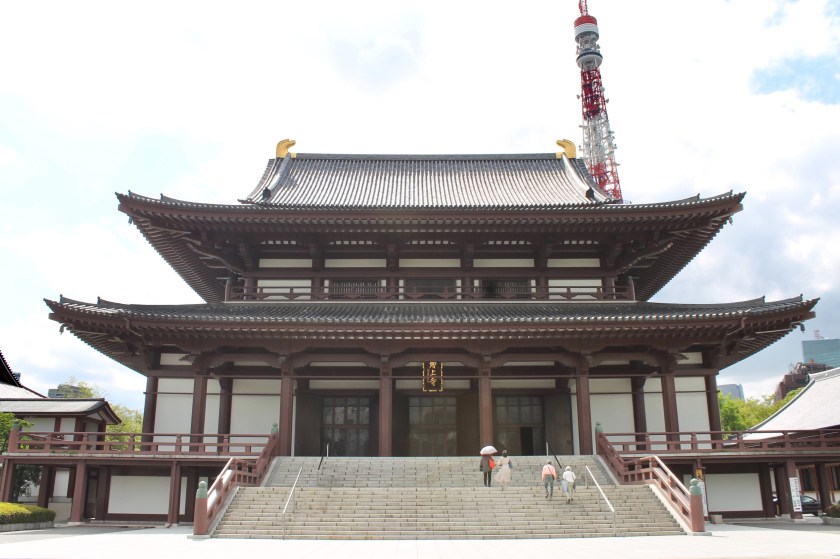
The ancient blends with the modern at Zōjōji Temple, which is surrounded by skyscrapers in the heart of Tokyo.
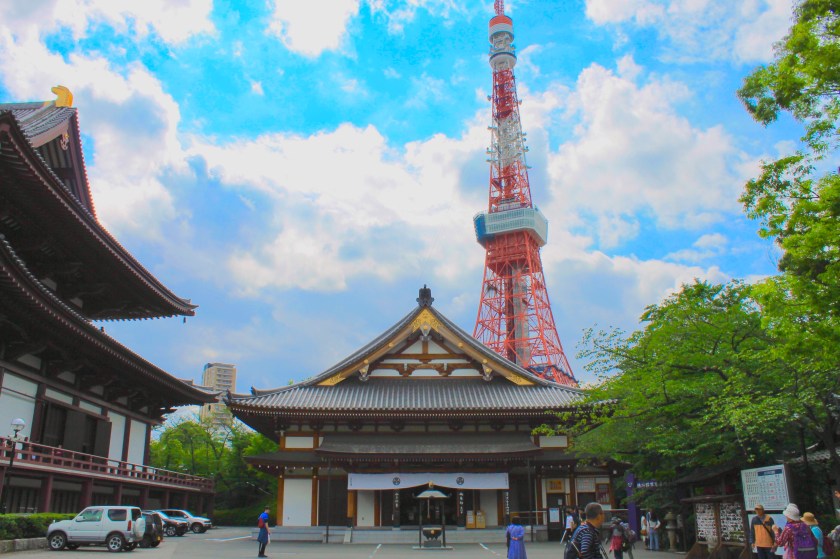
Near the heart of the city, under the shadow of Tokyo Tower, is Zōjō-ji Temple.
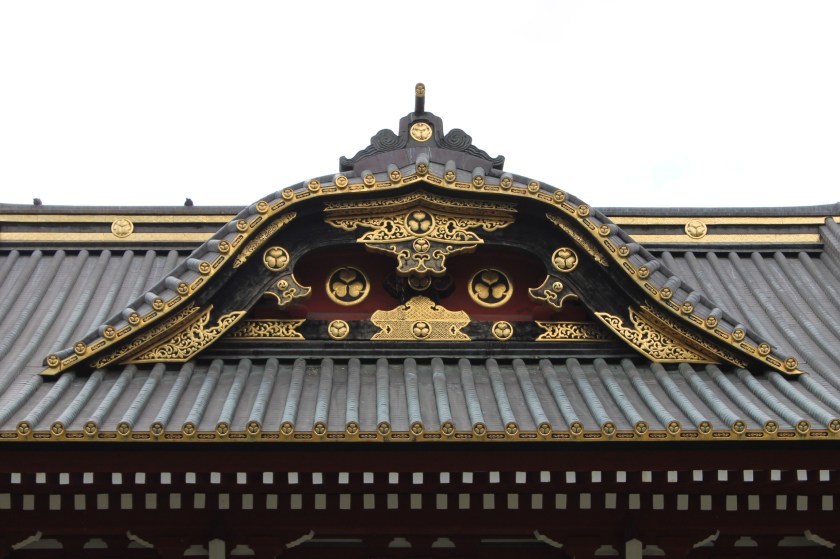
The shrine is the most important location in a 1,000-year-old sect of Buddhism as well as the burial grounds of the last shoguns. But what’s most striking about the complex is how it contrasts the old and the new — the sangedatsumon (“gate”) to Zōjō-ji, pictured above, is the oldest surviving wooden structure in Tokyo, leading to an island of tranquility amid skyscrapers, subway lines, neon signs and thousands of shops.
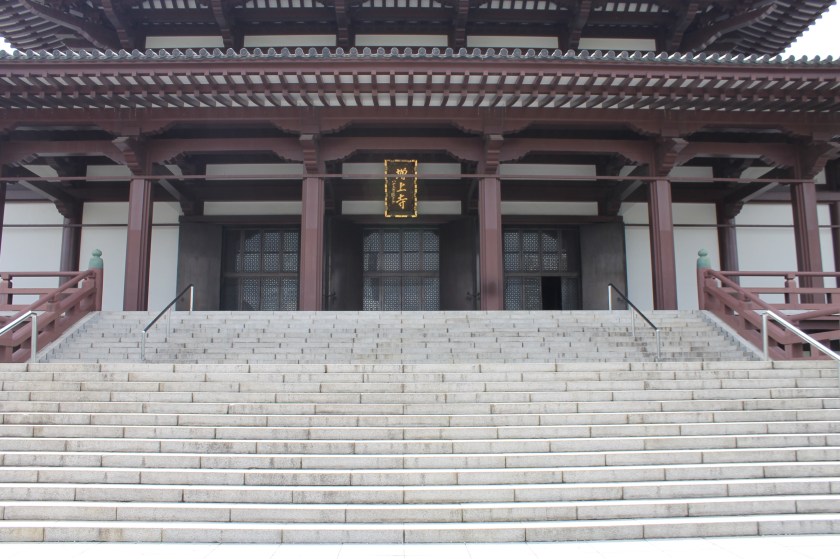
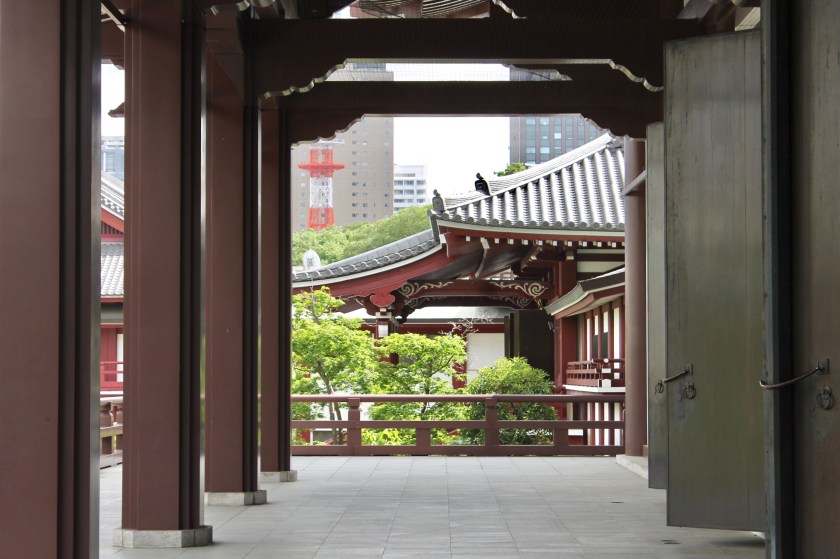
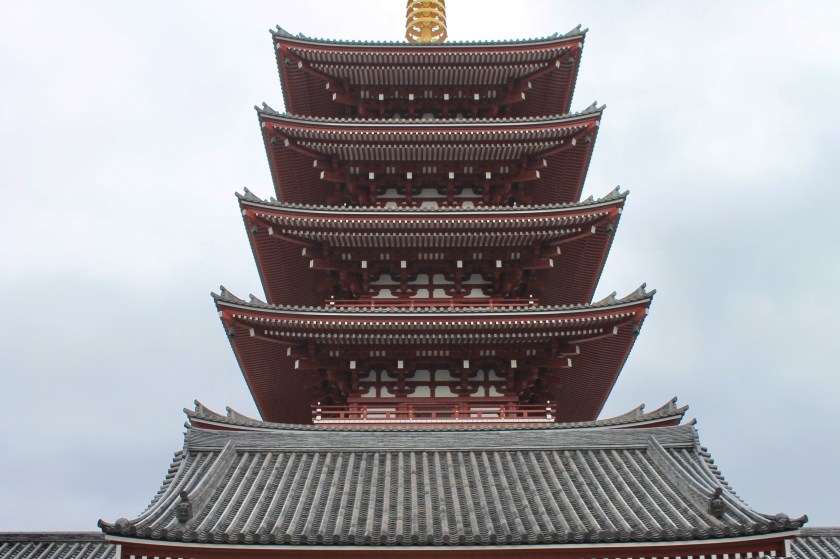
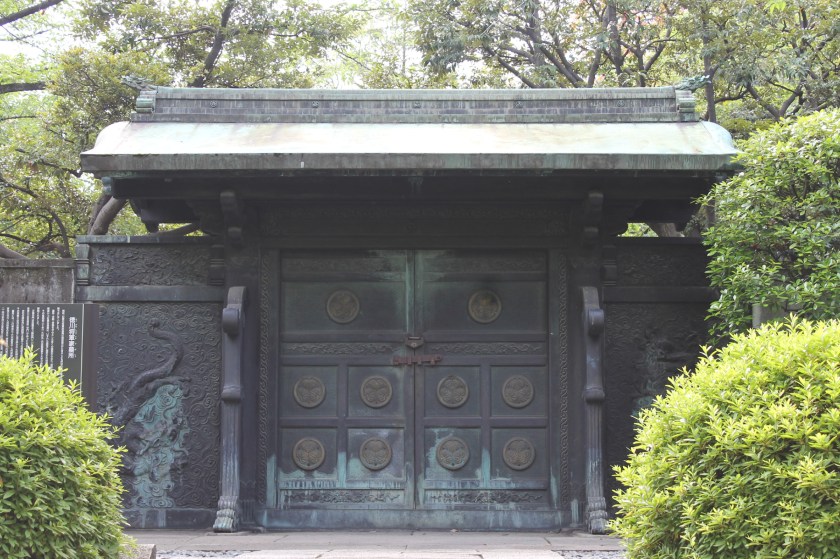
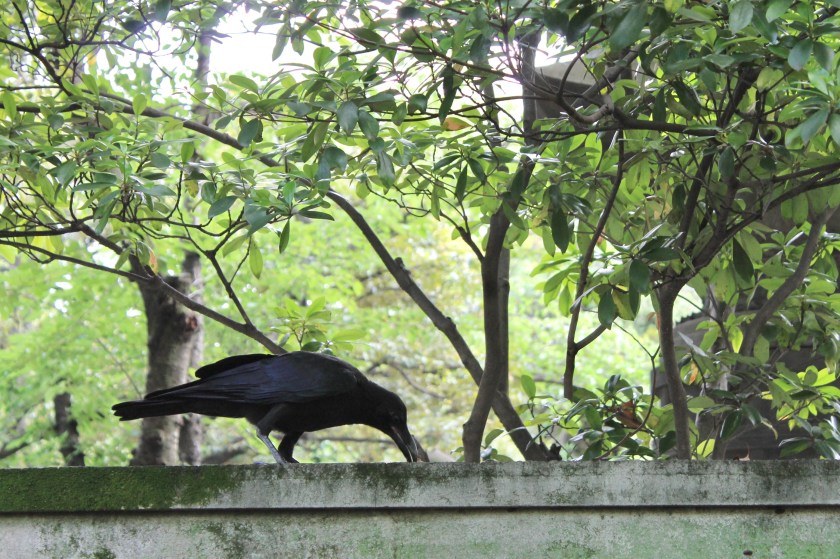
The gate leading to Zōjō-ji Temple was built in 1622, making it the oldest wooden building in Tokyo proper.Tokyo Tower looms over Zōjō-ji Temple itself, the main structure on the shrine grounds.The open door on the right side beneath the portico leads to the sanctuary, called the daiden (“great hall”) in Japanese.A view from the portico shows an adjacent temple structure as well as skyscrapers in the background.Zōjō-ji Temple itself, left, flanks a smaller shrine structure with Tokyo Tower in the background.A pagoda with the portico of Zōjō-ji Temple in the foreground.A close-up of the detail and symmetry of the pagoda.The entrance to the Shōgun mausoleum and graveyard. Six members of the Takegawa Shōgunate, the last feudal rulers in the country’s history, are buried here.Statues of Jizō Bosatsu, a Buddhist figure designated as the guardian of children, line a quiet path behind the temple.Gilded ornaments surround a central statue in the daiden. Visitors can light incense and sit in quiet contemplation in the great hall.A crow sits on a stone wall separating the Shōgun burial ground from the path lined with Jizō Bosatsu statues.
A quiet Tokyo burb is home to Gōtokuji Temple, the famous cat shrine and birthplace of maneki neko, aka the beckoning cat.
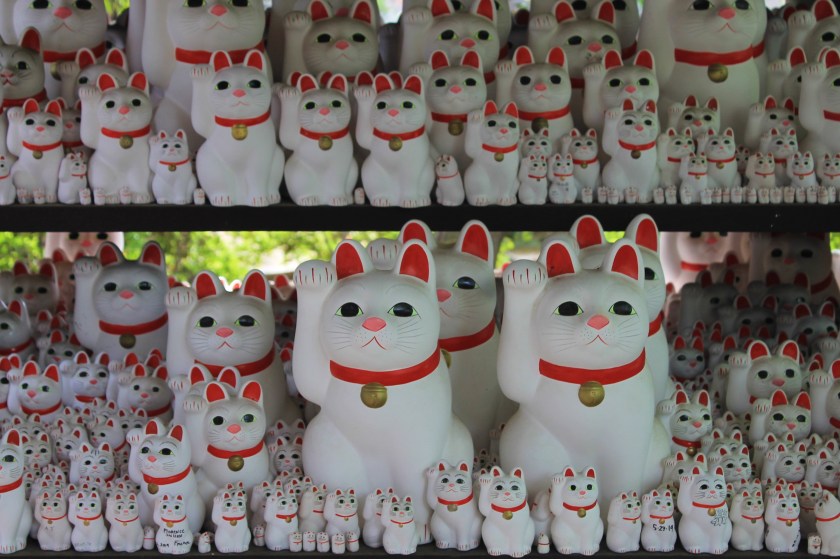
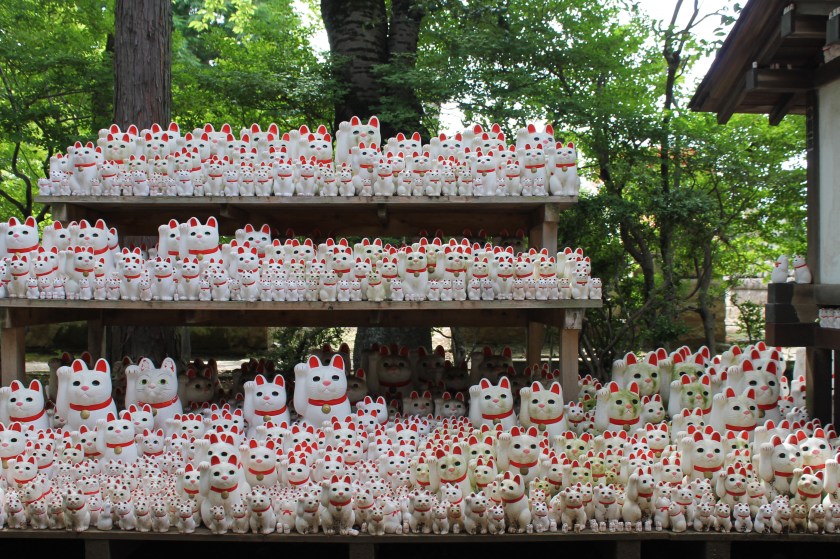
Look at all the buddies!
No trip to Japan would be complete for me without a visit to Gōtokuji Temple, home of the famous cat shrine.
Legend has it that a feudal lord and a few of his samurai were road-weary and looking for a spot to rest when they saw a cat by the road, beckoning them with a waving paw.
Thousands of maneki-neko (“beckoning cat”) statues are placed at Gōtokuji Temple.
The lord and his men followed the cat, who led them to a humble temple. The group reached the shelter of the temple just in time to avoid a thunderstorm and resultant downpour.
Thankful that he was dry and warm — and inspired by the temple monk’s sermon — the feudal lord vowed to become the temple’s benefactor, providing the funds for the extensive grounds that exist at Gōtokuji Temple today.
Because it was the cat who led the lord to the shelter of the temple, the “beckoning cat” — maneki neko — became associated with good luck across Japan. Today maneki neko can be seen in shops, restaurants and homes throughout the country.
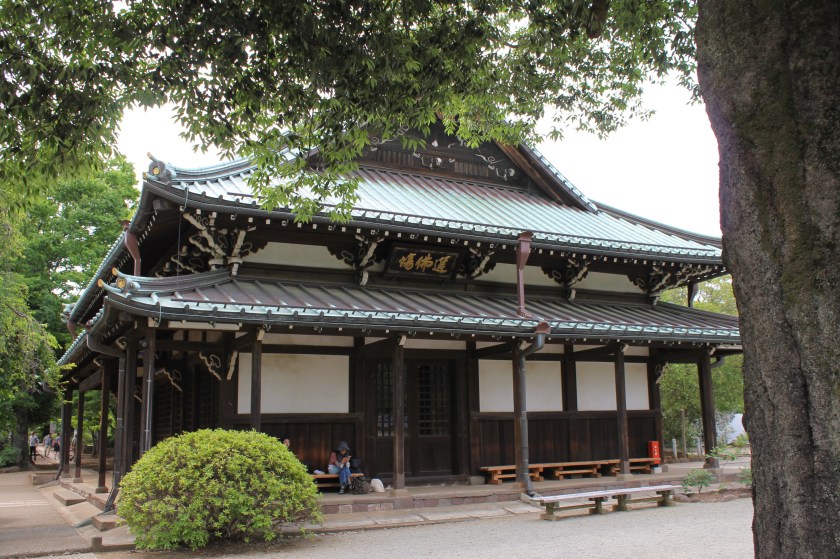
Even by the immaculate standards of Japanese temple complexes, Gōtokuji Temple is remarkably well-manicured.
Situated in the “suburbs” of Setagaya, Gōtokuji is also more quiet and peaceful than some of the other temples that are wedged between skyscrapers and commercial plazas.
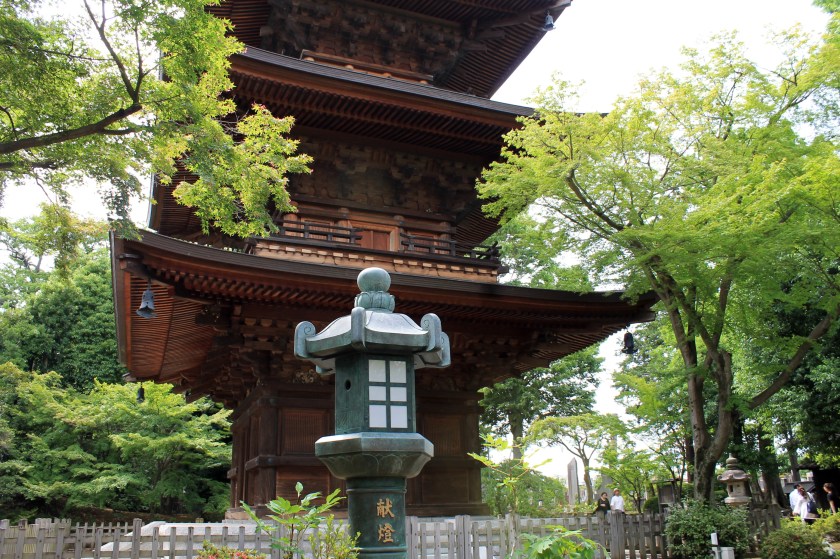
The Gōtokuji Temple grounds are well-manicured even by Japanese standards.According to a local docent — a kindly elderly man toting a photo album of the shrine — the temple structure above is inhabited by a brown-coated cat, who calls the second floor home.
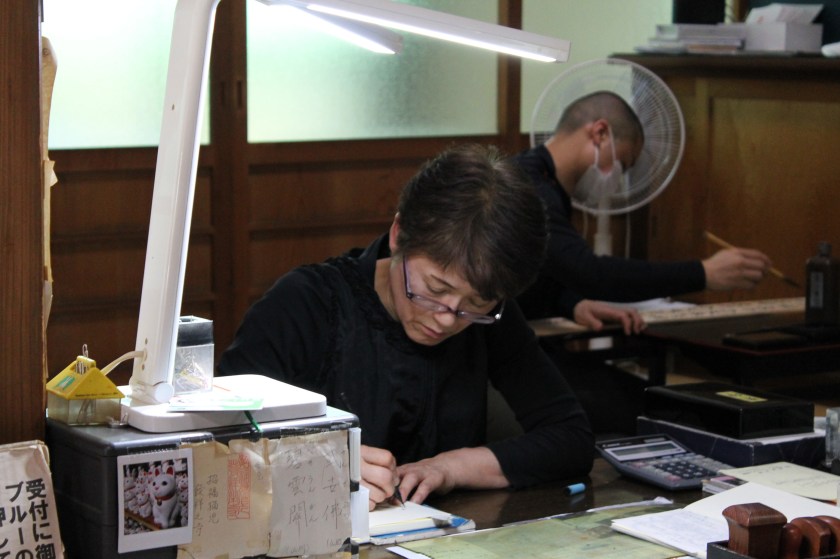
Staff at Gōtokuji Temple paint calligraphy with the temple’s symbols and stamp them.
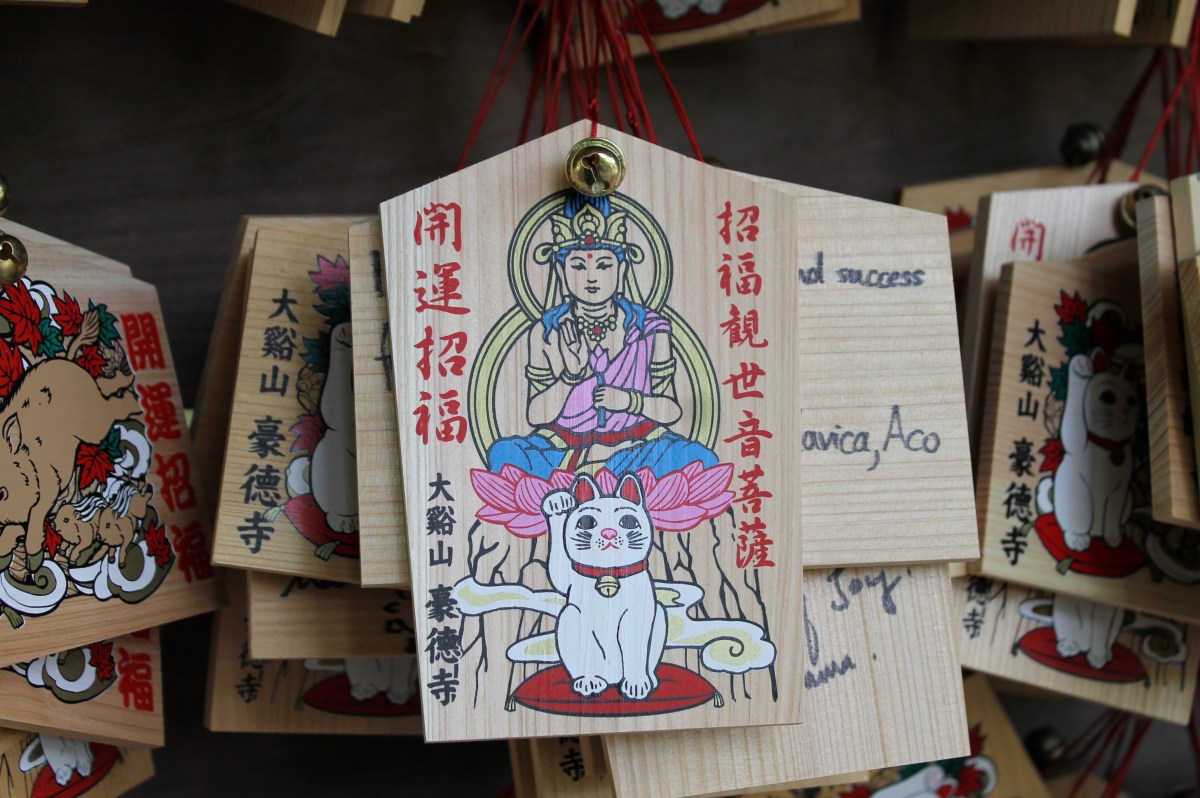
Like other shrines throughout Japan, the temple has its own calligraphic symbols and stamps.
The shrine grounds include several temples and other structures.Staff at Gōtokuji Temple paint calligraphy with the temple’s symbols and stamp them.Like other shrines throughout Japan, the temple has its own calligraphic symbols and stamps.That’s a lot of cats!Visitors leave statues of the beckoning cat as they pray for personal success or prosperity in business.












 Pain In The Bud