Bring Your Cats Inside: Thieves Are Snatching Cats From Yards And Selling Them Online

As cat thefts increase on both sides of the pond, a UK woman’s security cameras caught a pair of thieves trying to stuff a neighbor’s cat into a plastic bin under cover of darkness. The cats are later sold online.

A week after a brazen thief stole a Portland family’s cat off their front porch, a pair of cat thieves were caught on security footage snatching a cat from a residential street in the UK.

The latter is not an isolated incident. A group of amateur sleuths, comprised of people whose cats were stolen and others concerned about the spate of thefts, found several of the missing cats listed for sale on a UK pet classifieds site, Pets4Homes.co.uk.

The latest cat-napping happened in East Birmingham, where home security cameras captured footage of a man and a woman creeping along a residential street shortly before 4 am, armed with cat treats, milk and a plastic bin and quietly searching for neighborhood felines.

East Birmingham’s Charlene Jones told the UK Sun that she was woken up by her dogs, who alerted her to intruders on her property.

“I didn’t notice anything until the dogs started barking, and I looked out the window and caught them in the act,” Jones said. “It all happened around 20 to four in the morning, at this point she was just putting the cat into the bin. I opened the window and the cat escaped.”

Cat thieves
In this still from Jones’ security cameras, the cat thieves are seen with the treats, milk and plastic bin they were using to capture neighborhood kitties.

An angry Jones, whose own cat was stolen three weeks ago, confronted the thieves, who claimed they were working for a local animal welfare charity and were trapping strays.

“I went out and spoke to them and she started reeling off all these charity numbers and claiming she worked for them,” Jones said.

When Jones later reviewed the footage she recognized the cat, who belongs to a neighbor a few doors down the street.

“I feel angry,” Jones told the paper. “I have done my own research, she has been selling cats for eight months.”

Jodie Smith of Solihull, a town of about 123,000 about 18 miles from Birmingham, said her family’s cat, Arlo, was stolen in January. A friend later spotted Arlo on Pets4Homes, but the Smiths weren’t able to recover him.

“It’s awful, this is my daughter’s cat,” Smith said. “My daughter can’t go to bed with cuddles from her fur baby. She is absolutely gutted.”

Arlo the cat
Arlo was listed on Pets4Homes but the family was unable to recover him.

Pet thefts on both sides of the Atlantic have been on the rise since the beginning of the Coronavirus pandemic in 2020. As entire countries went into lockdown, demand for companion animals skyrocketed, leaving many shelters bare and breeders sold out.

Criminals saw an opportunity and began stealing pets, mostly dogs at first, from yards, homes and kennels, prompting the owner of one lost pet site to dub 2020 “the worst year ever” for dog thefts, according to the BBC.

With exotic cat breeds commanding large amounts of money on the open market, from a few hundred dollars for breeds like Persians to $20,000 for Savannah cats, opportunistic thieves began targeting felines as well. “Moggies,” cats of indeterminate origin or no particular breed, aren’t exempt either. Some may be stolen because thieves mistake them for exotics, while other thieves apparently find it worth their time to snatch cats that can net them $100 or more on sites like Craigslist and Pets4Homes.

In the UK, cat thefts have increased threefold within the last five years, a trend accelerated by the pandemic and the resulting scarcity of cats, especially those with breed pedigree. Police rarely recover the stolen pets, and authorities say some people are targeted after sharing photos and video of their pets online.

Stealing cats is especially easy in the UK, where the majority of people allow their cats to roam free outdoors and the idea of keeping cats strictly indoors is seen as cruel or improper, even though felis catus are domesticated animals and don’t have a “natural habitat.”

In the Portland case, no one has come forward with any solid information in the theft of Kiki the cat despite two relatively clear shots of the suspect’s face and extended footage of her approaching and taking the cat from the Autar family’s front porch on Feb. 20. Like the UK catnappings, the Portland suspect seemed motivated by profit: The family said their cameras also caught the woman checking for open car doors, and the way she grabbed and held the cat — holding him at arm’s length, dangerously carrying him by the scruff of his neck — indicated she saw him as an object, not a living creature.

Karina Autar told PITB on March 1 that her family hasn’t given up hope.

“We are all just getting by, we are coping by putting in all our energy [into finding] him,” she said.

Cat thief suspect
The thief was caught snatching KiKi off his family’s front porch on Feb. 20.

In the UK, Jones is not the only person to confront the cat thieves. Amy Buckley, 29, told The Sun that the woman seen in Jones’ footage also told her she was an employee of an animal welfare organization.

“She came to mine around January, claiming she worked for the PDSA and that they’d had a report about a large number of stray cats in the area,” Buckley told the paper.

She said she was immediately suspicious because PDSA (People’s Dispensary for Sick Animals) is a charity run by veterinarians that provides care, not TNR or general trapping services.

PDSA confirmed the woman does not work for the organization, while local police told the paper they had taken several reports from people whose cats had been stolen and were investigating the thefts. Meanwhile, an RSPCA spokesperson urged caretakers to have their cats microchipped.

In the meantime the victims are trying their best to locate their stolen furry family members, but they’re also angry at the pain the thieves have caused families and children.

“There are other families going through the same heartbreak,” Smith said. “For a lady to have some money in her pocket, she is destroying little children.”
Pa. Man Charged With Felony For Running Over Cat With His Truck

A former local councilman in Pennsylvania faces animal cruelty charges for allegedly running over a cat earlier this month.

A former councilman in rural Pennsylvia faces two animal abuse charges after trying to run down a group of cats — and hitting at least one — with his truck earlier this month.

Frank Pagani Jr. was charged with aggravated cruelty toward animals, a felony, as well as a misdemeanor animal cruelty charge, according to a story by Beaver County Times reporter Garret Roberts.

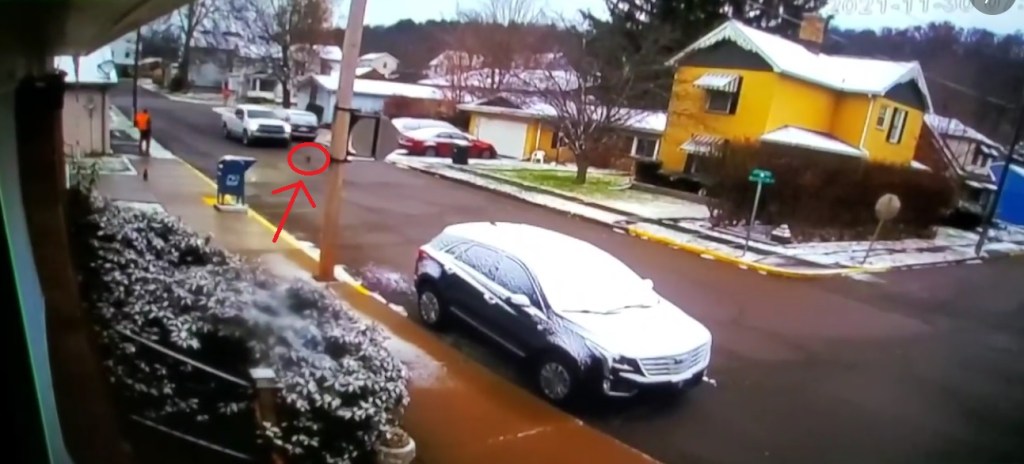
Neighbor William Bittner, who helps care for the neighborhood strays, captured the Dec. 1 incident on his home security camera. The clip (embedded below) shows Pagani’s truck speeding up on the residential street and swerving toward cats who were in the road before blowing through a stop sign. Pagani Jr. then made a left turn to a side street and pulled into his driveway a few hundred feet away.

The 31-year-old was behind the wheel of the truck and his father, Frank Pagani Sr., was in the passenger seat during the incident, according to the Times. The Paganis live in New Galilee, a town of 379 people in rural Pennsylvania about 50 miles north of Pittsburgh.

In this still from Bittner’s video, Pagani’s white pickup truck aims for a cat, circled, in the road. The cat hasn’t been seen since.

Bittner said last week that Pagani Jr. called him after he realized the incident was caught on video and said he’d resign his council seat.

“He thinks that’s the end of it,” Bittner said at the time. “You just can’t let an act like that go on without someone being charged.”

Bittner and his neighbors have been caring for the stray colony for years. In addition to feeding the strays, they’ve run a trap, neuter and return (TNR) program, fixing 28 cats, and have found homes for kittens who were born to the colony cats.

The Pagani family apparently panicked when they realized Bittner had captured the incident on video and posted it to Facebook. Per the Times:

“The police affidavit also details repeated phone calls were made to the homeowner who caught the incident on camera by Pagani, his father and his mother. Voicemails received by police detail the family asking for the video to be taken down.”

The video shows Pagani’s truck striking at least one of the cats, who immediately ran off with the other strays. It’s not clear how badly the cat was injured, and Bittner said “he’s not showing up” at regular feeding times.

“We’ve been searching and searching and we can’t find him,” he told WKDA, the local CBS affiliate.

Locals who reacted to the video on Facebook were horrified by the footage.

“I adopted one of those kittens,” one woman commented. “This breaks my heart.”

Pa. Politician Resigns After Running Over Stray Cats With His Truck

“We don’t need his idea of animal control,” says one neighbor, who has been caring for the local cat colony for years.

Neighbors who live on a quiet street in rural Pennsylvania were horrified when a man in a white pickup truck intentionally tried to run over stray cats last week, hitting at least one.

Now, thanks to one neighbor who captured part of the attack on video, they’ve identified the man at the wheel, and he’s a local politician.

Frank Pagani Jr. resigned from his seat on the municipal council of Galilee, a rural Pennsylvania town with a population of 379. Video shows Pagani Jr. speeding up and swerving to hit one of two cats who were in the road at the time. He was going so fast he blew through the stop sign at the end of the street.

The brazen politician then made a left turn and casually pulled into his own driveway on a side street.

William Bittner, who captured part of the Dec. 1 hit-and-run on video, said Pagani called him afterward, admitted what he’d done, and said he would resign his council seat.

“He thinks that’s the end of it,” said Bittner, who takes care of the cats along with other neighbors on the street. “You just can’t let an act like that go on without someone being charged.”

The Beaver County Humane Society said its humane officers were investigating the incident, but Pagani Jr. hadn’t been charged as of Dec. 6. Neighbors told the Beaver County Times that police officers were going door to door on Dec. 3 to speak to witnesses. Pagani has not returned calls from at least two local media outlets.

Pagani works with his father in their family business, Pagani and Son Trucking LLC, which contracts with the United States Postal Service to shuttle mail in bulk to and from a processing facility to individual post offices in the area. The company has had three USDOT violations in 2020 and 2021, records show.

As for the cats, their fate remains unknown. The video appears to show Pagani’s truck hitting or running over the tail of one cat, who immediately bolted along with the other cat who was in the street at the time. Those two cats took off with a larger group that was on the nearby sidewalk. The injured cat hasn’t been seen since.

“He could have hit the undercarriage of the front, he could have had his tail run over, he could have been bruised,” Bittner told KDKA, the local CBS affiliate. “We’ve been searching and searching and we can’t find him.”

”And when I feed him in the morning and night, he’s not showing up. So we don’t know whether [he] ran off to die or…” Bittner said, trailing off.

In a follow-up post on Facebook, Bittner explained that the strays are part of a managed TNR colony, with neighbors pitching in to help feed the cats and adopt out kittens. So far, 28 cats have been trapped and fixed.

People in the neighborhood believe Pagani was taking matters into his own hands, which follows a disturbing trend of vigilantism toward cats by people who either hate them or think they’re protecting local wildlife by killing cats.

“We don’t need his idea of animal control,” Bittner wrote.

The Most Important Cat Study Ever Has Been Completed, And The Results Are In

For the first time ever, a US city has conducted a true cat census using scientifically proven methods, including doing it the hard way — by counting. The project’s authors hope other cities follow their lead.

The last decade has seen something of a renaissance in cat-related research, with insightful studies about feline behavior coming from researchers in the US and Japan.

On the other hand there’s been a glut of research into feline predatory impact and public policy, and the majority of those studies have been deeply flawed. They’re based on suspect data and tainted by the interests of people who are more interested in blaming cats for killing birds than they are in learning about the real impact of domestic felines on local wildlife.

Those studies have all taken extreme shortcuts — using data that was collected for entirely different studies, for example, or handing out questionnaires that at best lead to highly subjective and speculative “data” on how cats affect the environment.

Several widely-cited studies that put the blame on cats for the extirpation of bird species have relied on wild guesses about the cat population in the US, estimating there are between 20 million and 120 million free-roaming domestic cats in the country. If you’re wondering how scientists can offer meaningful conclusions about the impact of cats when even they admit they could be off by 100 million, you’re not alone.

No one had ever actually counted the number of cats in a location, much less come close to a real figure — until now.

When leaders in Washington, D.C., set out to tackle the feral cat problem in their city, they knew they couldn’t effectively deal with the problem unless they knew its scope. They turned to the University of Maryland for help, which led to the D.C. Cat Count, a three-year undertaking to get an accurate census with the help of interested groups like the Humane Society and the Smithsonian.

DC Cat Count
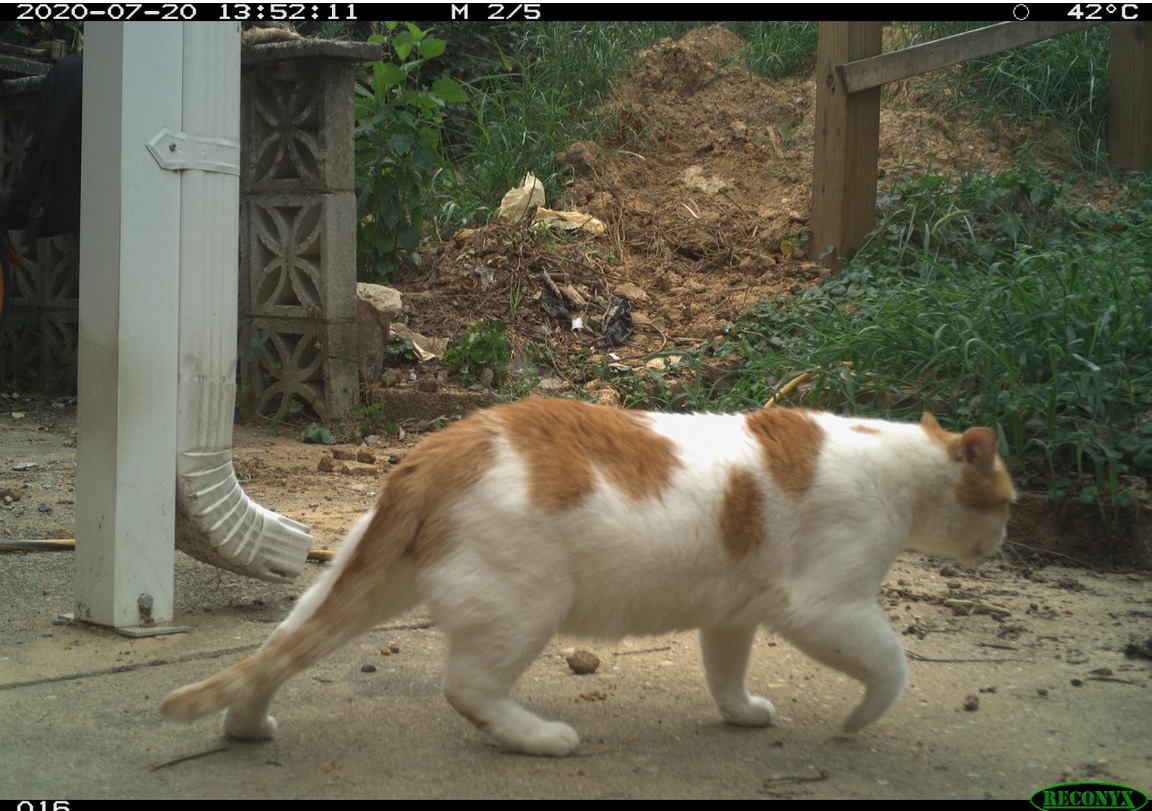
An image from one of 1,530 motion-activated cameras deployed for the D.C. Cat Count. Credit: D.C. Cat Count

The researchers approached each of their local shelters and rescues for data, then assembled a meticulous household survey to get a handle on how many pet cats live in the city, and how many have access to the outdoors.

Finally — and most critically — they used 1,530 motion-activated cameras, which took a combined 6 million photos in parks, alleys, public spaces, streets and outdoor areas of private residences. They also developed methods for filtering out multiple images of individual cats, as well as other wildlife. And to supplement the data, team members patrolled 337 miles of paths and roads in a “transect count” to verify camera-derived data and collect additional information, like changes in the way local cats move through neighborhoods.

DC Cat Count
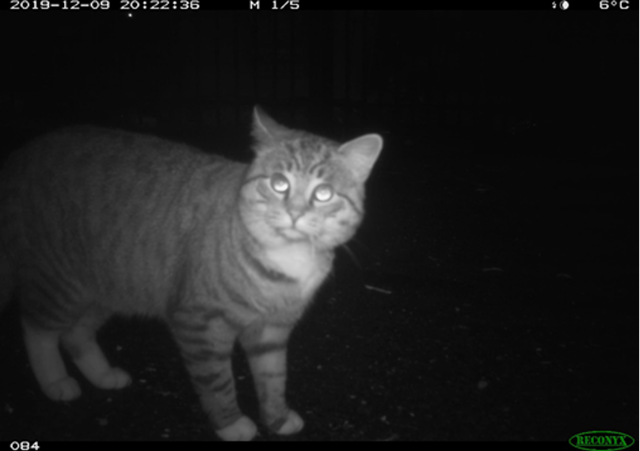
A cat who looks a lot like the Budster was captured in this 2019 photo from a motion-activated camera with night vision. Credit: DC Cat Count

Now that all the data’s been collected and analyzed, the D.C. Cat Count finally has a figure: There are about 200,000 cats in the city, according to the study.

Of those, 98.5 percent — or some 197,000 kitties — are either pets or are under some form of human care and protection, whether they’re just fed by people or they’re given food, outdoor shelter and TNR.

“Some people may look at our estimate and say, oh, well, you know, you’re not 100% certain that it’s exactly 200,000 cats,” Tyler Flockhart, a population ecologist who worked on the count, told DCist. “But what we can say is that we are very confident that the number of cats is about 200,000 in Washington, D.C.”

The study represents the most complete and accurate census of the local cat population in any US city to date, and the team behind it is sharing its methods so other cities can conduct their own accurate counts. (They’ll also need money: While the D.C. Cat Count relied on help from volunteers and local non-profits it was still a huge project involving a large team of pros, and it cost the city $1.5 million.)

By doing things the hard way — and the right way — D.C. is also the first American city to make truly informed choices on how to manage its feline population. No matter what happens from here, one thing’s certain — the city’s leaders will be guided by accurate data and not creating policy based on ignorance and hysteria painting cats as furry little boogeymen.

DC Cat Count
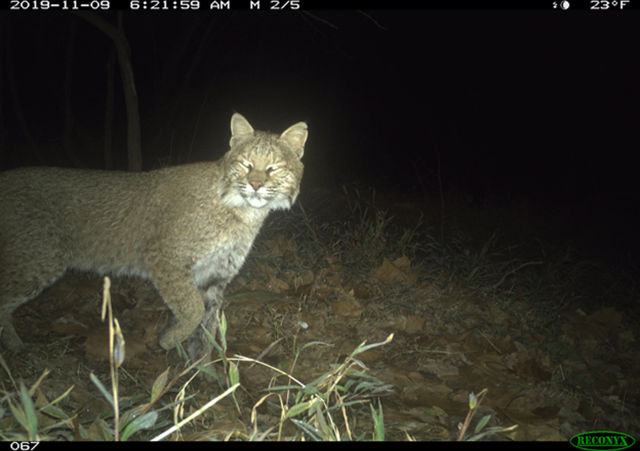
Not all the photos captured images of cats, and not all the felines were little: In this 2019 night image, a bobcat wanders in front of a trail camera. Credit: DC Cat Count

Local Gov. Employees In California Are Shooting Cats To ‘Protect Wildlife’

The government agency that manages Bay Area parks initially denied killing the cats, then said its employees shot 18 strays because they were a threat to birds who migrate to the area for the winter.

In a sickening story out of California, state government employees have admitted to shooting 18 cats and say they can’t rule out shooting more who venture too close to a marshland where thousands of birds migrate for the winter.

The cats were shot by employees of the East Bay Regional Park District, a government agency that manages parks in the Bay Area, including San Francisco, Oakland, San Jose, Palo Alto and dozens of other cities and towns in a nine-county area.

They’re operating under a broad mandate that allows them to kill any cats “that may pose a danger to wildlife,” according to a report by Bay Area ABC affiliate KGO.

It’s 7:30 at night in an East Oakland office park, Cecelia Theis is trying to trap what’s left of the colony of cats she’s cared for over the past year. She tells the I-Team, “I really want to get them out of here.”

After Theis came here to work for the county, training poll workers in the last primary election, she began helping others feed the feral cats. She fell hard for them, including the little one who climbed on her hood waiting for food, and the first cat she befriended.

“Each of them had a personality and helping them was a priority for me,” Theis said.

She found homes for their kittens, took the adults to be spayed and neutered; the colony was stable at 30 cats. But over the past month, most of them have disappeared.

Theis finally got East Bay Regional Park officials to admit, their staff shot and killed several of the cats that had wandered into a nearby marsh.

Her heartbreak spilled out on social media, “It’s not okay to shoot these beings; some of them were pets that were abandoned.”

The state employees who shot the cats did so without notifying the public, without talking to locals who manage and care for cat colonies in the area, and without asking for the help of local shelters and rescues whose staffers say they could have easily trapped the cats and relocated them.

In fact, the East Bay Regional Park District lied when first asked about the fate of the cats: Employees there initially told Theis and another colony manager that the cats were trapped and taken to shelters in Oakland and nearby Dublin, according to a day-old Change.org petition that already has almost 500 signatures.

3C25179C-2597-4D77-87CD-2FB9A007E358

The state employees only came clean about killing cats when Theis went to KGO and they realized their actions would be detailed in media reports. They’re still obfuscating: KGO journalists filed public records requests for documents related to the cat killings, but the agency has not fulfilled the requests.

That’s illegal according to state and federal law, which dictate that government agencies have 30 days to respond and, if they deny the open records request, must provide a compelling reason why. As a career journalist who has filed my own share of Freedom of Information Act requests over the years, I cannot fathom any valid excuse for withholding those documents from the media and thus, the public.

Policies like this one are a direct result of the dangerous misinformation peddled by a handful of academics who advocate for the extermination of cats, and claim domestic cats kill more than 20 billion birds and small mammals in the US annually.

Despite serious and deep flaws in their methodology — and the fact that the authors invented data rather than trying to gather it — the findings of those studies are reported as fact in the press, without any skepticism, despite push back from other scientists who have been sharply critical of the studies and their conclusions.

5F8F6039-255A-4706-8A34-9E7DF8DEF7C2

The result has been a panic over cats and their impact on smaller wildlife. The studies and the subsequent panic are directly responsible for policies like those adopted by some Australian regional governments, who have an open bounty on domestic cats, paying $10 for adult pelts and $5 for kitten pelts. They also fuel rhetoric of the type we witnessed in the New York Times this August, when a columnist was so incensed by reports of cats killing birds that she admitted to fantasizing about shooting a hungry, sickly stray who showed up in her neighborhood.

We have a serious problem if, on the cusp of 2021, we have government employees shooting cats and paying bounties for kitten pelts, based on the misguided idea, not supported by evidence, that violently killing small domestic animals is somehow an effective way to protect birds.

Cats are sentient creatures who feel pain, fear, anxiety, sadness and the full range of primary emotions. Moreover, they’ve been molded into companion animals who bond closely with humans. According to Theis and KGO, several of the cats who were shot were former pets.

A manager with the East Bay Regional Park District downplayed the shootings, saying there was a “communications breakdown” between his team and local rescues as well as colony caretakers.

“We feel horrible about this, you know, this is really one thing that’s just really sad,” Matt Graul, “chief of stewardship” for the agency, told KGO. “And we really don’t want to ever have to take this step. You know, we are compassionate, and love all wildlife. And many of our staff have cats as pets.”

Despite that, Graul would not rule out killing more cats and his agency has not complied with state public records law, nor did he say why the agency lied to colony caretakers about the fate of the strays. We hope Bay Area media organizations are getting their lawyers involved and working with the state’s open government office to force the East Bay Regional Park District to obey the law and release its records on the cat shootings.

This is unacceptable, and it should be stopped before government officials with too much zeal and too little skepticism enact similar policies in other states.

94744672-DA95-48BA-92AC-A0C6518D9619