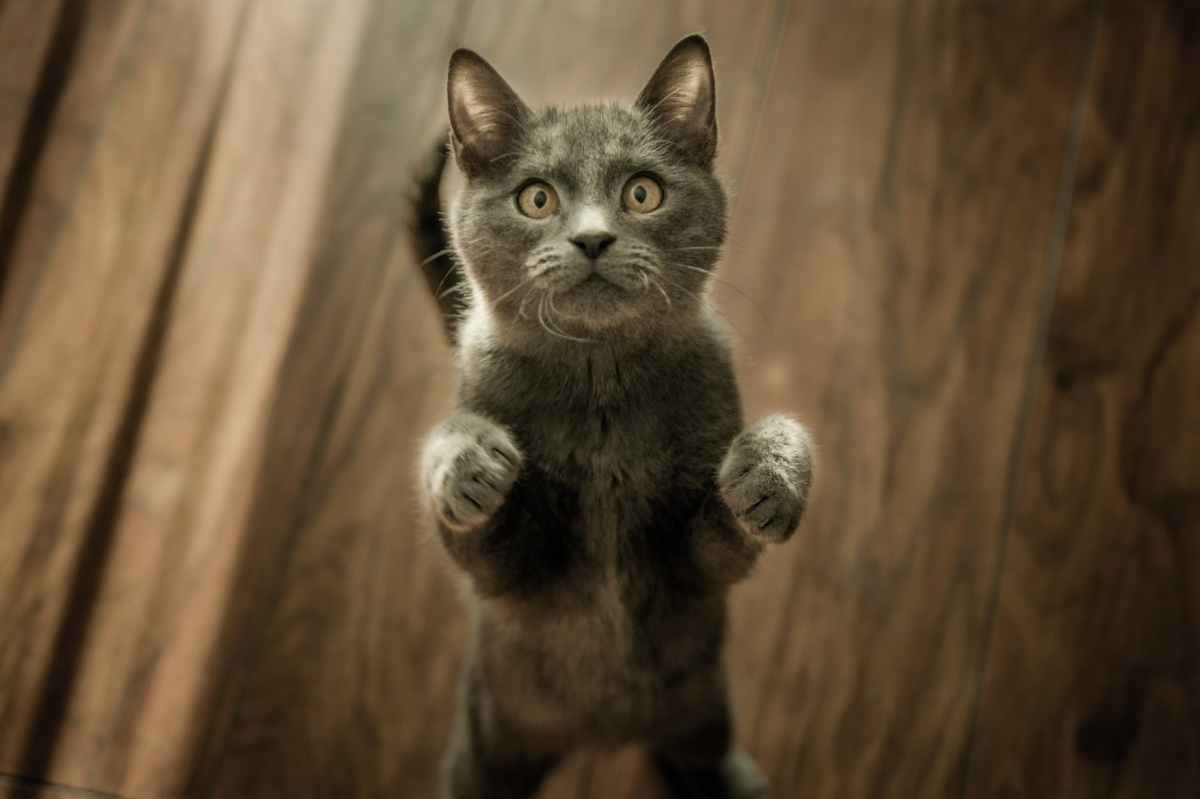
Reason #488 To Keep Your Cats Indoors: They Hunt Whether They’re Hungry Or Not

Cats who have regular outdoor access and hunt wildlife still get 96 percent of their nutrition from pet food, a new study found, suggesting their predatory behavior is driven by instinct, not hunger.

A new study from the UK debunks the claim that cats need access to the outdoors to supplement their diets with wild kills.

Cats who spend a significant amount of time outdoors and regularly kill local wildlife still get 96 percent of their nutrition from meals provided by their humans, according to research by a team at the University of Exeter.

The scientists connected with cat owners through ads on social media, TV and in print publications, specifically seeking out “cat owners living throughout southwest England whose cats regularly captured wild animals and brought them back to the house,” the study’s authors said.

They gave the owners a questionnaire to collect some basic information on the kitties — age, sex, breed, whether they had unrestricted access to the outdoors, and how much time they spend outside — then split the 90 participating cats into six groups.
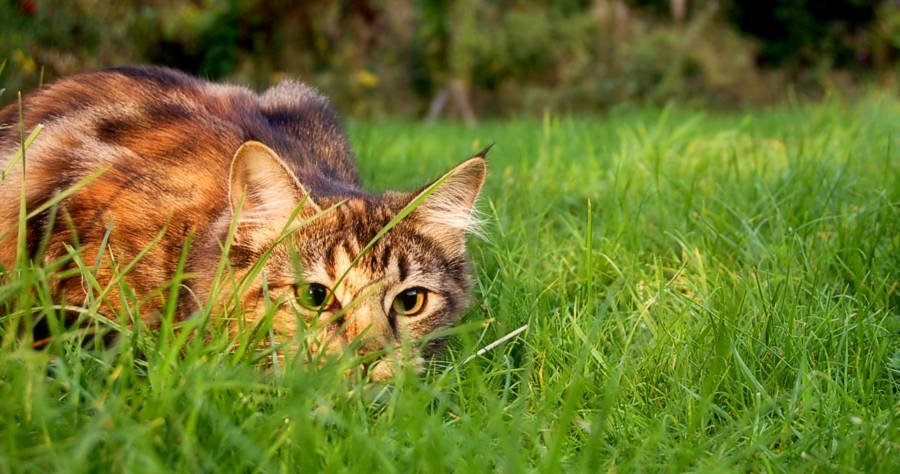
Cat hunting
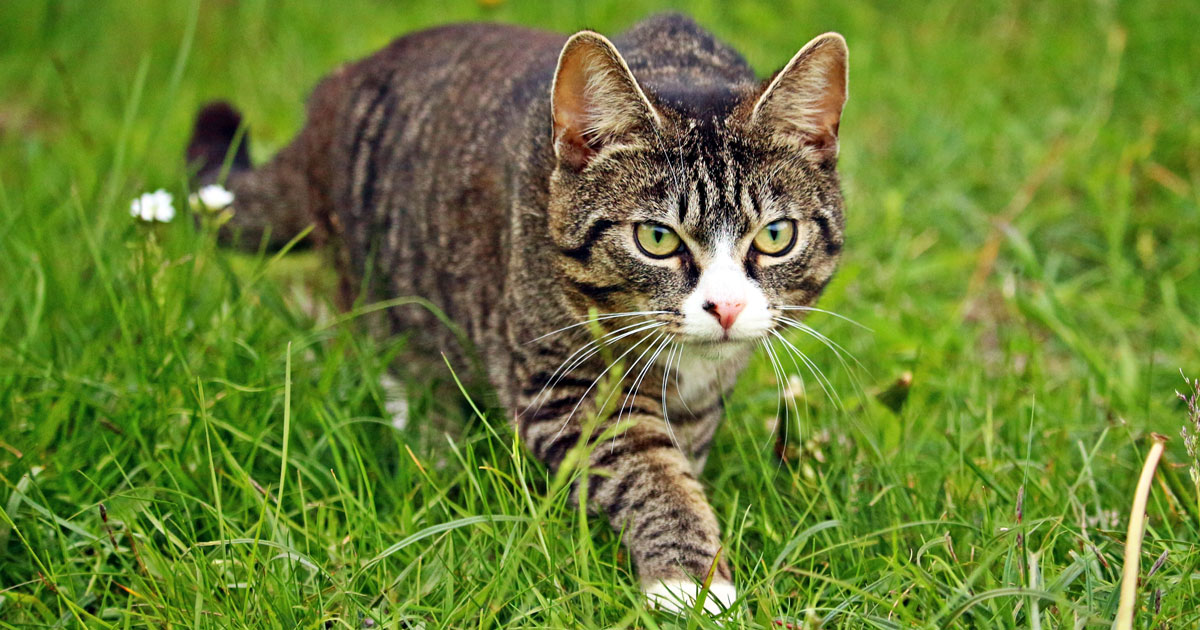
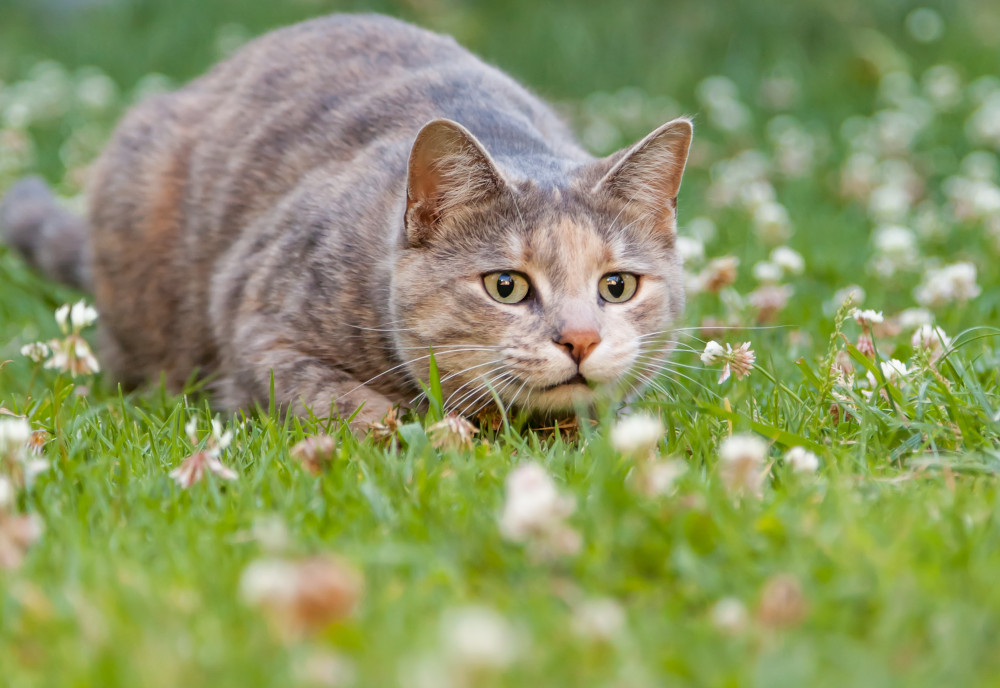
A domestic tabby cat stalking in the grass. Credit: Wikimedia Commons

To set a baseline, the scientists trimmed small sections of whisker from each of the cats, then trimmed a second sample at the end of the study.

By comparing stable isotope ratios in the whisker samples, they were able to determine what the cats were eating. Despite regular access to the outdoors and successful hunts, pet food accounted for the vast majority of their diets.

As a result, the researchers concluded, outdoor cats hunt because they’re driven by predatory instinct, not hunger.

“When food from owners is available, our study shows that cats rely almost entirely on this for nutrition,” said Martina Cecchetti, the study’s lead author.

“Some owners may worry about restricting hunting because cats need nutrition from wild prey, but in fact, it seems even prolific hunters don’t actually eat much of the prey they catch,” Cecchetti said. “As predators, some cats may hunt instinctively even if they are not hungry – so-called ‘surplus killing’ – to capture and store prey to eat later.”

A second component of the study was designed to find the best mitigation strategy to change the behavior of outdoor cats.

Each group was given a different strategy: In one group, cats were outfitted with bells on their collars, while another group wore reflective break-away collars and cats from a third group were fitted with BirdBeSafe collars. The other groups were told to make habit changes inside the home. For example, one set of cats was fed a higher-protein diet without grain filler, another group was fed with puzzle feeders, and the last group was given extra interactive play time.

While high-protein diets and play time helped cut down on hunting, the BirdBeSafe collars had the biggest impact on hunting success. The collars come in bright colors designed to stand out to avian eyes, taking away stealth and the element of surprise from cats.

The study was sponsored by Songbird Survival, a British non-profit that funds bird conservation research and looks for ways to mitigate the dwindling numbers of many avian species.

Susan Morgan, Songbird Survival’s executive director, said her group hopes cat owners will do their part to help: “Pet owners can help us reverse the shocking decline in songbirds via three simple, ‘win-win’ steps: fit collars with a Birdsbesafe cover; feed cats a premium meaty diet; play with cats for five to ten minutes a day to ‘scratch that itch’ to hunt.”

Of course there’s an obvious solution the study didn’t include: Keeping cats indoors. While keeping cats indoors is common in the US, cat ownership culture in the UK is different — another subject for another post.

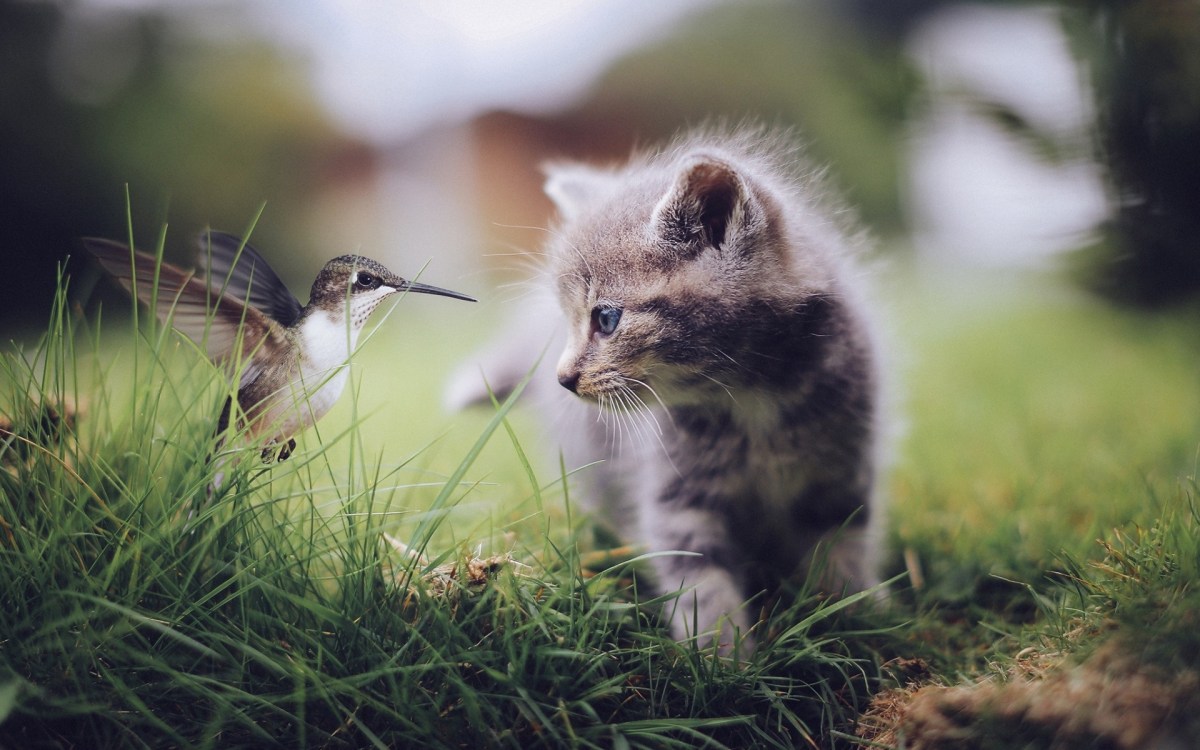
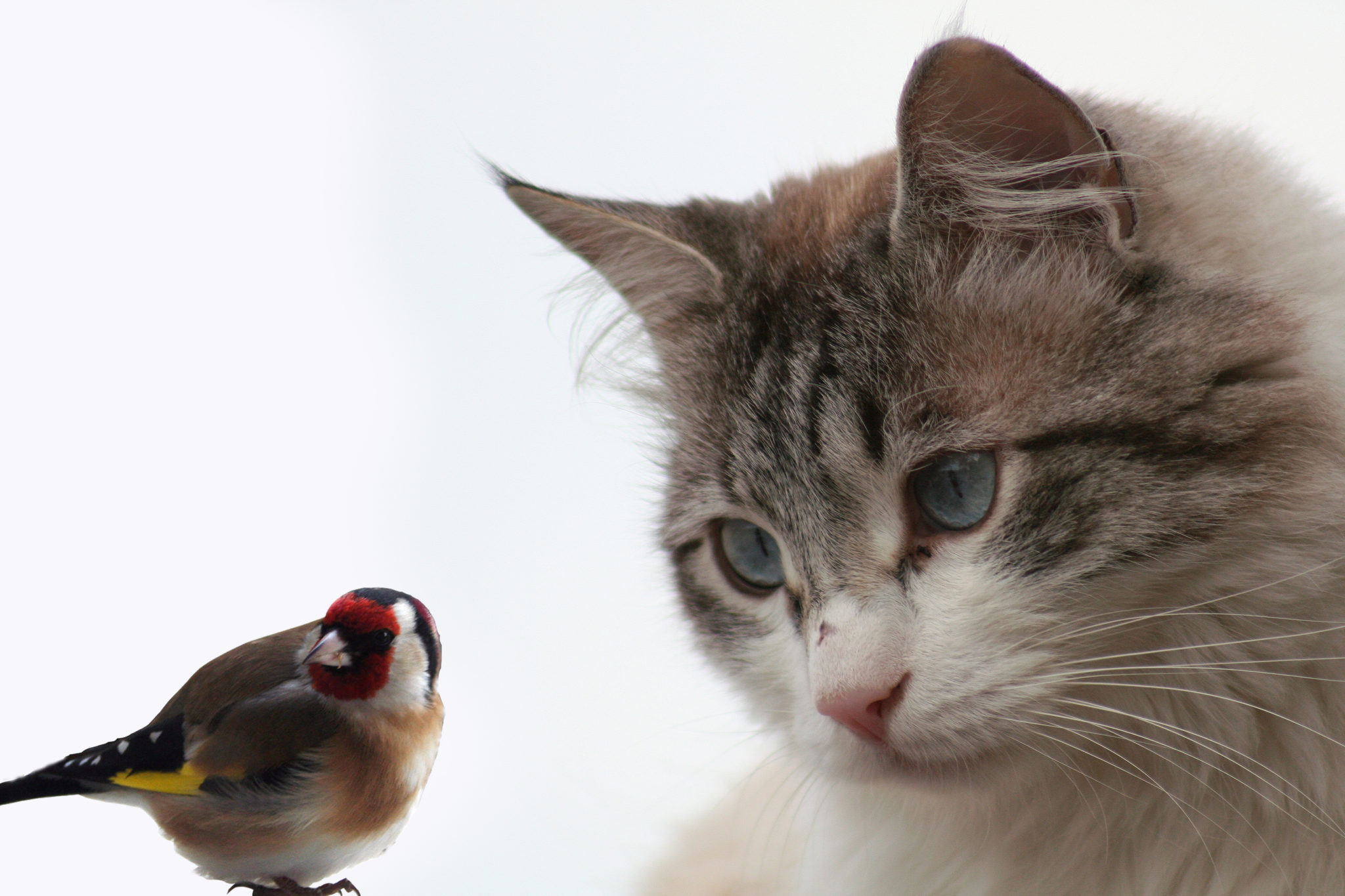
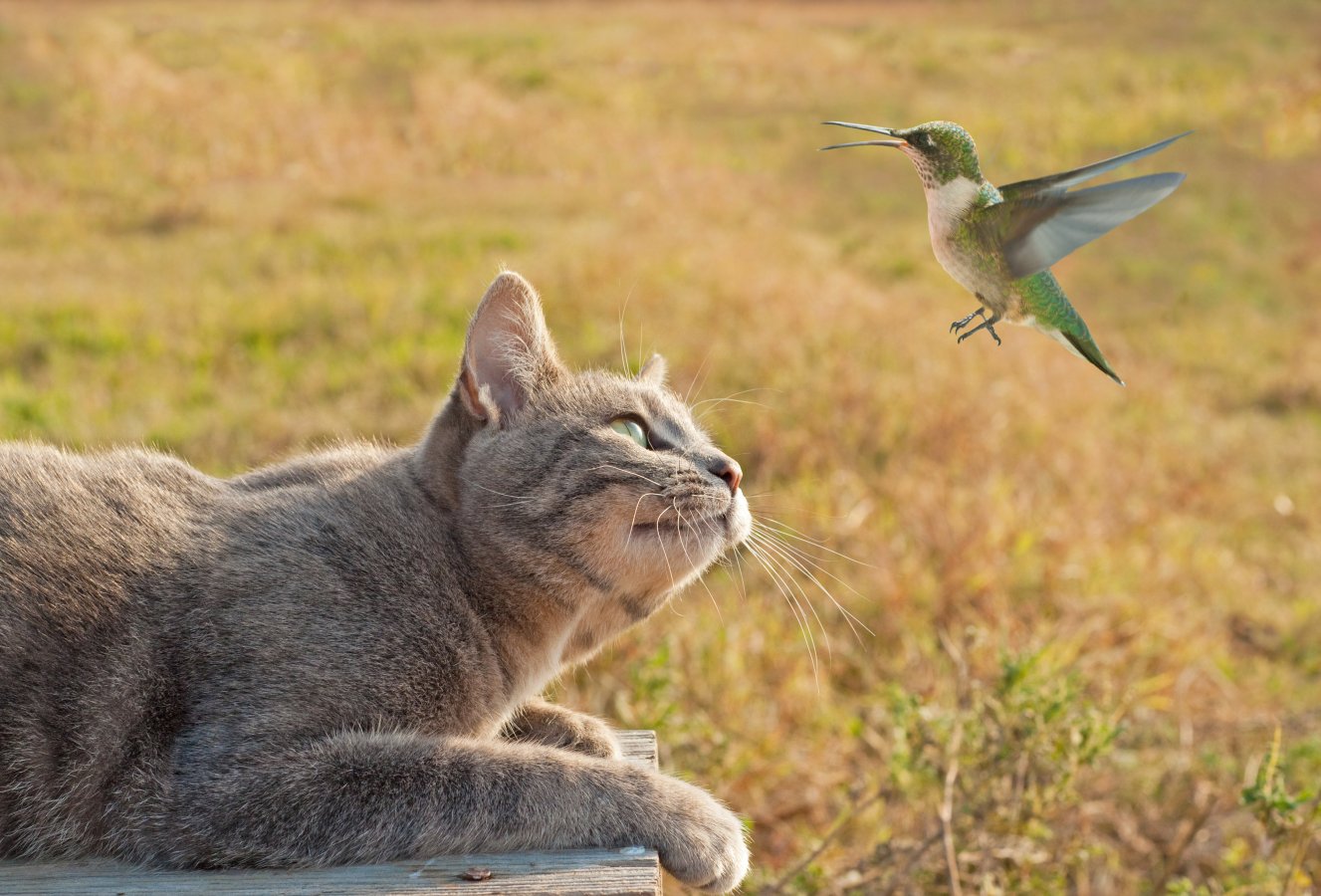
Read the full text of the study here. Header image credit Pexels. Body images credit BeSafeCollar.

Previously:

1024px-Florida_panther_kittens
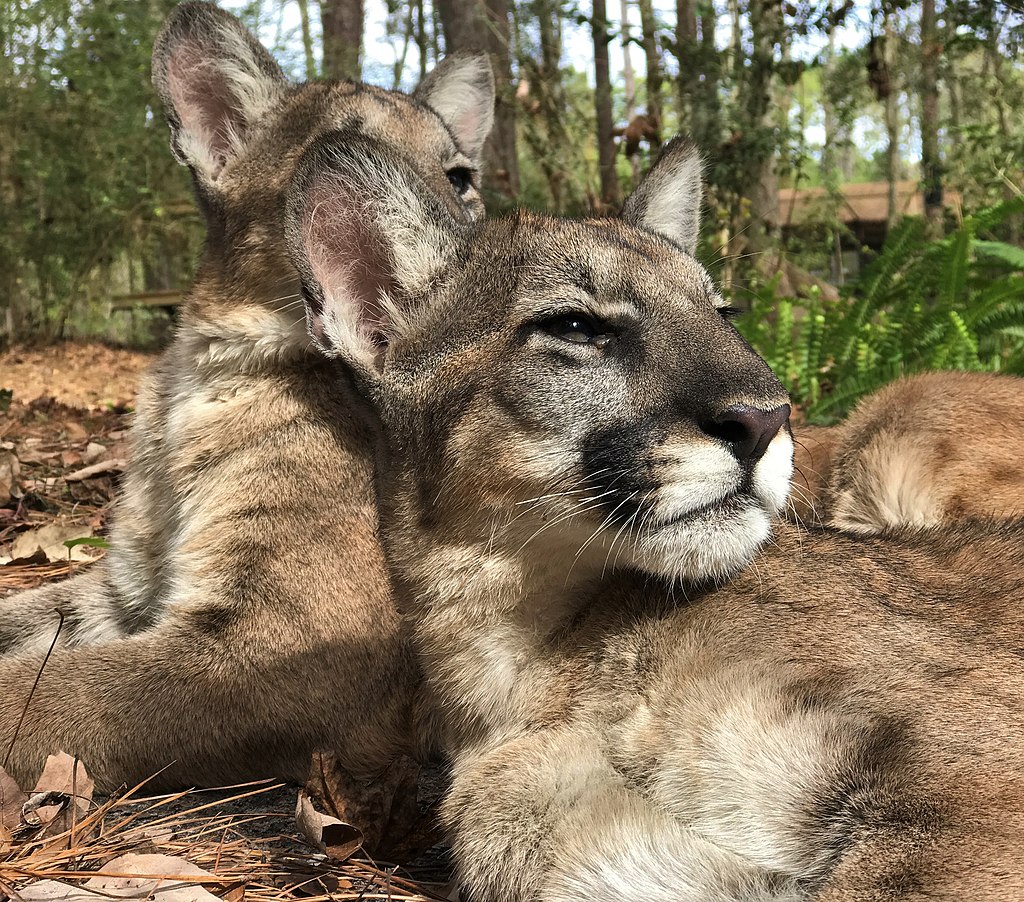
A pair of young mountain lions in Florida. Credit: Wikimedia Commons/WOConservation

Conservationists Want Cat Owners On Their Side

Wildlife conservationists should work with cat lovers instead of making enemies of them in the ongoing quest to protect small wildlife from felines. Cat owners, in turn, can show good faith by being more responsible about spaying and neutering, and by keeping their cats indoors.

Wildlife conservationists are worried, and they have a right to be.

In addition to the billions of animals we humans kill every year in our ruthless exploitation of life on this planet, our pet cats have their own separate impact, killing birds and small mammals in significant numbers.

Yet conservationists aren’t making headway with cat lovers, primarily because their approach frequently relies on shaming and drastic, often cruel proposals: Some Australian states are outright culling cats, offering $10 a head for adults and $5 for kittens, for example, while a pair of academics from the Netherlands advocate criminally prosecuting cat owners who let their pets outside combined with a policy of euthanizing millions of cats. Extremists in the US are pushing for similar measures, arguing that TNR (trap, neuter, return) isn’t an effective way of managing cat populations.

57336B30-57EA-4829-A5CB-07F0823934C6

Something has to be done, and a few smart conservationists are realizing the accusatory, Richard Dawkins-style of engaging “the enemy” just causes people to withdraw, not to listen and cooperate.

“I get quite sick of the conflict focus of some conservation biologists,” Wayne Linklater, chairman of the environmental studies department at California State, tells New Scientist. “The solutions lie with the people who care most about cats, not with the people who don’t care about them.”

Great. Now there are a few things conservationists should know as they engage with people who care for cats:

  • Most of us want what you want: We want cat owners to keep their pets inside. Cats aren’t wild animals. They have no “natural habitat” and contrary to misconceptions, they don’t belong outside. They’re not equipped to provide for themselves, and they face dangers from traffic, predators like coyotes and mountain lions, fights with other cats, and perverse humans who kill and torture them for fun. Strays and ferals live short, brutal lives (living to an average of 3.5 years) while indoor cats live 17 years on average. The “cats belong inside” angle is common ground from which to start a dialogue.
  • Stop repeating bunk studies as fact! The idea that cats are an all-consuming plague on wildlife came about as a result of a handful of studies, yet all but the most recent of them are based on old data and manipulated numbers compiled by people with an agenda. One of the earliest studies, which claimed cats kill up to 3.7 billion birds and 20.7 billion mammals annually, relies so heavily on invented numbers and massaged data that it’s worthless and outright dangerous to informed discourse on the topic, yet it’s repeated as fact by credulous conservationists and the press. Knowing the true scope of the problem is key to understanding whether mitigation efforts really work. Misinformation only sabotages those efforts.
  • Come get your people: Peter Marra is one of the co-authors of the bunk 2013 Nature Communications study with the above oft-cited numbers, and he’s also the author of the shrill Cat Wars: The Devastating Consequences of a Cuddly Killer. Marra is an advocate of using taxpayer money to kill millions of cats. He also says that anyone who questions his claims about cats — a group that includes major animal rescues, welfare organizations, and many academics — is tantamount to climate change deniers and tobacco companies that denied for decades that cigarettes have a negative effect on health. Marra’s major contributions amount to sowing misinformation, polarizing the issue and inflaming opinions on both sides. Everything about his behavior indicates he wants to sell books and promote himself, not save wildlife from predatory domestic cats. He should not be taken seriously and his research should not be reported as fact.

Cat lovers are, by definition, animal lovers. They’re people who care about wildlife and domestic animal welfare. It shouldn’t be difficult to engage with them.

At the same time, cat advocates need to purge the crazies out of their ranks as well. Sending death threats to scientists (see the New Scientist link up top) is way out of order, it’s inhuman behavior and it only hurts the legitimacy of our cause.

A good first step toward reconciliation could involve enlisting cat owners in an effort to properly study feline impact on small wildlife, producing reliable data to facilitate a measured, fact-based approach that doesn’t begin and end with the notion that cats are hellspawn.
If all sides engage in good faith, there’s no reason why we can’t protect wildlife and cats.

6246936A-DF9E-4BFE-86BA-BAEF7F5300BE

Study: There Are 5 Types Of Cat Owners

Do you keep your cats inside, or do you let them roam free?

When it comes to attitudes about hunting and impact on local wildlife, there are five broad categories of cat owners, a new study says.

Four out of the five aren’t particularly worried about their cats killing birds and small mammals, the University of Exeter researchers wrote in the study, which was published in Frontiers In Ecology and the Environment, a research journal.

  1. Concerned Protector. These are people who keep their cats indoors to keep them safe from the world. Their main worries are cats being stolen, lost or killed. They don’t have strong feelings about hunting behaviour and wouldn’t keep their cats indoors solely to stop them hunting.
  2. Freedom Defenders believe cats should be able to roam where they please, like wild animals. Cats hunting is a good sign of normal behaviour and helps control the rodent population. They oppose any restrictions of cat access to the outdoors.
  3. Tolerant Guardians believe that the benefits of roaming outweigh the risks of the cat being injured or lost. They love wildlife and cat hunting is the least attractive part of cat ownership, but it is just what cats do. They’re not sure how cat owners can effectively reduce hunting behaviour.
  4. Conscientious Caretakers believe cats should have access to the outdoors but they don’t oppose some containment. Hunting by cats really bothers them, and they particularly worry about birds. They believe owners should have have some responsibility managing their cat’s hunting behaviour.
  5. Lasseiz-faire landlords believes it’s natural for cats to want to go out into the natural world and if they fall foul of it (dogs, bigger cats, SUVs) that’s natural too. They’ve never seriously thought about the effects of cats on wildlife populations. They’d be more likely to manage their cat’s hunting behaviours if it was killing things all the time.

You can take a short quiz (16 multiple choice questions) to find out what kind of cat caretaker you are. For what it’s worth, the quiz says I’m a “conscientious protector,” which sounds about right.

cat-predation

In his mind, of course, Buddy is a fierce, powerful feline and a mighty hunter. In reality he’s hilariously inept at the hunting games we play, and no matter how many times I’ve brought him outside on his harness, he goes into sensory overload every time, spending the first 20 minutes nervously huddled before he relaxes, his tail shoots up and he starts to enjoy the new sights and smells.

Fortunately I don’t have to deal with a cat who pines for the outdoors. Bud has no desire to go out there on his own, and he won’t even step onto the balcony if it’s too hot, too cold, raining, snowing or especially windy.

Most of all it’s too dangerous out there between traffic, potential predators like coyotes, train tracks, other cats and people who will abuse or kill cats just because they can. I don’t want to lose my little Bud.

Dear readers, if you take the test, please let us know which category it placed you in.

Do Cats Care About Us? A Scientist Weighs In

Common misconceptions can impact the way owners bond with their kitties.

We’ve all heart the familiar knocks on our feline friends: They’re aloof, selfish animals who are indifferent to their humans as long as their bowls are filled with food and they’ve got a warm place to sleep for 16 hours a day.

NPR hosts took a look at those stereotypes in their new segment, Animal Slander, in which they take “common phrases and stereotypes about animals — blind as a bat, memory of a goldfish — and figure out how much truth there is to them, or if they’re really just slanderous to these animals.”

Emily Kwong and Maddie Sofia of Shortwave — NPR’s daily science podcast — host the series, taking a look at a different animal in each segment.

“We can at least set the record straight on some potential slander that cats endure,” Sofia said, “such as cat are aloof, especially compared to dogs, that they love food more than they love us, and the idea that cats love people who don’t love cats.”

catshutter
The feline mind has been a mystery to scientists for a long time. Credit: Shutterstock

Kwong and Sofia spoke to Kristyn Vitale, an animal behaviorist from Oregon State University. If Vitale’s name looks familiar to you it’s because we’ve talked about her work before on Pain In The Bud. Along with researchers at Sophia University in Tokyo, Vitale’s team at OSU has been putting out most of the headline-making cat research in recent years.

They were responsible for the much-talked-about study showing cats relate to their owners the same way human children relate to their parents in uncertain situations. They were also the authors of a study that found cats prefer affection from humans more than food.

The former validated the feelings of many cat servants by confirming the similarities between the parent-child and caretaker-animal dynamics. In other words, we’re surrogate parents to our cats.

“It was very interesting to find just how closely those numbers match what we’ve seen in dogs and humans,” Vitale said. “The majority of both dogs and human children are securely attached, and that’s anywhere from about 60 to 65 percent of the population, which is exactly what we found with cats.”

It wasn’t so long ago that scientists had apparently given up on cats, concluding they’re too uncooperative to serve as research subjects.

“I can assure you it’s easier to work with fish than cats,” comparative psychologist Christian Agrillo told Slate in 2014. “It’s incredible.”

Cats “freaked out” when taken from their homes to a lab for studies, Agrillo said, and most weren’t interested in the test.

“Very often, they didn’t participate in the experiment or they walked in the wrong direction,” Agrillo said at the time. “It was really difficult to have a good trial each day.”

cutecatorange
“Be cooperative? What’s in it for me?” Credit: Shutterstock

The teams at Oregon State and Tokyo’s Sophia University have worked around those issues by designing studies that focus on feline reactions rather than scenarios that required them to take certain actions. That method may not yield results in the sort of comparative psychology studies scientists like Agrillo design, but it’s given researchers a window into the feline mind.

Stereotypes about cats can dissuade scientists from studying them, Vitale said, which is why it’s important to debunk them.

The stereotypes “do bother me because some of these ideas are why the field of cat cognition has been stagnant for a long time,” she said. “A lot of these expectations shape the work that people want to do, and if we say cats are aloof and untrainable, well, then they can’t learn to how engage in cognitive testing. But in our lab we’re showing cats can be trained just as readily as dogs.”

Likewise, stereotypes can negatively impact the way owners treat their feline friends. That’s something we’ve talked about before: While dogs warm quickly to people, earning the love and trust of a cat takes effort. The better you treat a cat, the tighter your bond becomes.

“If people don’t think they can bond with their cat, or engage in a lot of these interactions, why even try?” Vitale asked. “And if we don’t try with our cats, that’s going to produce a very different individual than we see with dogs.”

As for the NPR hosts, they concluded cats have indeed been unfairly maligned.

“The next time someone says ‘I love this cat so much because it acts like a dog,'” Kwong said, “lovingly tell them ‘No, this cat acts like a cat.'”

Twitter Malcontents Shame Journal Into Dropping Study About Cats

A handful of people on Twitter found the study “problematic” and called for its removal.

Last Monday, the academic journal Biological Conservation published a “controversial” study about cats.

It didn’t last a week.

The journal quietly took the paper offline after it was buried in a heap of scorn and hysteria from that fount of good vibes, Twitter.

People whose profiles are appended with tags like “she/her” and “he/him” outlined why the paper is “problematic,” providing an afternoon’s worth of fresh outrage for the grievance enthusiasts.

The study, by a research team from China’s Nanjing University, has two main conclusions: The more women living on a college campus, the more stray and feral cats live there too. Additionally, the team surveyed men and women about their interactions with strays — with responses indicating women are more likely to care for them — and followed a handful of men and women to watch their interactions with cats.

53BD6F3A-1F10-4058-99ED-11FF84E3F124
“Study? Yes, I like to study…how to bend humans to my will so they feed me more delicious yums!”

Is it ground-breaking science? No. Do the results prove women are better caretakers of cats than men? Nope. Did the authors perhaps overextend themselves by mixing up correlation and causation? Probably.

But it’s still research, and studies should not be buried or banished from peer-reviewed journals because a handful of malcontents on Twitter cry sexism. Some aspects of the paper, like the small sample of observed interactions, are thin. But the authors did look at 30 universities, a healthy sample size as far as institutions go.

If follow-up studies indicate that women are indeed more likely to care for cats, so what?

Is reality sexist? Do we need to protect people from even the most mildly controversial things?

As a man who loves cats, I don’t doubt that most caretakers are women. I see the anecdotal proof among the ranks of rescue volunteers. I see it in my readership here — aside from the Extraordinary League of Cat Dads, some 85 percent of this blog’s readers are female.

And that’s perfectly fine!

I would like to see more men warm to the idea of adopting and caring for cats, but the fact that women in general seem to have more empathy for them isn’t sexist. It doesn’t mean every woman loves cats any more than it means all men don’t.

Very Sad Buddy
Pain In The Bud’s readership is overwhelmingly female, but most of our traffic isn’t from women — it’s from female cats who find Buddy devilishly handsome!

Some readers know I have a background in journalism and spent almost 15 years of my career as a reporter and editor. One thing that appalls me as a journalist is the routine practice of quoting tweets in lieu of speaking to people face to face or picking up the phone and asking questions.

Platforms like Twitter thrive on negativity. Whether 140 or 280 characters, Twitter’s bite-size messages may be good for people who have the attention span of gnats, but they don’t exactly foster productive or nuanced discussion. Perhaps most important of all, people are more likely to say negative things online than they are in a human-to-human conversation, and too often handfuls of loudly-complaining people are mistaken for a majority.

Studies show negative tweets are far more likely to spread than positive or neutral messages, which skews public perception. They also show Twitter opinions are not representative of the general public, in part because most of Twitter’s power users come from similar backgrounds and share world views.

To put it bluntly, Twitter is full of roving bands of grievance artists constantly on the lookout for new things to shit on, and we should stop assigning so much importance to what we think are the prevailing sentiments on social media platforms.

Academic journals are peer-reviewed. Taking the vetting responsibility away from experts and giving it to a few unhappy people on social media is not a smart way to present research.

The study authors’ peers will poke holes in their work if the holes indeed exist, and that’s part of what peer review is for. Not to bury research, but to encourage scientists to rethink it, refine it and try again.