Texas Pols Secretly Plot Cat Slaughter: ‘The More The Public Knows, The Uglier It Gets’

Another day, another abhorrent plan to kill cats.

Unaware they were being recorded, elected leaders in a small Texas city let their imaginations run wild in a closed-door meeting about dealing with feral cat colonies.

One proposed mass poisoning to take out as many as 50 cats at a time. Another, perhaps fancying himself a mafia hit man, envisioned taking care of the city’s cat “problem” execution-style with a “.22 round to the back of the head.”

A third proposed dumping the bodies of the dead cats in an area the city already uses to dispose of unwanted animals.

“We have a location on this property that’s called deer heaven,” the committee member told colleagues at the Nov. 6 meeting. “I’m sure it could be kitty cat heaven too.”

Now the city council and wildlife advisory council of Granite Shoals, a city of about 5,100 in central Texas, are trying to explain themselves to an infuriated public, the local Humane Society and their own police, who rebuked them in a public statement that asserted their plans are illegal.

State and local laws “do not allow any cruelty to animals, including feral cats in our community,” police chief John Ortis wrote in a letter to the public.

The Hill Country Humane Society took the extraordinary step of “terminating its relationship” with the city, calling the committee’s plans “blatantly unethical and illegal” in a statement posted on Facebook.

“This recording reveals that not only was there an attempt to develop a plan to inhumanely shoot captured cats and dispose of their carcasses, but there was open discussion between members of the committee and the City Manager about the need to conceal such activities from the general public,” the Humane Society wrote.

Staff at the Humane Society said they’ll still take in stray cats from the city, but they’ve ended their official partnership.
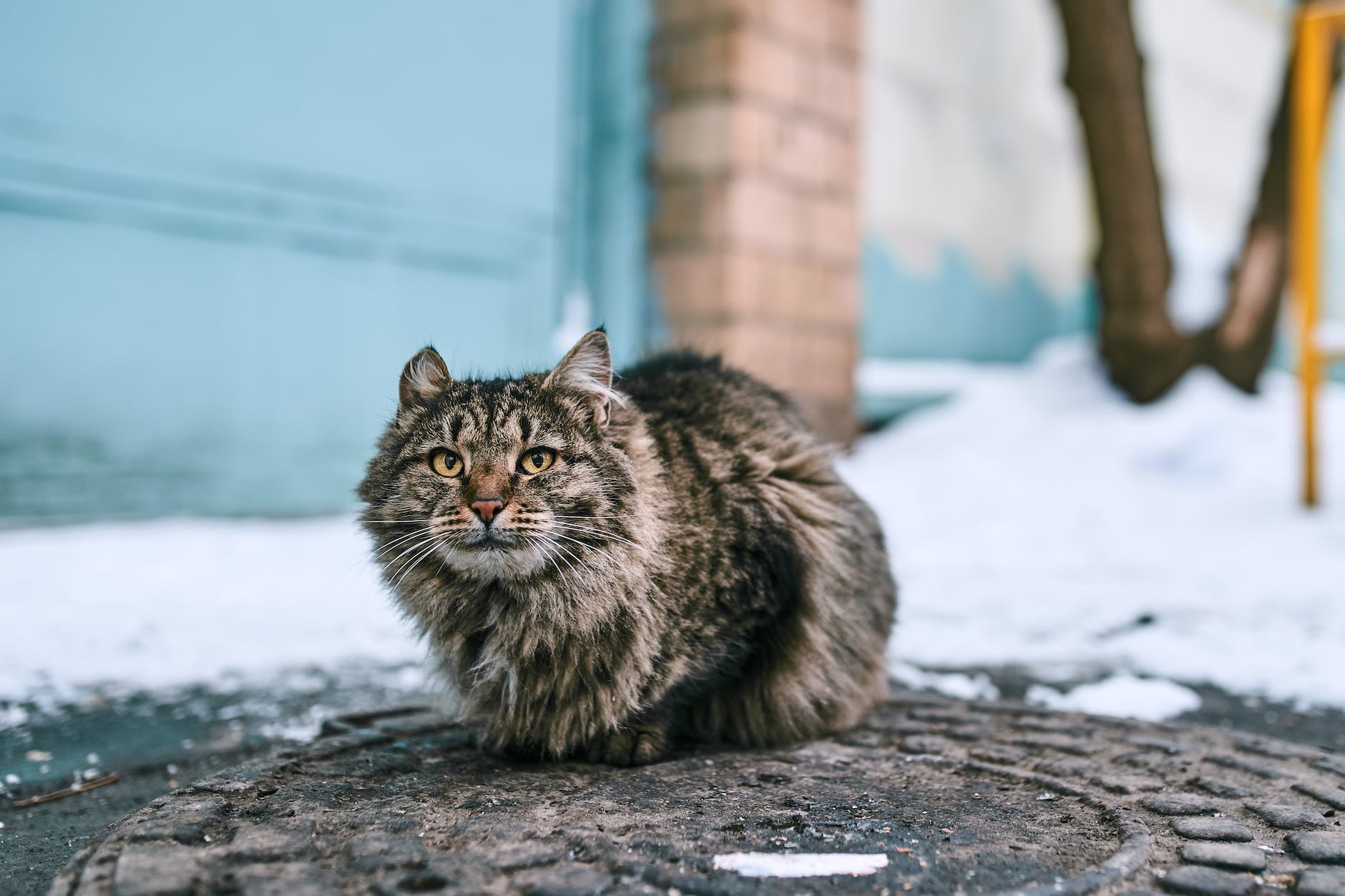
A stray cat. Credit: Aleksandr Nadyojin/Pexels

Todd Holland, the committee chair, denied that his members wanted to keep details of their plans from the public and told local newspaper the Daily Trib that the committee was merely trying to work out the “intricate details” of how to handle a population of about 400 cats. It’s not clear how the city arrived at that number, and there’s been no mention of an official effort to get an accurate tally.

“It’s not like we’re a bunch of cowboys running wild,” Holland said.

But in the recording, committee members clearly discussed hiding details from the public, and the Daily Trib noted that the committee used the word “remove” interchangeably with “euthanize” in written materials detailing the plan, perhaps to soften the language or obscure the fact that the proposed solution was to kill the cats.

Granite Shoals Mayor Ron Munos called the recording “disturbing” and said the committee’s plan will not be put into practice.

“The city is not doing this,” he told the Daily Trib. “We’re not going out and killing cats.”

Here at PITB we feel like a broken record regularly referring back to the junk studies blaming cats for killing billions of birds annually, but the reason we do is because those studies have real-life consequences.

Ill-advised, unethical and illegal plans to eradicate stray cats wouldn’t be explored at municipal and county levels if elected leaders weren’t told that trap, neuter, return (TNR) programs do not work and that outdoor cats pose the most significant thread to local wildlife.

Likewise, we wouldn’t hear about schools sponsoring cat hunts for children or so-called conservationists gunning down entire stray colonies if a small but vocal group of ostensible scientists weren’t routinely publishing dubious studies making improbable and unsupportable claims about feline predatory impact.

In plain terms there’s been a concerted effort to paint domestic cats as dangerous, ruthless killing machines, the media hasn’t treated the claims with skepticism, and the result is a whole lot of cruelty and misery inflicted on innocent animals.

City councils, wildlife biologists, park rangers and others are not armed with the facts when they rely on those studies, and the result is bad policy and decision-making.

Stories like this one out of Texas have become more frequent over the past few years, and we suspect things will get a lot worse for cats without injecting some much-needed sanity and evidence-based solutions to counter the tidal wave of misinformation.
Uvalde And Buffalo Mass Shooters Both Had History Of Killing Cats

The revelations about the shooters underscore the link between animal abuse and violence toward people.

One of the takeaways from the 2019 documentary Don’t F*** With Cats: Hunting An Internet Killer is the connection between violence toward animals and violence toward humans.

The 30-year-old who killed college student Jun Lin previously announced himself to the world with a series of videos in which he killed cats and kittens, then led online groupies on a years-long goose chase, parceling out crumbs of information to keep them interested until he finally “graduated” to humans and murdered Lin.

If police had taken the cat-killing videos more seriously, some of the documentary’s subjects believed, detectives could have caught the killer before he set his sights on a person. Of course, this blog’s position is that animal life has intrinsic value and animal abuse should be investigated for its own sake, but if police are more motivated out of fear that animal abusers could commit violent crimes against people, that helps cats and other animals too.

Now we’ve learned that the 18-year-old gunman responsible for the Texas school shooting and the 18-year-old who gunned down 10 people in a Buffalo, NY, supermarket were both cat killers before they were murderers of human beings. The former murdered 21 people, including 19 children and two teachers at a school in Uvalde, Texas, on May 24 while the latter took the lives of 10 people, all black, in a hate-motivated massacre on May 14.

The Texas shooter filmed himself grinning while holding “a bag of blood-soaked dead cats,” the New York Post reported on Sunday. David Trevino Jr., who knew the shooter, said he was “known for hurting cats.”

“He liked hurting animals,” Trevino told the Post. “I’m told he killed the cats and carried around the bag of bodies for s–ts and giggles The video shows he was not right in the head. He’s not all there. The video raises all sorts of red flags.”

The Buffalo murderer told online acquaintances he’d beheaded a cat, and wrote about it in a journal as well. Like the Texas shooter, his animal abuse wasn’t a secret. His mother knew, and gave him a box to bury the dead animal.

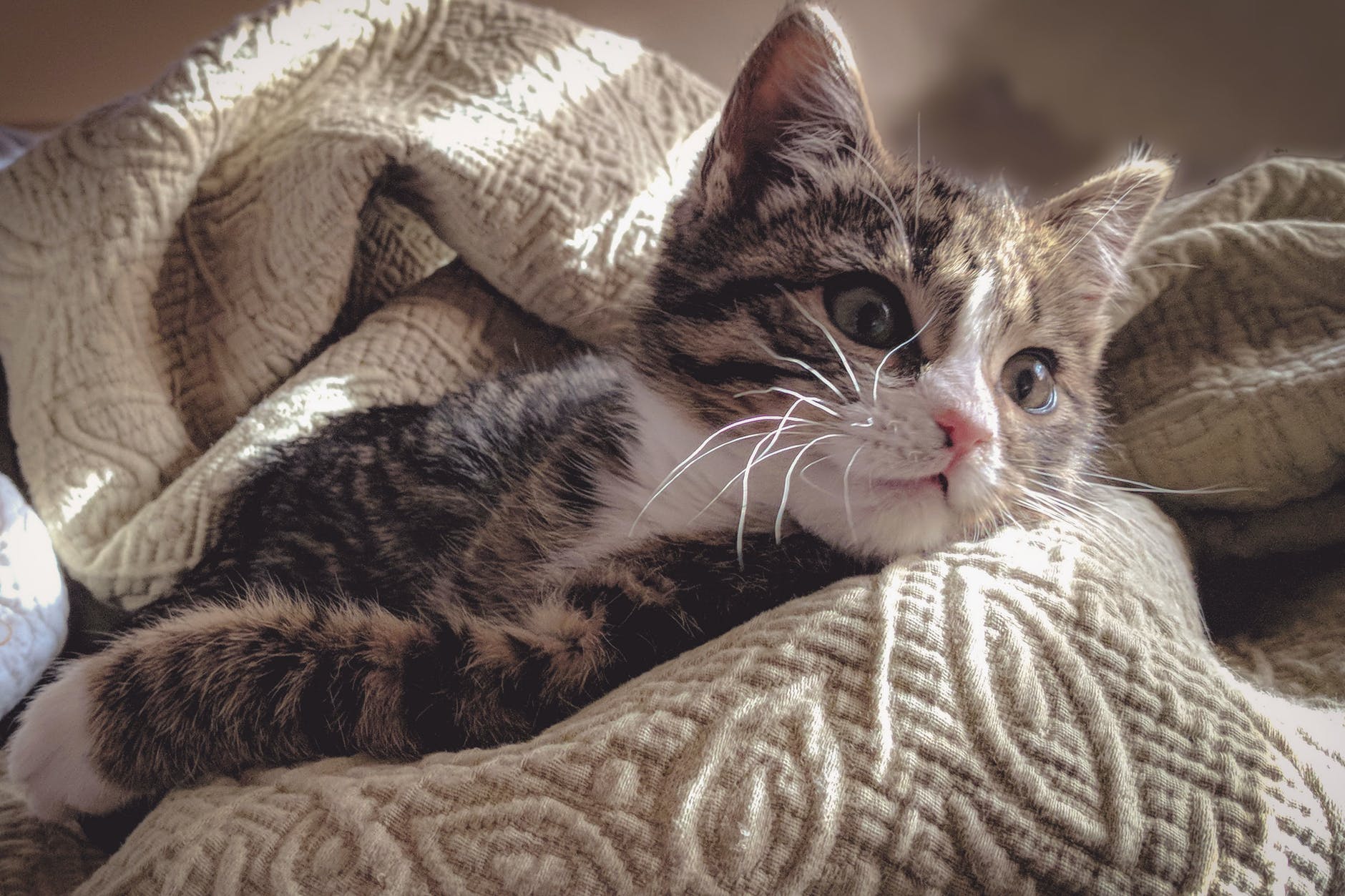
brown tabby cat lying down on gray bed sheet
Credit: Mark Burnett/Pexels

The shooters both fit the profile of animal abusers who move on to hurting people: Most animal abusers are men younger than 30, according to the Humane Society, and studies have found men who abuse cats often target them as an emotional proxy for women. More than 70 percent of women who have companion animals and were in an abusive relationship reported their significant others harming their pets.

Classmates of the Texas shooter described him as “eerie,” “scary” and quick to lose his temper. He was known for physically threatening girls and women, and for harassing them online. One classmate, 17-year-old Keanna Baxter, said he got “super violent” when he dated her friend.

“He was overall just aggressive, like violent,” Baxter said. “He would try and fight women. He would try and fight anyone who told him no — if he didn’t get his way, he’d go crazy. He was especially violent towards women.”

The Texas shooter spent a lot of time creeping on women on social media and in group chat services, which brings us full circle back to Don’t F*** With Cats. In a conversation with a teenage girl on group video chat app Yubo, he told her he “wanted his name out there” like the deranged killer at the center of that documentary.

The shooter, who lurked in group chats uninvited, also showed off the guns he bought after he turned 18 on May 16.

“He would be active every day and join our lives, repeating girls’ names until they paid attention to him,” the girl said.

Rolling Stone
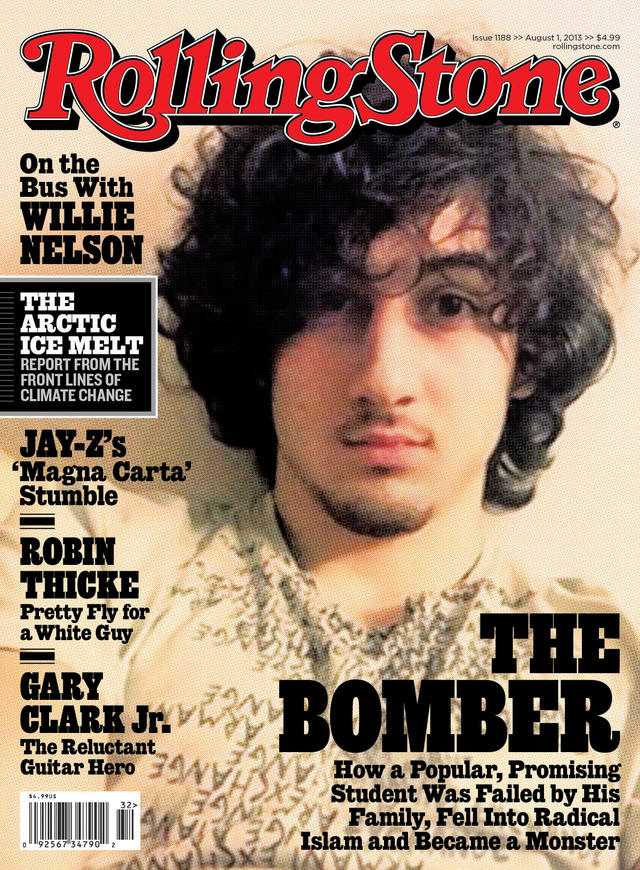
Rolling Stone was widely condemned for putting one of the Boston marathon bombers on its cover as if he were a rock star, but the issue was its best selling of the year.

Although the blame game begins while the bodies of the victims are still warm, as shrieking heads speculate on cable news, no one ever talks about the obvious and uncomfortable truth, which is that these disaffected young loners desperately want to show people they’re important, that they matter.

If they can’t find fame, infamy is a second prize they’re happy to embrace, and they’re motivated in part by the notoriety that previous members of their grim brotherhood “achieved” by massacring fellow human beings.

Major media figures aren’t merely willing to grant that wish. They’re wholeheartedly, enthusiastically in on it, filling hours of airtime looping the same short bits of footage, breathlessly reporting every nugget of information, and holding court over panels of “experts” who are happy to speculate on motivations regardless of how little they know. They blame video games, society, the lack of nuclear families, the lack of male role models, white supremacy, bullying, guns — everything but their own role in turning the killers into household names.

After all, almost everyone who was alive in 1999 can name the two trenchcoated murderers who perpetrated the Columbine massacre, back when things like that still shocked the country. But how many of us can name a single one of the 13 victims?

That’s why I won’t name the killers on this blog. It’s just one blog, in one small corner of the internet, and it won’t make a difference. But if everyone stopped naming them, stopped making them household names and the stars of obsessive crime porn, stopped turning them into objects of fascination whose faces are plastered on magazine covers like rock stars, maybe it would change things.

If would-be killers knew infamy was off the table, that if they survive they’ll remain anonymous nobodies without prison groupies begging for face time, journalists begging for interviews, and grief vampires discussing them for years in “true crime” books and on podcasts, would they go through with it?