‘Every Time We Needed To Refill, They Charged Us More’: FDA Says 2 US Women Made Millions Off Desperate People Whose Cats Had FIPV

The importers are accused of jacking up prices almost 16 fold on FIPV drugs they illegally imported from China, the FDA says.

FIPV is pretty much a guaranteed death sentence for cats, and the only way to cure it is with an experimental drug that doesn’t have FDA approval.

Oregon’s Nancy Ross and Nicole Randall of Texas knew that, and as importers selling the cure via the popular Facebook group FIP Warriors, the FDA says they banked on the desperation of people who would do almost anything to save their cats — including forking over vast sums of money.

Ross and Randall are now accused by the FDA of smuggling GS-441524 from China, where it’s manufactured illegally, and hiking the price by almost 16 times what they paid for it as they served as the middle women between desperate cat owners and the suppliers in Hong Kong.

Feline infectious peritonitis kills some 95 percent of cats it infects, and veterinarians often tell their clients with FIPV cats that while they can’t prescribe GS-441524, they will help administer it, track their cats’ progress through bloodwork and hopefully save feline lives — if the clients obtain the drug themselves.

FIP Warriors — now in its fifth incarnation as FIP Warriors 5.0 on Facebook — is where people with FIPV cats go to find suppliers. The group has more than 43,000 members, and the FDA says Randall made millions off of them, charging as much as $385 for vials of GS-441524 she obtained for between $25 and $45 from manufacturers in Hong Kong and mainland China.

Randall sold $9.6 million worth of GS-441524 to clients in the US, according to the FDA. Per The Oregonian:

“A spreadsheet found in Randall’s Google email showed customer orders of at least 58,460 vials and 236,836 pills of GS-441524 from July 2020 through June 6, 2022, the affidavit said.”

PITB spoke to several people who paid thousands of dollars for GS-441524 after their cats were diagnosed with FIPV. All of them said they were surprised by the news of the FDA’s investigation, and said they were given various reasons for why the drug was so expensive to acquire.

One customer from Texas, whose cat Seth began his regimen in July of 2020, told PITB she doesn’t regret spending the money to cure Seth, but she “can see how the people saw our desperate situation and took advantage of us.” She was told prices were at a premium because of scarcity.

“It was a very stressful time for us, and every time we needed to refill, they charged us more,” she said. “They knew we couldn’t say no.”
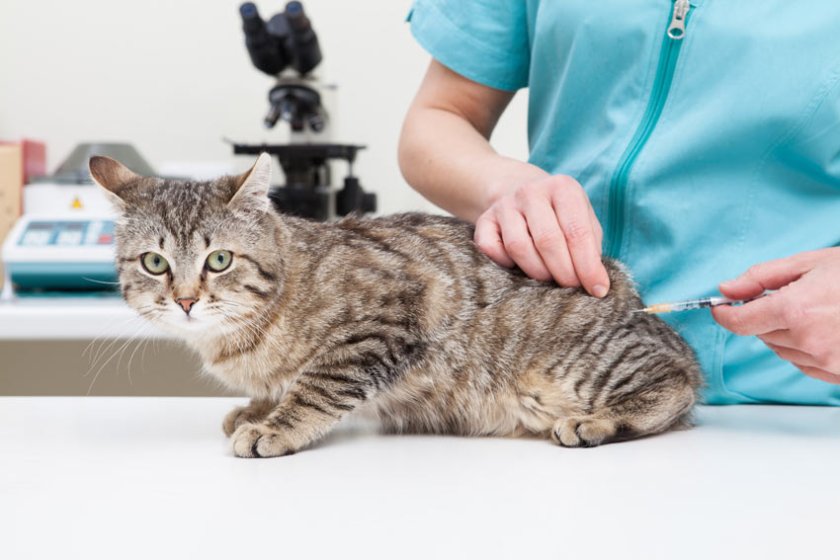
Cat-Cat_Guide-A_grey_tabby_cat_having_its_first_vaccination_injection

Another woman, whose kitten was diagnosed with FIPV in 2021, “was told that the prices were set because they ensure the medication was purchased from a trusted source.”

As a college student at the time, she used her savings and crowdfunded the other half, paying more than $5,000 for her kitten’s treatment. She said she doesn’t think the administrators of the group were ripping her off, since they had FIP cats of their own, and likely didn’t know the importers were making huge profits. She trusted the seller — who was not Ross or Randall — because the group vouched for that person, assuring her they supplied real pills.

“Of course, I don’t think this is a valid justification for hiking up prices up to 16x the amount,” she told PITB, “but I’m sincerely hoping the individual [accused by the FDA] had a valid reason for setting the prices that she did.”

Others paid even more exorbitant prices: a British woman we interviewed for a story about FIPV in 2022 said she paid about £7,000, or $9,400 at the time.

FDA investigators said they intercepted shipments from China and Hong Kong disguised as COVID masks, cat shampoo and chewable medicine for pets, and the Oregonian report says the shipments were listed as “essential oils” and “beauty products” in import documents.

Randall and Ross have not been charged criminally, but they are now targets of a civil asset forfeiture case:

“The government seized five of Randall’s bank and brokerage accounts and her 2022 Tesla Model Y car last year based on a warrant signed by a federal magistrate judge in Oregon.

The warrant identified the bank accounts and car as proceeds from the “crime of smuggling” and subject to forfeiture, according to the affidavit. It also alleged Randall, now 35, used the proceeds to buy several properties, including a ranch in Leander, Texas, in July 2021.”

While the FDA’s affidavit went into detail regarding Randall’s earnings, it describes shipments sent to Ross but does not specify how much she may have made in profit. An attorney for Randall told The Oregonian that the Texas woman will fight the civil asset forfeiture.

The illegal market for GS-441524 exists because the drug’s creator, Gilead Sciences of California, declined to submit it to the FDA for approval. That’s because it’s chemically similar to another drug the company makes, remdesivir, which was floated as a possible treatment for COVID-19. The company was worried any snags in a potential approval process for GS-441524 would also ensnare remdesivir, according to reports, putting the latter drug in limbo during the pandemic.

Now that the pandemic has retreated to much lower levels of infection and death, it’s not clear if Gilead Sciences will reconsider its FIPV medication, but there may be hope in the form of alternate treatments. A report from the American Animal Hospital Association (AAHA) says scientists at the University of California-Davis and UC San Diego are working on several promising therapies, including a potential treatment using CRISPR gene-editing technology.
But until another cure or treatment passes trials and earns FDA approval — a process that could take years — people with FIPV-diagnosed cats remain at the mercy of strangers on the internet, spending thousands of dollars per regimen and hoping the drugs they buy are the real deal.

Thanks To A New Treatment, These Cats Have A Second Chance At Life

Parsnip and Jupiter are fighting off FIPV, a virus that until recently was a death sentence for cats. The future looks bright for both cats.

After almost three months in treatment, little Parsnip is back to her old self.

The tabby cat with expressive sky blue eyes had been diagnosed with Feline infectious peritonitis, a variation of feline coronavirus that attacks the body’s white blood cells and can render even the most playful kittens lethargic, eventually robbing them of their ability to walk and ultimately, their lives.

Parsnip was an affectionate whirlwind of energy when 21-year-old Californian Anae Evangelista adopted her. When she lost her kitten exuberance six weeks later, Evangelista knew something was wrong. When the little cat stopped eating and drinking, Evangelista realized the problem was much more serious than an initial veterinary examination suggested.

After more tests, she received grim confirmation that Parsnip had FIPV, a virus that is almost always fatal.

But a veterinarian connected her with an online group for people whose cats have FIPV and Evangelista was able to get her kitty accepted for experimental treatment with GS-441524, a nucleoside analogue antiviral drug that has proven effective at treating all types of FIP in several trials in recent years.

After a regimen of almost three months of GS-441524 treatment, Parsnip has her energy back, she’s gained a pound and a half, and “looks perfectly healthy,” Evangelista said. Equally important, her blood work and other health indicators are all positive.

She’s overjoyed at the result. Parsnip came into her life at a difficult time, when Evangelista was grieving the loss of two friends. Losing the kitten she’d bonded with — an animal who had become such a comfort to her over the months — would have been too much.

Evangelista will graduate from college in about a week’s time, “so I’m honestly so excited to have her ‘graduate’ from her treatment too,” she told PITB.

Parsnip at the vet
Parsnip being a little trooper during one of her many veterinarian visits.

Londoner Billie’s cat, Jupiter, also suffers from FIPV. When she went to adopt him, Billie knew the British shorthair had Feline herpes virus (FHV) and that it would require careful monitoring. But the infection wasn’t life-threatening and Billie had already fallen in love with the golden-eyed chonkster.

When Jupiter’s appetite waned and his behavior changed earlier this year, Billie thought the little guy was just suffering from a FHV flare-up.

“He is very loving, he is like my shadow and he loves to play,” Billie told PITB, “but he wasn’t doing any of these things.”

As was the case with Parsnip, the veterinarians didn’t think Jupiter was seriously ill. They sent Billie and Jupiter home with antibiotics and anti-inflammatory medication, but after a week Jupiter still hadn’t improved. He was subject to a battery of tests — bloodwork, ultrasounds, x-rays — and kept overnight for observation.

“FIP is notoriously hard to diagnose, and there are so many symptoms that you could mistake for other things,” Billie said, noting veterinarians often have to “work backwards” and eliminate other potential ailments before diagnosing a cat with FIPV. “Jupiter’s symptoms were so minor initially, he just seemed a bit off and hadn’t eaten much and felt hot. I think because I know him and his behavior so well, we were able to catch it early.”

jupiterjubilee
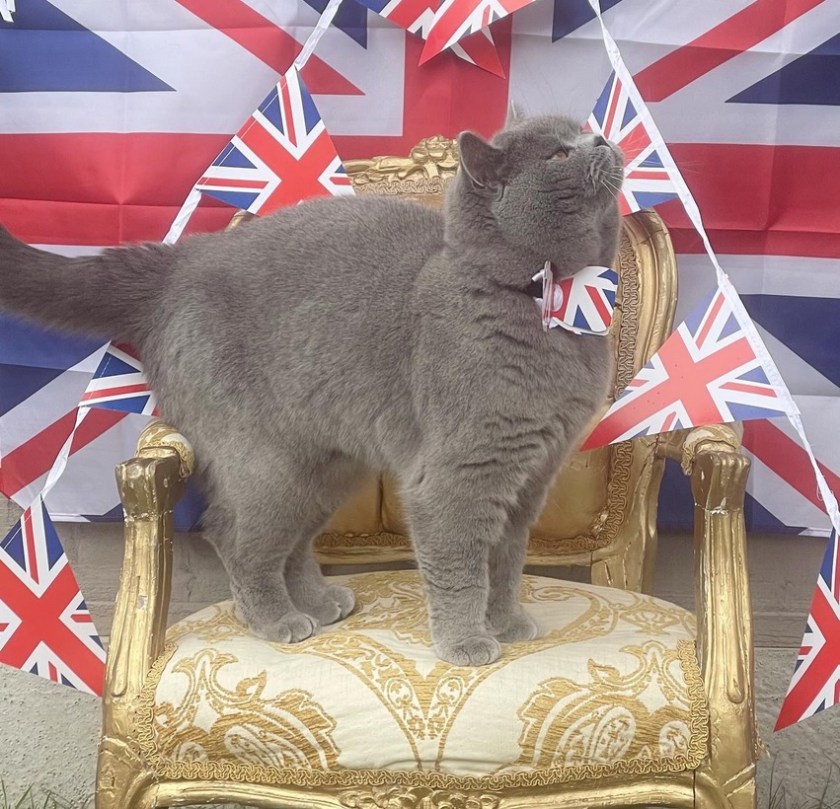
Jupiter proudly displaying the Union Jack in celebration of Queen Elizabeth’s Platinum Jubilee.

Because the tests didn’t confirm FIPV, a third visit with more tests followed before Jupiter was placed on his meds. While the FDA has yet to approve GS-441524 treatment in the US, the UK had approved the drug in fall 2021, so Jupiter was able to begin treatment right away. Like Evangelista, who paid $5,000 for the FIPV drugs, not including the initial veterinary examinations, Billie was faced with hefty bills: The three initial veterinary visits, tests and five nights of observation added up to £5,500 (about $6,930 in USD), and the medication set her back £7,500 (about $9,400).

Her family helped her pay the initial veterinary bills, her sister started a GoFundMe campaign, and her nieces began making “FIP Warrior crystal healing bracelets,” with the proceeds from sales going to Jupiter’s treatment. (A GoFundMe for Parsnip also exists, and has raised $2,060 of its $2,500 goal so far.)

So far, Jupiter is responding well to the treatment and the signs are encouraging.

Both cats will enter an 84-day observation period after their regimens. They’ll have their bloodwork monitored and will be examined several times over that stretch to make sure they’ve recovered. They’ll also be closely watched at home for any symptoms.

Evangelista and Billie said they’re heartened by the 85 percent success rate.

Despite the cost, Billie said she didn’t balk at taking care of her cat.

“Jupiter is my whole world,” Billie said. “It is just the two of us, he is my one constant and he means everything to me. He is so loving, and so sassy. He has such a little personality and I would be so lost without him.”

Follow Jupiter on Instagram @_jupitersfipfight and Parsnip at @lilmissparsnip