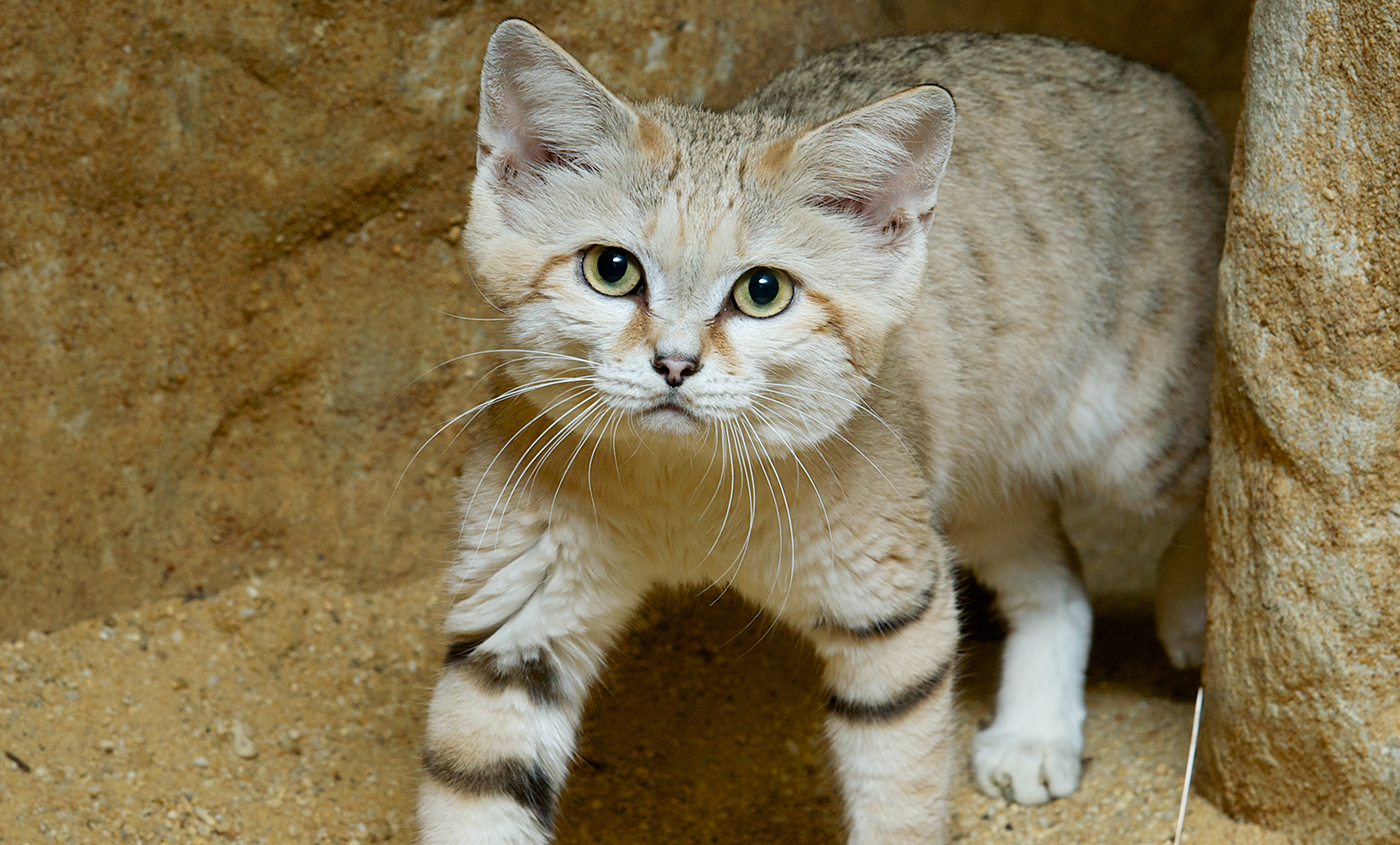
Sand cats are among the smallest felines in the world and live in harsh environments.
It’s baby season at the North Carolina Zoo.
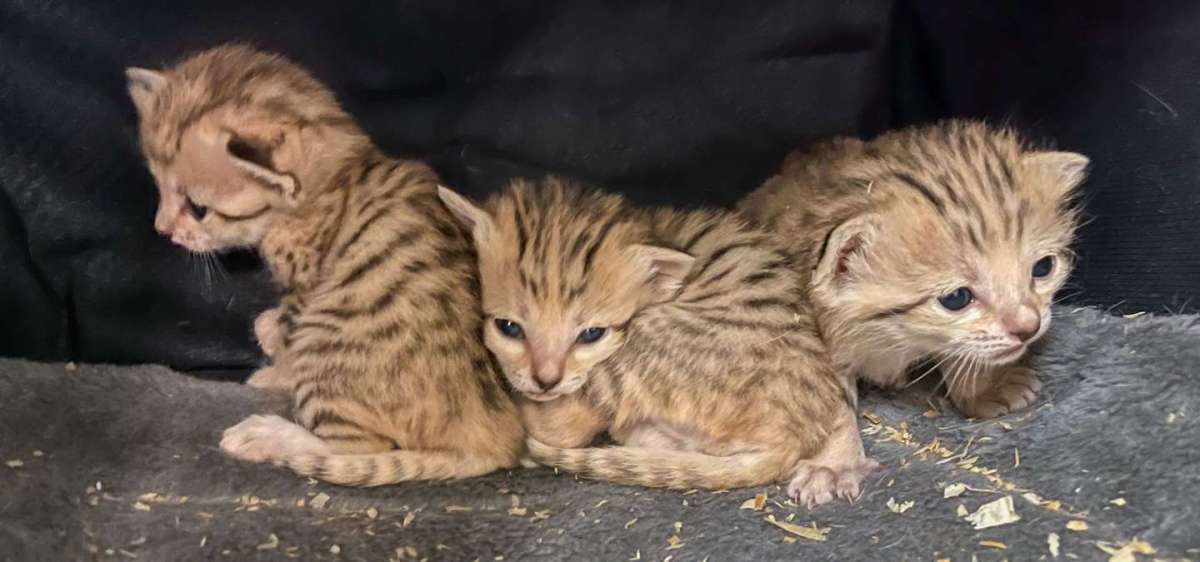
The 500-acre facility in Asheboro announced the birth of three healthy sand cat kittens. The species, felis margarita, is among the tiniest of all felids and is elusive in the wild, able to survive in desert biomes far from water in the African Sahara, as well as the Middle East and parts of Asia.
The kittens were born to first-time mom Sahara, 3, and Cosmo, 9, and remain unnamed for now. The zoo said it will allow the public to vote on their names, with details to be revealed in the near future.
The fortuitous birth of the tiny felines follows the arrival of a giraffe calf and a chimpanzee baby, both male, all within a two-week period in mid-May, the zoo said.
“The mom and triplets are doing well,” zoo staff wrote in an announcement. “The trio are beginning to explore their surroundings in the Desert Habitat. Lucky guests may be able to catch a glimpse of them in the coming days.”
Although sand cats aren’t listed as endangered, scientists don’t have a good handle on their numbers and caution that they may be less populous than estimated. The parents were arranged as a breeding pair for maximum genetic diversity through the Sand Cat Species Survival Plan and the Association of Zoos and Aquariums, the zoo said.
The little-known, Lilliputian species of feline thrives in some of the harshest environments on Earth, proving cat species are capable of remarkable adaptations to their surroundings.
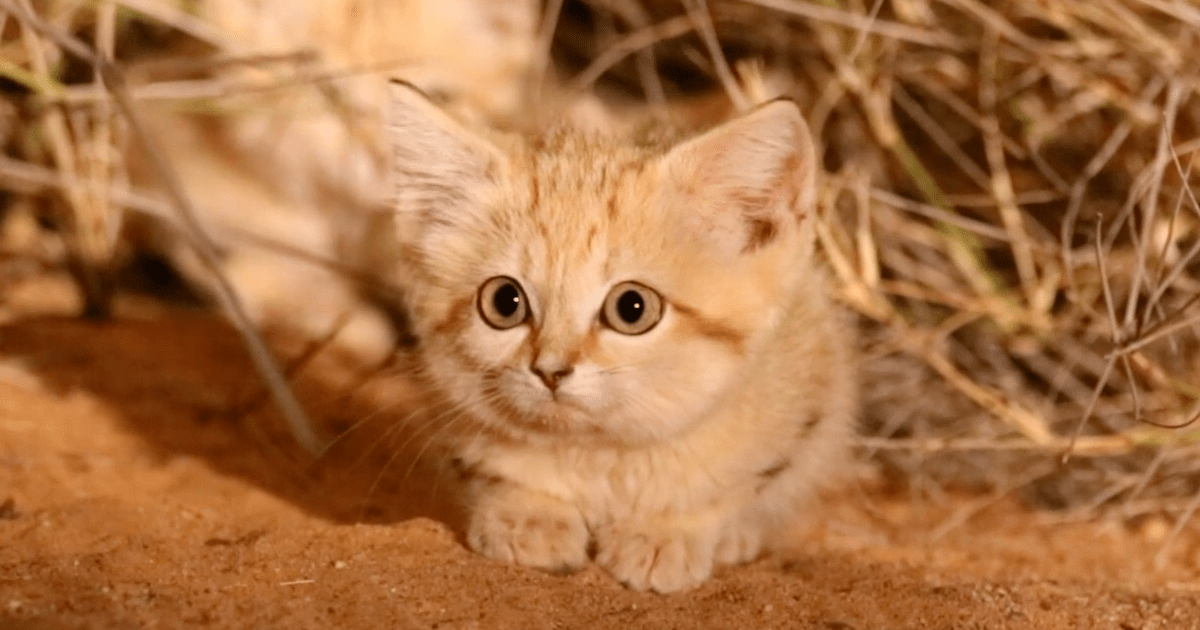
There’s a lot we don’t know about felis margarita, so much so that kittens of the elusive and stealthy species weren’t photographed in the wild until 2017.
Now a study has unveiled a surprising fact about sand cats: despite being tiny in stature, they occupy huge ranges that can rival the size of territories claimed by big cats like tigers and jaguars. One cat claimed 1,758 square kilometers — about 1,093 square miles — for himself according to Gregory Breton, the study’s author, who said the cat’s behavior showed sand cat ranges are “considerably larger than previously estimated.”
That individual maintained his impressive range for more than six months before moving on. His behavior and the movement of 21 others tracked via radio collars suggests the species could be semi-nomadic, moving or adjusting their ranges as they look for prey and water in some of the hottest, most arid environments on the planet.
“If true, this type of movement in response to rainfall is previously unrecorded among wild cat species,” wrote Breton, who is managing director of the cat conservation group Panthera in France.
In addition to following sources of water, the cats may maintain such large ranges because prey are more spread out compared to biomes like jungles, forests and wetlands where other species of cats make their homes.
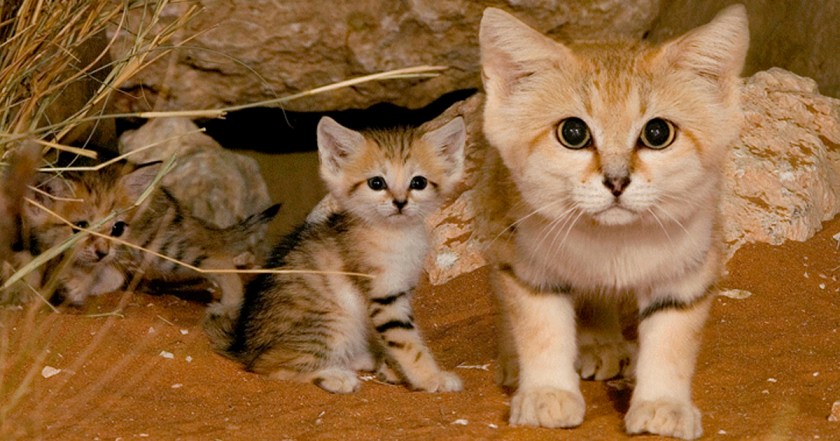
A mother sand cat with her babies.
(Above: Tap or click the images for full resolution versions.)
Impressive ranges weren’t the only surprise the tiny cats had for researchers. Breton and his colleagues managed to catch and examine more than 40 sand cats before releasing them back into the wild and noted they were all healthy, with few scars, no fresh wounds and no broken teeth.
The lack of wounds “means that it is likely that sand cats exhibit little territoriality and tolerate each other across their ranges,” Breton wrote “This beloved cat may indeed share habitat with others of its species — maybe their perception does match their nature, at least towards other sand cats.”
Sand cats can be found in the Algerian Sahara, the deserts of the Arabian Peninsula and countries like Chad, Niger and Morocco. The Panthera team tracked the Lilliputian felines in the latter country, traversing the desert and arid landscapes of southwestern Morocco where temperatures peaked at 122 degrees Fahrenheit (50 degrees Celsius) during the day.
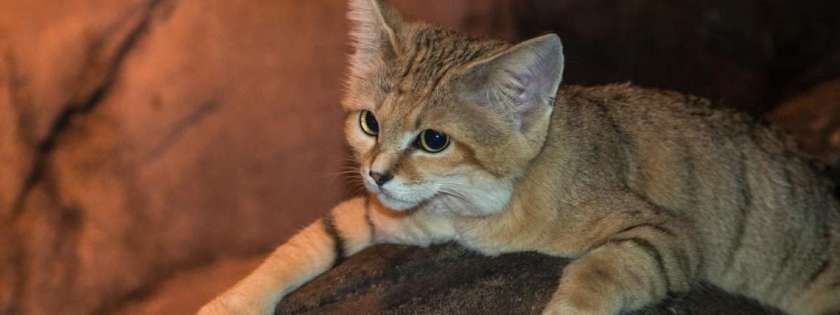
Sand cats have what Breton describes as “whimsical faces,” sporting wide, swept ears to go along with the general horizontal appearance of their heads.
They have golden, classic tabby markings and sand-colored fur with well-defined dark rings on their limbs, allowing them to expertly blend into their surroundings. Sand cat camouflage is so effective and the species is so quiet that one of the best ways to find them is at night, using search lights to pick out their reflective inner eyelids amid the desert landscape.
They’re also considerably smaller than house cats, weighing up to 7.5 pounds.
Breton said his team’s research is critical for estimates of sand cat population, which in turn will help authorities determine the conservation status of the elusive feline.



 Pain In The Bud