The Vet Thought This Stray Had No Chance, Now He’s Stealing Hearts At The Shelter

Gulliver was hit by a car and left for dead, but he never stopped clinging to life.

Gulliver was in a seriously bad way when a Good Samaritan found him on Oct. 27, on the outskirts of a “well cared-for cat colony” in New Jersey.

The little tuxedo cat had been hit by a car and left to die with a fractured pelvis, femur and tail. A veterinarian who examined him didn’t give him much of a chance to live, but his rescuer was familiar with Tabby’s Place in Ringoes, NJ, and knew if anyone would go to extraordinary lengths to save the little guy’s life, the staff there would.

Tabby’s Place took Gulliver in and their emergency veterinarians got to work on repairing his shattered body. It was touch and go, but Gulliver had a glorious will to live that saw him through the surgery and emerge on the other side with a ravenous appetite.

When the staff at Tabby’s Place saw him tuck into a bowl and begin “eating like a champ,” they knew Gulliver was probably going to make it.

Famished from his ordeal and in desperate need of nutrients to help his body heal,  he displayed “the best appetite I have ever seen in twenty years of feline medicine” said “Dr. Fantastic,” the collective name Tabby’s Place staff use for the skilled veterinary surgeons who put the most catastrophically injured felines back together again.

And then there was a second surprise — despite all he’d been through, despite the unimaginable pain of getting flattened by 3,000 pounds of aluminum, steel, glass and rubber and left to suffer in a broken heap, and despite pain signals hammering their way through the fog of painkillers, Gulliver turned out to be an “extremely affectionate” kitty.

“He is so affectionate and snuggly,” said Bree, a sanctuary associate at Tabby’s Place who has been caring for the little survivor. “He leans his whole body into you and makes muffins. He has personally reminded me that there is good in this world, and it is worth fighting for.”

Three weeks after his surgery, Gulliver summoned the strength to stand on his own for the first time since he was hit. He took his first few uncertain steps, Bree said, to get close enough to her so she could pet him while she cleaned his crate. His tail was so badly damaged that it had to be amputated and he’s going to require care — including manually expressing his bladder — for the near future, but the staff at Tabby’s Place will find a forever home for him.

Despite the trauma he endured, Gulliver “should enjoy a long, healthy life like any other cat,” said Angela Hartley, the sanctuary’s development directory. “It would take a special adopter to learn how to express his bladder, but as we learn continually, there are many, many special adopters out there.”

It’s not clear yet whether Gulliver will regain the ability to use the litter box on his own, but Bree said she’s “hopeful that this will not be permanent.”

Because a sickly cat from Gulliver’s colony had found his way to Tabby’s Place earlier, the colony managers knew of the shelter and Gulliver found himself “in the care of a person who knew his life was worth saving,” Bree said.

“She was so right. Gulliver’s life was saved because there are good people in the world. I feel like his loving and gentle personality is a reflection of that.”

All images courtesy of Tabby’s Place. To fill out an online application or browse the adoptable cats of Tabby’s Place, click here.
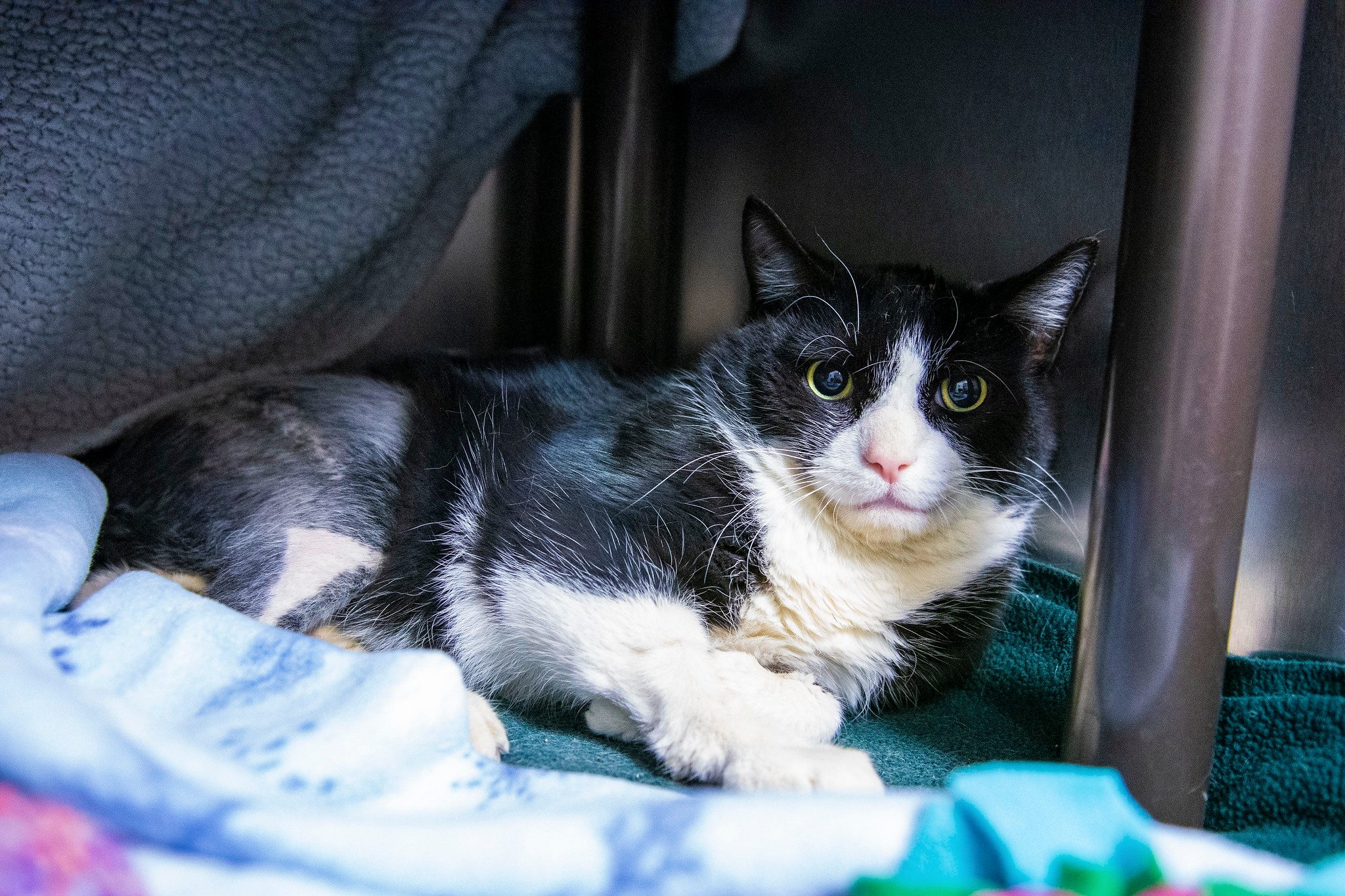
Gulliver
Now that he’s a month removed from his brush with death, Gulliver’s much healthier and even has a regal look about him. Credit: Tabby’s Place

Police Chief Doubles Down On Cat Lady Arrests, Trial Postponed

Despite a torrent of criticism, an Alabama police chief says his officers were justified in arresting two women who were managing a cat colony.

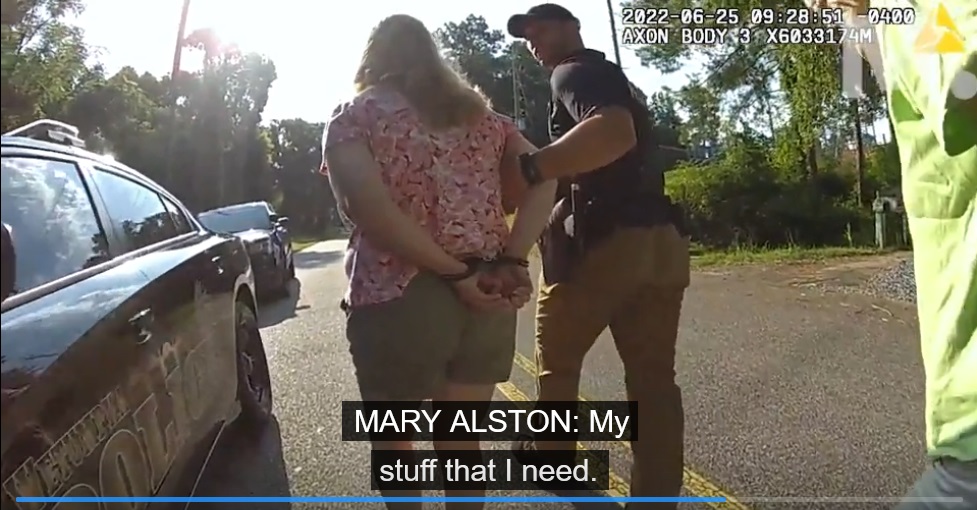
You might think if you were the police chief of Wetumpka, Alabama, you’d be embarrassed to learn your officers arrested and cuffed two women — one of them 85 years old — for the alleged crime of managing a cat colony.

Heck, you might be outright mortified that the public saw a video of that outrageous arrest, with your officers laughing about “a bunch of cops beatin’ up on some old ladies” after treating the aforementioned ladies like hardened criminals instead of good local people you’re sworn to protect and serve.

Lastly, you might be furious at your officers for demonstrating abysmal judgment by escalating a situation instead of keeping the peace.

Especially if video of the incident proceeded to go viral, drawing widespread mockery and condemnation of your entire police department

But if you’re Wetumpka Police Chief Greg Benton, apparently none of those things would occur to you.

Instead of apologizing to his community for traumatizing two women doing trap, neuter return (TNR) work in a public park, Benton is doubling down.

Benton told the Montgomery Advertiser that Mary Alston, 60, and Beverly Roberts, 85, were exacerbating a “nuisance” by spending their own money to spay/neuter strays, working with local shelters to find homes for them, and managing a stray cat colony that others were content to ignore.

Benton says the women were warned that they were “trespassing” in a public park — built and maintained with their tax dollars — and were warned not to feed the cats.

bravecop
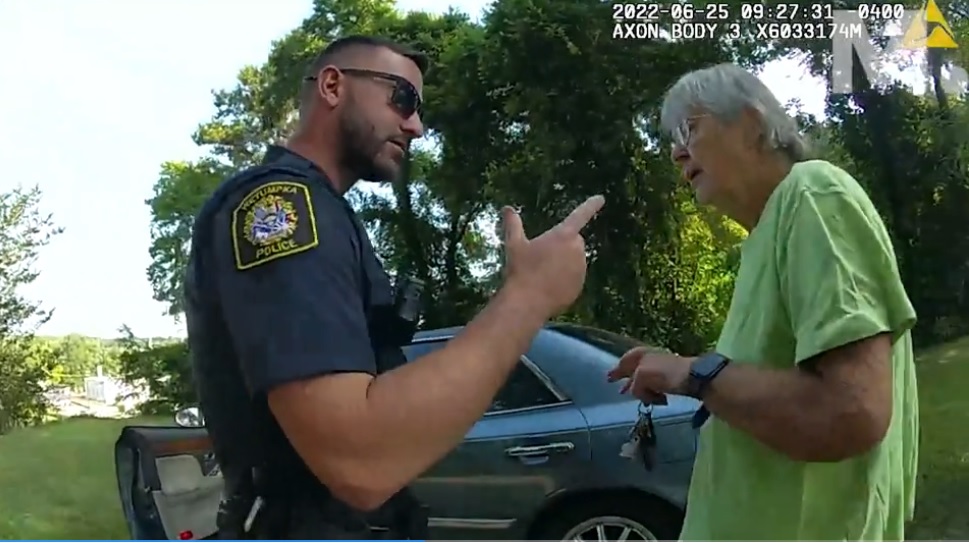
A Wetumpka police officer wags a finger at Roberts, who was 84 years old at the time, before handcuffing her hands behind her back and rifling through her personal possessions.

The women were arrested on June 25, but the media and public are just now learning the details because police pushed back on local media freedom of information requests for copies of the body camera footage.

Apparently Benton does not understand the distinction between tossing treats at strays and managing a colony at personal expense to reduce the stray population and get the cats adopted. Or maybe he’s one of those guys who thinks the solution is to kill the cats.

Either way, he’s chosen to ignore policing best practices, disregarding time-honored — and evidence-supported — protocols of community policing by endorsing the sort of behavior his officers engaged in.

Instead of charging into a public park, practically screaming “I am the law!” and gleefully cuffing two women while telling them “You’re too old to be acting this way,” a minimally-trained, minimally decent rookie cop almost anywhere else in America would immediately understand Alston and Roberts are not criminals.

That cop would understand the women are part of the community, they have to live with these people, and the productive thing would be to get the police chief, animal control officer, colony managers and local shelter supervisors together, so they can figure out how to support each other and combine their resources to humanely manage local cat colonies.

Instead, we have police moving forward with misdemeanor charges against the women. They’re both charged with criminal trespassing, while Alston faces an additional count of interfering with government operations, and Roberts faces a disorderly conduct charge.

Their attorney, Terry Luck, told the Advertiser that he believes the charges are baseless. Alston and Roberts were originally scheduled for an Oct. 20 trial, but it’s been postponed due to scheduling conflicts. A new date hasn’t been set yet.

Pa. Man Charged With Felony For Running Over Cat With His Truck

A former local councilman in Pennsylvania faces animal cruelty charges for allegedly running over a cat earlier this month.

A former councilman in rural Pennsylvia faces two animal abuse charges after trying to run down a group of cats — and hitting at least one — with his truck earlier this month.

Frank Pagani Jr. was charged with aggravated cruelty toward animals, a felony, as well as a misdemeanor animal cruelty charge, according to a story by Beaver County Times reporter Garret Roberts.

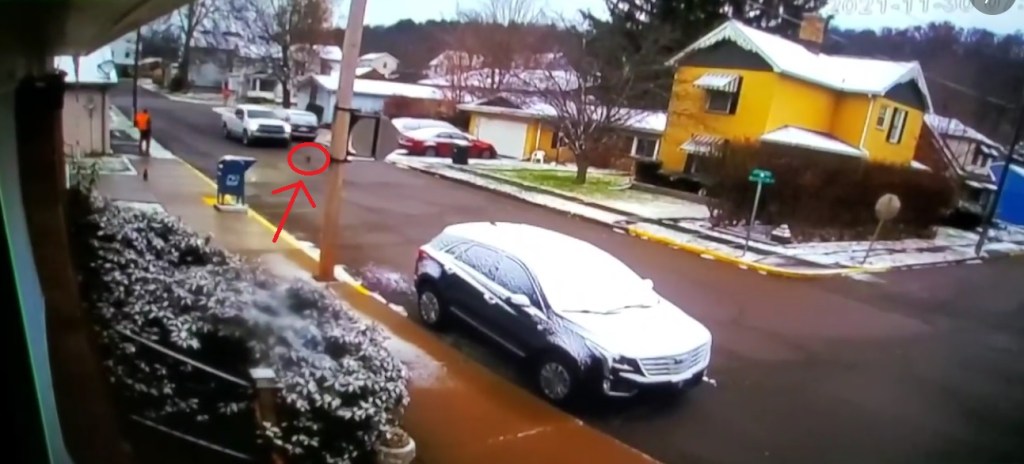
Neighbor William Bittner, who helps care for the neighborhood strays, captured the Dec. 1 incident on his home security camera. The clip (embedded below) shows Pagani’s truck speeding up on the residential street and swerving toward cats who were in the road before blowing through a stop sign. Pagani Jr. then made a left turn to a side street and pulled into his driveway a few hundred feet away.

The 31-year-old was behind the wheel of the truck and his father, Frank Pagani Sr., was in the passenger seat during the incident, according to the Times. The Paganis live in New Galilee, a town of 379 people in rural Pennsylvania about 50 miles north of Pittsburgh.

In this still from Bittner’s video, Pagani’s white pickup truck aims for a cat, circled, in the road. The cat hasn’t been seen since.

Bittner said last week that Pagani Jr. called him after he realized the incident was caught on video and said he’d resign his council seat.

“He thinks that’s the end of it,” Bittner said at the time. “You just can’t let an act like that go on without someone being charged.”

Bittner and his neighbors have been caring for the stray colony for years. In addition to feeding the strays, they’ve run a trap, neuter and return (TNR) program, fixing 28 cats, and have found homes for kittens who were born to the colony cats.

The Pagani family apparently panicked when they realized Bittner had captured the incident on video and posted it to Facebook. Per the Times:

“The police affidavit also details repeated phone calls were made to the homeowner who caught the incident on camera by Pagani, his father and his mother. Voicemails received by police detail the family asking for the video to be taken down.”

The video shows Pagani’s truck striking at least one of the cats, who immediately ran off with the other strays. It’s not clear how badly the cat was injured, and Bittner said “he’s not showing up” at regular feeding times.

“We’ve been searching and searching and we can’t find him,” he told WKDA, the local CBS affiliate.

Locals who reacted to the video on Facebook were horrified by the footage.

“I adopted one of those kittens,” one woman commented. “This breaks my heart.”

Pa. Politician Resigns After Running Over Stray Cats With His Truck

“We don’t need his idea of animal control,” says one neighbor, who has been caring for the local cat colony for years.

Neighbors who live on a quiet street in rural Pennsylvania were horrified when a man in a white pickup truck intentionally tried to run over stray cats last week, hitting at least one.

Now, thanks to one neighbor who captured part of the attack on video, they’ve identified the man at the wheel, and he’s a local politician.

Frank Pagani Jr. resigned from his seat on the municipal council of Galilee, a rural Pennsylvania town with a population of 379. Video shows Pagani Jr. speeding up and swerving to hit one of two cats who were in the road at the time. He was going so fast he blew through the stop sign at the end of the street.

The brazen politician then made a left turn and casually pulled into his own driveway on a side street.

William Bittner, who captured part of the Dec. 1 hit-and-run on video, said Pagani called him afterward, admitted what he’d done, and said he would resign his council seat.

“He thinks that’s the end of it,” said Bittner, who takes care of the cats along with other neighbors on the street. “You just can’t let an act like that go on without someone being charged.”

The Beaver County Humane Society said its humane officers were investigating the incident, but Pagani Jr. hadn’t been charged as of Dec. 6. Neighbors told the Beaver County Times that police officers were going door to door on Dec. 3 to speak to witnesses. Pagani has not returned calls from at least two local media outlets.

Pagani works with his father in their family business, Pagani and Son Trucking LLC, which contracts with the United States Postal Service to shuttle mail in bulk to and from a processing facility to individual post offices in the area. The company has had three USDOT violations in 2020 and 2021, records show.

As for the cats, their fate remains unknown. The video appears to show Pagani’s truck hitting or running over the tail of one cat, who immediately bolted along with the other cat who was in the street at the time. Those two cats took off with a larger group that was on the nearby sidewalk. The injured cat hasn’t been seen since.

“He could have hit the undercarriage of the front, he could have had his tail run over, he could have been bruised,” Bittner told KDKA, the local CBS affiliate. “We’ve been searching and searching and we can’t find him.”

”And when I feed him in the morning and night, he’s not showing up. So we don’t know whether [he] ran off to die or…” Bittner said, trailing off.

In a follow-up post on Facebook, Bittner explained that the strays are part of a managed TNR colony, with neighbors pitching in to help feed the cats and adopt out kittens. So far, 28 cats have been trapped and fixed.

People in the neighborhood believe Pagani was taking matters into his own hands, which follows a disturbing trend of vigilantism toward cats by people who either hate them or think they’re protecting local wildlife by killing cats.

“We don’t need his idea of animal control,” Bittner wrote.

Local Gov. Employees In California Are Shooting Cats To ‘Protect Wildlife’

The government agency that manages Bay Area parks initially denied killing the cats, then said its employees shot 18 strays because they were a threat to birds who migrate to the area for the winter.

In a sickening story out of California, state government employees have admitted to shooting 18 cats and say they can’t rule out shooting more who venture too close to a marshland where thousands of birds migrate for the winter.

The cats were shot by employees of the East Bay Regional Park District, a government agency that manages parks in the Bay Area, including San Francisco, Oakland, San Jose, Palo Alto and dozens of other cities and towns in a nine-county area.

They’re operating under a broad mandate that allows them to kill any cats “that may pose a danger to wildlife,” according to a report by Bay Area ABC affiliate KGO.

It’s 7:30 at night in an East Oakland office park, Cecelia Theis is trying to trap what’s left of the colony of cats she’s cared for over the past year. She tells the I-Team, “I really want to get them out of here.”

After Theis came here to work for the county, training poll workers in the last primary election, she began helping others feed the feral cats. She fell hard for them, including the little one who climbed on her hood waiting for food, and the first cat she befriended.

“Each of them had a personality and helping them was a priority for me,” Theis said.

She found homes for their kittens, took the adults to be spayed and neutered; the colony was stable at 30 cats. But over the past month, most of them have disappeared.

Theis finally got East Bay Regional Park officials to admit, their staff shot and killed several of the cats that had wandered into a nearby marsh.

Her heartbreak spilled out on social media, “It’s not okay to shoot these beings; some of them were pets that were abandoned.”

The state employees who shot the cats did so without notifying the public, without talking to locals who manage and care for cat colonies in the area, and without asking for the help of local shelters and rescues whose staffers say they could have easily trapped the cats and relocated them.

In fact, the East Bay Regional Park District lied when first asked about the fate of the cats: Employees there initially told Theis and another colony manager that the cats were trapped and taken to shelters in Oakland and nearby Dublin, according to a day-old Change.org petition that already has almost 500 signatures.

3C25179C-2597-4D77-87CD-2FB9A007E358

The state employees only came clean about killing cats when Theis went to KGO and they realized their actions would be detailed in media reports. They’re still obfuscating: KGO journalists filed public records requests for documents related to the cat killings, but the agency has not fulfilled the requests.

That’s illegal according to state and federal law, which dictate that government agencies have 30 days to respond and, if they deny the open records request, must provide a compelling reason why. As a career journalist who has filed my own share of Freedom of Information Act requests over the years, I cannot fathom any valid excuse for withholding those documents from the media and thus, the public.

Policies like this one are a direct result of the dangerous misinformation peddled by a handful of academics who advocate for the extermination of cats, and claim domestic cats kill more than 20 billion birds and small mammals in the US annually.

Despite serious and deep flaws in their methodology — and the fact that the authors invented data rather than trying to gather it — the findings of those studies are reported as fact in the press, without any skepticism, despite push back from other scientists who have been sharply critical of the studies and their conclusions.

5F8F6039-255A-4706-8A34-9E7DF8DEF7C2

The result has been a panic over cats and their impact on smaller wildlife. The studies and the subsequent panic are directly responsible for policies like those adopted by some Australian regional governments, who have an open bounty on domestic cats, paying $10 for adult pelts and $5 for kitten pelts. They also fuel rhetoric of the type we witnessed in the New York Times this August, when a columnist was so incensed by reports of cats killing birds that she admitted to fantasizing about shooting a hungry, sickly stray who showed up in her neighborhood.

We have a serious problem if, on the cusp of 2021, we have government employees shooting cats and paying bounties for kitten pelts, based on the misguided idea, not supported by evidence, that violently killing small domestic animals is somehow an effective way to protect birds.

Cats are sentient creatures who feel pain, fear, anxiety, sadness and the full range of primary emotions. Moreover, they’ve been molded into companion animals who bond closely with humans. According to Theis and KGO, several of the cats who were shot were former pets.

A manager with the East Bay Regional Park District downplayed the shootings, saying there was a “communications breakdown” between his team and local rescues as well as colony caretakers.

“We feel horrible about this, you know, this is really one thing that’s just really sad,” Matt Graul, “chief of stewardship” for the agency, told KGO. “And we really don’t want to ever have to take this step. You know, we are compassionate, and love all wildlife. And many of our staff have cats as pets.”

Despite that, Graul would not rule out killing more cats and his agency has not complied with state public records law, nor did he say why the agency lied to colony caretakers about the fate of the strays. We hope Bay Area media organizations are getting their lawyers involved and working with the state’s open government office to force the East Bay Regional Park District to obey the law and release its records on the cat shootings.

This is unacceptable, and it should be stopped before government officials with too much zeal and too little skepticism enact similar policies in other states.

94744672-DA95-48BA-92AC-A0C6518D9619