New App Translates Your Cat’s Meows

MeowTalk uses machine learning and algorithmic AI to learn cat vocalizations and what they mean.

It’s gonna be the future soon, and I can’t wait!

It was only a matter of time before someone leveraged machine learning and algorithmic AI to parse cat vocalizations, and thanks to Javier Sanchez, translating your cat’s meows — and trills, huffs and chirps — is now a reality.

Sanchez was a member of Amazon’s machine learning team contributing to the development of Alexa, the now-ubiquitous virtual assistant operated by voice commands.

“I got to see how the sausage was made, how they train their models and work with all the data science platforms,” Sanchez said. “So I was fresh off the heels of that and I was thinking, ‘Well, we could do something similar with cats and it could be an app.’”
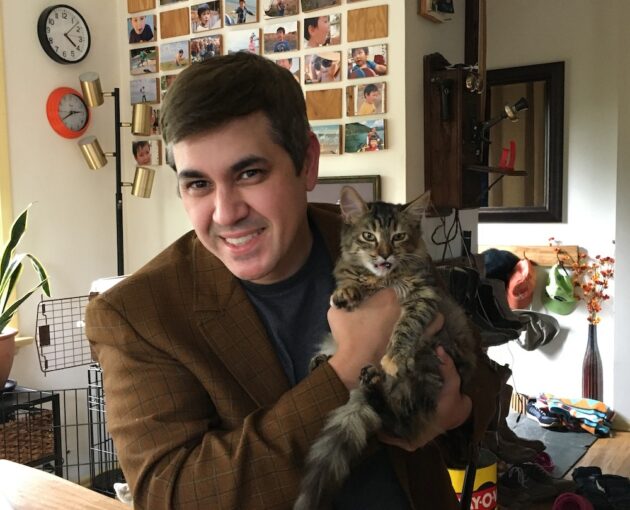
javiersanchezcat
Sanchez with his cat.

Sanchez’s new employers at the tech firm Akvelon saw promise in the idea and gave him the green light.

The resulting app, MeowTalk, is now available on iOS and Android.

There are two layers to the concept: The first one involves nine or 10 “intents” common to all or most cats. They include vocalizations for “Feed me,” “Hey human!”, “Let me out,” and “Pay attention to me,” among others.

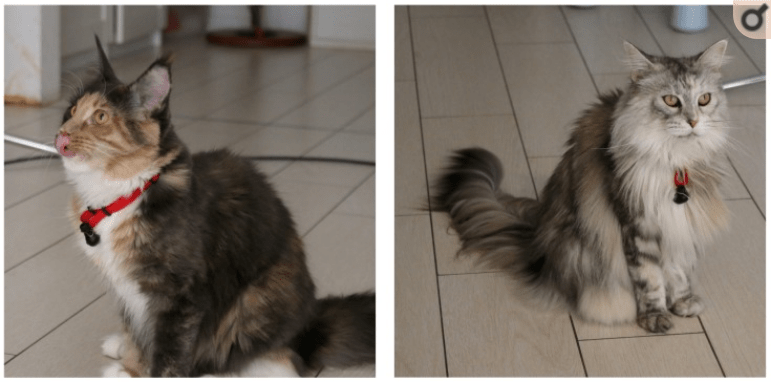
Sanchez didn’t guess or intuit the meanings — they’re based on research by a team at the University of Milan, who built a data set of cat vocalizations by attaching tiny microphones to cats and recording everything the fluffsters say. Each feline utterance was analyzed and catalogued by frequency, rhythmic quality and context, among other traits.
Screenshot_2020-11-12 Automatic Classification of Cat Vocalizations Emitted in Different Contexts
Two cats who participated in the University of Milan study: Note the small black microphones on their collars.

The second layer is where it starts to get really interesting: By using MeowTalk like Shazam, the app will start recording your cat’s particular trills, chirps and meows and — with your help — eventually piece together what they mean.

As with dictation software and machine learning in general, the more data the app gets, the better its translations become.

This is important because, while cats share many sounds, each cat develops its own unique vocalizations:

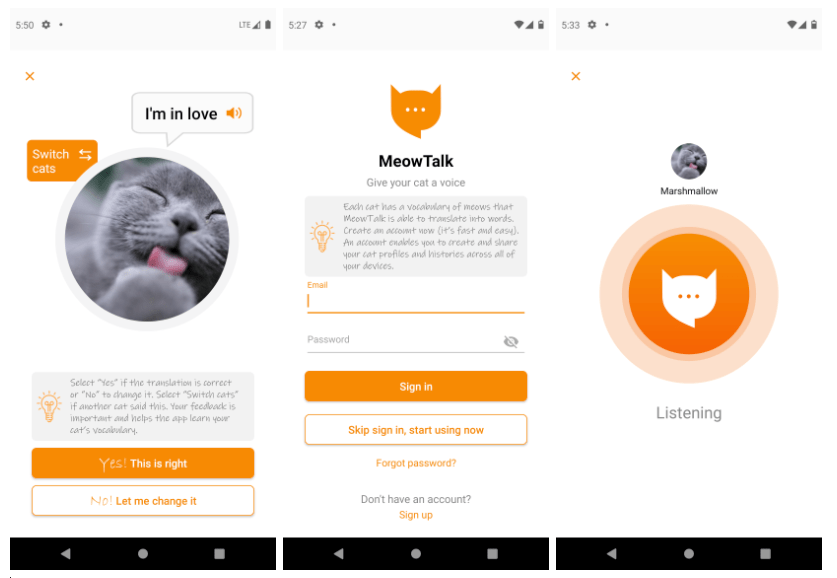
With MeowTalk, you can create a profile for your cat and start using its auto-recognition to translate your cat’s meows and start mapping its language. While some translations are built-in and inherent to the app, translations specific to your cat require you to train the app to recognize your cat’s specific vocabulary and intentions. Translations you deem to be incorrect can be corrected via the app. MeowTalk is not static; instead it learns and evolves with each translation that you confirm, adding to its corpus, just as we would add new words into our own memory banks or language processing programs.

At the same time thousands of other cat owners are also using the app, feeding the algorithm more data, which the app uses to improve itself. Development is ongoing, with future changes reflective of user (and cat) feedback.

“A tool like this can help certain people bond even more with their cats, especially if they can’t be in contact with other people on a regular basis,” Sanchez said. “So this could be a real game changer for a key demographic that have cats.”
Screen-Shot-2020-11-02-at-4.19.06-PM
MeowTalk’s user interface.

Applying what they’re learning via the app, Sanchez and his team are also working toward their next goal: Giving your cat a human voice. They’re developing a small device that clips on a cat’s collar and translates meows into human speech in real time.

That tech has the potential to give me nightmares. Imagine Buddy having a human voice and saying “Gimme snacks now, servant!” “Open the door, butler!” “You’re 23 seconds late with dinner!”

Maybe I’ll pass on the collar device. In the meantime I plan to download the iOS version of MeowTalk and give it a spin. I’ll report back in a week or two after giving it some time to adjust to the Budster. If any of our readers give it a shot, we’d like to hear your impressions as well.
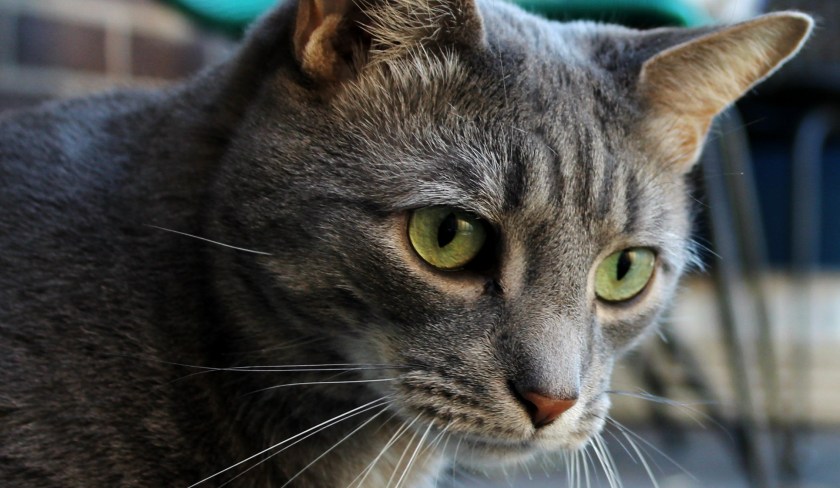
superhandsomebuddy1
Did you know? The Buddinese language includes 22 separate words for “jerk” and 37 different ways of demanding food.

AI Is Here, And It Wants To Study Your Cat’s Poop

A sophisticated AI analyzes your cat’s stools, looking for signs of disease and illness.

When Alan Turing was dreaming of a future made better by intelligent machines back in 1950, it’s a safe bet he wasn’t imagining computers that could analyze your cat’s excrement.

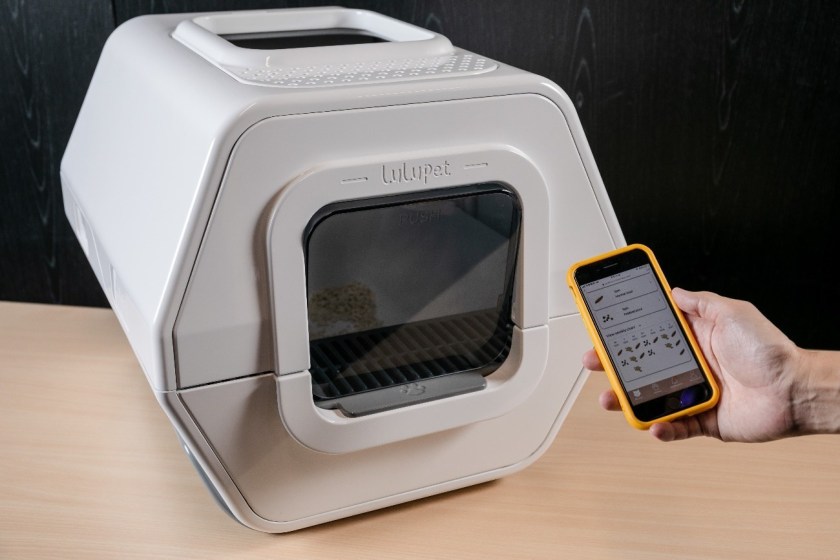
Turing, often called the father of artificial intelligence, couldn’t have envisioned a device like the LuluPet litter box, which harnesses the combined intelligence of man and machine — a proud lineage of devices from the Speak N Spell to the latest iPhone — to conduct “stool and urine image analysis” and compare your cat’s bowel movements to “excretory behavioral algorithms.”

Excretory behavioral algorithms! A sentence so ridiculous that you must be thinking I’m shitting you, dear reader, just like I double-checked to make sure the whole thing wasn’t some recycled April Fool’s joke.

Nope. The LuluPet litter box is real. It earned an Innovation Award honoree nod at CES 2020’s tech trade show, and it’s headed to Amazon, where you’ll be able to buy it for $149.

LuluPet-s-intelligent-litter-box-detects-littering-frequency-litter-weight-condition
The LuluPet litter box looks like it could be a high-tech microwave built for astronauts on the ISS.

Using a scale and sensor system, LuluPet can determine whether your cat’s performing a Number One or a Number Two inside the covered box, and it’s got visual recognition as well.

Featuring state-of-the-art optical fecal recognition

When your cat goes for a pinch, built-in cameras zoom in on the freshly-dropped deuce nuggets and, uh, log the images to LuluPet’s growing database of kitty crap. That’s when sophisticated algorithms get to work, analyzing the turds’ attributes — including texture, consistency and color, apparently — so it can compare them to others, ostensibly to alert you to any health problems plaguing your stoic kitty.

Worried that the device won’t work because your cat buries her business? Fear not! LuluPet uses “AI image restoration technologies” to recreate your cat’s turd so it can run it through its stool database.

“The litter box comes with 2 AI systems: one for litter analysis, and another that analyzes clumping between litter and litter box material,” the Taiwan-based company explains. “The latter attempts to reconstruct litter shape and present it to the former for confirmation, and can currently identify litter with an accuracy of up to 90%.”

NASA doesn’t even have tech like this!

IMG_2676
“SkyNET became self-award in my litter box!”

Put away those fears of rogue AI trying to wipe out humanity. Lighten up. Take a load off. AI doesn’t want to kill you. It just wants to amass the world’s most impressive collection of feline fecal photographs.

There’s an app for that

Of course, you may want to verify your cat is performing healthy bowel movements for yourself, and an integrated app allows you to tap into the litter box’s camera feed to watch kitty having a nice growler. Welcome to the future, folks.

And for those of you who think this is a fantastic idea but might balk at the pricy LuluPet because you’ve got an entire pride of little lions, fear not: The device’s AI can differentiate between the output of multiple cats by looking for the unique features of each kitty’s downloads.

Again, I’m totally not making this up.

Now that we’ve had our fun, it’s only fair to note the LuluPet litter box is well-intentioned, and if it works as intended, it could lead to critical early diagnosis for animals who are notorious for hiding pain and discomfort:

“Among the top ten causes of death for domestic cats, seven were feces-related diseases. Cats, however, are born concealers of their own weaknesses, making it difficult for owners to find out whether their precious feline is in pain. LuluPet illustrates this with the example of kidney failure: Statistically, a cat’s kidneys are 70% damaged by the time the owner suspects an illness and brings the cat to the veterinarian. The organ damage is not only irreversible, but subsequent medical fees may cost up to US$ 1,200.

Sick cats aren’t completely undetectable. According to the Bristol stool scale, cat feces may be divided into 7 categories, ranging from constipation to diarrhea; constipation may be caused by the pressing of a tumor, while symptoms of diarrhea may be the result of common systemic diseases such as kidney failure. Stool analysis thus becomes the most straightforward way of detecting these diseases.”

Maybe an all-knowing machine overlord to watch over your feline overlord isn’t such a bad thing.

skynet
“Urinalysis complete. Stool satisfactory. Have a nice day.”