Kitty Climbs On Imam, Demands Pets During Ramadan Prayer

The cute calico joined an Algerian imam for evening prayers, climbing up to his shoulder as he led his mosque in worship.

A cat in Algeria reminded an imam that members of her species get scritches when they want them — even in the middle of prayers during Islam’s most sacred month.

Cats are allowed to come and go as they please in mosques, and Muslims view cats favorably, in part because the Prophet Mohammad was fond of them. There’s even a famous story about Mohammad cutting his sleeve off instead of disturbing one of his favorite cats, who was sleeping comfortably on the sleeve when the prophet was getting up for prayer time.

On Wednesday, Imam Sheikh Walid Mehsas was leading tarawih — an evening prayer — when a calico rubbed up against his legs, meowed and then climbed up to his shoulder. She continued rubbing affectionately against him as he continued the prayer:

The prayers were broadcast on a live stream and the moment quickly went viral, with many praising the imam for his patience and love for the cat even as he led an important prayer. (Some comments on the live stream indicated the cat may belong to the imam, or the other way around, although that has not been confirmed.)

After leaning into the microphone as if she was going to join in the evening prayer, kitty thought better of it and hopped down off the imam’s shoulder, opting instead to claim a few more humans as her servants by rubbing up against their legs.

Whether by demanding pets during religious ceremonies, invading the diamond and pitch during baseball and soccer matches, or casually strolling on stage during concerts, cats have shown little regard for human activities and, true to their reputations, have made it clear that cat time takes priority over human time.

Despite that, or perhaps in part because of it, we still love the little stinkers. Perhaps that explains why I can never be mad at Bud, even when he plops himself in front of the screen during crucial moments in video games or tugs down at a book I’m reading, to demand I give him his scritches. I am his humble servant.
Tiny Sand Cats Have The Largest Ranges Of All Felines, Study Says

The little-known, Lilliputian species of feline thrives in some of the harshest environments on Earth, proving cat species are capable of remarkable adaptations to their surroundings.

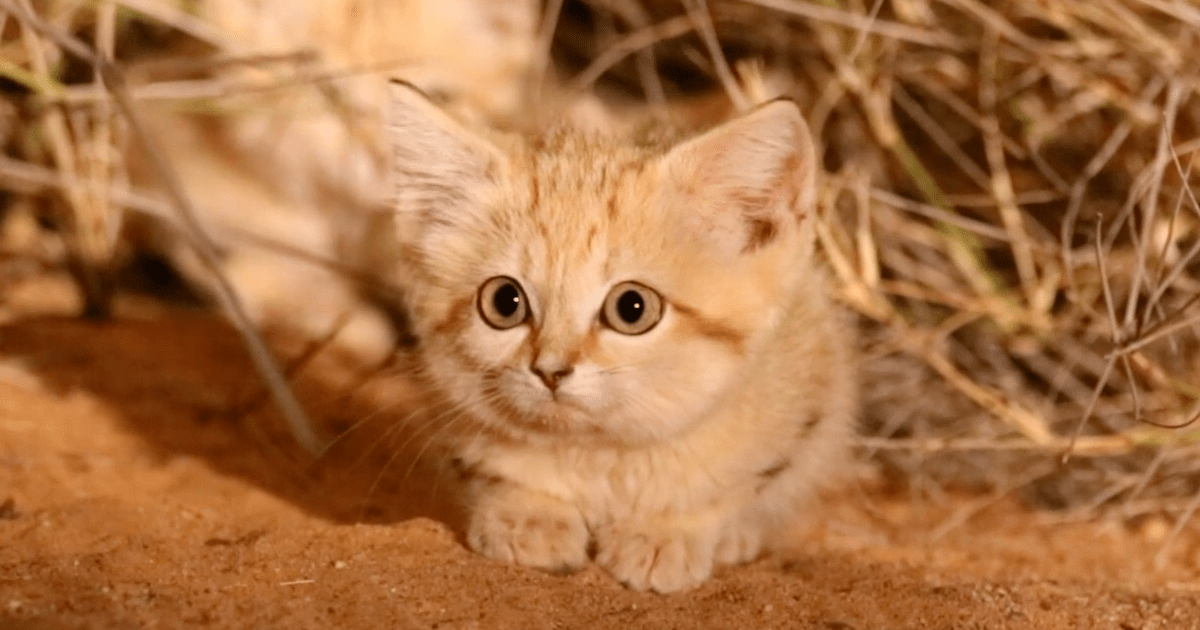
There’s a lot we don’t know about felis margarita, so much so that kittens of the elusive and stealthy species weren’t photographed in the wild until 2017.

Now a study has unveiled a surprising fact about sand cats: despite being tiny in stature, they occupy huge ranges that can rival the size of territories claimed by big cats like tigers and jaguars. One cat claimed 1,758 square kilometers — about 1,093 square miles — for himself according to Gregory Breton, the study’s author, who said the cat’s behavior showed sand cat ranges are “considerably larger than previously estimated.”

That individual maintained his impressive range for more than six months before moving on. His behavior and the movement of 21 others tracked via radio collars suggests the species could be semi-nomadic, moving or adjusting their ranges as they look for prey and water in some of the hottest, most arid environments on the planet.

“If true, this type of movement in response to rainfall is previously unrecorded among wild cat species,” wrote Breton, who is managing director of the cat conservation group Panthera in France.

In addition to following sources of water, the cats may maintain such large ranges because prey are more spread out compared to biomes like jungles, forests and wetlands where other species of cats make their homes.

(Above: Tap or click the images for full resolution versions.)

Impressive ranges weren’t the only surprise the tiny cats had for researchers. Breton and his colleagues managed to catch and examine more than 40 sand cats before releasing them back into the wild and noted they were all healthy, with few scars, no fresh wounds and no broken teeth.

The lack of wounds “means that it is likely that sand cats exhibit little territoriality and tolerate each other across their ranges,” Breton wrote  “This beloved cat may indeed share habitat with others of its species — maybe their perception does match their nature, at least towards other sand cats.”

Sand cats can be found in the Algerian Sahara, the deserts of the Arabian Peninsula and countries like Chad, Niger and Morocco. The Panthera team tracked the Lilliputian felines in the latter country, traversing the desert and arid landscapes of southwestern Morocco where temperatures peaked at 122 degrees Fahrenheit (50 degrees Celsius) during the day.

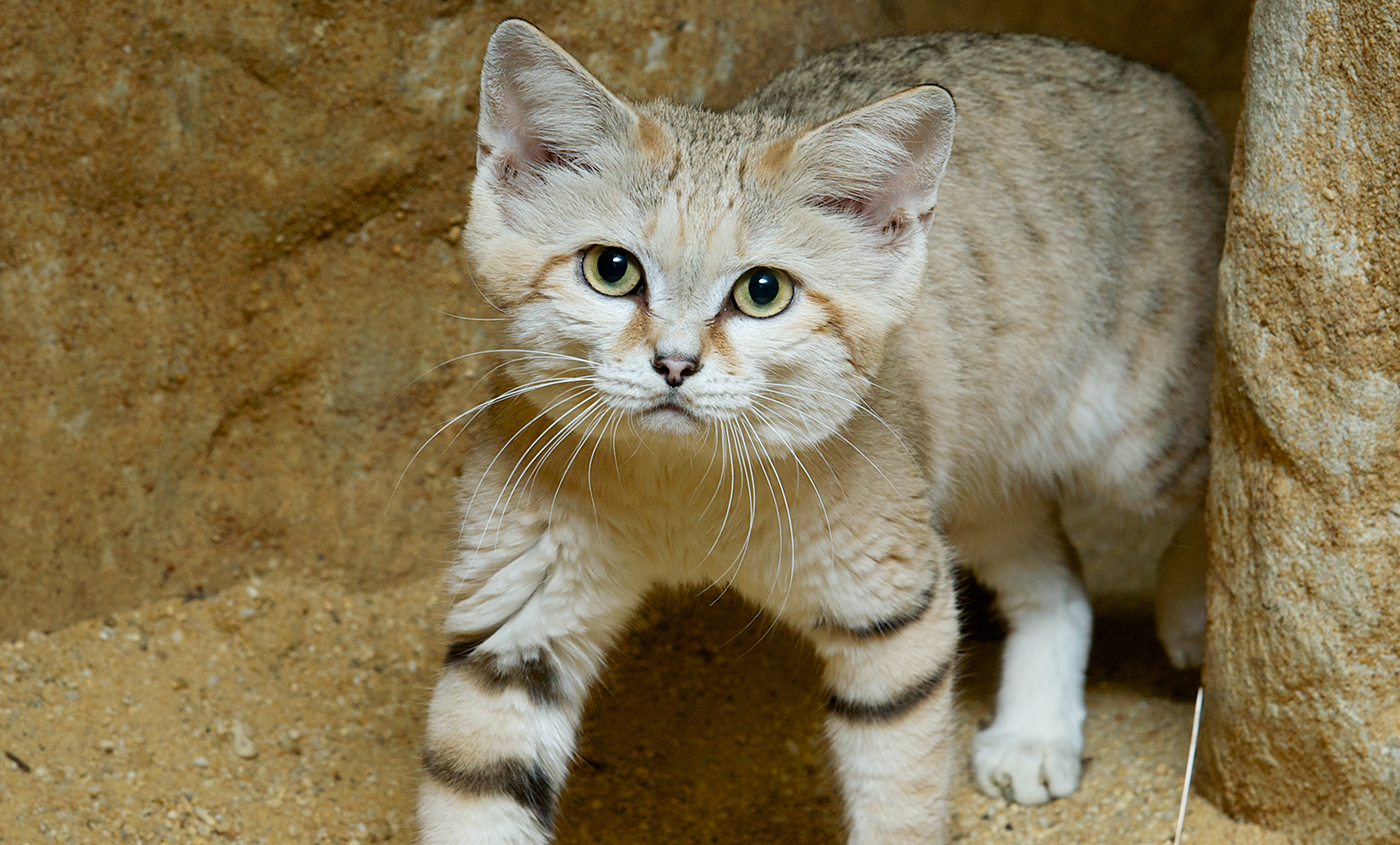
Sand cats have what Breton describes as “whimsical faces,” sporting wide, swept ears to go along with the general horizontal appearance of their heads.

They have golden, classic tabby markings and sand-colored fur with well-defined dark rings on their limbs, allowing them to expertly blend into their surroundings. Sand cat camouflage is so effective and the species is so quiet that one of the best ways to find them is at night, using search lights to pick out their reflective inner eyelids amid the desert landscape.

They’re also considerably smaller than house cats, weighing up to 7.5 pounds.

Breton said his team’s research is critical for estimates of sand cat population, which in turn will help authorities determine the conservation status of the elusive feline.

20130418-001CN
Credit: Panthera