The police are looking for the public’s help in identifying and tracking down a man seen in a disturbing video.
Cops are looking for the public’s help identifying a man who abused a cat, injuring the feline so badly it had to be euthanized.
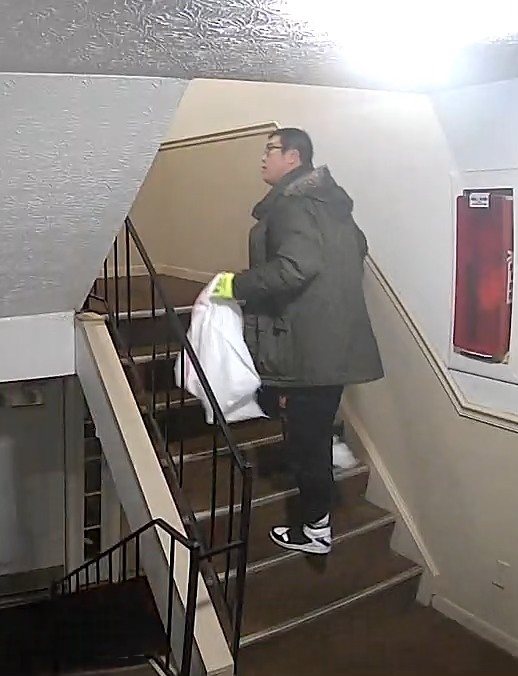
The man chased the cat into an apartment complex in Hamilton, Ohio, on Jan. 24 at 9 p.m. He caught the cat, forced it into a plastic bag and then slammed the bag down hard on the stairwell, according to footage from security cameras the complex. He dumped the cat, still alive and suffering, behind the apartment complex and fled.
The cat was found by deputy dog wardens, according to local media, but had a fractured pelvis and spine and had to be euthanized.
A still image from Jan. 24. Police say the suspect returned last week to scope out security cameras. Credit: Butler County Sheriff’s Office.
In addition to being shockingly cruel, the suspect isn’t the sharpest tool in the shed. Cops say he doesn’t live in the complex, but returned there last week to look for surveillance cameras. In doing so, he gave the police a better look at his facial features and more images to release to the public.
“In the new photos of the suspect, he is wearing the same coat and shoes, but has a recent hair cut, according to the BCSO.”
For those of you living in the Ohio area, details on how to contact the Butler County Sheriff’s Office are in the post below. Help them find this cruel man so he can be prosecuted and convicted.
The women were arrested for managing a cat colony in the summer of 2022, convicted in December, then won a subsequent appeal in April of 2023. Now they’ve filed a lawsuit against the police and mayor involved in the saga, alleging false arrest and malicious prosecution.
Two women who were arrested for trying to manage a colony of stray cats have filed a lawsuit against the mayor, police chief, assistant chief and three officers involved in the ugly incident.
The July 2022 arrest drew nationwide outrage and condemnation as police responded in force to a complaint that Beverly Roberts, 86, and Mary Alston, 61, were trespassing in a wooded area and trapping cats. Body camera footage showed police treating the women like violent criminals, the police response itself was disproportionate, and the police chief doubled down on his insistence that the women deserved to be treated harshly even after damning footage showed the officers laughing about “beatin’ up on some old ladies.”
Now Roberts and Alston have sued Wetumpka Mayor Jerry Willis, Police Chief Greg Benton, the assistant chief and three officers, according to the Montgomery Advertiser.
Noting that the women were paying out of their own pockets to help manage the stray cat population, the paper detailed the allegations in the civil suit:
“The suit alleges that Willis directed their arrests and that Benton and Reeves acted on the mayor’s orders. The women had angered city officials for “being vocal” about the care of animals in the city and appearing at several city council meetings to complain that the city was not enforcing anti-animal cruelty ordinances on the books, specifically the law banning the chaining or tethering of dogs, the lawsuit states.
The suit argues that the women were arrested under false circumstances. The women were originally charged with criminal trespassing.”
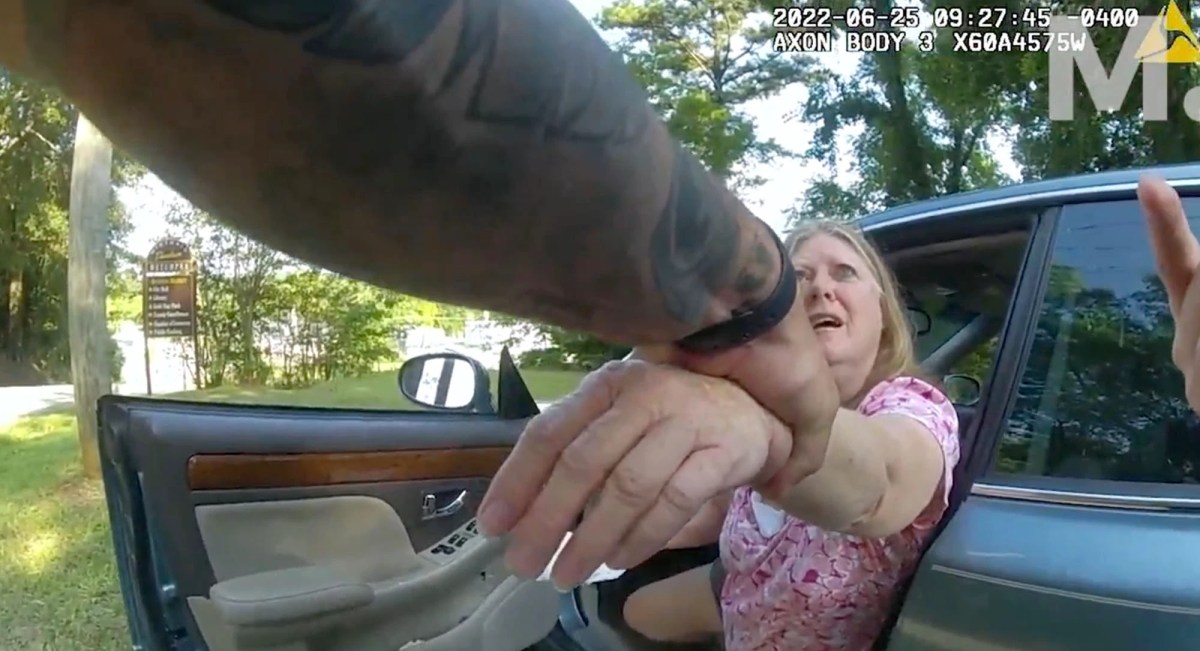
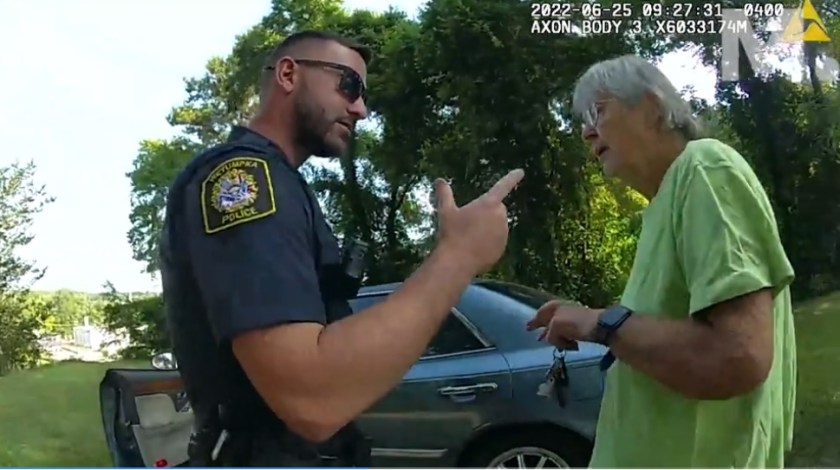
Footage of the summer 2022 arrest showed officers handling the women roughly, jabbing their fingers in their faces, threatening them with additional charges and barking at them to move more quickly.
The women were taken aback.
“I’m teetering on going to jail for feeding cats?” Alston asked in body camera footage of the police response.
Another officer towered over Roberts, jabbing a finger at her and warning it was “going to get ugly” if she didn’t move more quickly before eventually cuffing her.
A Wetumpka police officer wags a finger at Roberts, who was 84 years old at the time, before handcuffing her hands behind her back and rifling through her personal possessions.
After a show trial in municipal court in late 2022, in which Roberts and Alston were convicted of trespassing by a judge appointed by Mayor Jerry Willis, the women appealed. Despite the conviction, the municipal trial resulted in the release of damning information, including the fact that it was Willis himself who called the police on Roberts and Alston, that he did so because he didn’t like their complaints about the way the city handled animal issues, and that he instructed the police to arrest the women before they arrived in four patrol cars and had a chance to assess the situation.
Willis called the police after spotting Alston’s car near a county-owned plot of land, and lacking any ordinance that prohibited feeding or trapping stray cats, the police resorted to charging the women with misdemeanor trespassing and “obstructing governmental operations,” a charge roughly equivalent to resisting arrest.
But the land was county-owned, there were no prohibitions on managing cat colonies or conducting TNR (trap, neuter, return), and the footage — which police tried to hide from the public for months before finally caving to legal threats from attorneys for the women — was damning, drawing universal condemnation.
Roberts and Alston appealed, and in April of 2023 county court Judge J. Amanda Baxley accepted a motion by prosecutors to drop the case.
The civil suit “alleges unlawful seizure and detention, excessive force, malicious prosecution, negligence, wantonness and other counts,” per the Advertiser.
Attorneys for Roberts and Alston didn’t specify a dollar amount, but said they’re seeking “compensatory and punitive damages” and legal fees related to the arrest and resulting drama, which has played out for more than a year and a half. A spokesman for the City of Wetumpka did not respond to the Advertiser’s request for comment.
A UK woman said she couldn’t bear the thought of leaving the cat behind on the Greek islands.
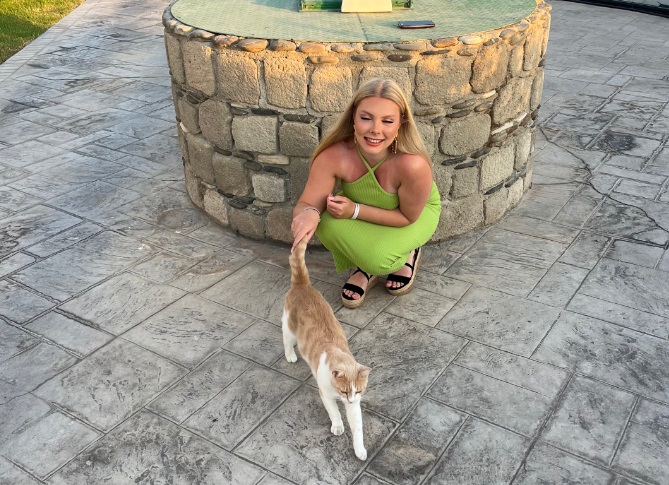
Jessica Addis met the friendly stray on the Greek island of Kos.
The UK woman vacationed on the Aegean island for sandy beaches, crystal blue water and the stunning ruins of classical Greek temples, but she fell in love a little white cat with ginger tabby markings.
Addis named the little one Zia after a sleepy Greek village on the slopes of Mount Dikaios, and began feeding the stray every day during her time on Kos this past September. Zia, who lived under a palm tree and depended on the kindness of tourists, liked her new human friend so much that she followed Addis back to her suite and began greeting her every morning.
Addis with Zia on the Greek island of Kos in September. Credit:
Leaving Zia at the end of her vacation wasn’t easy for Addis.
“I gave her the last of the cat biscuits and food and a last fuss, before I left,” she told Newsweek. “It broke my heart to leave her not knowing what would happen to her.”
When she asked hotel staff if anyone would care for the friendly moggie, she got a noncommittal answer. Greece lacks the extensive shelter infrastructure and trap, neuter, return (TNR) efforts of other western nations, and the result can be seen in the streets and the edges or human habitation, where a large population of strays eke out an existence by eating from garbage cans and hunting what they can.
“The hotel was closing for the season at the end of October, so I knew she then wouldn’t have the tourists to feed her,” Addis told Newsweek.
She said she was “heartbroken” thinking about Zia on her own without anyone to care for her or feed her during the off season.
“I knew straight away I needed to get her back to the U.K. I told my partner as we were on the bus to the airport that I was going to get Zia home. As soon as I got home, I started sorting everything to get her back to me.”
She enlisted the help of a Greek rescue group whose members wrangled Zia into a carrier, got her vaccinated, microchipped and onto a UK-bound plane with the appropriate paperwork. In all, it cost Addis $1,020, money well spent.
Addis with Zia after the latter was brought to the UK with the help of a Greek animal rescue group.
She welcomed Zia to her forever home over the holidays, but says the Greek kitty still hasn’t quite grasped that she’ll be fed and cared for.
“She is happy, content and has a belly full of food,” Addis wrote on a social media post that contained a slideshow of her with Zia on vacation in Greece, then later in her home in the UK. “Zia loves treats, playing with her bird feather catcher and having endless naps snuggled up with her blanket. Although she still thinks she’s stray, as she always wants food! She now has a loving home for the rest of her life.”
Unaware they were being recorded, elected leaders in a small Texas city let their imaginations run wild in a closed-door meeting about dealing with feral cat colonies.
One proposed mass poisoning to take out as many as 50 cats at a time. Another, perhaps fancying himself a mafia hit man, envisioned taking care of the city’s cat “problem” execution-style with a “.22 round to the back of the head.”
A third proposed dumping the bodies of the dead cats in an area the city already uses to dispose of unwanted animals.
“We have a location on this property that’s called deer heaven,” the committee member told colleagues at the Nov. 6 meeting. “I’m sure it could be kitty cat heaven too.”
Now the city council and wildlife advisory council of Granite Shoals, a city of about 5,100 in central Texas, are trying to explain themselves to an infuriated public, the local Humane Society and their own police, who rebuked them in a public statement that asserted their plans are illegal.
State and local laws “do not allow any cruelty to animals, including feral cats in our community,” police chief John Ortis wrote in a letter to the public.
The Hill Country Humane Society took the extraordinary step of “terminating its relationship” with the city, calling the committee’s plans “blatantly unethical and illegal” in a statement posted on Facebook.
“This recording reveals that not only was there an attempt to develop a plan to inhumanely shoot captured cats and dispose of their carcasses, but there was open discussion between members of the committee and the City Manager about the need to conceal such activities from the general public,” the Humane Society wrote.
Staff at the Humane Society said they’ll still take in stray cats from the city, but they’ve ended their official partnership.
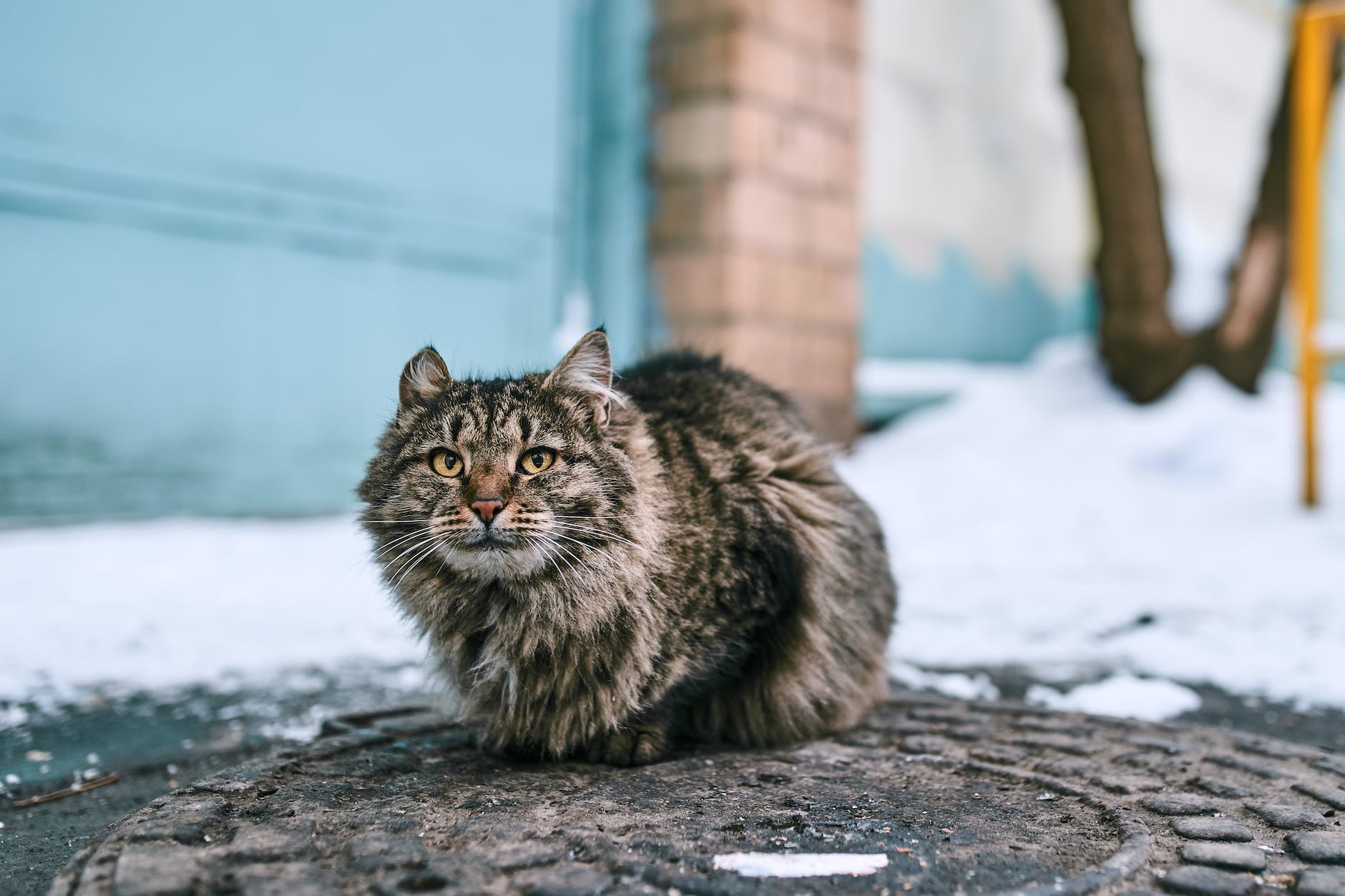
A stray cat. Credit: Aleksandr Nadyojin/Pexels
Todd Holland, the committee chair, denied that his members wanted to keep details of their plans from the public and told local newspaper the Daily Trib that the committee was merely trying to work out the “intricate details” of how to handle a population of about 400 cats. It’s not clear how the city arrived at that number, and there’s been no mention of an official effort to get an accurate tally.
“It’s not like we’re a bunch of cowboys running wild,” Holland said.
But in the recording, committee members clearly discussed hiding details from the public, and the Daily Trib noted that the committee used the word “remove” interchangeably with “euthanize” in written materials detailing the plan, perhaps to soften the language or obscure the fact that the proposed solution was to kill the cats.
Granite Shoals Mayor Ron Munos called the recording “disturbing” and said the committee’s plan will not be put into practice.
“The city is not doing this,” he told the Daily Trib. “We’re not going out and killing cats.”
Here at PITB we feel like a broken record regularly referring back to the junk studies blaming cats for killing billions of birds annually, but the reason we do is because those studies have real-life consequences.
Ill-advised, unethical and illegal plans to eradicate stray cats wouldn’t be explored at municipal and county levels if elected leaders weren’t told that trap, neuter, return (TNR) programs do not work and that outdoor cats pose the most significant thread to local wildlife.
In plain terms there’s been a concerted effort to paint domestic cats as dangerous, ruthless killing machines, the media hasn’t treated the claims with skepticism, and the result is a whole lot of cruelty and misery inflicted on innocent animals.
City councils, wildlife biologists, park rangers and others are not armed with the facts when they rely on those studies, and the result is bad policy and decision-making.
Stories like this one out of Texas have become more frequent over the past few years, and we suspect things will get a lot worse for cats without injecting some much-needed sanity and evidence-based solutions to counter the tidal wave of misinformation.
The kittens died “foaming at the mouth, throwing up bright green.” Acts of vigilantism against cats are happening more frequently as junk science about their hunting habits spreads via news reports.
Cat rescuer Erica Messina was trapping stray kittens to get them out of the cold and into homes before winter, hoping the young cats would have better lives.
Instead, they died horribly shortly after she successfully trapped them from a lakeside colony in October.
“All of the 13 kittens that I had all passed the same way,” Messina told KBTV, a Fox affiliate in Beaumont, Texas. “They were foaming at the mouth, they were throwing up bright green and peeing bright green.”
Two weeks later, per KBTV, a dozen adult cats from the same colony died the same way the kittens did, “some with chemical burns on their noses.”
“I was upset. I was at work when I found out and I came out here and started asking people, you know, what the problem was,” Messina told the station. “I got no answers.”
Like others who have cared for large colonies of strays who were killed by overzealous birders, Messina says she now has PTSD as she’s trying to save the lives of the remaining cats. She’s managed to catch all but four of them with the help of other local cat lovers and rescue organizations.
They’re getting no help from the authorities. Police referred Messina to Beaumont Animal Care, who told her they can’t help unless she can prove the cats were intentionally harmed. Not only are they putting the burden of proof on the victims in this case, but the victims can’t speak for themselves.
‘A bird-watcher’s paradise’
The colony lived in Collier’s Ferry Park, a lakeside park that also borders marshes where migratory birds spend time alongside native species. Indeed, Beaumont, a coastal Texas city of 115,000, markets itself, and Collier’s Ferry Park in particular, as a prime bird-watching spot.
Collier’s Ferry Park in Beaumont, Texas, where 25 cats were killed in an alleged poisoning. Credit: National Parks Service
A 2013 story in the local newspaper, the Beaumont Enterprise, detailed how local officials and business owners were promoting the park as a bird-watching paradise, noting that “[b]irders in particular are a lucrative market” driving tourism in the city. The story explains how the park is ideal for birds and those who like to watch them, details prized species found there — including herons, the least grebe and cinnamon teal — and includes input from a zoologist with a focus on birds, along with a local businessman who leads guided bird tours on the lake.
Collier’s Ferry Park is also listed on a site for “birding hotspots” while Texas Monthly calls it “one of the country’s best bird-watching spots.”
It is precisely the sort of place misguided bird watchers, driven to rage by widespread junk science blaming cats for declines in bird population, tend to dispense what they believe is vigilante justice. It stretches credulity to imagine anyone but a self-styled conservationist who blames cats for bird extinctions would risk a criminal conviction to poison a colony of cats, especially in a well-known hotspot for bird watchers.
Junk science blames cats for declining bird populations
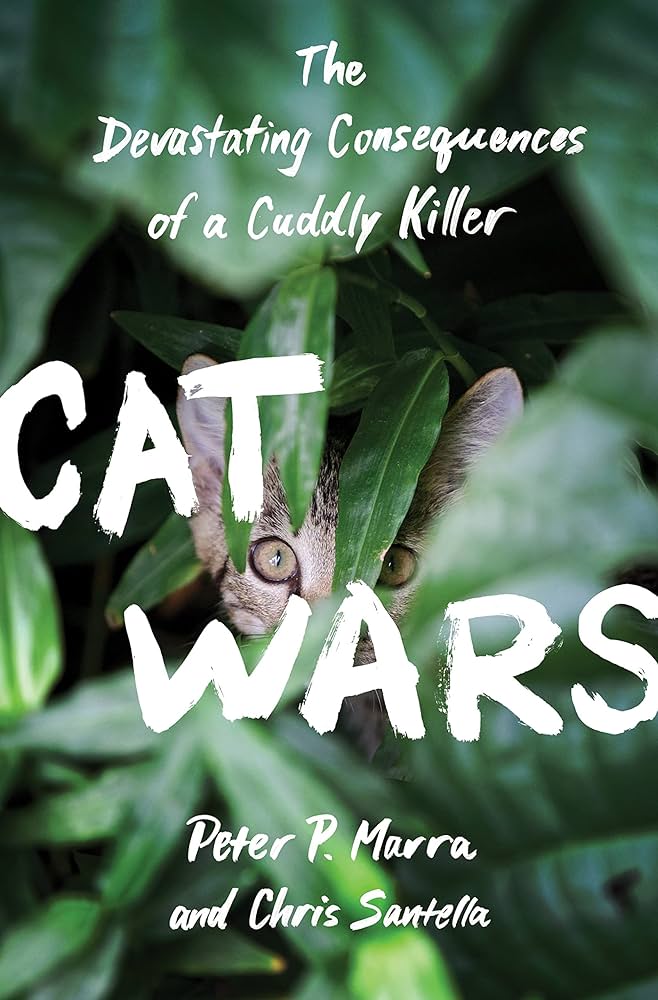
We’ve written our share about the disingenuous and agenda-driven activism that passes for research, most of it published by Peter Marra, a Georgetown avian ecologist who also authored the book Cat Wars: The Devastating Consequences Of A Cuddly Killer. The book advocates a “war” on cats and says they must be extirpated “by any means necessary” to protect birds and small mammals.
It does not, notably, put the blame on human activity, including but not limited to habitat destruction, the widespread use of harmful pesticides, wind farms, sky scrapers and all the other man-made structures, chemicals and machines that have contributed to a 70 percent decline in wildlife in the last 50 years.
But don’t take our word for it. Vox Felina calls Marra “a post-truth pioneer” who has claimed cats “kill more birds than actually exist,” while Alley Cat Allies echoes our own criticism by pointing out that Marra’s studies are composites of “a variety of unrelated, older studies” which his team uses to concoct “a highly speculative conclusion that suits the researchers’ seemingly desperate anti-cat agenda.”
“This speculative research is highly dangerous—it is being used by opponents of outdoor cats and Trap-Neuter-Return (including the authors) to further an agenda to kill more cats and roll back
decades of progress on TNR. And it is being spread unchecked by the media.”
In an NPR piece criticizing the studies blaming cats, Barbara J. King shares many of our own criticisms, chiefly that Marra and company have done no original research, relying instead on older studies, most of which have nothing to do with feline predatory habits, and none of which actually measure bird deaths from cats. King also notes, as we have, that it’s impossible to arrive at anything resembling a precise figure for feline ecological impact when Marra et al admit they don’t know how many free-ranging cats there are in the US, offering a uselessly wide estimated of between 20 and 120 million.
She also points out that the research team conducted “statistical perturbations” to massage the data into something fitting their agenda, which is activism, not science.
The researchers are guilty of “violating basic tenets of scientific reasoning when making their claims about outdoor cats,” bioethicist and research scientist William Lynn wrote.
“Advocates of a war against cats have carved out a predetermined conclusion,” Lynn noted, “then backfilled their assertions by cherry picking an accumulation of case studies.”
The war on cats
Across the world, people are using these studies and those of Marra’s acolytes to justify cruel cat-culling programs, like the recently-canceled cat hunt that would have rewarded children for shooting felines in New Zealand, and Australia’s widely-condemned mass culling that used poisoned sausages to kill millions of cats.
Stories of stray and feral cat poisonings in the US abound. Here at PITB we wrote a series of stories exposing how a government biologist in California took it upon himself to hunt cats under the cover of night, killing them with a shotgun and later celebrating in emails to colleagues, calling the dead cats’ bodies “party favors.”
Indeed, one of Marra’s own proteges, Nico Arcilla — formerly Nico Dauphine — went vigilante. Arcilla, who shares author credits with Marra on studies claiming free-ranging cats kill billions of birds, was a working for the Smithsonian National Zoo in Washington, D.C., when she was convicted in 2011 of attempted animal cruelty. The managers of a local colony, suspicious after strange substances began appearing in the feeders they’d set up for the strays, set up cameras which caught Arcilla placing poison on the food left out for the cats.
Back in Beaumont, Texas, a familiar story plays out: people who manage cat colonies out of love for the animals are working with local rescues, pooling together limited resources to save the remaining strays and hoping for justice.
“It’s terrible, you know? There are some people that just hate cats,” said Vyki Derrick, president of local rescue Friends of Ferals. “The rescuers have been trying to pull them out of the colony and it’s just sad that people want to interfere with that when the problem, ‘problem’ is being taken care of.”





 Pain In The Bud