

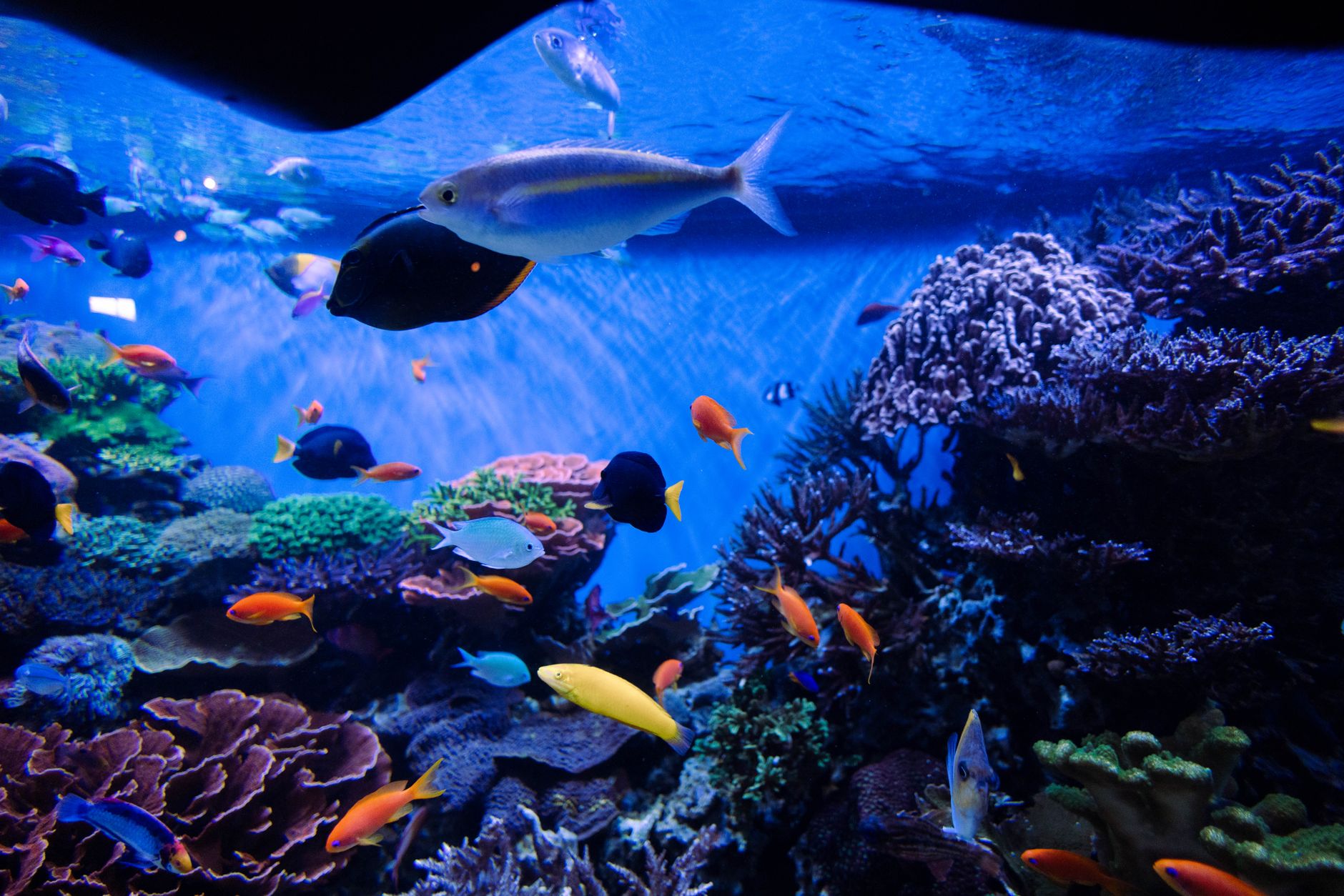
A new study claims we’ve gotten it wrong all these years, that pet cats and dogs aren’t good for young children, while kids who grow up with pet fish, turtles and hamsters learn empathy and develop better mental balance.
The authors of the study claim cats are “the only common pet linked to more mental health problems in children.”
Furthermore, the authors claim, pets like turtles, fish and hamsters are “linked to” positive mental health in children, while data shows dogs have no effect.
To understand what we’re dealing with here, we’ve got to break down “study,” “linked to” and “data” in relation to the report by researchers at the University of Valencia in Spain.
“Study” here means a meta-analysis of data collected by the INMA Project, a collaboration of universities, biomedical institutes and medical conglomerates in Spain. INMA is primarily concerned with researching the impact of environmental pollutants on early childhood development.
The INMA data was not collected specifically for this new study dealing with pets.
Secondly, while INMA did “track” some 1,900 participants from birth through six or seven years old, the “data” itself primarily consists of subjective reports by the parents of the children along with “environmental measurements and clinical tests.”
It’s not clear if the original data collection effort had anything to do with the presence of pets in the homes, or if that was just one of many data points gathered in a larger assessment. For example, the INMA questionnaires may have simply asked if the families have pets and what kind of pets they have without any further elaboration or information about whether, or how often, the children interact with the pets. There can be enormous variation in that area alone.
Then there’s “linked to,” a very specific choice of words by the authors. They’re using “linked to” instead of “caused by” because the data they have – if you can appropriately use the word data to describe the results of self-reported questionnaires based on subjective feelings – cannot distinguish between correlation and causation and really says nothing at all except certain animals were present in the homes of young children.
In all, 8.7 percent of the children lived in homes with a cat, which works out to a sample size of 165, all from Spain.
So we’re already on really shaky ground here. I don’t think there’s any real scientific value in information that comes from questionnaires distributed to parents, and certainly not when it comes to topics like mental health and behavioral problems.
The definition of bad behavior varies widely between parents in different families and even mothers and fathers in the same family. Was there a baseline? Did the participants receive instructions on how to describe their assessments so they’d at least roughly resemble uniform reports? Were there other commonalities among the children who lived in homes with cats? We don’t know the answers to these questions.

What we do know is that, putting all other concerns aside, the report claims that 165 children live in homes that have cats, or had cats at one time, and some of them have varying degrees of behavioral problems.
That the conclusions are vaporous becomes even more obvious when the authors go on to speculate, with no data, why children who live with, or previously lived with, cats are allegedly more likely to suffer behavioral issues.
They repeat common misconceptions about felines being aloof, claiming the nature of cats “limits emotional bonding” compared to other companion animals.
“Having fish, turtles and hamsters on a constant basis does seem to protect children from mental health problems,” the authors concluded, although again the reasons are pure guesswork.
I’m not sure how anyone can say feline behavior “limits emotional bonding,” then in the very next paragraph claim fish and turtles, animals with which there can be very little or no real interaction, “protect” kids from mental health issues. Not even “help protect,” but full on “protect.”
The authors also point to a common boogeyman, toxoplasma gondii. The parasite can be transmitted to humans dozens and potentially hundreds of different ways, including contaminated water and undercooked meat, but cats are blamed because they’re easily infected by it and can pass it to humans.
To be clear, toxoplasma gondii does not figure anywhere in the data and the researchers did not test the children for infection.

But the bit that sets off the most alarm bells in my mind is the claim that dogs have no impact on the mental health of children.
That should have immediately prompted the research team to go back and figure out where their analysis went funky.
There are so many studies linking cats and dogs, and especially dogs, to tangible improvements in mental health and mood that anyone who claims the opposite has a lot of work ahead of them to demonstrate why their findings are accurate and the abundance of studies that concluded the opposite are flawed. (Dogs are better studied than cats because they’re easier to control, so the abundance of studies on dogs shouldn’t be confused for a stronger impact on human health.)
Whenever I write something like this, I always worry I’m contributing to the anti-science positions of some people who view the entirety of science with suspicion.
Science is nothing more than a formal process for learning about the natural world. It doesn’t have an agenda. It’s important for us to separate our qualms with the methods and standards of particular studies from the idea of science itself. A study may be flawed, but the scientific method remains the best, most time-honored way to expand human knowledge we’ve managed to come up with.
There are also major differences between “soft” sciences like psychology and hard sciences like physics and chemistry. The latter are primarily black and white, true or untrue, while the former deal with uncountable shades in between. It’s hard to quantify human feelings, thoughts and behaviors.
I’m sure the researchers involved in this project mean well, but unless we begin to see other studies placing fish, turtles and hamsters atop the pet hierarchy for their impact on mental health, I think we can file it as an anomaly and move on.


That’s crazy. I don’t believe it for a second.
Having an age gap between my older siblings and myself, a lot of times they would be starting school earlier or having their extra activities while I was the only kid home — my family cat was there to comfort me and keep me company. I would have been so lonely without her.
After she passed away, when I adopted my cat on my ninth birthday, it was the best year of my life. I still look back on that year of one of the best years ever!
Science should always be questioned. Science has no motives, but the people who run, conduct, and pay for studies always have a motive.
LikeLiked by 1 person
Questioning results is built into the system of peer review, and while it seems to work really well in the hard sciences, it’s astonishing how much sloppy and lazy work passes for acceptable research and scholarship in certain fields of study.
That’s why I write posts like this and why I’ve been a longtime critic of the claim that cats kill untold billions of birds and other animals per year. That they have an impact on the environment is not in doubt, but we’re more than halfway through 2026 and still no one has made an effort to get real data outside of the D.C. Cat Count.
Where I think we get into dangerous territory is the belief that because some studies are poorly constructed, and some researchers may have agendas, all of science is somehow suspect.
When done honestly and rigorously, science is the best method we’ve come up with to expand human knowledge. That’s why I try to be careful to limit criticism to individual studies.
LikeLiked by 3 people
This specific study seems so messy to me. It’s hard to capture concrete data through simply questionnaires. Mental health itself is a difficult concept to measure in comparison to strictly physical health. And even in physical health, bodies are extremely complicated and complex, not like machines.
Does the study have a control? Who is to say that the behavioral issues in these children would have been worse or better without specified pets? It’s not like you can replicate two exact children with the same DNA and same environment, give one of them a cat and one of them a turtle, and then compare results. Now THAT could be telling!
I think that questioning is the heart of science! As I work in the medical research industry, there is no “trust” in science, it’s either in the data or it’s not. If something happened but it wasn’t recorded, then it didn’t happen. There is no basis of anything without proof of record. If a tiny little sliver of information is inaccurate, the entire study is thrown away. It’s kind of wild, but necessary!
But having said all that, my personal bias is my love for cats. I would be intrigued to see an exact replica of myself who lived life without cats. Sounds terrifying.
LikeLiked by 1 person
That’s exactly how I feel, re: questionnaires, and the added ambiguity of measuring mental health states or problems.
It’s so subjective, even if you give people guidance on how to report behavior they’re observing.
There are so many variables in home environments, the way kids are raised, whether they live in stable nuclear families or different family situations, how much space they have, what their school life is like, etc.
It would be a monumental task to control for all that stuff and identify a pet as the cause of something.
Good point about throwing out the entire study if the data is poisoned. In certain fields researchers will try to “fix” the bad data or paper over a lack of data by applying funky mathematical solutions. I’m not a mathematician, but I cannot see how that could be a remedy.
LikeLiked by 3 people
Absolutely, it’s amazing how thorough and regimented many studies are. And then there’s ones like these… haha. But a study is a study, always worth looking at and discussing.
LikeLiked by 1 person
I’m sick of this shite…
LikeLiked by 2 people
🤣🤣🤣🤣🤣🤣Imbecile. And 🖕🖕🖕to that idiot. Cannot wait to tell my clients and friends with kids and cat. I can see them laughing.
LikeLiked by 1 person
I’ve had all of these pets in my childhood, and more…Then I’ve had numerous cats during my adult years.
What shall they make of that?
LikeLiked by 2 people
Individually they wouldn’t since it’s anecdotal, but since this particular analysis looked at the results of questionnaires from kids in Spain, it’s definitely worth asking the results would be different if they had data from, say, people in a dozen different countries.
There are separate studies that have looked into possible links between toxoplasma gondii and developmental issues, but that stuff is in the early stages as well. Not enough data, not enough studies yet.
LikeLiked by 3 people
They’re wrong.
LikeLiked by 1 person
It’s true that science has no agenda, but the same can’t be said of people. And unfortunately, not all scientists or researches manage to be impartial and set their beliefs aside when conducting research. After all, they’re human. As for this study, I honestly think it’s nonsense, when a person has a pet, it’s only natural to form an emotional bond. Of course, not all cases are like that, and we know there are many people who are, in fact, cruel to their pets, but that behavior usually extends to how they interact with other people. Blaming cats for causing mental health issues honestly strikes me as similar to those “studies” that blame video games for violent behavior. The worst part is that the ones who suffer because of this are the animals, the cats in this case, who can’t speak up or defend themselves. You’re not criticizing science BigBuddy; you’re pointing out the inconsistency of this “study.” And that’s the right thing to do, it’s what needs to be done.
LikeLike
I grew up with (at various points) turtles fish, two gerbils, and a cat. The cat was the only one who would cuddle. I still talk about Tigger
LikeLike