
Mattias Krantz got Tako from a Japanese seafood market.
“That guy,” he told the person manning the stall, pointing to a common octopus sitting in shallow water with others of its kind, not even given room to swim before it was to become someone’s meal.
It is the ultimate as far as random interventions of fate go, and I kept thinking about Tako’s almost-end on a plate while watching musician Mattias Krantz teach the clever animal how to play piano.
Octopus are smart. Comparing animal intelligence to human intelligence is always a flawed and imprecise effort, not least because of differences in psychology and evolution, but the eight-armed invertebrates have cognitive abilities on par with humans at three years old. That is to say, some of their cognitive gifts exceed those of small children, some fall short, and some are about equal. It’s always going to be apples to oranges between species.
Octopus learn quickly simply by observing. They remember individual people even if they haven’t seen them for months. They play, explore and even decorate their dens. In the wild, species like the mimic octopus perform nature’s most astonishing acts of imitation, not only changing the hue, texture and patterns of their skin, but also their shape and the way they move. They can imitate dozens of creatures, blend into the sand, and disguise themselves as plants and rocks. When a predator approaches, the mimic octopus takes on the shape, color and behavior of another predator — a highly venomous fish, for example — and scares off the aggressor. That requires serious smarts.
Technically, saying Tako is playing piano may be a stretch. Octopus can’t hear, so Krantz rigged Tako’s tank with a device that turns sound to rhythmic pulses in the water.
Yet there is no denying that Taku took to the piano with enthusiasm, happily played it, even looked forward to it every day when Krantz’ multiple iterations of waterproof keyboards finally reached a point where the animal could reliably manipulate the keys. (Krantz had to create switches Tako could pull, for example, as it’s difficult for the invertebrates to push keys.)
Krantz’ determination is admirable. The Swedish musician, known for his quirky projects, overcame major hurdles that would have stopped most people, and navigating some of those challenges required radical reconsideration of how humans and animals interact with the world.
Yet Krantz and Tako got there in the end, and the piano is only one part of it. Tako is short for takoyaki, a Japanese fried octopus dish. Watching Tako’s interest and enthusiasm as he tackled the piano day after day, you can’t help but think about his less fortunate tankmates, and our collective ambivalence to the overwhelming evidence that we share this planet with billions of other minds, each with their own thoughts and feelings.
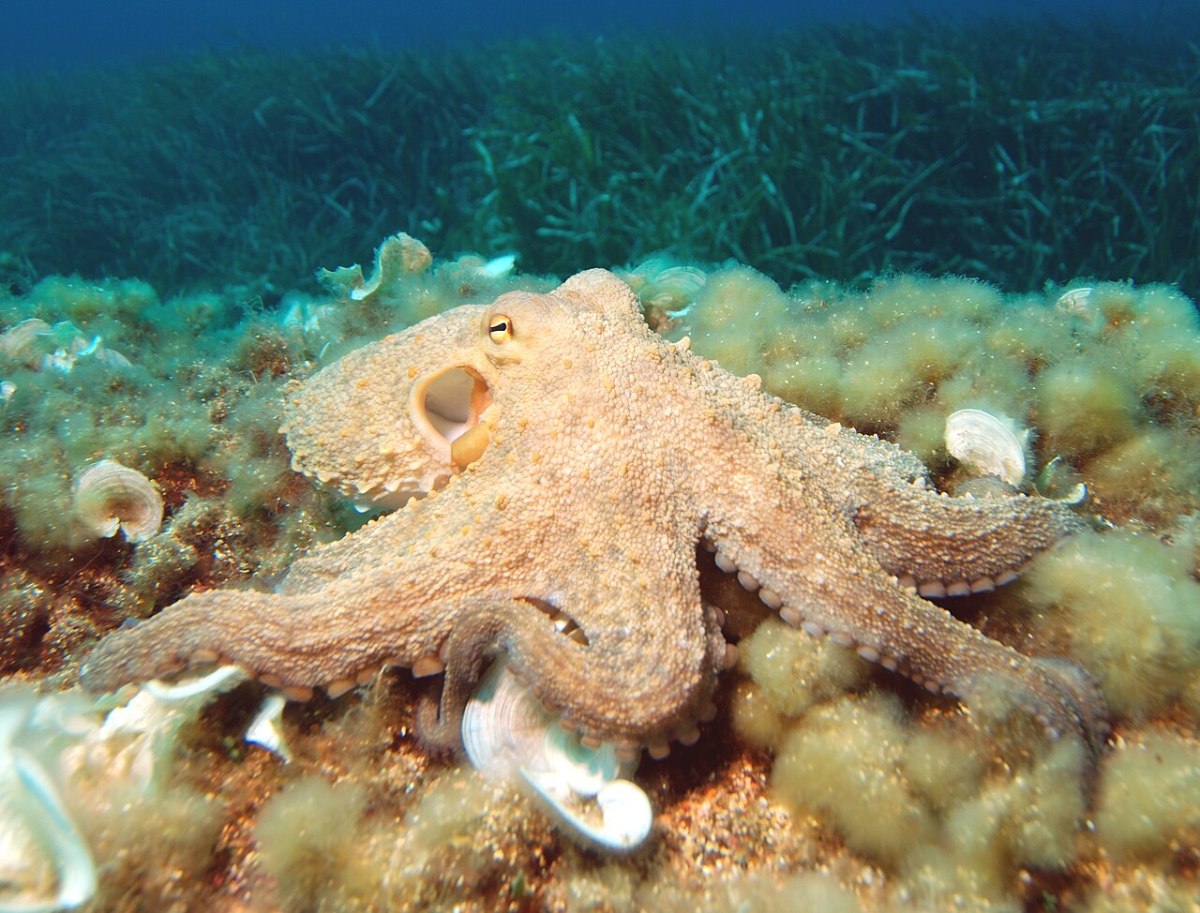
Header image of common octopus credit Albert Kok/Wikimedia Commons
 Pain In The Bud
BRAVO!!!
LikeLike
The first time I saw a living octopus was in a Jacques Cousteau film at school. It terrified me. It’s amazing what they are capable of doing.
LikeLike
Yeah, I mean, they’re slimy, weird as hell, and there’s a reason Lovecraft’s Cthulu scares the hell out of people with his giant octopus-like form.
But they are also benign, friendly, clever, and there are verified accounts of them building forts for themselves and even a “city” where a group of them built homes in a cluster. Can you imagine how intelligent they would be if they lived longer and had some way of passing down knowledge over generations?
LikeLiked by 1 person
I think it’s great that he saved that octopus. But I would’ve been even more happy if he’d let it go. It’s a wild animal. It shouldn’t have to live its life in a tiny (compared to the ocean) aquarium.
LikeLike
Did you watch until the end? Mattias was going to let Tako go and drove him back to the ocean in a container, but had second thoughts. I don’t know what to say about that and I don’t know enough about “rewilding” an octopus, if there is such a thing, to make an informed comment.
Maybe Mattias felt Tako’s chances of making it in the wild were not good after so long away, or maybe he felt a bond.
You’re absolutely right, it’s a wild animal and we sure as hell can’t read octopus expressions when we struggle to do the same with cats and other familiar animals. Who knows?
LikeLike
There’s a 2020 documentary on Netflix called ‘My Octopus Teacher,’ about a guy who forged a relationship with a wild octopus he dived to visit every day.
LikeLike
That was great. I never thought I’d be so invested in the fate of an octopus, but that documentary did a fantastic job of showing us she absolutely had her own feelings and thoughts, and the interspecies friendship was amazing.
LikeLike