
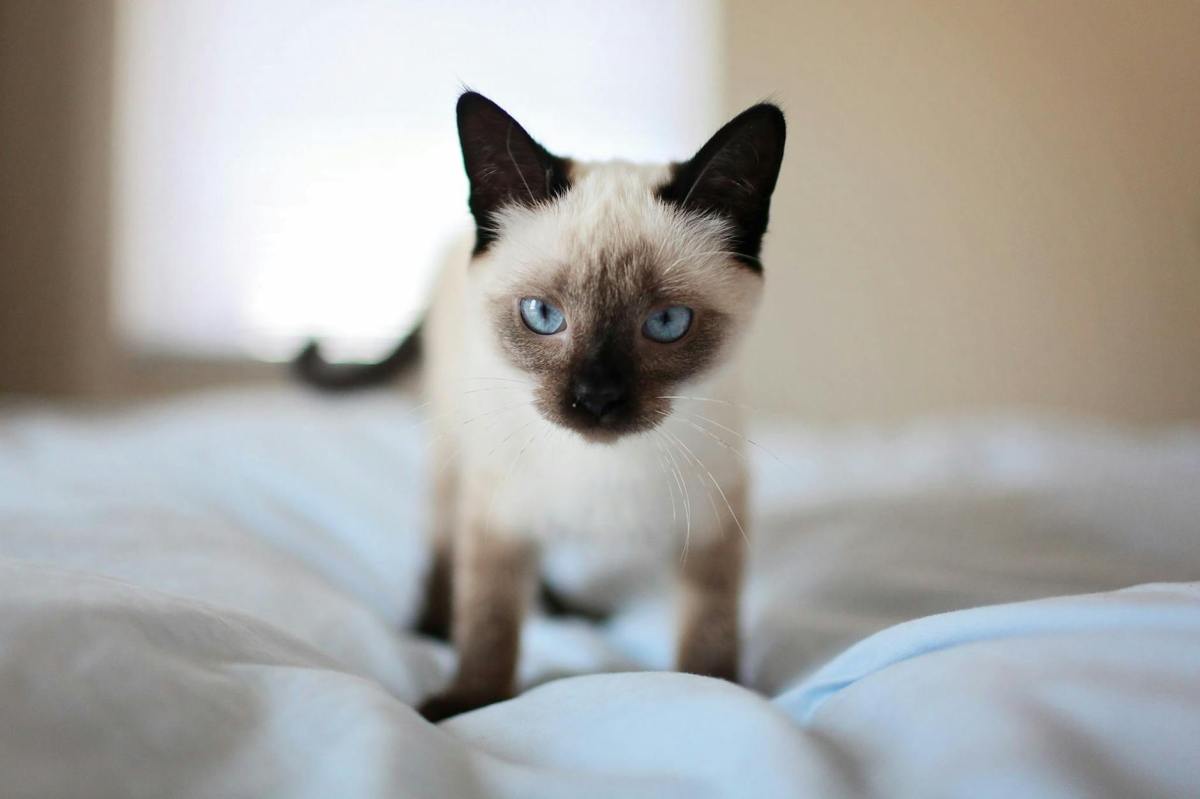
Is kitten season getting longer because of climate change?
Some rescuers in California think so, according to a story in Santa Rosa’s Press-Democrat.
“Heat and warmth is what it’s all about,” said Mary Pulcheon, trapping coordinator for Forgotten Felines of Sonoma County.
Pulcheon and the executive director of Forgotten Felines, Pip Marquez de la Plata, told the Press-Democrat that strays in their care had given birth as late as December in 2023 when kitten season generally runs from late March through October.
They say the typical kitten season has shifted and is now longer due to rising temperatures caused by climate change.
It’s an unverifiable claim for several reasons.
First, we don’t have reliable estimates for how many cats there are in the US, let alone stray and feral cats. Any estimates are guesses, and they vary wildly from 20 million on the low end to 120 million, which seems an excessive and unrealistic number.
To date there’s been a single comprehensive feline census in the US, the D.C. Cat Count. It took three years, several million dollars, hundreds of trail and trap cameras, and the efforts of an army of volunteers and staff.
The final tally: 203,595, with only 6,533 unowned cats fending for themselves and drifting between managed colonies.
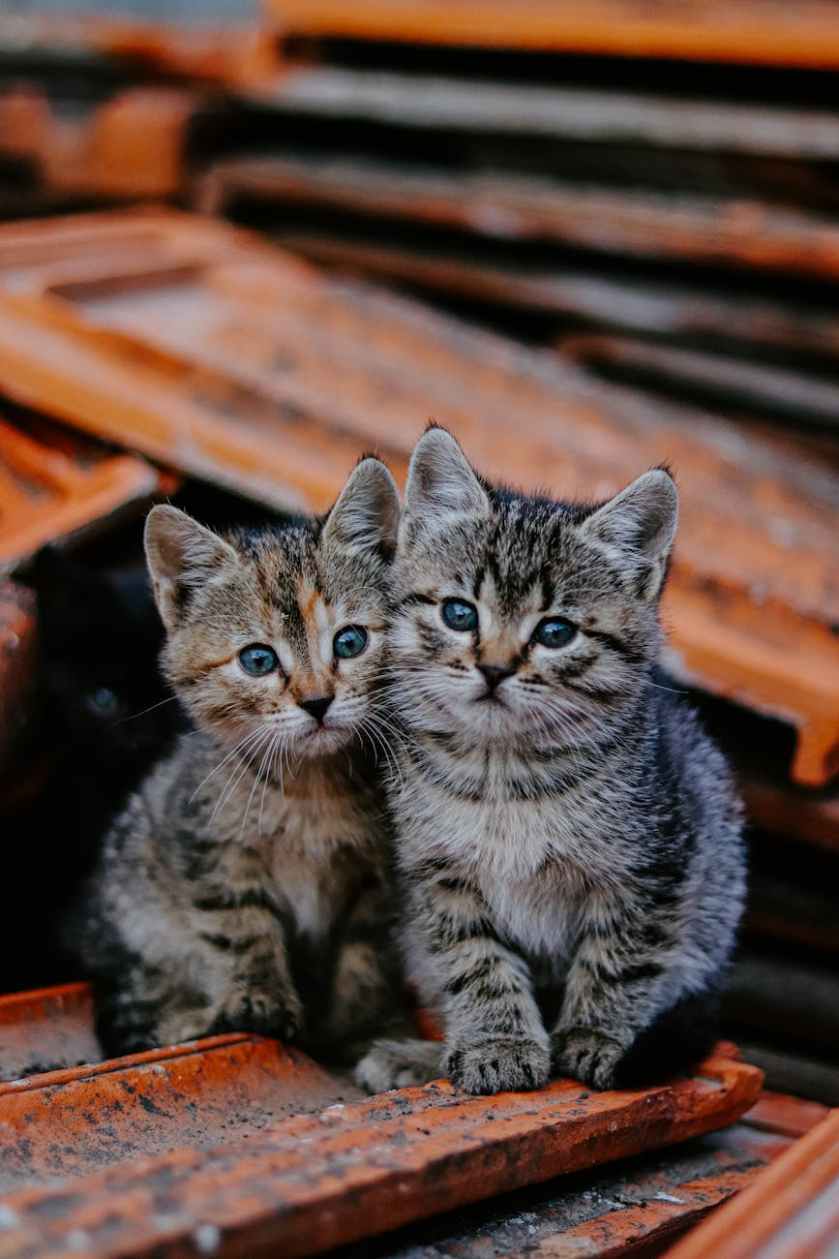
The DC Cat Count is historic and has already proven its value by facilitating informed debate, showing rescuers/TNR volunteers where to direct their efforts, and yielding valuable data on local ecological impact.
Alas it’s a one-off, so we don’t know anything about how the population has changed over time.
Secondly, while there absolutely is scientific consensus that human activity is driving global temperatures up, there’s debate about how much temperature flux is directly attributable to modern civilization. We’re also looking at planetary timescales here, tracking changes that happen not just over decades, but centuries and millennia.
Attributing shifts in kitten season to climate change is a bit like attributing single storms to climate change. These are single data points from which we can’t draw conclusions.
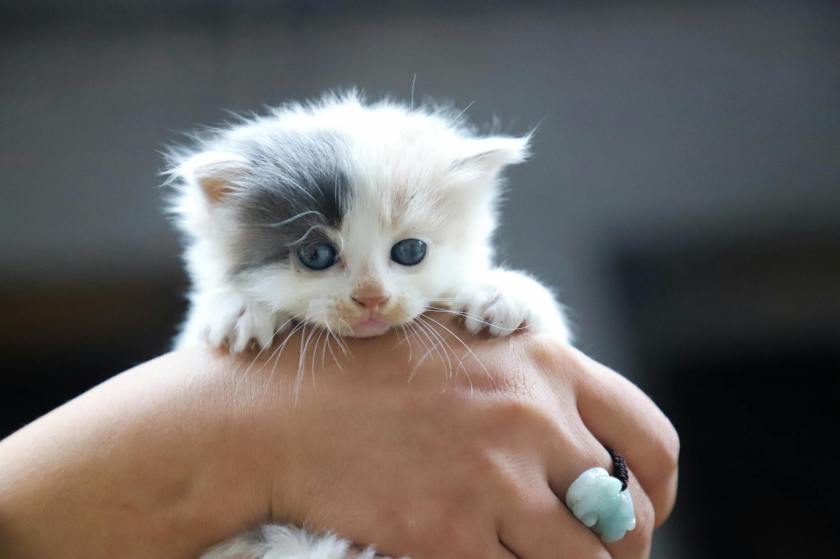
Lastly, there could be dozens of factors skewing “normal” kitten season, and that’s assuming the March through October season is normal by historical measurements. We don’t know that for sure, and we can’t know it without data.
I’m limited by a lack of imagination here, but changes in kitten season could be regional, reflect non-climate weather patterns, or adjust according to cyclical patterns. Things as seemingly unimportant as ambient light pollution can have a profound effect on animal behavior, and it always helps to remember that felines are sensitive to stimuli that we literally cannot detect. Cats can pick up high frequency sounds we can’t hear and smell things beneath the notice of our own weak noses. They even have a second form of olfactory input, a literal sixth sense that is unmatched by anything in human biology.
We understand very little about how those things impact feline behavior.
With all things considered there could be hundreds of reasons for changes in kitten season, and that’s assuming the changes are real and people aren’t mistaking outliers for trends.
Ultimately we don’t need to draw conclusions about whether there are more kittens born each season. We know TNR, while imperfect, is the best way to humanely reduce stray and feral populations, and we still have a way to go before cats are no longer euthanized because we can’t find homes for them.
 Pain In The Bud
OMG. They’ll use anything as an excuse to push that Agenda. Crazy.
LikeLiked by 1 person
This kind of stuff actually undermines efforts to talk about climate change in reasonable terms because people can’t say we have to be guided by science, then turn around and use single data points like storms or anecdotes as “evidence.”
I’m sure they mean well and I respect them for rescuing cats and kittens, but there are so many potential factors at play and we really have no data.
If society is talking about human impact, we could start with the fact that we’ve wiped out 70% of Earth’s wildlife since 1970, but few people want to talk about that because it brings up uncomfortable questions about habitat destruction and endless human expansion.
LikeLiked by 1 person
Not to mention the “solutions” being proposed do NOTHING to address real issues BUT they do line the pocket books of the Usual Suspects with more of our $$$$$$.
LikeLiked by 1 person
You’re telling me carbon credits don’t actually help the environment?!? I’m shocked! lol
LikeLike
I do believe this but there is no such thing as kitten season as i sadly found out. Kittens born in dead of winter die unless rescued asap. Happened 3 blocks from me years ago. We were looking for faint meows of 3 kittens. We got them. Bought to emergency vet where all 3 died in incubator. One of sad stories in my days of rescue. I found comfort that they died in warm place.
LikeLiked by 1 person
Yup and that’s why everyone is reminded to check their engines during winter for cats who may have climbed into them for warmth.
Bud was born outside kitten season. I’m not exactly sure when he was born, but it was probably late February because I adopted him in late April.
We celebrate his adoption day as his birthday since I don’t know his exact birth date.
LikeLiked by 1 person
I should fish for my cats papers and do the same birthday thing.He was tnr’ed. Only later to find out he was a dump and i kept him. Speaking of fish did you hear all the rage for people and pets? FAKE FISH TANKS!! My client said her cat stares at fake floating fish.
LikeLiked by 1 person
I have not heard about fake fish tanks. What are they, battery powered fish or something? Imagine the disappointment if a cat gets its paws into the tank haha.
LikeLike
When I was researching my book 2 I found some research saying that longer lengths of daylight trigger estrous in female cats.. It also said that night lights in cities completely mess with that, making estrous cycles occur year round. So does the lighting in homes with intact females. My draft copy isn’t searchable at the moment so I can’t tell you exactly which studies right now, or critique their methods. Maybe they know more now and heat has a role too. That does seem possible and I do think climate change is real. Anyway re: spring, I can verify that there have been recent increases in the number of roaming tomcats stopping by for meals and I dread the appearance of a mom with kits. That’s how we got most of our current gang of ruffians, but we’re now at catpacity.
LikeLiked by 1 person
Yeah I don’t want to give anyone the impression I’m a climate change denier. I am absolutely not.
The evidence is overwhelming. My issue is with attributing individual storms and things like a longer kitten season to climate change. There are so many variables and we just don’t have the data.
re: light pollution, I had a strong feeling that would be a factor given what I’ve read about light pollution and its overall impact on animal behavior and health. I’ll look for the research on that.
I don’t think it’s healthy for us humans either, and there’s also the psychological issue of being essentially cut off from the stars and the night sky. Growing up in New York, I didn’t realize how much I was missing until camping on a very clear night in my 20s and seeing for the first time a sky full of stars.
Unfortunately efforts to curb light pollution are always met with strong resistance from people who argue that reducing outdoor lights will invite more crime.
LikeLiked by 1 person
Hey little Buddy and Big Buddy, I don’t think climate change has much to do with cats giving birth! Our cat Cheetah (I was little, in the 5I0’s) had usually 4 litters per year! Didn’t matter what the weather was like! So, maybe she was different but I think she was a good mom! No one stressed spaying in those days…
LikeLiked by 1 person
Thankfully spaying and neutering is much more common since major efforts in the 90s and 00s, leading to a drastic reduction in euthanization of cats and dogs. There’s still quite a ways to go, however, as about 1.5 million are euthanized in the US every year.
It’s strange to imagine spaying/neutering wasn’t common and cat litter wasn’t even a thing in the 50s.
The comedian Bill Burr has a funny bit about how “dogs used to have balls” and the differences between his childhood in the late 70s/early 80s and now in terms of the way we treat pets.
LikeLike
To Sissy Beans. Exactly.
LikeLike
This fake fish tank looks like a small screen flat screen No opening for cat to put paw in. Google fake fish tank. My client got it from Amazon. I think it needs batteries. Not sure. Colors are beautiful.
LikeLike
I would love to adopt any of those cute kittens shown in the pictures.
LikeLiked by 1 person
They’re cute but Bud was an absolute lunatic as a kitten, so if I adopt again it’s almost certainly gonna be an adult.
LikeLike
I know kittens are crazy but I like their zoomies.
However, as a senior, I adopt senior pets because usually no one wants them.
LikeLiked by 1 person
You nailed it again!
LikeLiked by 1 person