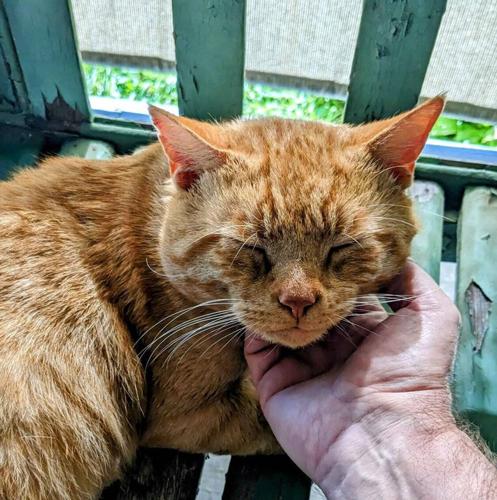
Max didn’t like his new “home” in a barn in Amish country and returned to the man who first showed him kindness.
Brad Bennett said Max the stray was in a bad way when he showed up.
The young cat was malnourished, missing patches of fur and was suffering from infections when Bennett saw him on the property of a western Pennsylvania home where he works as a personal caretaker, first via trail cameras set up to catch images of local wildlife, then in person.
The orange tabby cat was drawn by stale cat food Bennett had thrown out, but he was extremely cautious. He hissed at Bennett the first time the 58-year-old approached him and tried to attack him.
Bennett, who thinks Max may have been abused in the past, earned the stray’s trust and was eventually able to deworm him and give him flea and tick medication, he told local newspaper the Tribune-Democrat.
“I started feeding him and working with him,” Bennett told the paper. “Three months later, [he] was on my lap with me on the swing.”
Max the cat. Credit: Bill Bennett
Bennett, who has two cats of his own, said he couldn’t afford to keep Max because he was “tapped out” by thousands of dollars in veterinary bills, but he knew the little guy needed a home before winter so he made arrangements to take him to a nearby Amish farm which was in need of a mouser.
Max clearly wasn’t taken with the farm because he walked five miles and crossed a major interstate (376) to get back to the home where Bennett works — in one day.
“I kept having feelings of guilt about sending [him] off, not knowing what was going to happen,” Bennett said. “Part of me was kind of excited to see him.”
Bennett knew he couldn’t send Max back to the farm. After he wrote a Facebook post about Max’s situation, Jill Powell, a volunteer with Homeless Cat Management in Pittsburgh, drove about an hour from Pittsburgh to pick Max up. He’ll stay with a foster family until Powell and her organization can find him a forever home.
Whoever opens their home to him will find a grateful cat who knows what it’s like to struggle on his own.
“I was able to hold him, he meows and he reaches for petting,” Powell said. “He seems very sweet.”
“The camera never lies,” the old saying goes, but it turns out that’s not quite true.
During my crime reporting days I wrote an unusual story about a guy who’d been picked up on armed robbery charges. The suspect’s face was visible, the security camera footage was unusually sharp, and the suspect himself had a previous armed robbery conviction from years earlier.
It looked like an open and shut case.
There was just one problem: The man had an airtight alibi. He had half a dozen people willing to go on record saying he was at a party 70 miles away when the robbery happened, as well as ATM receipts showing he’d withdrawn cash that night far from the site of the robbery. When he retained a lawyer, the attorney was able to show his cell phone records placed him at the party, and forensic videography showed the man in the armed robbery footage, despite bearing a striking resemblance to the suspect, was taller and moved differently.
In the end the police dropped their case and found the real robber, but I never forgot the story, nor my conversations with forensics experts who explained how something as simple as taking measurements at a crime scene, from the same angle and using the same cameras, could prove a case of mistaken identity. Things like gait, observing the dominant hand and other body language also factor heavily.
One forensics expert told me it’s like watching the replay in a baseball game: You can be absolutely sure a runner is out by watching footage from one angle, but footage of the same slide from another angle can clearly prove the runner’s foot made contact with the base before the fielder’s glove tagged him.
That kind of attention to detail is what helped Thomas Keller rule out the possibility that a mountain lion was roaming the fields of Lower Macungie Township in Pennsylvania. On Sunday, Pennsylvania state police issued a warning to people in the area that “a large feline was seen in the fields” near a residential road.
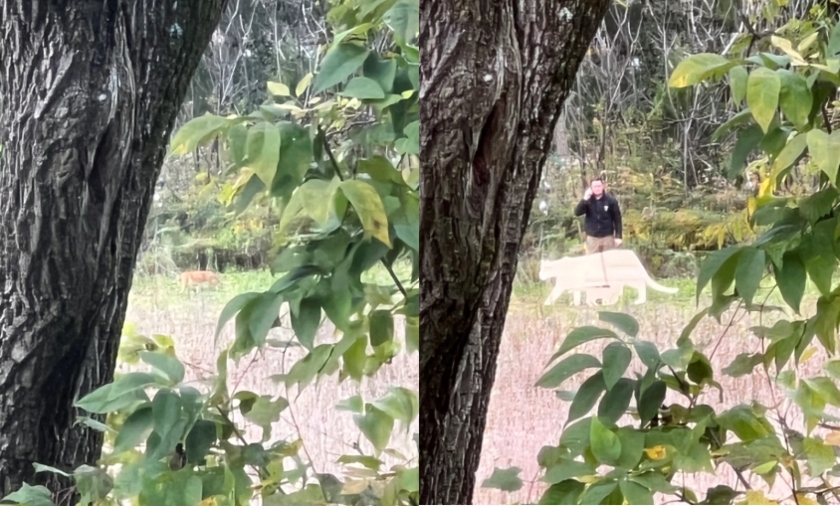
Keller, a furbearer biologist with the Pennsylvania Game Commission, headed down to the area earlier today and found the exact spot where a local homeowner had photographed the supposedly wild cat. Using a life-size cut-out of a puma, which he placed carefully where the cat was standing, and a camera placed at the same height and angle used in the original photograph, Keller proved the cat in the photo was much smaller than a puma.
“It’s just a house cat,” Keller said flatly after producing his own photos of the spot.
The original photo, left, and Keller with his scale cut-out of a mountain lion, right. Keller says the cat in the photo is probably a large, well-fed stray.
Like the forensic videographer who helped clear a man of a robbery charge, Keller was able to disprove the immediate conclusions of people who saw the image. He says the work is important because “there’s a lot of fear and panic that can spread.”
“We will generally go out and try to talk with who reported it and get perspective on where the photo was taken,” Keller told the Lehigh Valley News. “We look at original picture and measure what we can … We look at things in the picture that we can get scale from. It might look like a mountain lion, but we need to know what those measurements are to get the scale.”
Confusion over what the camera shows is compounded by the optical effects of zoom, which can throw off the observer’s sense of scale, he told The Morning Call, a local newspaper. He said people who aren’t sure what they’re looking at should call their state game commissions, or comparable offices, to get help from experts.
As for Pennsylvania, while there have been historical reports of mountain lions, most were decades ago and the handful that panned out were cases in which the large felines escaped from private captivity or traveling circuses.
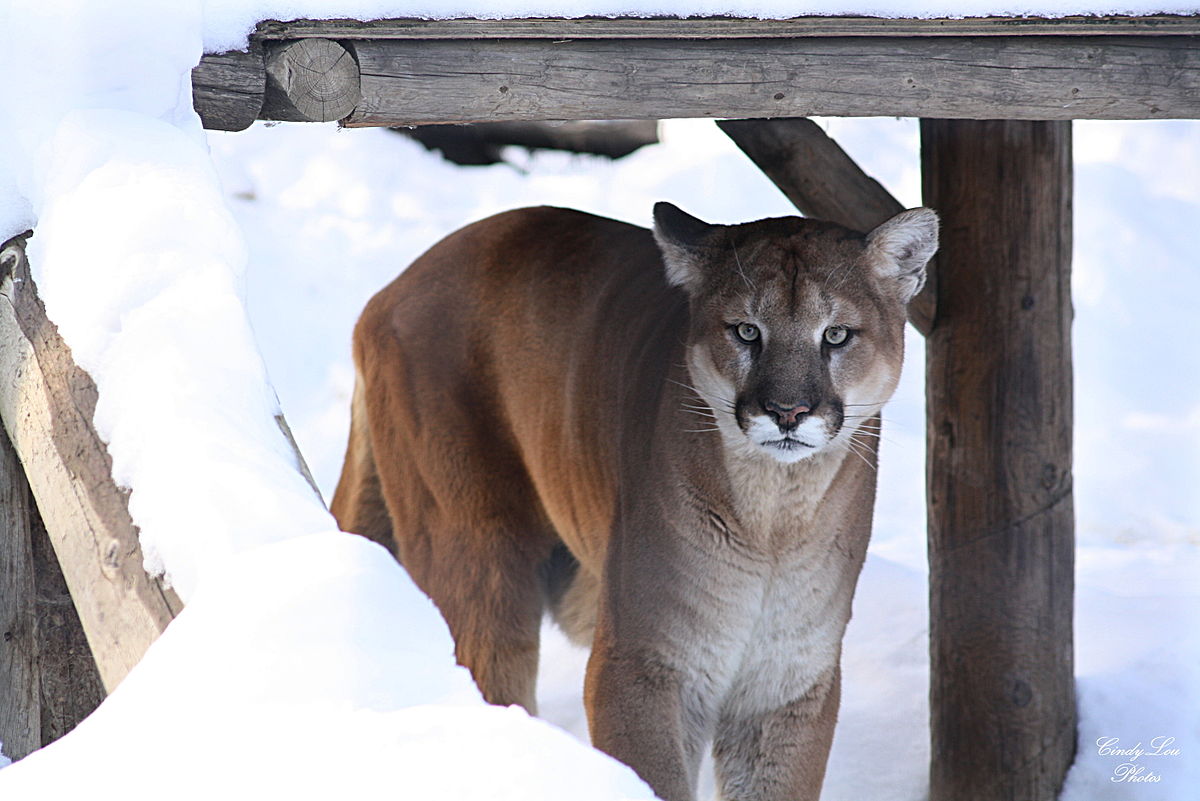
Although it’s not unheard of for pumas to migrate east, they’re no longer extant in the region and sightings of the elusive cats are almost always cases of mistaken identity when people see bobcats or large housecats.
“There’s none,” Keller said. “We get hundreds of these reports every year and we haven’t been able to substantiate one yet.”


 Pain In The Bud