Study: Women Don’t Want To Date Men With Cats

“Men holding cats were viewed as less masculine; more neurotic, agreeable, and open; and less dateable,” the study’s authors wrote.

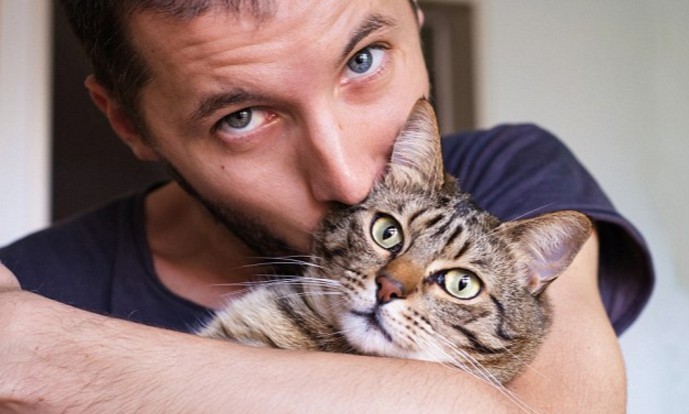
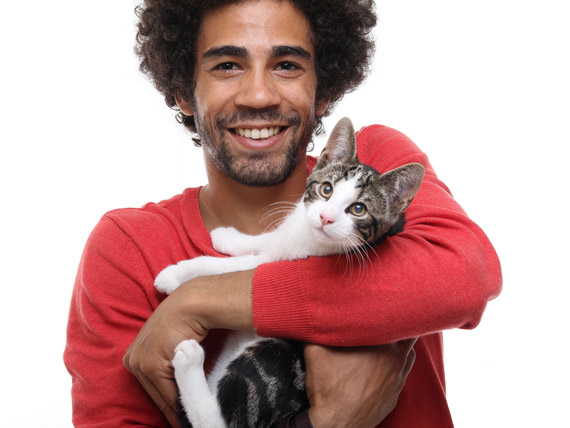
Sad news, gentlemen: A new study from a team at Colorado State University claims men who love cats are perceived as “less masculine” and are less likely to score dates with single women.

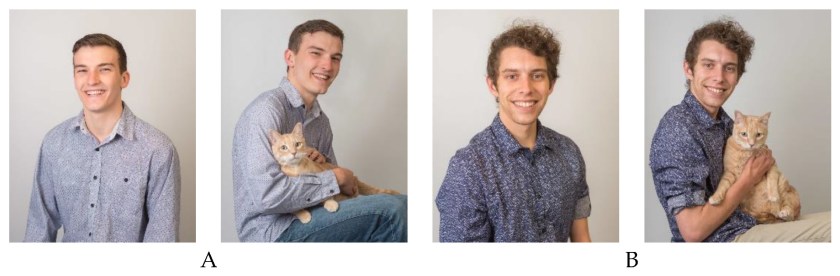
The study surveyed 708 women between the ages of 18 and 24, showing them photos of men photographed alone and with cats. The women were asked whether they’d agree to a date with each man they viewed, and whether they’d consider a long-term relationship with each man.

When those same men were shown with cats, the number of women who said they’d date them dropped by five percent, while the number who said they’d consider a serious relationship dropped by four percent.

The women who took the survey also rated men “on masculinity and personality” according to their appearance in the photos. In addition, the participants answered questions like: “Is he reserved?”, “Is he generally trusting?” and “Is he lazy?”, and asked the women whether they believed the men were outgoing, sociable, kind and considerate.

“Men holding cats were viewed as less masculine; more neurotic, agreeable, and open; and less dateable,” wrote authors Lori Kogan and Shelly Vosche, who titled their paper “Not the Cat’s Meow? The Impact of Posing With Cats on Female Perceptions of Male Dateability.”
catsstudy2
In an attempt to reduce variables, the photos were all staged the same way in front of a plain white background, with the men wearing blue button-down shirts. Credit: Lori Kogan and Shelly Vosche/Colorado State University

The researchers also asked the women if they viewed the men as dominant, gentle, sympathetic, affectionate, warm, decisive and possessed of leadership abilities.

The presence of cats hurt men across the board with the female respondents, who found the cat men “ultimately less datable in the short or long term,” Vosche and Kogan concluded.

That begs the question: Why?

Women want manly men, Vosche and Kogan argue.

“Women prefer men with ‘good genes,’ often defined as more masculine traits,” they wrote. “Clearly, the presence of a cat diminishes that perception.”

The results, they said, indicate “women are more likely to seek masculinity first, then consider other components of the potential mate.”

The findings were “influenced by” whether the women self-identified “as a dog or a cat person,” although it wasn’t clear just how much that impacted their responses.

Vosche and Kogan speculate “that American culture has distinguished ‘cat men’ as less masculine, perhaps creating a cultural preference for ‘dog men’ among most heterosexual women in the studied age group.”

The authors didn’t say why they concentrated on the 18 to 24 range, nor did they speculate on how women in older age cohorts might respond.

Buddy responds

We would be remiss, of course, if we didn’t run this by Buddy the Cat. This is his blog, after all.

The outspoken tabby cat dismissed the study as “fake mews” and said it’s well-known that cats are “spectacular wing-men.”

In addition Buddy — who holds doctorates in being a cat and being handsome — argued that, while some cats may indeed make their human male servants seem less masculine, other cats — like Buddy — amplified masculine and desirable traits by several orders of magnitude.

“If a man is pictured with a scowling, flabby Persian, then sure, maybe women are less likely to view that man as masculine,” Buddy said. “But if a man is pictured with a ripped, dashingly handsome cat such as myself, women are 96 percent more likely to want to date him.”

Asked where he arrived at that figure, Buddy replied: “I made it up. But obviously it’s true.”
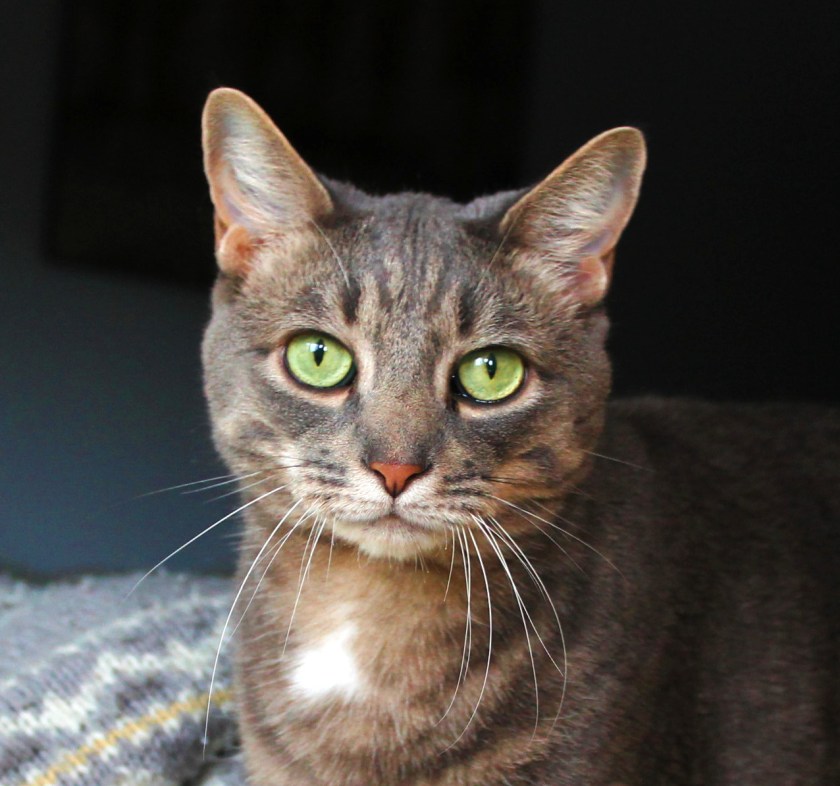
Buddy the Wingman
In research by Buddy, women were 96 percent more likely to date men pictured with Buddy.


This Might Be The World’s Worst Cat Study

A bizarre new study concludes some cats are depressed because they live with men, among other questionable claims.

A Brazilian research team wanted to find out if cats experience separation anxiety when their owners aren’t home, so they visited the homes of 200 cat servants, wired them up with cameras and microphones, and conducted a rigorous study in which they first established a behavioral baseline, then compared the cats’ normal behavior with their actions when their humans weren’t home.

Just kidding.

In what might be the laziest, most assumptive attempt at conducting animal behavioral research thus far in 2020, the team from Brazil’s Universidade Federal de Juiz de Fora handed out questionnaires to 130 cat owners that asked, among other things, about the body language and behavior of their cats when they weren’t at home to witness it.

Did these cat caretakers have Palantirs that allowed them to spy, Sauruman-style, on their kitties at home? Nah.

The information comes third-hand. I’m not joking:

“Since there weren’t any cameras observing the cats, the owners answered based on evidence from reports by other residents, neighbors or any signs the cat left in the home, such as feces, urine or broken objects, [study author Aline Cristina] Sant’Anna said.”

My neighbor’s friend’s Uber driver, who parked outside for 16 minutes, said my cat looked angry when he briefly appeared in the window, so I’m gonna go ahead and write in this here questionnaire that Mr. Socks has terrible separation anxiety. Yep.

catman2

But suppose the data was reliable, instead of fuzzy third-hand accounts from cat owners who quizzed their apparently nosy neighbors about what their cats do in their down time. How do we know a smashed vase is separation anxiety, and not the result of a cat with the zoomies just knocking stuff over?

How do we know a cat who misses the litter box doesn’t have a UTI, or refused to use a dirty box?

But it gets better, dear reader. This team of superstar scientists decided the reason some cats were supposedly depressed or destructive is because they live with male caretakers instead of women:

Cats with behavior problems also tended to live in households without any female adults or more than one female adult; households with owners ages 18 to 35 years old; single pet households; and households with no toys.

“Maybe, for different reasons, the animals raised in households with no female adults or more than one female adult were less likely to develop secure and mentally healthy types of attachments with their owners in the sampled population,” [study author Aline Cristina] Sant’Anna said.

Or maybe the authors are getting paid to make wild, unsupported assumptions and combine them with worthless data.

The CNN version of the story doubles down by quoting a self-appointed expert who expounds on the cats-and-females theory:

Additionally, female cat owners tended to be more affectionate and doting, said Ingrid Johnson, a certified cat behavior consultant for more than 20 years.

Cats might be a little more distressed in the absence of their owners if they are younger adults who are busy and not focused on the fact that they have a pet, the researchers theorized.

“They’re happy to have a pet, but they’re going out, being social, [going on] dates and having parties,” added Johnson.

Right

For those who aren’t keeping score, we now have an academic and a certified behaviorist telling us cats who live with men or adults younger than 35 are more likely to be depressed because they, like, totally heard we don’t scoop the litter boxes as frequently or something.

That’s because all men refuse to be affectionate with their cats, and people under 35 are party animals who snort cocaine off the posteriors of strippers when they should be feeding Fluffy, according to our experts.

Johnson’s credentials include working at a hospital for cats and running her own “cat behavior house call and toy business.”

It’s worth noting that there are dozens of organizations that certify people as cat behaviorists. Sometimes the difference between a certified behaviorist and one without certification is the former simply paid dues to a member group that issues the certificates.

The Rock and His Cat
“Where’s the jabroni who claimed men aren’t affectionate with their cats?”

By now my opinion on this study is abundantly clear. The methods and conclusions wouldn’t pass muster in most undergraduate classes, let alone a research paper published in an academic journal. (The researchers published their work to PLOS ONE, an open access journal.)

What I don’t understand is, why bother? According to the study, 13.5 percent of the cats demonstrated at least one behavior consistent with separation anxiety, but for reasons I elaborated on earlier, the data is worthless. I’m not a fan of questionnaire studies in the first place, let alone questionnaire studies asking people what other people told them about difficult-to-interpret animal body language.

And lastly, I’m not a fan of this idea that there’s a certain “type” of person who is the best kind of cat owner.

We should be dispelling crazy cat lady stereotypes, not perpetuating them. Maybe men are in the minority when it comes to adopting cats, but nothing other than unfounded assumption suggests we men aren’t loving and affectionate with our little buddies, just like there’s nothing but anecdotal evidence to suggest caretakers younger than 35 neglect their pets.

The past few years have seen an authentic boom in research into feline cognition, behavior and emotion, and for that I’m grateful. But we can do better than this.

Image sources: [1] [2] [3]