The Mixed Legacy of CC the Cloned Cat

Scientists now clone animals for experimentation and genetics companies clone pets.

Like Dolly the sheep, CC the cat’s arrival into this world was accompanied by apocalyptic pronouncements, grave concerns about man’s hubris at playing God and warnings that human clones wouldn’t be far behind.

At the time cloning was revolutionary, something that was only supposed to exist in science fiction movies. Most people were uneasy with it, and much of the public debate centered around ethical concerns.

It was 2001: The world had just gotten over the Y2K scare, the Sept. 11 attacks and an abundance of turn-of-the-century, end-of-the-world prophesies. When people thought of cloning, they pictured tyrannosauruses rampaging through Jurassic Park and Jeff Goldblum’s scientist character lecturing the park’s proprietors on playing with the awesome power of nature.

CC passed away on March 4, 2020 at 18 years old — a full life by feline standards. The real consequences of her existence were less dramatic than predicted, but ultimately disappointing.
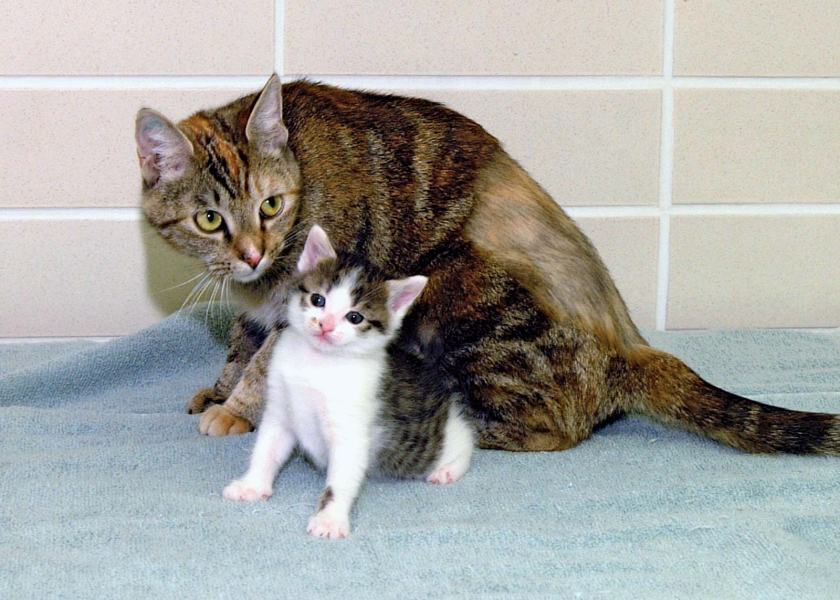
CC the Cat
CC with her surrogate mother, Annie. Credit: Texas A&M

Copy Cat’s birth didn’t herald an age of human cloning, but it did open the door to widespread animal cloning — including, as of last year, non-human primates — and eventually, to pet cloning.

A Mixed Legacy

Mark Westhusin, a scientist who was part of the team that successfully cloned CC, sees it as progress.

“CC’s passing makes me reflect on my own life as much as hers,” Westhusin said Wednesday. “Cloning now is becoming so common, but it was incredible when it was beginning. Our work with CC was an important seed to plant to keep the science and the ideas and imagination moving forward.”

CC lived as any typical house cat would, according to Shirley and Duane Kraemer, who adopted the famous feline. Duane Kraemer was also part of the research team involved in CC’s cloning.
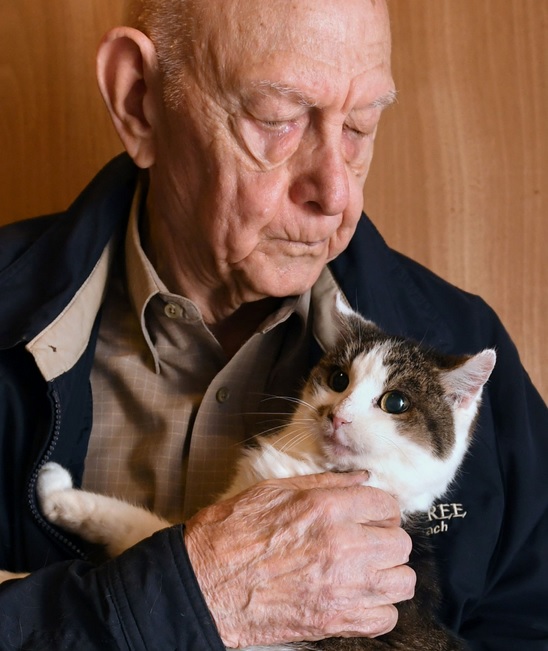
cckraemer
Kraemer with CC. Credit: The Eagle (Bryan, Texas)

When Barbra Streisand admitted she had her dog cloned in 2017, she responded to the backlash by writing an editorial in the New York Times, defending cloning as a way to get over the heartbreak of losing a pet.

There are now several genetics companies that offer pet-cloning services for people who want to bring their dear dogs and cats back to life.

“The human–animal bond is a pretty strong thing,” said Kerry Ryan, a veterinarian who works for pet cloning firm Viagen. “Our pets truly are a part of the family, and people want to have a piece of their pets around forever.”

Clones, But Not Your Real Pets

Except, of course, they really aren’t bringing cats and dogs back to life, and the animals won’t be around forever. Viagen’s customers get a genetic copy, but that doesn’t mean the clone will look or even act the same.

“It can be a genetically identical animal that can come out looking differently than the animal that you had,” veterinarian Katy Nelson told WTOP in 2018.

To the people who can afford dropping between $25,000 and $50,000 to clone their cats and dogs, it doesn’t seem to matter that both nature and nurture will ensure differences.

Pet cloning has also drawn the ire of animal welfare activists and major organizations like the Humane Society and SPCA, who point out that every cloned cat or dog means one less home for strays in shelters.

The Humane Society “opposes cloning of any animals for commercial purposes due to major animal welfare concerns,” HSUS’s Vicki Katrinak told National Geographic. “Companies that offer to clone pets profit off of distraught pet lovers by falsely promising a replica of a beloved pet. With millions of deserving dogs and cats in need of a home, pet cloning is completely unnecessary.”

False Starts, Gene Splicing and Clone Experimentation

Then there’s the truly dark side of cloning.

Each cloning attempt involves implanting eggs into several surrogate cat (or dog) moms, and no one wants to know what happens to the other clones, whether or not they make it to term. There’s no law requiring the companies to disclose the fate of those animals, so for now it remains a mystery.

Not all clones end up in loving homes, either. The lucky handful do, but others are birthed into the world to be experimented on, like a quintet of monkeys cloned by scientists in China.

Cloned Monkeys from China
Scientists edited the DNA of these monkeys to remove a gene that regulates sleep, resulting in depression and anxiety, among other problems. Three of the five monkeys pictured here are sucking their thumbs, which is a sign of stress when primate infants are taken from their mothers. Credit: Institute of Neuroscience, Shanghai

The scientists who brought the monkeys to life also edited their genes, “cutting out a gene involved in regulating the sleep/wake cycle.” A 2019 story on Phys.org explained the consequences:

“The gene removal created multiple effects in edited monkeys, such as reduced sleep time, increased movement during the night, changed blood hormone levels, increased anxiety and depression, and some schizophrenia-like behaviors.”

Which was precisely the point: The research team wanted to study the unintended consequences of gene-editing on animals to learn more about how it could impact humans.

To be sure, none of this is Copy Cat’s fault.

The famous cat, who was delivered by a surrogate mother, lived for 18 years, a year or two more than the average house cat. She spent the remainder of her days as a typical house cat, albeit one whose vet visits and blood work were carefully pored over as geneticists confirmed she was as healthy as any other kitty.

But as science barrels forward and labs — many of them in countries with no regulations — are bringing cloned animals into this world, we should think about the consequences for animals and the human race.
Cat Food Is Loaded With Mystery Ingredients, Study Says

Ingredients can change without any indication on pet food packaging or acknowledgment from the companies that manufacture pet food, the study revealed.

We’ve all heard the oft-quoted factoid claiming domestic cats kill billions of birds and small animals every year, and unsurprisingly that number is contested and controversial.

One reason skeptics doubt those numbers is because researchers didn’t observe cat behavior and extrapolate the ecological impact — they handed out questionnaires to owners and asked them how often their cats brought dead animals home. To get accurate results, researchers have to be confident people are answering honestly and have reliable memories. It’s really not the best way to do a study.

So a team at North Carolina State University came up with a better way to measure cat predation on wildlife: They’d take hair samples from more than 400 cats, which would reveal how much of their diets consist of cat food versus prey.

Hair analysis can reveal different isotopes, so the team would be able to directly note each cat’s diet by distinguishing between pet food isotopes and those from prey animals. As the team explained:

A common way to understand the composition of animal diets is to collect samples of fur, nails, or blood from an animal and analyze its carbon and nitrogen isotopes. All organic materials contain isotopes of elements that get locked into body tissues, following the basic principle that you are what you eat. For example, the ratios of nitrogen isotopes present in carnivores are dependably distinct from those of plant eaters. Similarly, researchers can distinguish the types of plants that an animal eats by measuring the ratio of carbon isotopes.

It was a good idea, but the study was derailed by an unexpected discovery: No one knows what the heck is in pet food.

Cat food manufacturers fill their products with mystery ingredients, the team found, which means one bag of kibble or one can of wet food doesn’t have the same ingredients as the next, even if they’re the same flavor from the same company.

Cat Eating
Although they can meow in protest, our cats can’t tell us their food tastes different. (Source)

Additionally, pet food manufacturers can — and do — change what they put in their products without notifying customers or acknowledging the changes on the packaging.

As a result, the research team couldn’t identify which isotopes were from cat food and which ones were from hunted meals.

“We really thought this was going to be an ideal application of the isotope methodology,” said scientist Roland Kays, a co-author of the study. “Usually these studies are complicated by the variety of food a wild animal eats, but here we had the exact pet food people were giving their cats.”

That discovery essentially rendered the study useless for its original purpose, but like all good scientists, the North Carolina State team realized that failure reveals just as much as success, even if it’s not necessarily what you’re looking for.

They published their results in the journal PeerJ, explaining what they’d learned.

“This isn’t what we aimed to study, but it is important in as much as there are hundreds of millions of cats (perhaps more) on Earth,” said Rob Dunn, a professor in NC State’s Department of Applied Ecology and co-author of the study. “The diets of cats, dogs and domestic animals have enormous consequences for global sustainability, cat health and much else. But they are very non-transparent. In short, at the end of this study we are still ignorant about why some cats kill more wildlife than others, and we have also found we are ignorant about something else, the shifting dynamics of ‘Big Pet Food.'”

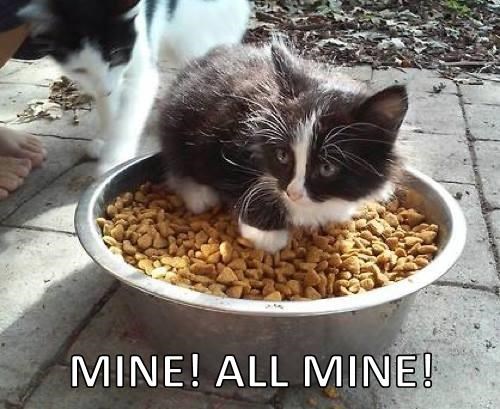
kitteneating
A happy kitten. (Source: ICanHazCheezburger)

As veterinarian Shawn Messonnier put it in an editorial for Pet Age, “the pet food industry remains shrouded in mystery about what’s really inside the pet food bag and how it’s created.”

Calling for more transparency in the manufacture and packaging of pet food, Messonnier pointed out ingredients can have a drastic effect on the health of our furry friends.

“For pet parents, a big leap of faith is required of them because unlike fresh human food, you can’t visually verify the ingredients used, their sources, freshness or the safeness of their handling,” he wrote. “Label language can be difficult to discern, too, so people rely mostly on the observations and opinions of friends and family they trust. Inevitably, people hope what goes in the bowl will translate into well-being and happiness for their dog or cat.”