

I usually wait until someone’s had a spoonful or two before casually asking “You know what Häagen-Dazs means, right?”
Some people will pause and give it lots of thought, as if they knew what it meant at one point and the memory is almost within grasp if the right synapse fires.
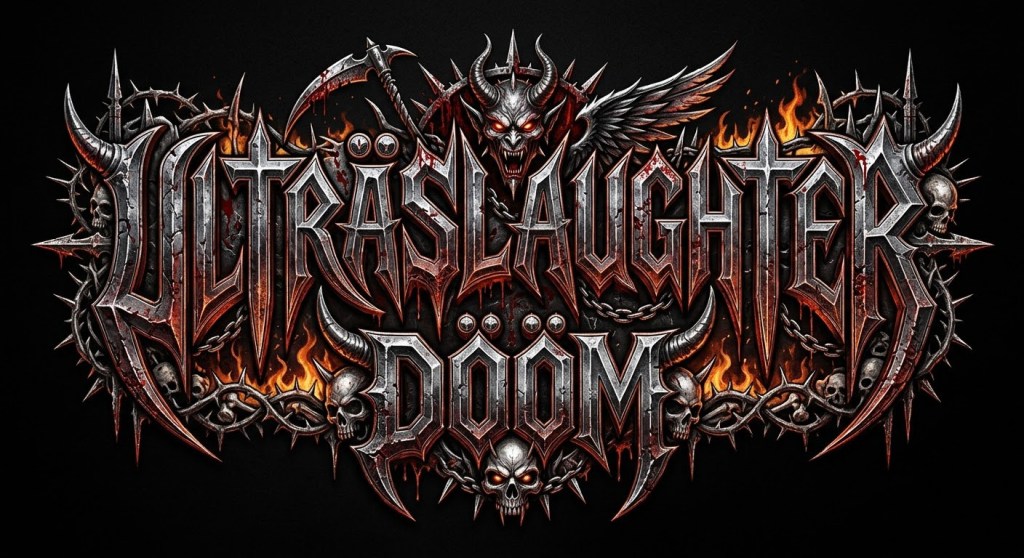
Others will fabulate an explanation, confidently asserting that Häagen-Dazs is German, Norwegian, Danish, Finnish or Icelandic. The umlaut conjures up something vaguely Nordic when removed from the context of heavy metal bands, which seem to be obsessed with sticking it on as many letters as possible.
“Did you see Ülträŝláügĥʻtër Dööm at Black MëtälFëst, dude? They rocked out!”
Some people will just shrug and fess up to ignorance.
Depending on how invested the person is, I might invent something absurd before revealing the truth.
“Yeah, it’s German for ‘the moment when frosted perfection settles amicably upon your tastebuds,’” because we all love how German has words for some of the most obscure situations and feelings.
But nothing beats the truth.
Häagen-Dazs means absolutely nothing. It’s nonsense.
The now-famous ice cream brand’s founder, a Polish immigrant named Reuben Mattus, made the word up when he launched the business in 1960. He slapped an umlaut on it and added a nonsensical “zs” to give it an exotic, vaguely Danish connotation.
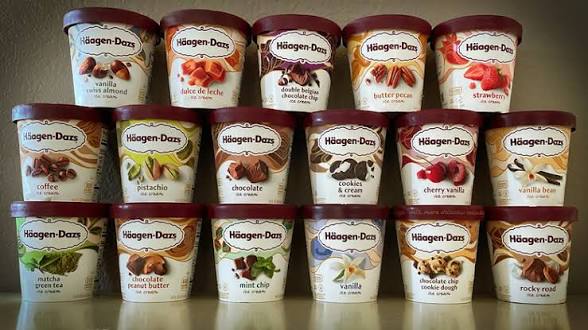
People won’t pay a premium for just any ice cream, but toss an umlaut in the name and claim it’s Danish, and suddenly customers are paying $3 or $4 more for a tub half the size, convinced that the Danes must know something about ice cream because their country is cold.
Score one for branding ingenuity and deduct another point from the American education system!
Sincerely,
Your friends at Pàin In The Büd
What’s a completely useless fact you love sharing?
View all responses


Suspicions confirmed. 😀
LikeLike
Indëëd!
LikeLiked by 1 person
Great post, being in the brand creative business for many years I obviously support this type of approach to branding. Not that we would ever do anything so completely made up… well, not this week anyway
LikeLiked by 2 people
You’ve got Bella the MI5 cat branding thing going on too. Very on point. I’ve got Bud the Buddinese Tiger who seems fearsome until he meows, then he’s Elmo.
LikeLike
lol i had no idea!
LikeLiked by 1 person
I was surprised when I found out too. The branding works too well.
LikeLiked by 1 person
It’s nonsense, and it’s fascinating. I remember that when I finally reached a decent level of English, my brother played me a song and asked if I understood anything. I tried with all my might, it sounded like English, but I couldn’t make out a single word. After trying really hard, I managed to make out “shoe” or at least that’s what I thought. Then he told me, “It’s not English, it’s nothing. It’s nonsense, and it’s great”. The song was “Prisencolinensinainciusol.” It was the first time I’d heard it, and I thought it was great, though it also gave me a bit of a panic attack because I thought I couldn’t understand a single word of English.
LikeLiked by 1 person
Hah! I listened to it and don’t feel bad, if I didn’t know it was gibberish I’d be fooled too, cupping my ear to the speaker like “What the heck is this dude saying?”
It sounds like those Youtube videos like “This is what English sounds like to foreigners”:
It also reminds me of this dude, who walked around Rome speaking ancient Roman to Italians, who were absolutely freaked out because they could understand him but only partially and couldn’t figure out why. Until one dude is like “It’s Latin! He’s speaking Latin!” lol:
LikeLiked by 1 person
It seems that even though they don’t understand what he’s saying, people recognize the names of the places, which apparently haven’t changed. Fascinating.
LikeLiked by 1 person
Indeed, and a lot of the root words and conjugations are the same or similar. I’ve heard archaic forms of English that are “only” about 1,000 years old and I couldn’t make heads or tails of it, so it’s amazing that modern Italian and Latin are still phonetically similar.
LikeLiked by 1 person
Hate that ice cream. It’s like eating sugar. Rather have less sweet stuff like frozen yogurt.
LikeLiked by 1 person
I knew this already! Learned it from that show “Unwrapped” that used to be on the food network. I was surprised.
LikeLiked by 1 person