
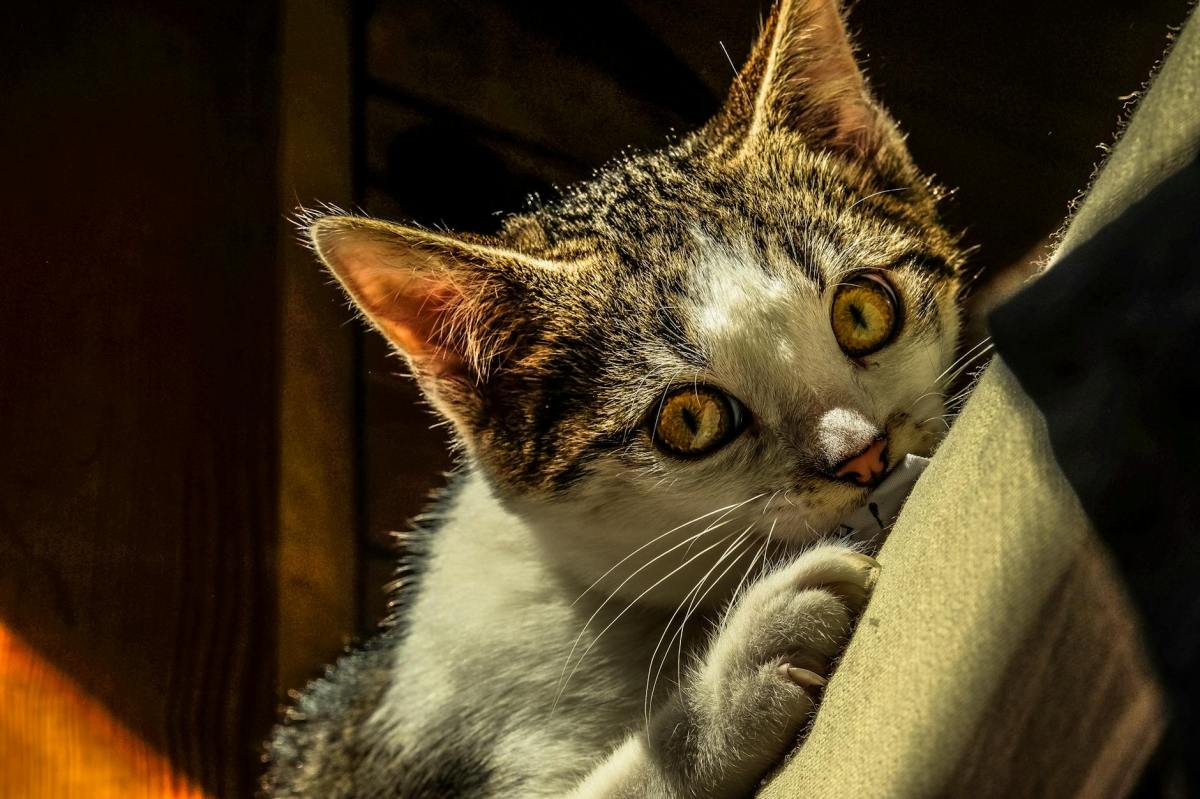
Five down, forty five to go.
With a new law going into effect in the fall, Rhode Island joins New York, Maryland, Virginia and Massachusetts in banning the declawing of cats.
Declawing may sound like a sort of kitty manicure, but the neutral name disguises a cruel form of elective mutilation that involves amputating a cat’s toes at the first knuckle.
It’s the equivalent of chopping off 1/3 of each finger, all to prevent potential damage to inanimate objects like furniture.
“Declawing is painful, unnecessary and inhumane. It’s no way to treat any pet,” said Rhode Island state Sen. Melissa Murray, one of the bill’s co-sponsors. “Fortunately, there has been growing awareness of the risks and cruelty of declawing. Our state must recognize that declawing is animal abuse and prohibit it altogether.”
Rhode Island’s new law is more prohibitive than some of the others: veterinarians who declaw cats once the law goes into effect on Sept. 1 will have their licenses suspended or revoked entirely.
Declawing doesn’t “just” cause short term pain from the procedure. It forces cats to change the way they walk and move in general, altering their gaits. As a result, declawing leads to early onset arthritis among a host of other medical problems.
Declawing also results in psychological and behavioral problems. Cats who are declawed often become depressed, and they’re more likely to avoid the litter box since standing on litter is painful for them.
Since the procedure also takes away their primary defensive mechanism, declawed cats are much more likely to bite, which along with litter box avoidance means they’re more likely to end up abandoned in shelters.

Cats should never be declawed!
There are several viable options for keeping them from scratching furniture, including nail caps and redirecting them to scratchers. The latter are a bare necessity if you have a cat, as scratching is a natural feline behavior and our little friends will find something to scratch if we don’t provide them with appropriate scratching surfaces.
Since cats like to stretch while they scratch, I highly recommend getting a large tower scratcher with a secure base. Bud has one, he uses it constantly, and he does not touch the couch or the chair in the living room, nor does he touch any other furniture. It can be done, it just requires patience and consistent redirecting, with positive encouragement.
Negative reinforcement, such as yelling at your cat, will not achieve results. The only thing it will accomplish is damaging your relationship and trust with your cat.
Since New York became the first state to ban declawing in 2019, more states have considered similar legislation. Although routinely opposed by state Veterinary Medical Associations — special interest groups that represent a portion of veterinarians who see declawing as a reliable money-maker — lawmakers have allied with veterinarians in support of bans, as well as groups like the Humane Society, the SPCA, the Animal Legal Defense Fund and the Paw Project to overcome opposition and get bills passed.
Let’s hope the trend of declawing bans continues.
 Pain In The Bud
Should be banned everwhere…..
LikeLiked by 3 people
A nationwide ban would be nice, but without anything like that on the radar, I’ll take the state bans. Unfortunately a lot of politicians don’t see animal-related stuff as serious, or worth their time.
LikeLiked by 2 people
Not very profitable financialy !
LikeLiked by 1 person
Great article. Thanks, I shared it on X. Besides, fur-niture is overrated.
LikeLiked by 2 people
I adopted a declawed cat long ago and it broke my heart every time I thought about what he must’ve gone through with that procedure. He was the sweetest cat I’ve ever met, loved strangers and would roll over immediately so they could pet his tummy, took on as his own a kitten I brought home and they were best friends for the rest of his life, and let my daughter pet him endlessly when she was little. I am sure the previous owner’s furniture would’ve been just fine without putting this cat through such a painful ordeal!
LikeLiked by 3 people
Poor little guy. It’s depressing that people mutilate innocent animals to protect inanimate objects. It really needs to stop completely in the US. Europe’s ahead of us on this.
LikeLiked by 3 people
It’s amazing to me that people don’t know declawing hurts the kitty. How can you not know?
LikeLike
People are too lazy to look for a solution to cats scratching furniture!! Not only is there sticky double tape and scratching post to put at end of couch. I put two decorative blankets at ends of my couch where my cat likes to scratch. I told my clients that and it works. But then again they could not give a rats ass about furniture.
LikeLike
Great news but wish it would go faster.
LikeLike
Excellent news! Attitudes are changing slowly but surely. Some years ago a fellow member of the local humane society said heirloom furniture is worth more than a cat’s claws. Tbh, I don’t have any fancy old furniture, but even if I did my claws would keep their claws.
LikeLike
Some will tell you that they only do it on indoor cats. But if those indoor cats get outside for some reason they are totally defenseless. They can’t even climb a tree to get away.
LikeLike
Exactly. Yet another reason we need a full nationwide ban.
LikeLiked by 1 person
Another alternative is trimming your cats claws. Not a permanent solution, but a lot better than mutilating them. Helps if you start doing it when they’re young, but I’ve had several adult cats who tolerated it (especially when followed by a good treat.)
LikeLike
Good advice as well, thanks. My cat won’t tolerate it, and I tried early, but I can’t complain because he uses his scratcher and doesn’t touch the couch after lots of redirecting.
LikeLike