
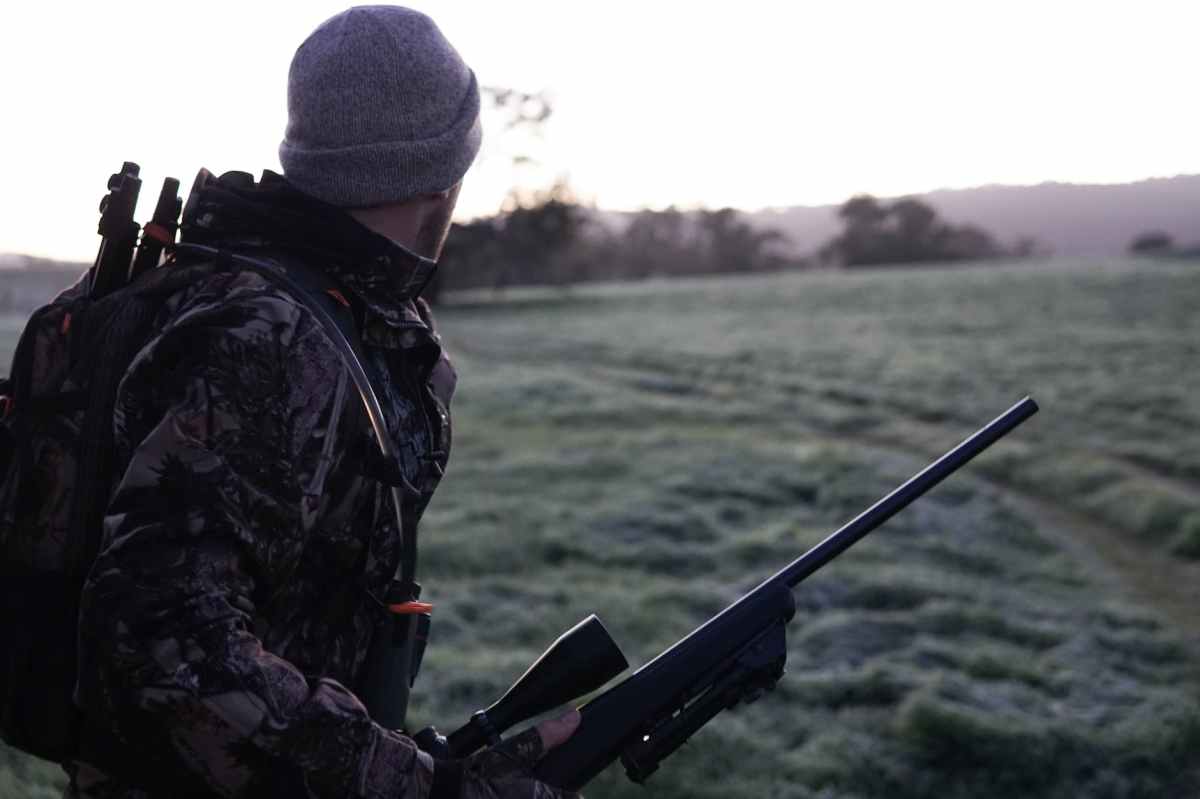
There’s this bizarre and infuriating idea among people who call themselves conservationists that they can save certain animals by running around and arbitrarily gunning down other animals.
These people will shoot certain species of birds to protect other bird species, extirpate ferrets, pine martens and various other mustelids, and have had a hard-on for cats ever since a series of shockingly dishonest pieces of propaganda masquerading as studies used fabulated data to paint felines as furry demon spawn who feast on birds by the billions in countries like the US, New Zealand and Australia.
They used to be quiet about it because they realized gunning down cats isn’t exactly good PR for their cause, but now they don’t even bother.
Like John McConnell, a 67-year-old New Zealander whose hobby is going out with a rifle to shoot cats at night because he thinks that’s an effective way to protect birds.
“I shoot them,” McConnell told The Guardian. “Seriously. If it’s a cat and I know whose it is, I’ll leave it. But if it’s a stray cat – it’s a goner. Even if it’s domestic and it’s out at night, I’m getting to the point where I’d shoot those as well, because they shouldn’t be out.”
Two things to note here:
- McConnell is playing vigilante cat killer, having appointed himself arbiter of which animals get to live and which ones don’t, but he doesn’t understand that stray, feral and pet cats are all the same species. This is a man who thinks the difference between a domesticated and wild animal is whether it has a home.
- The article contains no statistics and nothing in the way of numbers other than a wild estimate of New Zealand’s cat population, yet it’s filled with anecdotes: people who claim they see more birds after they’ve bagged a couple of cats, but can offer no evidence. That’s not an effective or smart way to make public policy.
Between the bogus studies and the lack of any data remotely suggesting that arbitrarily shooting domesticated animals has a measurable impact on bird populations, there is nothing to support this kind of ruthless nonsense. You’d think that, if an entire country is going to war with an animal species and has vowed to take potentially millions of lives, there would be something — anything — to back up the claim that inflicting all that misery and suffering on sentient creatures would accomplish a conservation goal.
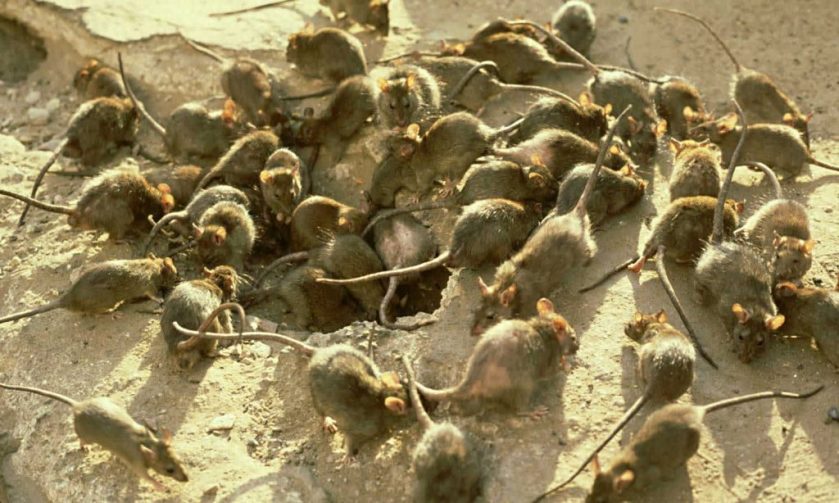
Especially after their neighbors, the Australians, killed two million cats with poisoned sausages in a similarly misguided attempt at protecting wildlife and were rewarded for their efforts with three years (and counting) of biblical mouse plagues that destroyed thousands of homes, farms and businesses, and caused billions in damage. Mice, by the way, are a non-native species introduced by settlers from the UK.
Credit another blow to the environment from human behavior as people randomly shoot cats. I suppose blaming cats is easier than admitting we’ve behaved abominably and are the root cause of these problems.
But let’s stop for a moment and imagine if the situation were reversed. Imagine people who want to protect cats decided they’re going to start shooting dogs, foxes, coyotes, owls, eagles and other large birds of prey.
Suppose someone decided that John McConnell’s dog shouldn’t be out for walks and shot it in an act of conservationist vigilantism.
Would anyone tolerate that? Wouldn’t they be labeled lunatics and condemned? What makes the cat culling any different, aside from “justification” in the form of a handful of widely-condemned, heavily-criticized studies that violate just about every elementary rule of scientific research?
Here’s comedian Bill Burr’s take on the absurdity of human efforts to manage wildlife population by shooting animals. Burr, whose everyman facade and humor often mask salient points, also takes the rest of us to task by pointing out it’s humanity, not the behavior of animals, that has the biggest impact on the planet and its wildlife, yet no one’s suggesting we cull our own population.
“I think it’s weird that human beings are trying to control the populations of animals. You know? Like any time the deer population gets out of control, some dude will get on TV like [puts on a redneck accent] ‘Okay, the deer population is up to about 17, 1,800, realistically we need to get that number down to about five or six, alright? So starting tomorrow, if you got a gun, f—ing shoot them in the face!’ I’m just sitting at home like, ‘What are the deer doing that’s so bad for the environment?’ [Slips into a redneck accent again] ‘They eat all the f—in’ grass! They comin’ up to trees, just nibblin’! Just nibblin’!’ Dude, the deer didn’t put a hole in the ozone layer, alright? That’s not a bunch of dogs clogging up the freeway. It’s us, alright?”
Then he lays into people who breed like rabbits, and this is a personal pet peeve of mine whenever I hear someone like Alec Baldwin, a man who has eight children, four massive homes, a fleet of SUVs and an army of nannies, holding court on environmental responsibility and global warming. Baldwin has 12 to 16 people living under his roof at any time, with palatial homes that consume more energy each than entire European villages, yet that doesn’t stop him from adopting a patrician tone and lecturing the “peasants” (his word) on their environmental responsibilities.
A word of caution: while I think Burr is hilarious, this clip is also peppered with obscenities, as his most of his material. If that sort of thing bothers you, skip the clip. If not, well, he’s got a point:
 Pain In The Bud
THESE PEOPLE DESERVE WHAT IS COMING TO THEM. Rats and mice. As i mentioned in the past one block near me has 3 feral cats who hunt rats and mice. That whole block do not see rats like on my block. My garden feral has killed 8 rats and mice. So far.
LikeLiked by 2 people
There are other factors as well, including weather conditions that allow mice to breed unchecked, but it’s certainly not a coincidence that Australia’s cat culling program started in 2019 and the mouse plagues began in full force shortly afterward. I used an illustrative but comparatively tame photo for this post, but if you do an image search, many of the photos are hard to believe — entire buildings overrun and destroyed, massive fields stripped of crops, mice in their legions carpeting roads…
History is pretty clear in terms of what happens when people cull cats, and the results are never good.
LikeLike
Oh for Pete’s sake! I may have said this before, but every day I watch birds swoop down and eat cat food leftovers in the yard where we feed two ferals. The cats sleep in that yard all day and there are no signs any birds have been caught. The birds were nesting there in the spring. A mom duck even brought her ducklings one day. If you want birds in your yard, leave them some cover, don’t manicure or destroy every plant in sight. Advocate against shrinking bird habitats and world-wide crashes of insect populations. Why are there only two ferals here? Because I, my family, and some friends have been adopting the friendlies and TNRing the truly feral on this block, for decades. It works. Big Buddy, it’s good to see you post. Hope this means you are feeling much better!
LikeLiked by 1 person
Thank you, Leah. I think I have long COVID, with the fatigue, lack of motivation and brain fog that comes with it, but I’m trying to force my way through it.
You’re absolutely right, and the crashing insect populations are incredibly disturbing. I don’t think most people understand how much of a problem it is and how many of nature’s systems depend on insects for everything from pollination and spreading seeds to providing food for smaller animals, which in turn are food for the critically endangered megafauna.
I really don’t understand how discussions about climate change and the environment rarely seem to touch on the impact on animals. It’s bizarre.
LikeLiked by 1 person
Wasn’t the Black Plague enough of a lesson? Talk about being doomed to repeat forgotten history!
Maybe they should look at the use of chemical insecticides for the loss of bird population?
LikeLiked by 2 people
Exactly. Instead of admitting hard truths and having honest conversations about the damage WE are doing to the environment and animals, it’s easier to blame cats, which then leads to the behavior we’re seeing in New Zealand where people are going vigilante.
It’s barbaric. My original headline was “Barbarians In New Zealander Make No Excuse For Shooting Cats,” and I changed it before publishing because it was a little harsh, but the behavior really is beneath the dignity of our species.
We have wiped out 70% of Earth’s wildlife. There’s no question we are responsible for these problems.
With the disappearing insects, I keep thinking of a book called Permafrost by one of my favorite science fiction writers, Alastair Reynolds. The book is about a cascade failure due to human destruction of the environment, with interrelated systems crashing until people are left starving on a barren Earth where it’s no longer even possible to grow crops. That’s exactly where we’re headed, yet no one wants to hear about it.
LikeLike
YES!!! You read my mind. Humans will never learn any lessons.
LikeLiked by 1 person
Just wanted to apologize for missing some comments on earlier posts. I realized there were comments that hadn’t been approved/published and want to let everyone know it was not intentional. I saw a few more just now and I hope I’ve gotten them all. Slowly but surely catching up!
LikeLiked by 1 person
New Zealand is known for their barbaric killing of animals they feel don’t belong. They had throwing possums contests for children. Once the possums were dead they would have the children dress them up.
LikeLiked by 1 person
This makes me so mad that my blood boils. And ha ha to the Australians, who brought their vermin problem down on themselves! Hope the rat population ( not counting John McConnell) in New Zealand blows up in their faces, too.
LikeLiked by 1 person
Yes, humans have behaved abysmally by bringing mammals to Aotearoa New Zealand in the first place, but keeping the status quo will have only one outcome: the extinction of a great many more native species of bird, reptile, bat and insect. That is an unfortunate fact that has been verified many times in NZ. Indigenous wildlife is in decline everywhere in Aotearoa except in areas where there is intensive predator control. Admittedly, feral cats are not the only danger to native wildlife – rats, stoats, possums and ferrets are as much to blame. In fact the nation spends much more on rat and possum control to protect native fauna and flora than it does on the control of feral cats which harms only the fauna.
What you are overlooking is that NZ flora and fauna evolved in the complete absence of mammals (a few species of bats excepted), and if your only threat of predation is from the skies, the best form of defence is to freeze. Mammals hunt by scent as well as sight, and freezing simply makes the a bird/insect/reptile/bat a “sitting duck”. Don’t forget that many native bird species nest on or near the ground and many are flightless, making them additionally vulnerable to mammalian predators, including feral cats. Even our bats have evolved to spend much their time scurrying across the forest floor foraging for food. A few years ago, a single feral cat was found to be responsible for the killing of over 100 pekapeka (a critically endangered species of bat) in just one week. And those were the pekapeka it killed but didn’t eat.
Some background: Rats and mice were unintentionally brought to NZ by early European arrivals, but they have no natural predators here, and they quickly became plagues of Biblical proportions, as did rabbits and sparrows (introduced to remind settlers of Britain). The “solution” was to introduce predators such as stoats, ferrets and European hawks, and allow cats and dogs to go feral. The problem was that mice, rats and rabbits evolved in the presence of mammalian predation, and eventually predators and rodents reach an uneasy equilibrium.
However, the predators found that native wildlife was easier prey than the rodents having no fight or flee instinct, and so the onslaught on native species began. Native species have been in decline ever since. For millions of years they evolved in an almost predator free environment and have evolved low reproduction rates accordingly. One example: Kiwi don’t start breeding until they are around 5 years old. In several species, the female lays a single egg each breeding season (which may not occur every year). In areas with little or no predator control, only 5% of chicks survive their first year. Do the maths. That means that a pair of kiwi would need to raise at one chick a year for at least 40 years just to maintain the current low population. It’s simply not possible. In areas with moderate predator control, around 10% of chicks survive the first year, and this is enough to maintain the population and have a small increase in numbers. In areas where intensive predator control is carried out, 20% or more chicks survive the first year, allowing for a healthy growth in the population – not to pre-European levels, but certainly to levels where extinction is unlikely. Once a kiwi chick is a year old, it is usually capable of defending itself from most predators except dogs and large feral cats.
On sub-antarctic Auckland Island, feral cats have contributed to the global or local extinction of more than 29 bird species. The eradication of feral cats from other offshore islands has had a positive effect on native species, especially birds, bats, lizards, and insects. For example, on Rakiura/Stewart Island, the removal of feral cats has reduced the predation pressure on endangered species such as kākāpō, kiwi, and short-tailed bats. On Raoul Island, the eradication of feral cats has allowed the recovery of seabirds such as petrels and shearwaters. On sub-antarctic islands such as Campbell Island, the eradication of feral cats has benefited endemic species such as teal, snipe, and albatross.
I am not a cat hater. A cat (sometimes 2 cats) has been a member of our household for most of my 74 years. Throughout those decades, our cats have brought in many hunting trophies. Our current cat, Frankie, (a silver tipped tabby Chinchilla), brings in several trophies each week. While some of them are mice and rats, and the occasional non-native bird such as a sparrow, thrush or blackbird, by far most of his trophies, unfortunately have been native birds (which are relatively rare in our urban setting), native skinks and geckos (endangered) and wetā (in decline). Generally he brings in native animals unharmed as they tend not to put up a fight as introduced animals do. These we take from him and release back into the wild. On the other hand introduced species are either dead or near death when he brings them to us as they have fought more fiercely for survival.
I do not condone the actions of McConnell, but I do understand his motives. There’s more than enough evidence to conclusively prove native birds, insects, reptiles and bats cannot survive the current rate of mammalian predation due to the very low reproductive rates of native fauna. They can survive where there is intensive control of introduced predators. Eliminating other predators but exempting feral cats is counterproductive. After all, another major predator of NZ fauna, the rat, is also predated on by cats. What do you think cats will substitute for the rats?. Besides, why should cats have preferential treatment over other species that harm our fauna?
The ideal solution would be to ensure all domestic cats across the nation are neutered and micro-chipped. In districts where this has been mandated by the local authority, there is already evidence that it is having a positive effect on native fauna, especially in those areas where active trapping of feral cats is undertaken. Captured animals are neutered and if suitable, a home is found, otherwise they are released back into the wild. If the trapping is intensive enough, and ongoing long enough, eventually the breeding population of feral cats is eliminated. However, it requires intensive management and is beyond the means of many local authorities and so they turn to shooting or poisoning the cats – the same as they do for other non-native mammalian predators.
Animal cruelty is not tolerated here, and regardless of whether it’s a horse, sheep, dog, cat (domestic or feral), rat or any form of wildlife, if the authorities learn of it, then a prosecution is likely. However I don’t view the humane killing of mass killers of defenceless fauna as particularly evil especially when that mass killing threatens the survival of a species as is happening many times over in Aotearoa.
If there are other more humane and less expensive options of eliminating the harm caused by introduced predators (including cats) then I think every pet lover and wildlife lover alike would rejoice. But doing nothing is not the answer, unless you’re okay will more extinctions. Eliminating feral cats in NZ will not endanger the survival of cats as a species. However, not eliminating feral cats in NZ (along with other intoduced predators) will definitely see the extinction of many more animal species unique to these islands. And to most New Zealanders, no cat is worth the extinction of another species that is native or endemic to Aotearoa New Zealand.
LikeLiked by 1 person